Quick Verdict: The 2010 Insight's MPG Legacy in 2026
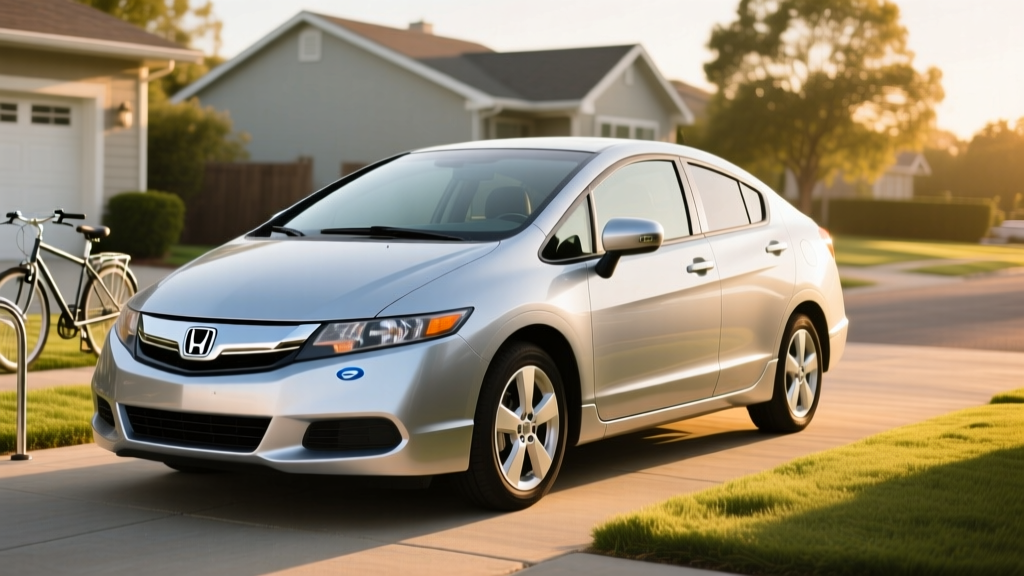
The 2010 Honda Insight was Honda's second-generation dedicated hybrid — a compact five-door hatchback designed to undercut the Toyota Prius on price while delivering exceptional fuel economy. With an EPA-estimated 40 MPG city / 43 MPG highway / 41 MPG combined, it remains one of the most fuel-efficient vehicles you can buy on the used market today. But a 16-year-old hybrid raises specific ownership questions: How does real-world fuel economy hold up? What's the battery replacement cost? And does it still make financial sense versus a modern hybrid, PHEV, or full EV?
This guide covers every number you need — EPA data, real-world MPG observations, powertrain specs, battery longevity, and a clear framework for whether the 2010 Insight fits your commute in 2026.
2010 Honda Insight: EPA Fuel Economy Breakdown
| Metric | EPA Estimate | Real-World Expectation |
|---|---|---|
| City MPG | 40 MPG | 38–44 MPG (hybrids often exceed EPA in stop-and-go) |
| Highway MPG | 43 MPG | 37–41 MPG (the 1.3L engine works harder at sustained speed) |
| Combined MPG | 41 MPG | 38–42 MPG (mixed driving) |
| Fuel Tank Capacity | 10.6 gallons | ~380–430 miles total range |
| Annual Fuel Cost (15k mi/yr) | ~$1,100 (at $3.00/gal) | Varies with local fuel prices |
Source: EPA Fuel Economy Guide — 2010 Honda Insight
Real-World MPG vs. EPA Sticker
The 2010 Insight uses Honda's Integrated Motor Assist (IMA) system — a mild hybrid setup where the electric motor assists the gasoline engine rather than driving the wheels independently. This means city driving, where regenerative braking and stop-start assist shine, often yields real-world MPG at or above the EPA city estimate. Owner-reported data on Fuelly and similar platforms clusters around 38–45 MPG combined, with some hypermilers reporting 50+ MPG in warm-weather city driving.
Highway caveat: Unlike Toyota's full hybrid system (which can run electric-only at low speeds), the Insight's IMA system relies more heavily on the 1.3L gasoline engine at sustained highway speeds. Expect highway MPG to fall slightly below the EPA estimate, particularly above 70 MPH or in hilly terrain.
Powertrain Specs: What's Under the Hood
| Specification | 2010 Honda Insight |
|---|---|
| Engine | 1.3L i-VTEC inline-4 (98 HP @ 5,800 RPM) |
| Electric Motor | IMA assist motor (13 HP / 58 lb-ft) |
| Combined Output | 98 HP / 123 lb-ft torque |
| Transmission | Continuously Variable Transmission (CVT) |
| Hybrid System Type | Mild hybrid (IMA) — cannot drive on electric only |
| Hybrid Battery | 0.6 kWh Nickel-Metal Hydride (NiMH) |
| Drivetrain | Front-wheel drive |
| 0–60 MPH | ~10.5 seconds |
| Curb Weight | 2,723 lbs |
The Insight's IMA system is fundamentally different from Toyota's Hybrid Synergy Drive. The electric motor sits between the engine and transmission, providing torque fill during acceleration and capturing energy during braking. It cannot propel the car on electric power alone — the gasoline engine is always engaged when the vehicle is moving (though it can deactivate cylinders under light load via i-VTEC).
This matters for your expectations: the Insight prioritizes fuel economy over electric-only capability or performance. The 10.5-second 0–60 time reflects a powertrain optimized for efficiency, not acceleration.
Conventional Hybrid (HEV) vs. Plug-In Hybrid (PHEV): Where the Insight Fits
The 2010 Honda Insight is a conventional hybrid (HEV). It does not plug in. It has no electric-only range. Its small 0.6 kWh NiMH battery charges exclusively through regenerative braking and engine power. If you're comparing it to modern electrified options, here's how the categories differ:
| Feature | Conventional Hybrid (HEV) e.g., 2010 Insight |
Plug-In Hybrid (PHEV) e.g., 2026 Toyota Prius Prime |
Battery Electric (BEV) e.g., 2026 Tesla Model 3 |
|---|---|---|---|
| Plugs in to charge? | No | Yes | Yes |
| Electric-only range | 0 miles | 30–50 miles (typical) | 250–360 miles (typical) |
| Battery capacity | 0.6 kWh (NiMH) | 10–20 kWh (Li-ion) | 50–100 kWh (Li-ion/LFP) |
| Combined MPG / MPGe | 41 MPG | 50 MPG + 120 MPGe (electric) | 120–140 MPGe |
| Federal tax credit (§30D) | Not eligible | Up to $7,500 (if eligible) | Up to $7,500 (if eligible) |
| Home charging required? | No | Recommended for EV range | Essential |
| Used-market price (2026) | $4,000–$7,500 | $18,000–$30,000 | $15,000–$35,000 |
Key distinction: The 2010 Insight does not qualify for the federal §30D clean vehicle tax credit — that credit applies only to new plug-in vehicles (PHEVs and BEVs) meeting battery-sourcing, MSRP cap, and buyer income requirements per IRS guidelines. There is also no used-EV credit (§25E) available for the Insight, since it is not a plug-in vehicle.
Hybrid Battery Lifespan, Warranty, and Replacement Cost
Original Honda Hybrid Battery Warranty
- Coverage: 8 years / 80,000 miles (10 years / 150,000 miles in CARB states including CA, NY, MA, and others)
- What's covered: IMA battery capacity loss triggering the IMA warning light or failure to hold charge
- Status in 2026: Original warranty has expired on all 2010 models unless the battery was replaced under warranty and the replacement carries its own coverage period
The 2010 Insight's NiMH IMA battery is considerably smaller and simpler than the lithium-ion packs in modern PHEVs and BEVs. This has both advantages and drawbacks for longevity:
Typical lifespan: Owner reports and mechanic surveys suggest the Insight's IMA battery lasts 120,000–170,000 miles before significant degradation triggers the IMA warning light. Some units fail earlier (around 80,000–100,000 miles), particularly in hot climates; others exceed 200,000 miles with gradual capacity loss.
Replacement cost (2026):
- Remanufactured IMA battery: $1,200–$1,800 (parts + labor at an independent hybrid specialist)
- New OEM Honda IMA battery: $2,000–$2,800 (if still available through Honda parts channels)
- Grid charger / reconditioning: $150–$300 for an aftermarket grid charger that can rebalance and extend a degrading NiMH pack — a popular budget fix in the Insight community
- Aftermarket lithium conversion: $2,500–$4,000 from specialty shops offering Li-ion IMA replacements with improved energy density
Signs of IMA battery degradation: The IMA warning light on the dash, reduced regenerative braking, lower fuel economy (typically a 3–8 MPG drop), and the battery charge gauge rarely reaching full or dropping rapidly under load.
Reliability and Common Issues Beyond the Battery
The 2010 Insight earns mixed reliability marks. The powertrain itself — the 1.3L engine and CVT — is generally durable with regular maintenance. However, several recurring issues affect the ownership calculus:
- IMA battery failure (as detailed above) is the most common and costly repair
- CVT shudder or hesitation — typically resolved with a transmission fluid drain-and-fill using Honda HMMF fluid; neglected CVTs can fail past 150,000 miles
- 12V auxiliary battery drain — the Insight's small 12V battery can die if the car sits for extended periods; replacement is standard (~$120–$180)
- Brake actuator recalls — Honda issued recalls for certain 2010–2011 Insight models related to the brake system; check the NHTSA recall database with the VIN before purchasing
- Air conditioning compressor — electrically driven A/C compressors can fail at higher mileage; replacement runs $800–$1,400
For a 2026 buyer, a well-maintained 2010 Insight with a recently replaced IMA battery and documented CVT fluid changes can be a solid low-cost commuter. One with the original battery at 130,000+ miles is a repair waiting to happen.
Pros and Cons: The 2010 Insight in 2026
Pros
- 41 MPG combined EPA — still competitive with many 2026 hybrids
- Low used-market entry price ($4,000–$7,500)
- Honda build quality and parts availability
- Hatchback cargo versatility (up to 51.6 cu ft with rear seats folded)
- No plug-in charging required — works for apartment dwellers
- Low annual fuel cost (~$1,100 at 15k miles/year)
Cons
- IMA battery replacement likely needed if not already done ($1,200–$2,800)
- Sluggish acceleration (10.5s 0–60) — challenging for highway merging
- No electric-only driving capability
- Dated interior technology (no Apple CarPlay, basic infotainment)
- No federal tax credit eligibility (not a plug-in vehicle)
- Highway MPG falls below EPA estimate at sustained speeds
- Road noise and ride comfort below modern standards
Hybrid vs. PHEV vs. EV: Which Fits Your Situation?
Decision Framework
Choose the 2010 Honda Insight (used HEV) if:
- Your budget is under $8,000 and you need maximum MPG per dollar
- You lack access to home or workplace charging (no plug needed)
- Your commute is primarily city/suburban stop-and-go (where hybrid MPG peaks)
- You want a simple, proven powertrain with no charging logistics
Choose a modern PHEV (e.g., 2026 Toyota Prius Prime, Hyundai Tucson PHEV) if:
- You can install a Level 2 home charger and your daily commute is under 40 miles
- You want electric-only driving for most trips with gas backup for road trips
- You qualify for the §30D federal tax credit (up to $7,500) based on income, MSRP caps, and battery sourcing requirements
- You want modern safety tech (automatic emergency braking, lane-keeping) and infotainment
Choose a full EV (e.g., 2026 Tesla Model 3, Hyundai Ioniq 5) if:
- You have reliable home Level 2 charging access
- Your daily driving is under 250 miles and you can plan for DC fast charging on road trips
- You want to eliminate gasoline costs entirely and minimize moving-part maintenance
- You qualify for the §30D credit and/or your state offers additional EV incentives
Frequently Asked Questions
How many MPG does the 2010 Honda Insight hybrid get?
The EPA rates the 2010 Honda Insight at 40 MPG city, 43 MPG highway, and 41 MPG combined. In real-world driving, owners typically report 38–45 MPG combined depending on driving style, climate, and battery health. City driving often exceeds the EPA estimate thanks to regenerative braking, while sustained highway driving above 70 MPH tends to fall a few MPG below.
Can the 2010 Honda Insight drive on electric power only?
No. The 2010 Insight uses Honda's Integrated Motor Assist (IMA) mild-hybrid system, which assists the gasoline engine but cannot drive the wheels independently on electric power. The gasoline engine is always running when the car is in motion. This is fundamentally different from full hybrids (like the Toyota Prius) or plug-in hybrids (PHEVs) that offer electric-only driving modes.
Does the 2010 Honda Insight qualify for any tax credit?
No. The 2010 Insight is a conventional hybrid (HEV), not a plug-in vehicle. It does not qualify for the federal §30D Clean Vehicle Credit, the §25E Used Clean Vehicle Credit, or any state EV rebates that require plug-in capability. The federal hybrid tax credit that existed for the Insight when new expired long ago and applied only to the original purchaser.
How much does it cost to replace the hybrid battery in a 2010 Insight?
A remanufactured IMA battery replacement costs $1,200–$1,800 including labor at an independent hybrid specialist. A new OEM Honda battery runs $2,000–$2,800 if available. Budget-friendly alternatives include grid charger reconditioning ($150–$300 for the equipment) to rebalance a degrading NiMH pack, which can extend battery life by 1–3 years.
Is the 2010 Honda Insight reliable?
The 1.3L engine and CVT are generally durable with proper maintenance — particularly regular CVT fluid changes using Honda HMMF fluid. The main reliability concern is IMA hybrid battery degradation, which typically occurs between 120,000 and 170,000 miles. Before purchasing, verify recall completion via the NHTSA recall lookup, check for IMA warning lights, and review maintenance records.
How does the 2010 Insight compare to the 2010 Toyota Prius?
The 2010 Prius achieves a higher EPA rating of 51 MPG city / 48 MPG highway / 50 MPG combined, and its full hybrid system allows limited electric-only driving at low speeds. The Prius also has a larger cargo area and a more refined ride. However, the 2010 Insight typically costs $1,500–$3,000 less on the used market. If maximum MPG is the priority, the Prius wins; if budget-conscious efficiency is the goal, the Insight is a strong value pick.
Is the 2010 Insight a good buy in 2026?
At $4,000–$7,500, a well-maintained 2010 Insight with a healthy or recently replaced IMA battery is one of the cheapest ways to achieve 40+ MPG without plug-in charging. It makes sense as a budget commuter for drivers without home charging access. However, factor in potential battery replacement costs, dated safety technology (no standard AEB or blind-spot monitoring), and the availability of newer used hybrids for $10,000–$15,000 that offer better performance, tech, and remaining battery warranty.