Quick Verdict: A Budget Hybrid That Still Commutes
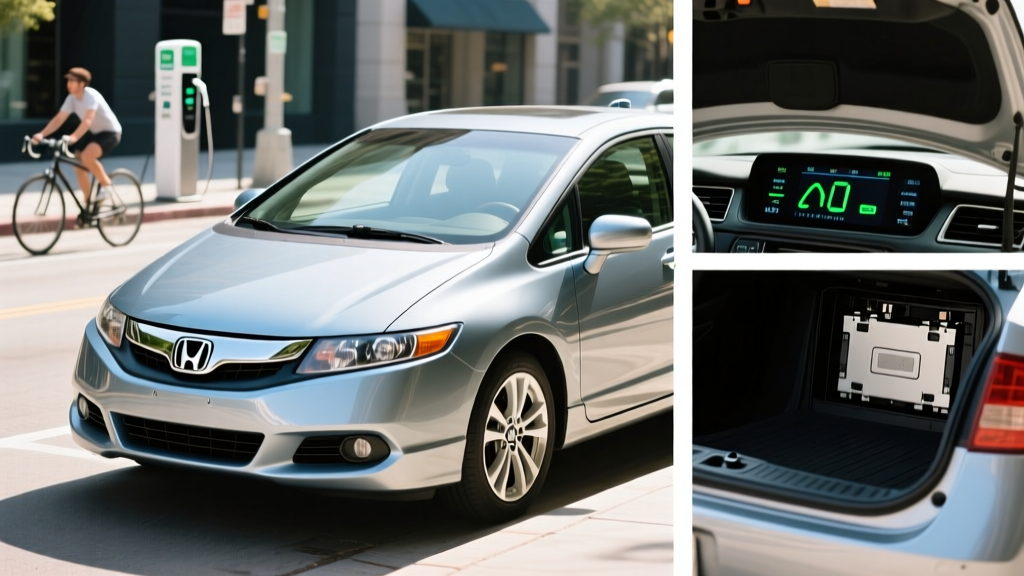
The 2010 Honda Insight EX is Honda's second-generation parallel hybrid, built on the Integrated Motor Assist (IMA) system that pairs a 1.3-liter gasoline engine with a small electric motor. It is a conventional hybrid (HEV), not a plug-in — it recovers energy through regenerative braking and never needs to be plugged in. In 2026, this model exists exclusively on the used market, typically priced between $3,500 and $6,500 depending on mileage and condition. Its appeal is straightforward: low acquisition cost, proven 40+ MPG fuel economy, and hatchback practicality for budget-conscious commuters who aren't ready to transition to a full battery-electric vehicle.
However, any 16-year-old hybrid carries battery degradation risk. The IMA battery is the single biggest ownership variable. This guide breaks down the real numbers — EPA vs. real-world MPG, battery replacement economics, and how the Insight stacks up against modern hybrid and EV alternatives.
Fuel Economy: EPA Ratings vs. Real-World MPG
| Metric | Value |
|---|---|
| City MPG | 40 |
| Highway MPG | 43 |
| Combined MPG | 41 |
| Fuel Tank Capacity | 10.6 gallons |
| Total Driving Range | ~435 miles |
| Annual Fuel Cost (est.) | ~$1,250 (15,000 mi/yr at $3.40/gal) |
The Insight's EPA combined rating of 41 MPG was competitive when new and remains respectable for a used vehicle. The highway-favoring split (43 highway vs. 40 city) is a hallmark of Honda's IMA system, which provides less low-speed electric assist than Toyota's Hybrid Synergy Drive. In city driving, the gasoline engine does more of the work at low speeds, so real-world city MPG may fall to 36–38 if you drive aggressively or in stop-and-go traffic without extended regen opportunities.
On the highway, owners consistently report 42–46 MPG at 65–70 mph, with some hypermilers exceeding 50 MPG using economy-driving techniques. Cold-weather fuel economy drops are real but modest — expect 37–39 MPG combined in winter conditions, as the engine runs richer during warm-up and cabin heat draws from engine coolant rather than an electric heat pump.
IMA Powertrain: How the Insight Hybrid Works
The 2010 Insight uses Honda's Integrated Motor Assist (IMA), a parallel hybrid architecture. Unlike Toyota's power-split system, IMA places a thin electric motor directly between the engine and transmission. Both the engine and motor drive the wheels together — the electric motor cannot propel the car on its own except in very limited low-speed scenarios.
| Component | Specification |
|---|---|
| Gasoline Engine | 1.3L i-VTEC inline-4 (SOHC, 8-valve) |
| Engine Power | 88 hp @ 5,800 rpm |
| Engine Torque | 88 lb-ft @ 4,500 rpm |
| Electric Motor (IMA) | 10 kW (13 hp) / 58 lb-ft assist |
| Combined System Output | 98 hp @ 5,800 rpm / 123 lb-ft @ 1,000–1,500 rpm |
| Transmission | Continuously Variable Transmission (CVT) |
| Drivetrain | Front-wheel drive |
| 0–60 mph | ~10.5 seconds |
With 98 combined horsepower, the Insight is not a performance vehicle. The 10.5-second 0–60 time is adequate for merging and city driving but feels strained on steep highway on-ramps. The CVT keeps the engine in its efficiency sweet spot but produces the characteristic "rubber-band" drone under hard acceleration. The electric motor's primary role is torque fill at low RPM and regenerative braking — not silent electric cruising.
HEV vs. PHEV vs. EV: Where the Insight Fits in 2026
Understanding the distinction between hybrid types is essential before buying a used Insight:
| Type | Plug In? | Electric-Only Range | Fuel Source | 2026 Example |
|---|---|---|---|---|
| HEV (Conventional Hybrid) | No | None (motor assists only) | Gasoline | 2010 Honda Insight, Toyota Prius |
| PHEV (Plug-in Hybrid) | Yes | 25–50 miles (typical) | Gasoline + grid electricity | Toyota Prius Prime, RAV4 Prime |
| BEV (Battery Electric) | Yes | 200–400+ miles | Grid electricity only | Tesla Model 3, Hyundai Ioniq 5 |
The 2010 Insight is a conventional HEV. It has no plug, no electric-only driving mode, and no ability to charge from the grid. Its hybrid system reduces fuel consumption by assisting the gas engine and recapturing braking energy — nothing more.
Choose the Insight (used HEV) if: Your budget is under $7,000, you drive 10,000–15,000 miles/year, lack home charging access, and want 40+ MPG without lifestyle changes.
Choose a used PHEV if: You can install a Level 2 charger at home, your commute is under 40 miles, and you want electric-only daily driving with gas backup for road trips.
Choose a BEV if: You have reliable home charging, your daily driving is under 250 miles, and you want zero tailpipe emissions with the lowest per-mile energy cost.
IMA Battery: Lifespan, Degradation, and Replacement Cost
The 2010 Insight's IMA battery is a Nickel-Metal Hydride (NiMH) pack rated at approximately 0.6 kWh (usable capacity is significantly less, around 0.3–0.4 kWh). This small capacity reflects its role: the battery buffers regenerative energy and provides short bursts of motor assist, not sustained electric propulsion.
| Metric | Value |
|---|---|
| Battery Chemistry | Nickel-Metal Hydride (NiMH) |
| Nominal Capacity | ~0.6 kWh (gross) |
| Voltage | ~100V (nominal) |
| Original Warranty | 8 years / 100,000 miles (10 yr / 150,000 mi in CARB states) |
| Warranty Status in 2026 | Expired on all 2010 models |
NiMH batteries in Honda IMA systems typically last 120,000–180,000 miles before significant degradation triggers an IMA warning light. Many 2010 Insights on the used market have already had at least one battery replacement or reconditioning. Key indicators of IMA battery health include:
- Recalibration frequency: If the IMA system frequently "recalibrates" (visible as the charge gauge dropping and refilling), the battery cells are becoming unbalanced.
- Reduced assist: Noticeable loss of electric motor assist during acceleration signals capacity loss.
- IMA warning light: An illuminated IMA light on the dashboard indicates the system has detected a fault — often cell imbalance or capacity below threshold.
Battery replacement costs in 2026:
- OEM new battery (Honda dealer): $2,500–$3,500 installed
- Aftermarket refurbished pack: $1,200–$2,000 installed
- DIY reconditioning / cell replacement: $200–$600 in parts (requires technical skill)
Given that a used 2010 Insight EX costs $3,500–$6,500, a dealer-installed OEM battery at $3,500 can represent 50–100% of the vehicle's value. Most owners opt for refurbished packs or independent hybrid specialists for replacement. Some third-party shops offer grid-charger reconditioning services for $400–$800 that can extend a degraded battery's life by 2–4 years.
Pricing, Tax Credits, and Total Ownership Cost
The 2010 Honda Insight EX is only available on the used market in 2026. Original MSRP when new was approximately $21,300 (base) to $23,800 (EX with navigation). Current used pricing:
| Condition / Mileage | Approximate Price |
|---|---|
| Excellent (<90K mi, recent battery) | $5,500–$6,500 |
| Good (90K–140K mi, original or refurbished battery) | $4,000–$5,500 |
| Fair (140K+ mi, battery may need service) | $3,000–$4,000 |
Federal tax credit eligibility: The 2010 Insight does not qualify for the current IRS §30D Clean Vehicle Credit. That credit applies only to new qualifying plug-in vehicles (BEVs and PHEVs meeting battery sourcing and MSRP requirements). Conventional hybrids like the Insight are excluded. There is also no federal used-EV credit for HEVs — the §25E used clean vehicle credit (up to $4,000) applies only to used BEVs and PHEVs, not conventional hybrids.
State incentives: A handful of states previously offered hybrid tax credits or HOV lane access, but most have expired or shifted exclusively to plug-in vehicles. Check your state's current energy or DMV website for any residual programs.
Reliability and Known Issues
The 2010 Insight's mechanical reliability is generally strong. The 1.3L i-VTEC engine is simple and durable, and the CVT in this generation has proven more reliable than some competitors' early CVTs. Beyond the IMA battery (discussed above), common issues include:
- CVT shudder at low speeds: Some owners report a mild shudder during initial acceleration. Usually resolved with CVT fluid changes using Honda HMMF fluid.
- Air conditioning compressor cycling: The A/C compressor is engine-driven and can cause slight MPG drops when active. Compressor clutch failures are reported but not widespread.
- 12V battery drain: Like all hybrids, the Insight has a conventional 12V battery for accessories. Parasitic drain from the IMA monitoring system can kill the 12V battery if the car sits unused for 2+ weeks.
- Brake actuator recalls: Check NHTSA recall database for open recalls — some 2010 Insights were included in brake system software recalls.
With proper maintenance — regular oil changes, CVT fluid service every 30,000–60,000 miles, and timely IMA battery care — the Insight can reliably reach 200,000+ miles. Honda's reputation for drivetrain longevity applies here, with the hybrid system being the primary maintenance wildcard.
Pros and Cons at a Glance
Pros
- 41 MPG EPA combined; 42–46 highway real-world
- Low used purchase price ($3,500–$6,500)
- Hatchback cargo versatility (up to 45 cu ft seats folded)
- No plug-in required — works for apartment dwellers
- Simple, proven 1.3L engine with strong mechanical longevity
- Low annual fuel cost (~$1,250 at 15K mi/yr)
Cons
- Sluggish acceleration (10.5s 0–60, 98 hp combined)
- IMA battery replacement cost ($1,200–$3,500) can exceed vehicle value
- No federal or state tax credits available
- Minimal electric assist — mostly a fuel-efficient gas car
- Dated interior tech (no standard Bluetooth audio, basic display)
- Highway noise and CVT drone under hard acceleration
Frequently Asked Questions
How many MPG does the 2010 Honda Insight EX hybrid get?
The EPA rates the 2010 Insight EX at 40 city / 43 highway / 41 combined MPG. Real-world owners typically see 38–43 MPG combined, with highway cruising sometimes exceeding 45 MPG. Cold weather and aggressive driving reduce these figures by 3–5 MPG.
Does the 2010 Honda Insight need to be plugged in?
No. The Insight is a conventional hybrid (HEV), not a plug-in hybrid. It charges its small IMA battery through regenerative braking and the gasoline engine. You never plug it in — you simply fill it with gasoline like any other car.
How far can the 2010 Insight drive on electric power alone?
The Insight cannot drive on electric power alone in any meaningful way. Its IMA motor provides brief assist to the gasoline engine but cannot propel the car independently. This is fundamentally different from a PHEV like the Toyota Prius Prime, which offers 40+ miles of electric-only range.
Is the 2010 Honda Insight hybrid reliable?
Mechanically, yes — the engine, transmission, and chassis are durable Honda components. The primary reliability concern is the IMA NiMH battery, which typically lasts 120,000–180,000 miles. Replacement costs $1,200–$3,500 depending on whether you choose a refurbished or OEM pack. Budget for this expense when purchasing.
What does an IMA battery replacement cost in 2026?
A refurbished aftermarket NiMH pack costs $1,200–$2,000 installed at an independent hybrid specialist. A new OEM battery from a Honda dealer runs $2,500–$3,500. DIY cell-level reconditioning is possible for $200–$600 but requires electrical knowledge and safety precautions.
Does the 2010 Insight qualify for any tax credit?
No. The IRS §30D Clean Vehicle Credit applies only to new plug-in vehicles (BEVs and PHEVs). The §25E used clean vehicle credit also requires a plug-in vehicle. Conventional hybrids like the Insight are not eligible for any current federal tax incentive.
Should I buy a used 2010 Insight or save for a newer hybrid or EV?
If your total budget is under $7,000 and you need a car now, the Insight offers genuine 40+ MPG efficiency at a low entry price — provided you budget $1,500–$2,000 for potential IMA battery service. If you can stretch to $15,000–$25,000, a newer used Toyota Prius (2016+) or a used Chevrolet Bolt EV (with 259 miles of range and potential §25E used-EV credit eligibility) offers more modern safety features, better performance, and lower long-term risk. The Insight makes sense as a budget bridge vehicle, not a decade-long keeper.