Quick Verdict: A Pioneer Truck With Real Trade-Offs
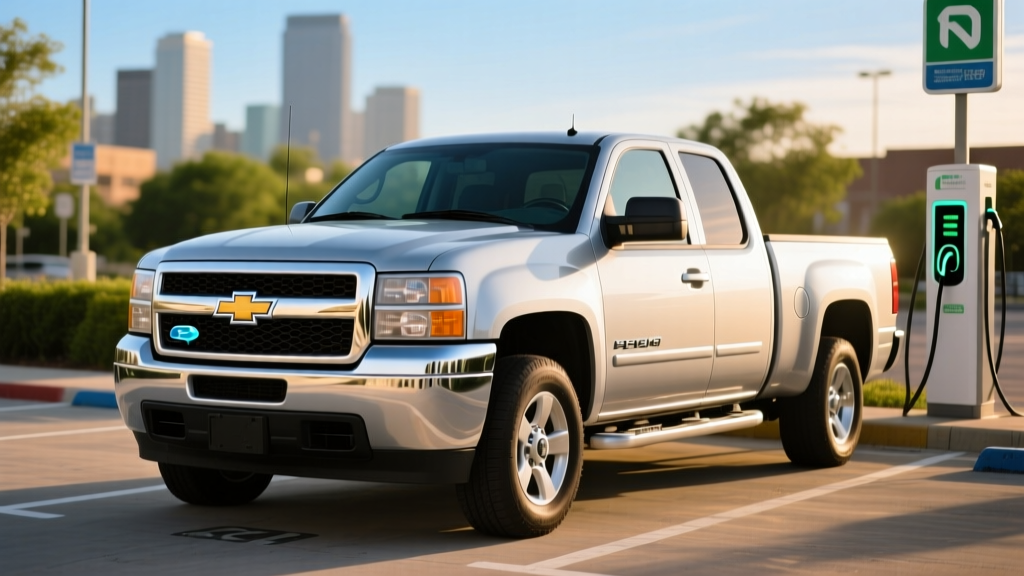
The 2010 Chevy Silverado 1500 Hybrid was one of the first full-size pickups to pair a gasoline V8 with an electric motor system, promising better fuel economy without sacrificing truck capability. As a conventional hybrid (HEV) — not a plug-in — it requires no behavioral change from the driver: no charging cables, no range planning, no outlet hunting. You fuel it like any other truck, and the hybrid system works invisibly in the background.
More than 15 years after its release, the 2010 Silverado 1500 Hybrid has become an interesting proposition on the used market. Buyers eyeing these trucks in 2026 are typically looking for a more fuel-efficient work or tow rig at a bargain price — often under $10,000 for well-maintained examples. But understanding what this hybrid system actually delivers, what it costs to maintain, and how it stacks up against modern alternatives is critical before signing any paperwork.
How Many MPG Does the 2010 Silverado 1500 Hybrid Get?
The EPA rated the 2010 Silverado 1500 Hybrid (2WD) at 21 MPG city / 22 MPG highway / 21 MPG combined. The 4WD variant drops slightly to 20 city / 20 highway / 20 combined. For context, the conventional gas-only 2010 Silverado 1500 with the 5.3L V8 was rated at 15 city / 21 highway / 17 combined (2WD). That's a meaningful gap — roughly a 24% improvement in combined driving.
| Configuration | City MPG | Highway MPG | Combined MPG |
|---|---|---|---|
| Hybrid 2WD | 21 | 22 | 21 |
| Hybrid 4WD | 20 | 20 | 20 |
| Gas 5.3L V8 2WD | 15 | 21 | 17 |
| Gas 5.3L V8 4WD | 15 | 21 | 17 |
Real-World MPG: What Owners Actually Report
On fueleconomy.gov, owner-reported figures for the 2010 Silverado Hybrid cluster around 18–20 MPG combined in mixed driving — somewhat below the EPA sticker. This is a common pattern for older hybrid trucks: the 2-Mode system shines in stop-and-go city traffic where regenerative braking recaptures energy, but highway-heavy commutes see diminished returns.
In city-heavy driving (delivery routes, urban commutes with frequent stops), some owners report hitting or even exceeding the 21 MPG city rating. On long highway trips at 75+ MPH, expect 17–19 MPG. Towing or hauling heavy loads drops economy further, often into the 13–15 MPG range regardless of hybrid assist.
Understanding the 2-Mode Hybrid Powertrain
The 2010 Silverado 1500 Hybrid uses GM's 2-Mode Hybrid system, co-developed with BMW and Chrysler (then DaimlerChrysler). This is a full parallel hybrid — not a mild hybrid or a plug-in. Here's how the components break down:
| Specification | Value |
|---|---|
| Engine | 6.0L Vortec V8 (VVT, Active Fuel Management) |
| Engine Horsepower | 332 hp @ 5,100 rpm |
| Electric Motors | Twin 60 kW motors (inside transmission housing) |
| Combined System Output | 379 hp |
| Transmission | 2-Mode CVT (electronically variable) |
| Hybrid Battery | Nickel-Metal Hydride (NiMH), ~1.8 kWh |
| Towing Capacity | 6,100 lbs (2WD) / 5,900 lbs (4WD) |
| Payload Capacity | ~1,400 lbs (varies by config) |
| 0-60 MPH (est.) | ~7.8 seconds |
| Drivetrain | RWD or 4WD |
How the 2-Mode System Works
"2-Mode" refers to the two distinct operating ranges of the hybrid transmission. In Mode 1 (low speed, city driving), the truck can operate on electric power alone at speeds up to about 30 MPH — though only for very short distances (roughly a mile or less) before the V8 kicks in. In Mode 2 (highway and towing), one or both electric motors assist the gasoline engine under load, smoothing out acceleration and reducing the engine's workload.
The NiMH battery pack charges exclusively through regenerative braking and engine-driven generation. You never plug this truck in. There is no charging port, no Level 1 or Level 2 capability, and no DC fast-charging support. This is a defining characteristic of conventional hybrids (HEVs) versus plug-in hybrids (PHEVs).
HEV vs. PHEV vs. EV: Where Does This Truck Fit?
Buyers shopping for a more efficient truck in 2026 face a wider menu than ever. Here's how the 2010 Silverado 1500 Hybrid's conventional HEV architecture compares to the other electrification options available today:
| Attribute | 2010 Silverado Hybrid (HEV) | Modern PHEV Truck (e.g., F-150 PowerBoost hybrid era) | Full EV Truck (e.g., F-150 Lightning, Silverado EV) |
|---|---|---|---|
| Plug-in Required? | No | Optional (gains EV miles if plugged in) | Yes — mandatory |
| Electric-Only Range | ~1 mile at low speed | 20–40 miles (PHEV models) | 230–400+ miles total |
| Combined MPG / MPGe | 20–21 MPG | 22–25 MPG (gas) / 60+ MPGe (electric) | 65–75 MPGe |
| Home Charging Needed | No | Recommended for EV range | Yes (Level 2 strongly recommended) |
| Used Price Range (2026) | $6,000–$12,000 | $35,000–$55,000 | $35,000–$65,000+ |
| Federal Tax Credit | None (used, HEV) | Up to $7,500 if new & eligible | Up to $7,500 if new & eligible |
The 2010 Silverado Hybrid occupies a specific niche: buyers who want a cheap, more-efficient-than-stock used truck with zero lifestyle changes. If you can't charge at home and don't want to think about electricity at all, an HEV is still the simplest path to better fuel economy in a truck.
Battery Life, Warranty, and Replacement Cost
This is the single biggest concern for anyone buying a 15-year-old hybrid truck. The NiMH battery pack in the 2010 Silverado Hybrid is located under the rear seat and is a proven — if aging — technology.
Original Battery Warranty
When new, GM covered the hybrid-specific components (battery pack, electric motors, hybrid control module) under an 8-year / 100,000-mile warranty. For a 2010 model, that factory coverage expired no later than 2018 or at 100K miles — whichever came first. Any 2010 Silverado Hybrid you buy in 2026 is entirely out of warranty unless a previous owner purchased an extended coverage plan that's still active (unlikely).
Real-World Battery Longevity
NiMH batteries in GM's 2-Mode hybrid trucks have generally proven durable. Many owners report original battery packs lasting 150,000–200,000+ miles with gradual capacity loss rather than sudden failure. Unlike lithium-ion packs in modern EVs, NiMH degrades more linearly and tends to lose capacity slowly, meaning the truck remains drivable even as the electric assist diminishes.
However, age matters as much as mileage. A 16-year-old NiMH pack — regardless of miles — is approaching the end of its practical service life. Heat, storage conditions, and usage patterns all affect degradation.
Battery Replacement Cost
If the hybrid battery fails or degrades to the point where you're losing meaningful fuel economy, replacement options include:
- Remanufactured NiMH pack: $2,500–$4,000 (installed) — the most common route for older hybrids
- New OEM pack from GM: $5,000–$7,000+ (if still available; GM has discontinued some older hybrid parts)
- Individual cell replacement: $800–$1,500 at specialized hybrid shops — viable if only a few cells have failed
For a truck worth $8,000–$12,000, a $4,000 battery replacement is a significant percentage of the vehicle's value. Factor this into your purchase budget if the original battery hasn't been replaced.
Reliability and Common Issues
The 2010 Silverado 1500 Hybrid's reliability record is mixed. The 6.0L V8 engine and the GM truck platform itself are generally robust, but the hybrid-specific components add complexity that conventional Silverados don't have.
Known Problem Areas
- Hybrid battery degradation: The most predictable issue. Expect reduced electric-assist functionality and lower MPG as the NiMH pack ages.
- Hybrid system warning lights: Various sensors and control modules in the 2-Mode system can trigger dashboard warnings. Diagnosis requires a shop with hybrid-specific scan tools.
- Active Fuel Management (AFM) lifter issues: The 6.0L V8's cylinder-deactivation system (which shuts down 4 cylinders under light load) has a known history of lifter failure, potentially leading to expensive engine repairs ($2,000–$5,000).
- Transmission concerns: The 2-Mode CVT is complex. While not prone to widespread failure, repairs are costly and require specialized knowledge.
- Brake system: Regenerative braking reduces wear on the friction brakes, which is a positive. But the blended braking system can feel different from conventional trucks and may require module recalibration if issues arise.
For safety recall information, check the NHTSA recalls database using the VIN of any specific truck you're considering.
Does the 2010 Silverado Hybrid Qualify for Any Tax Credit?
No. The 2010 Chevy Silverado 1500 Hybrid does not qualify for any current federal tax credit in 2026. Here's why:
- Federal §30D New EV Credit: This credit applies only to new plug-in electric vehicles (BEVs and PHEVs) purchased new. The Silverado Hybrid is a conventional HEV with no plug-in capability, and it's no longer sold new.
- Used EV Credit (§25E): This credit of up to $4,000 applies to used plug-in EVs and PHEVs sold through dealers for under $25,000. Again, the Silverado Hybrid is an HEV — not a plug-in — so it doesn't qualify even on the used market.
- Original Hybrid Credit (expired): When the Silverado Hybrid was new, it qualified for a federal hybrid tax credit (under the Energy Policy Act of 2005), but this credit had phase-out limits tied to GM's cumulative hybrid sales and expired long ago.
- State incentives: A handful of states offer modest incentives for hybrid vehicles, but most state-level programs focus on plug-in vehicles. Check your state's energy or DMV website for specifics, as these vary significantly by jurisdiction.
For current federal credit rules, always verify on the IRS clean vehicle credits page.
Who Should Buy the 2010 Silverado 1500 Hybrid?
Reasons to Buy
- Significant city MPG improvement over gas-only Silverados (21 vs. 15 city)
- No plug-in charging required — zero lifestyle change
- Low entry price on the used market ($6K–$12K)
- Full truck capability: 6,100-lb towing, V8 power, full bed
- Regenerative braking extends brake pad life
- Proven NiMH battery longevity in many examples
Reasons to Think Twice
- 16-year-old hybrid battery is near end of life; $2,500–$4,000 replacement risk
- AFM lifter issues on the 6.0L V8 can be catastrophic
- Highway MPG improvement is modest (22 vs. 21 for gas model)
- Hybrid-specific repairs require specialized shops
- No tax credits or incentives available
- Outdated infotainment, safety tech, and interior vs. modern trucks
- Fuel savings may not offset repair costs vs. a newer conventional truck
The Ideal Buyer Profile
The 2010 Silverado 1500 Hybrid makes the most sense for a buyer who:
- Drives primarily in city or suburban stop-and-go traffic where the hybrid system delivers maximum MPG benefit
- Needs a truck for occasional towing or hauling but doesn't want the fuel penalty of a conventional V8 pickup for daily driving
- Has a limited budget and can't stretch to a $40K+ modern hybrid or EV truck
- Has access to a mechanic familiar with GM hybrid systems — this is not optional
- Can budget an additional $3,000–$5,000 for potential hybrid battery and AFM-related repairs in the first few years of ownership
Who Should Look Elsewhere
If your driving is mostly highway, the MPG advantage shrinks to almost nothing. If you need modern safety features (automatic emergency braking, lane-keeping, backup cameras were not standard on the 2010 model), look at newer trucks. And if you can charge at home, a modern PHEV truck or a used EV like the Ford F-150 Lightning will deliver dramatically better efficiency and lower operating costs.
Frequently Asked Questions
How many MPG does the 2010 Chevy Silverado 1500 Hybrid get in real-world driving?
The EPA rates it at 21 MPG combined (2WD). Real-world owner reports typically fall between 18–20 MPG in mixed driving, with city-heavy routes sometimes reaching or exceeding the 21 MPG city rating, and highway-only trips dropping to 17–19 MPG. Towing reduces economy further to 13–15 MPG.
Does the 2010 Silverado Hybrid need to be plugged in?
No. This is a conventional hybrid (HEV), not a plug-in hybrid (PHEV). The battery charges through regenerative braking and the gasoline engine. There is no charging port and no electric-only driving range to speak of (about one mile at very low speed in Mode 1).
How far can the 2010 Silverado Hybrid drive on electric power alone?
Effectively less than one mile, at speeds under 30 MPH. This is not a plug-in hybrid and was never designed for meaningful electric-only driving. The electric motors exist to assist the V8 and improve fuel economy, not to replace it.
What does it cost to replace the hybrid battery in a 2010 Silverado?
A remanufactured NiMH battery pack typically costs $2,500–$4,000 installed. Individual cell replacement at a hybrid specialist can run $800–$1,500 if only partial degradation has occurred. New OEM packs from GM may cost $5,000–$7,000+ if still available.
Is the 2010 Silverado 1500 Hybrid reliable?
The truck platform and 6.0L V8 are generally solid, but the hybrid system adds complexity, and the Active Fuel Management (AFM) cylinder-deactivation system has known lifter failure risks. The NiMH battery is durable but, at 16 years old, is approaching the end of its service life. Budget for hybrid-specific repairs and buy from a seller who can provide maintenance records.
Does the 2010 Silverado Hybrid qualify for any tax credit in 2026?
No. Federal tax credits for new hybrids (under the old Energy Policy Act) expired years ago. Current federal credits (§30D for new, §25E for used) apply only to plug-in vehicles (BEVs and PHEVs), not conventional hybrids. Some states may offer small incentives — check your state's energy office for details.
Should I buy a 2010 Silverado Hybrid or save for a newer hybrid truck?
It depends on budget and risk tolerance. At $6,000–$12,000, the 2010 Hybrid is the cheapest path to a more efficient V8 truck. But with aging hybrid components and no warranty, your total cost of ownership over 5 years could rival a newer, more reliable truck. If you can afford $35,000+, a used modern hybrid truck (like a 2019+ Ram 1500 eTorque or a newer Ford F-150 PowerBoost) offers better reliability, modern safety tech, and stronger fuel economy gains.