Quick Verdict: A Pioneer That Still Has Niche Appeal
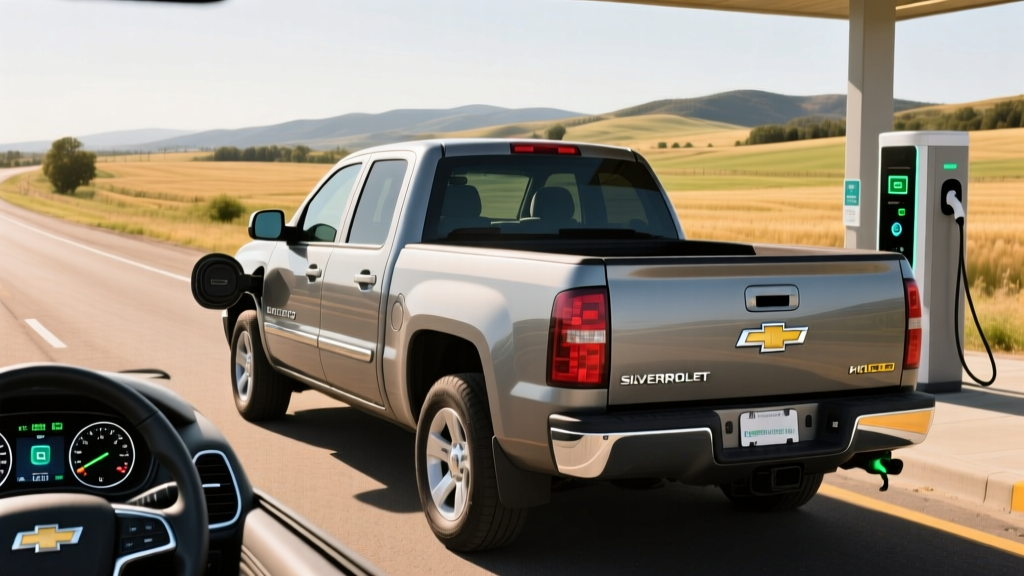
The 2010 Chevrolet Silverado Hybrid was one of the first full-size pickup trucks to pair a V8 with an electric hybrid system — a bold experiment from General Motors that aimed to cut fuel consumption without sacrificing towing capability. As a conventional hybrid (HEV), it never needed to be plugged in, relying instead on regenerative braking and engine assist to charge its nickel-metal hydride (NiMH) battery pack. For used-truck shoppers in 2026, the Silverado Hybrid presents an interesting value proposition: you get modest fuel savings over the gas-only 5.3L V8 Silverado, but you also inherit a 16-year-old hybrid system with potential battery replacement costs to consider.
This guide breaks down everything a prospective buyer needs to know — real-world MPG, powertrain specs, battery longevity, and how this early hybrid stacks up against modern electrified trucks like the Ford F-150 PowerBoost Hybrid and the Chevrolet Silverado 1500 Duramax diesel.
HEV vs PHEV: What the 2010 Silverado Hybrid Actually Is
Conventional Hybrid (HEV) — this truck: The 2010 Silverado Hybrid uses GM's Two-Mode Hybrid system. It cannot be plugged in. The battery recharges via regenerative braking and the gasoline engine. Electric-only driving is limited to very low speeds (under ~25 mph, short distances). There is no electric-only range to speak of in practical terms.
Plug-in Hybrid (PHEV): A PHEV has a larger battery (typically 10–25 kWh) that charges from a wall outlet or public charger, offering 20–50 miles of electric-only driving before the gas engine takes over. The 2010 Silverado Hybrid is not a PHEV.
Full EV (BEV): No gasoline engine at all. Examples in the truck segment include the Rivian R1T and the Ford F-150 Lightning.
The distinction matters because some used listings mislabel this truck. The 2010 Silverado Hybrid is strictly an HEV — you fuel it with gasoline and never plug it in. If you're looking for electric-only commuting in a pickup, this isn't it.
Powertrain Specs: The Two-Mode Hybrid System
| Specification | 2010 Silverado Hybrid |
|---|---|
| Engine | 6.0L V8 (Vortec) with Active Fuel Management |
| Engine HP | 332 hp @ 5,100 rpm |
| Electric Motors | Two 60-kW motors (inside transmission housing) |
| Combined System HP | 379 hp |
| Transmission | Electrically Variable Transmission (EVT), Two-Mode |
| Battery Type | Nickel-Metal Hydride (NiMH), ~1.8 kWh |
| Drivetrain | 2WD or 4WD (4WD adds ~1 MPG penalty) |
| Towing Capacity | Up to 6,100 lbs (2WD), 5,900 lbs (4WD) |
| Payload | ~1,400 lbs |
| 0–60 mph | ~7.8 seconds (est.) |
GM's Two-Mode Hybrid system was co-developed with BMW and Chrysler (then DaimlerChrysler) and was genuinely innovative for its time. The first mode optimized low-speed, city-type driving where the electric motors could propel the truck at low speeds without the engine. The second mode engaged at highway speeds, where the system blended engine and electric power for improved efficiency. Active Fuel Management (cylinder deactivation) further cut consumption by shutting down four cylinders under light load.
Fuel Economy: EPA Numbers and Real-World MPG
| Configuration | City | Highway | Combined |
|---|---|---|---|
| 2010 Silverado Hybrid 2WD | 21 MPG | 22 MPG | 21 MPG |
| 2010 Silverado Hybrid 4WD | 20 MPG | 20 MPG | 20 MPG |
| 2010 Silverado 5.3L V8 Gas (2WD, baseline) | 15 MPG | 21 MPG | 17 MPG |
Source: fueleconomy.gov
The headline here is the city MPG advantage. The hybrid's 21 MPG city rating represents a 40% improvement over the gas-only 5.3L V8's 15 MPG city. This is characteristic of conventional hybrids: the electric motors absorb the energy waste of stop-and-go driving, where a gasoline engine is least efficient. Highway MPG, however, is nearly identical to the gas truck — at sustained highway speeds, the electric motors contribute less and the 6.0L V8 does most of the work.
Real-World MPG Expectations: Owners on forums and fuel-tracking sites like Fuelly report real-world combined figures of 18–20 MPG for 4WD models and 19–21 MPG for 2WD, depending on driving habits. City-heavy commuters often see the EPA sticker or slightly above. Highway-only drivers may see 19–20 MPG. Towing drops economy significantly — expect 12–14 MPG when pulling near the truck's capacity.
Battery Longevity, Warranty, and Replacement Cost
Original Hybrid Battery Warranty
Coverage: 8 years / 100,000 miles (whichever comes first) for hybrid-specific components including the NiMH battery pack, electric motors, and EVT transmission.
Powertrain Warranty: 5 years / 100,000 miles.
Status in 2026: All original factory warranties on the 2010 Silverado Hybrid expired no later than 2018. Any battery failure today is an out-of-pocket expense unless covered by an extended aftermarket warranty.
How Long Do These Batteries Last?
NiMH battery packs in GM's Two-Mode Hybrid system have shown reasonable longevity, with many owners reporting 150,000–200,000+ miles before significant degradation or failure. Unlike lithium-ion packs in modern EVs, NiMH chemistry degrades more gradually — you'll notice reduced electric-assist capability and declining MPG before a complete failure. However, at 16 years old, any original battery pack in a 2010 Silverado Hybrid is living on borrowed time.
Battery Replacement Cost
A replacement NiMH hybrid battery pack for the 2010 Silverado Hybrid typically costs between $2,500 and $4,500 (parts and labor) depending on whether you source a new OEM pack, a refurbished unit, or a used pack from a salvage yard. Refurbished packs from hybrid battery specialists usually run $2,500–$3,500 with a 1–3 year warranty. A brand-new OEM pack from a GM dealer can exceed $5,000 installed. Given the truck's current market value ($5,000–$10,000 depending on condition and mileage), a battery replacement represents a significant percentage of the vehicle's worth — a factor to weigh carefully.
Pricing in 2026 and Tax Credit Eligibility
The 2010 Silverado Hybrid originally carried an MSRP of approximately $38,500–$42,000 depending on configuration (2WD vs 4WD, crew cab vs extended cab). That was a substantial premium — roughly $5,000–$8,000 more than a comparably equipped gas V8 Silverado.
Current Used Market Value (2026)
Expect to pay between $5,000 and $10,000 for a 2010 Silverado Hybrid in the used market, depending on mileage, condition, region, and whether the hybrid battery has been replaced. Examples with a documented battery swap command a premium. High-mileage trucks with the original battery still in service should be priced at the lower end, with the buyer budgeting for an imminent replacement.
Tax Credit Status
Federal §30D tax credit: Not available. The federal new-vehicle EV/PHEV tax credit does not apply to used purchases of conventional hybrids. The used-EV credit (§25E, up to $4,000) applies only to used BEVs and PHEVs — not to conventional HEVs like this Silverado.
Original hybrid tax credit: When new, the 2010 Silverado Hybrid qualified for a modest federal hybrid tax credit (roughly $2,200), but this was a non-refundable credit available only to the original purchaser and has long since been claimed. See current rules at IRS.gov.
State incentives: Most state-level electrification incentives target BEVs and PHEVs. A few states offer minor registration-fee reductions for hybrids, but these are uncommon and vary by jurisdiction. Check your state's DMV or energy office for current programs.
2010 Silverado Hybrid vs Modern Electrified Trucks
| Metric | 2010 Silverado Hybrid (HEV) | 2025 Ford F-150 PowerBoost (HEV) | 2025 Silverado 1500 Duramax (Diesel) |
|---|---|---|---|
| Combined MPG | 21 (2WD) | 25 (4WD) | 24 (2WD) |
| Powertrain | 6.0L V8 + 2 motors | 3.5L V6 TT + 1 motor | 3.0L I6 Turbo Diesel |
| Combined HP | 379 hp | 430 hp | 305 hp |
| Towing | 6,100 lbs | 11,200 lbs | 9,300 lbs |
| Plug-in? | No | No | No |
| New MSRP (base) | ~$38,500 (in 2010) | ~$58,000+ | ~$48,000+ |
| Used Price (2026) | $5K–$10K | $40K–$55K | $35K–$50K |
The gap between the 2010 Silverado Hybrid and modern alternatives is substantial. Ford's PowerBoost hybrid delivers 4 MPG more combined, nearly double the towing capacity, modern safety tech, and a new-vehicle warranty — at a much higher price. The Duramax diesel offers comparable highway efficiency with vastly superior towing. The 2010 Silverado Hybrid's advantage is purely financial: it's the cheapest way to get a hybrid V8 pickup, if you accept the age and tech limitations.
Pros and Cons
Pros
- 40% city MPG improvement over gas V8 Silverado
- No plug-in charging required — fuel and go
- 379 combined HP provides confident acceleration
- Low used purchase price ($5K–$10K)
- V8 sound and feel retained
- Proven EVT transmission design (shared with Cadillac Escalade Hybrid, Tahoe Hybrid)
Cons
- Highway MPG barely better than gas V8
- NiMH battery aging — replacement cost of $2,500–$5,000
- All factory warranties expired years ago
- No electric-only driving capability
- Towing limited to ~6,100 lbs (low for a full-size truck)
- Dated interior, infotainment, and safety features
- Hybrid parts availability declining as fleet ages out
- No eligibility for any current federal or state tax credits
Who Should Buy This Truck — And Who Shouldn't
Choose the 2010 Silverado Hybrid if:
- You need a cheap full-size truck with better city fuel economy than a standard V8
- Your driving is predominantly stop-and-go urban/suburban (where the hybrid system shines)
- You're comfortable budgeting $2,500–$4,500 for a potential battery replacement
- You want a V8 truck but cringe at 14 MPG in city traffic
- You're buying it as a secondary/backup truck, not a daily long-haul driver
Skip it and look at a modern alternative if:
- You tow frequently — the 6,100-lb limit is restrictive, and modern hybrids tow far more
- You drive mostly highway — the MPG advantage nearly disappears at 70 mph
- You want current safety features (automatic emergency braking, blind-spot monitoring, lane-keep assist)
- You want electric-only commuting — look at a PHEV like the upcoming electrified trucks or a used Chevrolet Volt for car-based commuting
- You want tax-credit eligibility — only new or used BEVs/PHEVs qualify under current IRS rules
Frequently Asked Questions
How many MPG does the 2010 Chevrolet Silverado Hybrid get?
The EPA rates the 2WD model at 21 city / 22 highway / 21 combined MPG, and the 4WD model at 20/20/20 MPG. Real-world results cluster around 18–21 MPG combined depending on driving mix. City-heavy drivers see the best results; highway-only drivers see minimal advantage over the gas V8.
Can the 2010 Silverado Hybrid drive on electric power only?
Only at very low speeds (roughly under 25 mph) and for very short distances — think creeping through a parking lot or stop-and-go traffic at walking pace. It is not a plug-in hybrid and has no meaningful electric-only range for commuting. The battery is approximately 1.8 kWh (NiMH), far too small for sustained electric driving.
Is the 2010 Silverado Hybrid reliable?
The Two-Mode Hybrid powertrain proved reasonably reliable in service, with the EVT transmission and electric motors showing good durability. The primary concern is the aging NiMH battery pack — at 16 years old, original batteries are at or beyond their expected lifespan. Other mechanical components (suspension, brakes, differentials) are shared with the standard Silverado and have typical GM truck reliability. Parts availability for hybrid-specific components is narrowing as the fleet ages.
What does a replacement hybrid battery cost?
Expect to pay $2,500–$4,500 for a refurbished or aftermarket NiMH battery pack including labor. A new OEM battery from a GM dealer can exceed $5,000. Given the truck's $5,000–$10,000 market value, this is a major financial consideration. Some hybrid battery shops offer cell-level reconditioning for $1,500–$2,500, which can extend the pack's life for a few more years.
Does the 2010 Silverado Hybrid qualify for any tax credit in 2026?
No. The federal §30D new-vehicle credit applies only to new BEVs and PHEVs meeting battery-sourcing and MSRP requirements. The used-EV credit (§25E, up to $4,000) applies only to used BEVs and PHEVs sold through a licensed dealer for $25,000 or less. Conventional hybrids (HEVs) like this Silverado are not eligible for any current federal electrification tax credit. Always verify current rules at IRS.gov or consult a tax professional.
Hybrid vs PHEV vs EV — which truck should I buy?
If you want the lowest upfront cost and don't want to think about charging, a conventional hybrid (HEV) like this Silverado is the simplest option. If you want electric-only commuting with a gas backup for road trips, a PHEV is ideal — but no PHEV pickup truck was available in 2010, and the segment is only now emerging with models like the Ram 1500 Ramcharger (EREV). If you have home charging access and want zero tailpipe emissions, a full EV like the Ford F-150 Lightning or Rivian R1T eliminates gasoline entirely, though at a much higher purchase price. For budget-conscious buyers in 2026, the used Silverado Hybrid is a bridge solution — not the future of trucking, but a functional stopgap at a low entry price.
How does the 2010 Silverado Hybrid compare to the Tahoe Hybrid?
Both use the same GM Two-Mode Hybrid system with the 6.0L V8 and twin 60-kW electric motors inside the EVT. The Tahoe Hybrid (and its GMC Yukon Hybrid and Cadillac Escalade Hybrid siblings) shares the same battery, powertrain, and reliability profile. If you're considering the Silverado Hybrid, the same battery replacement cost and longevity considerations apply across the GM full-size hybrid family.
Editorial note: The 2010 Chevrolet Silverado Hybrid was discontinued after the 2013 model year when GM retired the Two-Mode Hybrid system in its full-size trucks. GM returned to truck electrification with the 2022+ Silverado EV (BEV). This review covers a discontinued model for used-market shoppers and does not represent a currently available new vehicle. All MPG data sourced from fueleconomy.gov. Tax credit information reflects 2026 IRS rules and is subject to change.