Quick Verdict: A Pioneering Full-Size Hybrid, Now a Budget Used Option
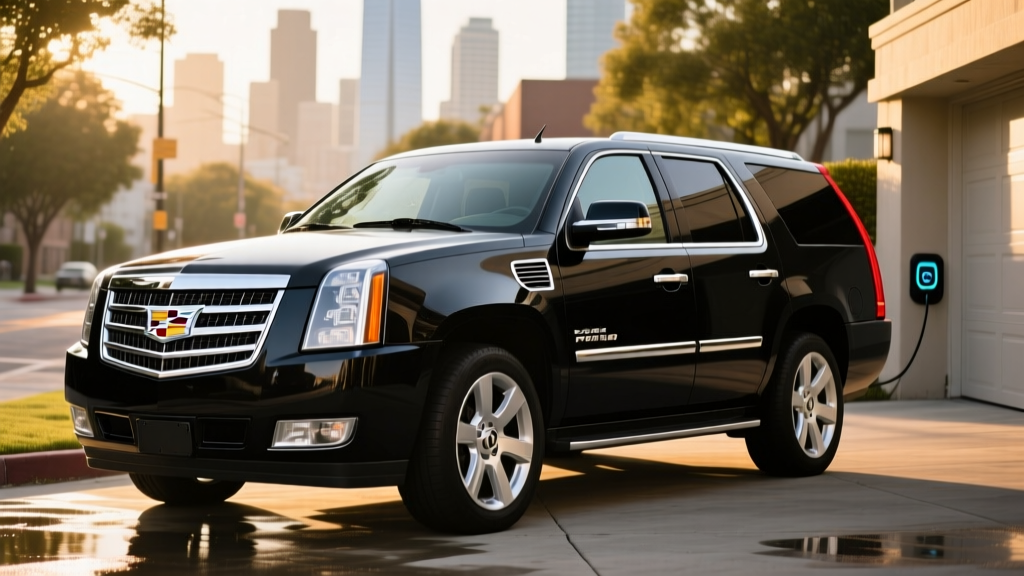
The 2010 Cadillac Escalade Hybrid was one of the first full-size luxury SUVs to pair a V8 with an electric motor system, aiming to cut fuel consumption without sacrificing towing or presence. Over a decade later, it remains a curiosity on the used market: a body-on-frame luxury hauler that returns roughly 20 MPG combined — a meaningful improvement over its gas-only sibling's 15 MPG. But with a complex two-mode hybrid system that's now aging, buyers need to go in with eyes wide open about battery replacement risk and parts availability.
This guide covers everything a 2026 used-car shopper needs: exact EPA fuel economy, real-world MPG expectations, the hybrid powertrain specs, battery longevity data, replacement costs, and how this conventional hybrid (HEV) stacks up against modern plug-in hybrids and full EVs in the large SUV segment.
HEV vs PHEV: What the Escalade Hybrid Actually Is
Before diving into specs, it's critical to understand what you're buying. The 2010 Escalade Hybrid is a conventional hybrid (HEV), not a plug-in hybrid (PHEV). Here's the difference:
| Feature | Conventional Hybrid (HEV) | Plug-In Hybrid (PHEV) |
|---|---|---|
| Plug in to charge? | No — charges via regenerative braking and engine | Yes — has a charge port for grid electricity |
| Electric-only driving | Very limited (~1 mile at low speed) | 20–50 miles typical on modern PHEVs |
| Battery size | Small (~1.5–2.0 kWh) | Larger (10–25 kWh typical) |
| Primary fuel | Gasoline always required | Gasoline for longer trips; electricity for daily commutes |
| Federal tax credit (new) | None | Up to $7,500 under §30D if eligible |
The Escalade Hybrid has no plug and no meaningful electric-only range. It uses its hybrid system to assist the V8 during acceleration, enable engine stop-start, and recapture energy during braking. You fuel it exactly like a conventional gas vehicle.
Fuel Economy: EPA Ratings vs Real-World MPG
The headline reason this truck existed was to improve on the gas Escalade's dismal fuel economy. Here's how the numbers break down, per EPA fueleconomy.gov data:
| Configuration | City MPG | Highway MPG | Combined MPG |
|---|---|---|---|
| 2010 Escalade Hybrid (2WD) | 20 | 23 | 21 |
| 2010 Escalade Hybrid (4WD) | 20 | 22 | 20 |
| 2010 Escalade Gas (6.2L V8, 2WD) | 12 | 18 | 14 |
| 2010 Escalade Gas (6.2L V8, 4WD) | 12 | 18 | 14 |
Real-world expectations: Hybrid systems tend to exceed EPA city estimates because regenerative braking recaptures more energy in stop-and-go traffic. Owners on fuel-tracking platforms commonly report 19–22 MPG combined in mixed driving. Highway cruising at 75+ MPH will drop closer to 18–20 MPG, as the aerodynamic penalty of a 5,800-pound box overwhelms the hybrid assist. In cold weather (below 30°F), expect a 1–2 MPG reduction as the engine runs more frequently to maintain cabin heat and battery temperature.
The hybrid's advantage over the gas model is most pronounced in city driving: a 67% improvement (20 vs 12 MPG city). On the highway, the gap narrows to just 4 MPG. If your driving is predominantly highway commuting, the hybrid's fuel savings shrink considerably.
Powertrain Specs: Two-Mode Hybrid V8
The 2010 Escalade Hybrid uses GM's Two-Mode Hybrid system, co-developed with BMW and Chrysler (then DaimlerChrysler). It's a technically sophisticated setup that was genuinely innovative for 2008–2013 full-size trucks and SUVs.
| Specification | Detail |
|---|---|
| Engine | 6.0L Vortec V8 (VVT, cylinder deactivation) |
| Engine horsepower | 332 HP @ 5,100 RPM |
| Electric motors | Two 60 kW motors integrated in transmission |
| Combined system output | 379 HP |
| Transmission | Electrically variable transmission (EVT) — 4 fixed gears + 2 electric-only modes |
| Hybrid battery | Nickel-Metal Hydride (NiMH), ~1.8 kWh, 288V |
| 0–60 MPH | ~8.0 seconds |
| Towing capacity | 5,600 lbs (2WD) / 5,500 lbs (4WD) |
| Curb weight | ~5,841 lbs (2WD) / ~6,036 lbs (4WD) |
| Fuel tank | 26 gallons |
| Total range (est.) | ~520 miles (4WD, combined) |
The two-mode system operates in Mode 1 (low speed, electric assist and engine stop-start) and Mode 2 (highway cruising with cylinder deactivation via GM's Active Fuel Management). The 6.0L V8 can shut down four of its eight cylinders under light load, effectively running as a 3.0L four. Combined with regenerative braking and engine auto-stop at lights, the system achieves its efficiency gains without any plug-in requirement.
Hybrid Battery Longevity and Replacement Cost
The NiMH battery pack is the single biggest ownership risk on a 15-year-old hybrid. Here's what buyers need to know:
Original Battery Warranty
GM warranted the hybrid battery for 8 years / 100,000 miles (extended to 10 years / 150,000 miles in California and CARB-adopting states). For a 2010 model, this warranty expired no later than 2020. All replacement costs are out-of-pocket.
How long do these batteries actually last? The NiMH pack in the Two-Mode system has a mixed reliability record. Many original batteries survived 120,000–160,000 miles before significant capacity loss or cell failure triggered a check-engine light. However, failures as early as 80,000 miles have been documented, particularly in hot climates where under-hood temperatures accelerate cell degradation. Unlike modern lithium-ion packs, NiMH doesn't suffer from calendar-based degradation as severely — mileage and heat are the primary wear factors.
Battery replacement cost (2026):
- OEM new battery from GM: ~$3,500–$4,500 (parts only; limited availability)
- Remanufactured battery: ~$2,000–$3,000 from hybrid specialists
- Used/salvage yard battery: ~$800–$1,500 (high risk — unknown remaining life)
- Installation labor: ~$500–$900 (2–3 hours at a hybrid-capable shop)
- Total realistic replacement: $2,500–$5,400 depending on source
Parts availability is a growing concern. GM discontinued the Escalade Hybrid after the 2013 model year, and OEM battery stock has dwindled. Remanufactured units from hybrid specialists are currently the most practical option. Before buying, have a hybrid-qualified mechanic perform a battery health scan to check individual cell voltage variance — any spread greater than 0.2V between cells signals imminent failure.
Reliability: What Breaks on a 2010 Escalade Hybrid
Beyond the hybrid battery, the Two-Mode system adds complexity that can be costly to repair:
- Electrically Variable Transmission (EVT): The twin-motor EVT is robust but not immune to failure. Replacement runs $4,000–$7,000. Fewer transmission shops are familiar with this unit compared to a conventional automatic.
- Inverter/Power Electronics: The hybrid power inverter can fail, particularly if coolant service was neglected. Replacement: $1,500–$3,000.
- Active Fuel Management (cylinder deactivation): The 6.0L V8's AFM system is known for lifter failures, which can destroy the camshaft. This affects both hybrid and gas models. Repair: $2,500–$4,500.
- Standard Escalade issues: Power-folding mirrors, air suspension (if equipped), and electrical gremlins are common across all 2007–2014 Escalades regardless of powertrain.
The hybrid system itself (motors, wiring, control modules) has proven reasonably durable. The primary failure points are the battery pack and, less commonly, the inverter. The gasoline V8 and transmission carry the same reliability profile as any GM 6.0L truck of this era.
Tax Credits and Purchase Economics in 2026
Federal tax credit: The 2010 Escalade Hybrid does not qualify for any current federal tax incentive. The IRS §30D Clean Vehicle Credit applies only to new EVs and PHEVs meeting battery sourcing and MSRP caps. Conventional hybrids (HEVs) have never qualified for the §30D credit, and the used-EV credit (§25E, up to $4,000) applies only to battery-electric and plug-in hybrid vehicles — not conventional hybrids.
State incentives: A handful of states offer modest rebates or HOV-lane access for hybrids, but most have shifted focus to PHEVs and BEVs. Check your state's energy office for current programs.
Used market pricing (2026):
- Clean examples with 100K–130K miles: $9,000–$14,000
- Higher-mileage or cosmetically rough: $6,000–$9,000
- Low-mileage, well-maintained examples (under 90K): $14,000–$18,000
Cost-per-mile fuel comparison: At $3.50/gallon and 20 MPG combined, fuel cost is approximately $0.175/mile. A comparable modern PHEV large SUV (if one existed — the segment is thin) would cut that roughly in half for daily commuting. A gas-only 2010 Escalade at 14 MPG combined costs $0.25/mile — the hybrid saves about $750/year for a 10,000-mile driver.
Escalade Hybrid vs Modern Alternatives: Which Fits You?
The 2010 Escalade Hybrid occupies a narrow lane. Here's how to decide if it — or something else — is the right call:
Reasons to Buy
- Significant MPG improvement over gas Escalade (20 vs 14 combined)
- Low purchase price on the used market ($9K–$14K typical)
- Full-size SUV capability: 3-row seating, 5,600-lb towing
- No charging infrastructure needed — fuel and go
- Luxury badge and road presence at a fraction of new-vehicle cost
Reasons to Pass
- Hybrid battery replacement risk ($2,500–$5,400 out of pocket)
- Obsolete technology — no plug-in capability, no EV mode
- Parts availability declining for hybrid-specific components
- Still only 20 MPG — modern midsize PHEVs do 30+ MPG combined
- No federal or state tax incentives available
- High insurance and maintenance costs relative to vehicle value
Who should choose the 2010 Escalade Hybrid?
You need a full-size, body-on-frame, 3-row luxury SUV with real towing capacity, you drive mostly city/suburban miles where the hybrid system shines, you can absorb a potential $3,000–$5,000 battery repair, and you're buying with full awareness that this is a 15-year-old luxury vehicle with premium maintenance costs.
Who should look elsewhere?
If fuel economy is your primary goal, a modern PHEV like the Toyota RAV4 Prime (94 MPGe, 42 miles electric-only) or a full EV like the Rivian R1S (EPA 352 miles, zero tailpipe emissions) will serve you better — though at significantly higher purchase prices ($45K–$80K+). If you need towing and 3-row space without hybrid complexity, a clean 2015+ gas Escalade or a Ford Expedition with EcoBoost may be simpler to maintain long-term.
Frequently Asked Questions
How many MPG does the 2010 Cadillac Escalade Hybrid get?
The EPA rates the 4WD model at 20 city / 22 highway / 20 combined MPG. The 2WD model is rated at 20 city / 23 highway / 21 combined. Real-world owners typically report 19–22 MPG in mixed driving, with city mileage sometimes exceeding the EPA estimate thanks to regenerative braking.
Can the 2010 Escalade Hybrid drive on electric power only?
Only trivially. The two-mode hybrid system can move the vehicle under electric power alone at very low speeds (under 25 MPH) for roughly one mile or less — such as creeping through a parking lot. It has no meaningful electric-only range and no plug. This is a conventional HEV, not a PHEV or EV.
Is the 2010 Escalade Hybrid reliable?
The gasoline V8 and conventional drivetrain components are typical for GM full-size trucks of this era — generally robust but with known AFM lifter issues. The hybrid-specific components (NiMH battery, EVT transmission, inverter) add failure points that don't exist on the gas model. Budget $2,000–$5,000 for potential hybrid-system repairs over your ownership period.
What does a replacement hybrid battery cost?
Expect $2,500–$5,400 total (parts + labor) depending on whether you source a remanufactured pack ($2,000–$3,000) or an OEM new unit ($3,500–$4,500, if available). Used/salvage batteries are cheaper ($800–$1,500) but carry unknown remaining life. OEM availability is declining as GM discontinues support.
Does the 2010 Escalade Hybrid qualify for any tax credits?
No. The vehicle never qualified for the federal §30D credit when new (that credit targets PHEVs and EVs, not conventional HEVs), and it does not qualify for the current used-EV credit (§25E) either. No federal or most state incentives apply to conventional hybrids purchased used in 2026.
How does this compare to a modern PHEV or EV SUV?
A modern PHEV like the Jeep Grand Cherokee 4xe (56 MPGe, 25 miles electric-only) or a full EV like the BMW iX (EPA 300+ miles) will dramatically outperform the Escalade Hybrid in efficiency and technology. However, neither matches the Escalade's body-on-frame towing capacity at a sub-$15,000 price point. The Escalade Hybrid makes sense only if full-size truck capability on a tight budget is the priority.