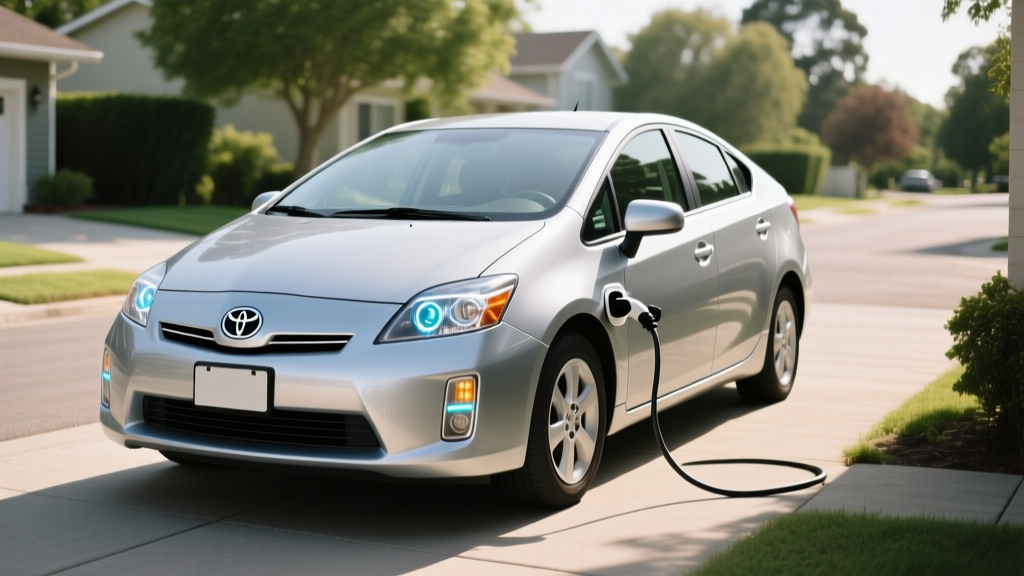
The third-generation Toyota Prius debuted for the 2010 model year, which means the 2009 Toyota Prius represents the final year of the second-generation (Gen 2) platform — a vehicle that fundamentally defined the modern hybrid segment. If you are researching the 2009 Toyota Prius hybrid MPG as a prospective used-car buyer, a budget commuter, or a benchmark comparison shopper, this guide covers the exact EPA figures, real-world expectations, battery longevity, and ownership economics you need to make an informed decision.
As of 2026, the 2009 Prius is a 17-year-old vehicle, so the conversation shifts from showroom specs to used-market reality: What MPG can you actually expect today? How long does the hybrid battery last? And how does this pioneering HEV stack up against modern hybrids, PHEVs, and full EVs?
2009 Toyota Prius Hybrid MPG: EPA Ratings and Real-World Numbers
The EPA rated the 2009 Toyota Prius at 48 mpg city / 45 mpg highway / 46 mpg combined. These figures made it the most fuel-efficient mass-market vehicle available in the United States at the time, and they remain competitive even against some 2026 compact hybrids.
| Driving Cycle | EPA Rating | Real-World Expectation (2026) |
|---|---|---|
| City | 48 mpg | 44–50 mpg |
| Highway | 45 mpg | 40–46 mpg |
| Combined | 46 mpg | 42–48 mpg |
Source: fueleconomy.gov — 2009 Toyota Prius
HEV vs PHEV: Understanding the 2009 Prius Powertrain
The 2009 Toyota Prius is a conventional hybrid electric vehicle (HEV) — not a plug-in hybrid (PHEV). This distinction matters for buyers comparing older and newer electrified vehicles.
HEV (Conventional Hybrid)
- No plug — the gasoline engine and regenerative braking recharge the battery
- Small battery (~1.3 kWh usable in the 2009 Prius)
- Electric motor assists the engine but cannot drive the car alone for extended distances
- Fuel economy benefit: continuous, no behavior change required
PHEV (Plug-In Hybrid)
- Plugs into a wall outlet or Level 2 charger
- Larger battery (typically 8–20 kWh in modern PHEVs)
- Can drive 20–50 miles on electric-only power before the engine starts
- Requires charging access to maximize savings
The 2009 Prius has no plug, no electric-only driving range, and no kWh capacity to charge. Toyota did not introduce the Prius Plug-In (later renamed Prius Prime) until the 2012 model year. If you need electric-only commuting, you will need to look at a 2012+ Prius Prime or a modern PHEV like the 2026 Toyota RAV4 Prime (42 miles EV range) or Chrysler Pacifica Hybrid (32 miles EV range).
Powertrain Specs: What Moves the 2009 Prius
| Specification | Value |
|---|---|
| Engine | 1.5L 4-cylinder Atkinson-cycle (76 hp) |
| Electric Motor | Permanent-magnet synchronous (67 hp) |
| Combined System Output | 110 hp (net) |
| Transmission | Continuously Variable (eCVT — planetary gearset) |
| Hybrid Battery | Nickel-Metal Hydride (NiMH), ~1.3 kWh |
| Drivetrain | Front-wheel drive |
| 0–60 mph | ~10.4 seconds |
| Curb Weight | ~2,932 lbs |
The Gen 2 Prius uses Toyota's Hybrid Synergy Drive, which blends engine and motor power through a planetary gearset rather than a traditional transmission. This design eliminates fixed gear ratios and shift shock, contributing to both smoothness and efficiency. The 1.5L Atkinson-cycle engine sacrifices peak power for thermal efficiency — it produces only 76 hp on its own but operates at a higher efficiency point than a conventional Otto-cycle engine of similar displacement.
Hybrid Battery Lifespan, Warranty, and Replacement Cost
Battery longevity is the single biggest concern for any used hybrid buyer, and the 2009 Prius is no exception. Here is what you need to know:
How Long Does the Gen 2 Prius Battery Actually Last?
The NiMH battery in the 2009 Prius has a well-documented track record. Real-world data from fleet operators, taxi services, and long-term owners shows:
- Typical lifespan: 150,000–200,000 miles before significant degradation
- Age factor: Calendar degradation matters — a 17-year-old NiMH pack will have lost capacity regardless of mileage
- Failure mode: Gradual capacity loss rather than sudden failure; you will notice reduced MPG and more frequent engine cycling before the battery fails outright
- Cell-level repair: Individual NiMH modules (there are 28 in the Gen 2 pack) can be tested and replaced by hybrid specialists for $400–$800
2009 Prius Battery Replacement Cost (2026 Estimates)
| Option | Cost Range | Warranty |
|---|---|---|
| New OEM Toyota battery | $2,200–$2,800 (installed) | 3 years / unlimited miles |
| Remanufactured battery (Dorman, Green Bean, etc.) | $1,200–$1,800 (installed) | 1–3 years depending on supplier |
| Used/salvage battery | $500–$900 (installed) | 30–90 days typically |
| Individual module replacement | $400–$800 (specialist shop) | Varies |
For a vehicle with a 2026 used-market value of roughly $3,500–$6,000 depending on mileage and condition, a full OEM battery replacement represents a significant percentage of the car's value. Many owners opt for remanufactured packs or individual module replacement to keep costs proportional.
Does the 2009 Prius Qualify for Any Tax Credits?
No. The 2009 Toyota Prius does not qualify for any current federal tax credit. Here is why:
- The original §30D federal hybrid tax credit for the Prius was phased out for Toyota in 2007 after the manufacturer hit the 60,000-unit cap. Even when it was active, the credit was $1,500–$3,150 depending on the purchase date — not the $7,500 associated with modern EVs.
- The current §30D Clean Vehicle Credit (up to $7,500) applies only to new plug-in electric vehicles (BEVs and PHEVs) that meet battery sourcing, critical minerals, MSRP caps, and buyer income requirements per IRS guidelines. Conventional hybrids like the 2009 Prius are not eligible.
- The used clean vehicle credit (up to $4,000 under §25E) also requires a plug-in electric or fuel-cell vehicle. A conventional HEV does not qualify.
- Some states offer their own incentives, but these almost universally target plug-in vehicles. Check your state's energy office for any remaining hybrid-specific programs.
Who Should Buy a 2009 Prius vs a Modern Hybrid, PHEV, or EV?
Choose the 2009 Prius If
- Your budget is under $6,000
- You want proven hybrid reliability with massive aftermarket support
- You drive mostly city/suburban miles where hybrid efficiency shines
- You don't have access to plug-in charging (apartment, street parking)
- You want the lowest possible fuel cost without any plug-in infrastructure
Consider a Modern Alternative If
- You want warranty coverage and modern safety tech (AEB, blind-spot monitoring)
- You have home charging and could benefit from PHEV electric-only commuting
- You drive 15,000+ miles/year and want the lowest total cost of ownership
- You qualify for the §30D tax credit on a new PHEV or BEV
- You need more power, cargo space, or AWD capability
2009 Prius vs Modern Alternatives: Quick Comparison
| Vehicle | Type | EPA Combined | EV Range | Approx. Price | Federal Credit |
|---|---|---|---|---|---|
| 2009 Toyota Prius | HEV | 46 mpg | N/A | $3,500–$6,000 (used) | None |
| 2026 Toyota Prius LE | HEV | 57 mpg | N/A | ~$29,445 (new) | None |
| 2026 Toyota Prius Prime SE | PHEV | 52 mpg + 127 MPGe | 44 mi | ~$34,695 (new) | Up to $7,500* |
| 2026 Hyundai Elantra Hybrid | HEV | 54 mpg | N/A | ~$28,250 (new) | None |
| 2026 Chevrolet Equinox EV LT | BEV | 113 MPGe | 319 mi | ~$34,995 (new) | Up to $7,500* |
* Federal credit eligibility depends on buyer income, vehicle MSRP caps, battery sourcing requirements, and point-of-sale transfer rules. Verify at IRS.gov before purchasing.
Reliability and Common Issues Beyond the Battery
The 2009 Prius earned a reputation as one of the most reliable vehicles Toyota has ever built. Taxi fleets routinely pushed Gen 2 examples past 300,000 miles. However, at 17 years old, certain age-related issues are worth inspecting:
- Inverter coolant pump: Known failure point; replacement runs $300–$500. Check for recalls (Toyota issued one for certain model years).
- Combination meter (dashboard): Some units fail, causing the instrument cluster to go dark. Repair or replacement: $200–$600.
- Brake actuator: The electro-hydraulic brake system can develop issues above 150,000 miles. Replacement is $1,200–$2,000.
- 12V auxiliary battery: Located in the trunk; replacement every 4–5 years. A weak 12V battery can cause bizarre error codes that mimic hybrid system failures.
- Catalytic converter: Theft target due to precious-metal content. Replacement shield: $200–$350; replacement cat: $800–$1,500.
Buying Checklist: Inspecting a Used 2009 Prius
- Hybrid battery health check: Ask a hybrid-specialist shop to run a module-level voltage test. Healthy modules should be within 0.2V of each other under load.
- Maintenance records: Engine oil changes every 5,000 miles, inverter coolant flush every 100,000 miles, transaxle fluid drain-and-fill every 60,000 miles.
- OBD-II scan: Check for stored hybrid system codes (P0A80, P0A7F, etc.) even if the check-engine light is off.
- Recall verification: Confirm all NHTSA recalls were performed — check at nhtsa.gov/recalls using the VIN.
- Rust inspection: Focus on rear wheel arches, underbody battery tray, and exhaust mounting points, especially in salt-belt states.
Frequently Asked Questions
How many MPG does the 2009 Toyota Prius get in real driving?
The EPA rates the 2009 Prius at 48 city / 45 highway / 46 combined mpg. In real-world driving, most owners average 42–48 mpg combined, with city-heavy routes often exceeding the EPA city figure thanks to regenerative braking. High-speed highway driving (75+ mph) and cold weather can reduce economy to the high 30s.
Does the 2009 Prius need to be plugged in?
No. The 2009 Prius is a conventional hybrid (HEV). Its nickel-metal hydride battery recharges through regenerative braking and the gasoline engine. There is no plug, no charging port, and no electric-only driving mode.
How much does it cost to replace the hybrid battery in a 2009 Prius?
A new OEM Toyota battery costs $2,200–$2,800 installed. Remanufactured options run $1,200–$1,800, and individual module replacement by a hybrid specialist can cost as little as $400–$800. Given the vehicle's used-market value of $3,500–$6,000, a remanufactured pack is often the most economical choice.
Is a 2009 Prius still a good buy in 2026?
If you can find one with a healthy hybrid battery (or budget for replacement), the 2009 Prius remains one of the cheapest vehicles to fuel in America at ~$0.08–$0.10 per mile at current gas prices. Its simplicity, parts availability, and mechanic familiarity make it a low-risk used hybrid purchase. The trade-offs are outdated safety equipment (no AEB, no backup camera on base trims) and modest acceleration.
How does the 2009 Prius compare to the current-generation Prius?
The 2026 Toyota Prius delivers 57 mpg combined (11 mpg more than the 2009), produces 194 hp (vs. 110 hp), and includes modern safety features like automatic emergency braking and lane-keeping assist. However, it starts at ~$29,445 — roughly 5–8 times the cost of a used 2009 model. The value equation depends on your budget, annual mileage, and how much you value warranty coverage and safety technology.
Does the 2009 Toyota Prius qualify for any federal or state tax credits?
No. The original hybrid tax credit for the Prius expired for Toyota buyers in 2007. Current federal clean vehicle credits (§30D for new, §25E for used) apply only to plug-in electric vehicles (PHEVs and BEVs). The 2009 Prius, as a conventional hybrid, is ineligible for any federal incentive. Some states may offer minimal hybrid-specific benefits, but these are increasingly rare.