The 2009 Chevrolet Tahoe Hybrid: America's First Full-Size Hybrid SUV
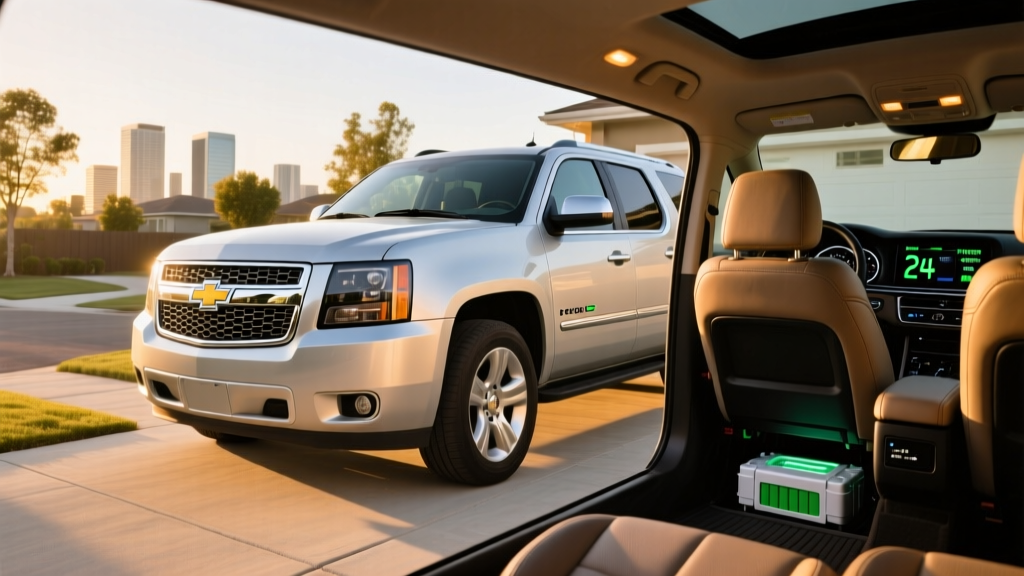
Long before plug-in hybrids and 300-mile EVs became mainstream, General Motors bet big on a different idea: putting a two-mode hybrid system into a body-on-frame, three-row SUV. The result was the 2009 Chevrolet Tahoe Hybrid — the first full-size hybrid SUV sold in the United States. Built on GM's now-defunct 2-Mode Hybrid architecture (co-developed with BMW and Chrysler), the Tahoe Hybrid paired a 6.0-liter V8 with two electric motors inside a specially designed transmission. The goal was straightforward: deliver the towing and passenger capability of a full-size Tahoe while cutting fuel consumption by roughly 25% compared to the gas-only V8 model.
For used-car shoppers in 2026 researching the 2009 Chevrolet Tahoe Hybrid, the big questions are about battery longevity, real-world fuel economy, and whether a 17-year-old hybrid system is a sound purchase. This guide breaks down every critical number — from EPA MPG to battery replacement cost — so you can make an informed decision.
HEV vs PHEV: What the Tahoe Hybrid Actually Is
Important clarification: The 2009 Chevrolet Tahoe Hybrid is a conventional hybrid electric vehicle (HEV), not a plug-in hybrid (PHEV). You never plug it in. The 1.8 kWh nickel-metal hydride (NiMH) battery pack charges exclusively through regenerative braking and the gasoline engine. There is no electric-only driving range to speak of — the electric motors assist the V8 during acceleration and enable engine-off idle, but they cannot propel the Tahoe on electricity alone for any meaningful distance.
This is a critical distinction. Modern PHEVs like the Toyota RAV4 Prime offer 42 miles of electric-only range and require plug-in charging to access their full efficiency benefit. The Tahoe Hybrid operates like a Toyota Prius scaled up to 5,800 pounds — it self-charges, requires no behavioral change from the driver, and delivers its efficiency gains transparently.
Fuel Economy: EPA Ratings vs Real-World MPG
| Metric | EPA Rating | Real-World Expectation |
|---|---|---|
| City MPG | 21 MPG | 19–22 MPG |
| Highway MPG | 22 MPG | 19–23 MPG |
| Combined MPG | 21 MPG | 18–21 MPG |
| Gas-Only Tahoe 5.3L V8 (2009) | 14 city / 20 hwy / 16 combined | 13–17 MPG combined |
| Improvement Over Gas Model | +5 MPG combined (+31%) | Varies by driving style |
The EPA rated the 2009 Tahoe Hybrid at 21 MPG city, 22 highway, and 21 combined — a substantial improvement over the gas-only 5.3L V8 Tahoe's 16 MPG combined. The city figure is where the two-mode system shines: the electric motors handle low-speed crawling, the engine shuts off at stops, and regenerative braking recaptures energy that would otherwise be lost as heat. In stop-and-go traffic, owners have reported seeing 22 MPG or slightly above.
Highway driving tells a different story. At sustained 70+ MPH speeds, the 5,840-pound curb weight and brick-like aerodynamics work against efficiency. The hybrid system's advantage diminishes at highway speeds because there's less regenerative braking opportunity and the engine does most of the work. Expect 19–20 MPG on flat interstate cruising, dropping to 17–18 MPG if you're climbing grades or carrying a full load. According to fueleconomy.gov, the annual fuel cost estimate was based on 15,000 miles per year at roughly $2,700 (at the time of rating), though current fuel prices will shift that number.
Powertrain and Performance Specifications
| Specification | 2009 Tahoe Hybrid |
|---|---|
| Engine | 6.0L V8 (Vortec) with Active Fuel Management |
| Engine Output | 332 HP @ 5,100 RPM / 367 lb-ft @ 4,100 RPM |
| Electric Motors | Two 60 kW motors (inside transmission) |
| Combined System Output | 379 HP |
| Transmission | Electrically Variable Transmission (EVT) — 2-Mode Hybrid |
| Battery Pack | 1.8 kWh Nickel-Metal Hydride (NiMH), 300V nominal |
| Drivetrain | Rear-wheel drive (4WD available on some trims) |
| 0–60 MPH | ~8.2 seconds |
| Towing Capacity | 5,800 lbs (properly equipped) |
| Curb Weight | ~5,840 lbs |
| Seating | 7 passengers (3 rows) |
| Cargo (behind 3rd row) | 16.9 cu ft |
The two-mode hybrid system is engineering-heavy. Mode 1 handles low-speed driving, where the electric motors can move the vehicle at very low speeds (under ~30 MPH in light-throttle situations) and the V8 can deactivate four of its eight cylinders via GM's Active Fuel Management. Mode 2 engages for higher speeds and heavy loads, including towing, where both electric motors and the V8 work together through fixed gear ratios. The result is seamless — most drivers never notice the transitions.
Performance is adequate, not thrilling. The 379 combined horsepower moves the heavy Tahoe reasonably well, and the instant torque from the electric motors makes initial acceleration feel stronger than the 0–60 time suggests. Towing capacity drops slightly compared to the gas V8 model (which could tow up to 7,700 lbs with the right package) — the hybrid is rated at 5,800 lbs, which covers most boat and utility trailers but falls short for heavy campers.
Battery Life, Reliability, and Replacement Cost
Original Battery Warranty: GM covered the hybrid battery and related components for 8 years or 100,000 miles (whichever came first). In states that adopted California Air Resources Board (CARB) standards, the warranty extended to 10 years or 150,000 miles. For a 2009 model, factory warranty coverage expired no later than 2019 in most states.
The 1.8 kWh NiMH battery pack in the 2009 Tahoe Hybrid is fundamentally different from the lithium-ion packs in modern EVs and PHEVs. NiMH chemistry is less energy-dense but has proven to be remarkably durable in hybrid applications — Toyota's Prius fleet, which also used NiMH, routinely sees battery packs lasting 150,000–200,000 miles before significant degradation.
That said, a 2009 Tahoe Hybrid is now 17 years old. Even with moderate mileage, calendar aging takes a toll on NiMH cells. Here's what you need to know:
- Expected battery lifespan: Most Tahoe Hybrid batteries lasted 120,000–180,000 miles before capacity loss became noticeable (reduced fuel economy, more frequent engine cycling).
- Signs of degradation: Reduced city MPG (dropping below 18), the engine running more at stops, dashboard hybrid system warnings, or noticeably weaker regenerative braking.
- Replacement cost: A refurbished/remanufactured NiMH hybrid battery pack for the 2009 Tahoe Hybrid typically costs $2,500–$4,000 installed at an independent hybrid specialist. A new OEM pack from GM (if still available) was originally priced around $5,500–$7,000 before labor.
- Individual cell replacement: Some hybrid repair shops can replace individual modules within the pack for $1,200–$2,000, extending the pack's life at lower cost.
Reliability of the Tahoe Hybrid's two-mode transmission has been mixed. The EVT is complex — it contains the two electric motors, multiple clutch packs, and the power electronics all in one housing. When it works, it's seamless. When it fails, repairs are expensive ($3,000–$5,000+ for a rebuild or replacement). The NHTSA database shows a modest number of complaints related to the hybrid system, primarily concerning the battery and power inverter. Always pull a vehicle history report and, ideally, have a hybrid-qualified mechanic perform a pre-purchase inspection that includes a battery state-of-health test.
Tax Credits and Incentives: What Applies in 2026
The 2009 Chevrolet Tahoe Hybrid originally qualified for a federal tax credit of up to $2,200 under the Energy Policy Act of 2005 — that credit was available only to the original purchaser and has long since been claimed. For used buyers in 2026, here's the current landscape:
- Federal §30D New EV Credit: Does NOT apply. The Tahoe Hybrid is neither new nor a plug-in vehicle.
- Federal §25E Used Clean Vehicle Credit: This credit (up to $4,000 or 30% of sale price, whichever is lower) applies to used plug-in EVs and fuel cell vehicles purchased from a dealer for $25,000 or less. However, conventional hybrids (HEVs) that do not plug in do NOT qualify for the §25E credit. The Tahoe Hybrid is an HEV and is therefore ineligible.
- State incentives: A small number of states offer modest incentives for used hybrid purchases, but most state programs focus on plug-in vehicles. Check your state's energy office or DMV for current programs. The IRS page on clean vehicle credits outlines federal eligibility rules.
Bottom line: expect no federal tax credit for purchasing a used 2009 Tahoe Hybrid. The purchase price is your total cost, minus any state-specific incentives you may independently qualify for.
Who Should Buy the 2009 Tahoe Hybrid — And Who Shouldn't
Reasons to Buy
- 31% better fuel economy than the gas V8 Tahoe — meaningful savings at 15,000+ miles/year
- Three-row seating for 7 with a flat load floor when seats fold
- 5,800-lb towing capacity covers most utility and boat trailers
- No plug-in charging required — drive it like any conventional SUV
- Lower used-market price vs equivalent-age gas Tahoe (hybrid depreciation was steep)
- NiMH battery chemistry is well-understood by independent repair shops
Reasons to Skip
- 17-year-old complex hybrid powertrain — repair costs can exceed vehicle value
- Battery replacement ($2,500–$4,000) may be imminent if not already done
- Two-mode EVT transmission is expensive to rebuild if it fails
- 21 MPG combined is unremarkable by 2026 standards (even gas V6 SUVs approach this)
- No federal tax credit eligibility for used HEV purchases
- Outdated infotainment, no modern ADAS features (no automatic emergency braking, no lane-keep)
Hybrid vs PHEV vs EV: Which Fits Your Situation?
If you need three rows, towing, and body-on-frame capability, the used full-size SUV market has evolved since 2009. Here's a decision framework:
- Choose the 2009 Tahoe Hybrid if: You need a cheap, large SUV right now, you drive mostly city miles where the hybrid system delivers its best MPG advantage, you have access to a hybrid-qualified mechanic, and you accept the risk of an aging battery and transmission. Budget: $4,000–$8,000 used.
- Choose a newer PHEV SUV if: You want electric-only commuting (20–40 miles) with gas-engine range for road trips. Modern options like the Jeep Grand Cherokee 4xe or the Toyota Grand Highlander Hybrid offer far better technology, safety, and efficiency — at higher prices ($45,000+).
- Choose a full EV if: You have home charging access, your daily driving is under 250 miles, and you want minimal maintenance. The Rivian R1S or Kia EV9 offer three rows with 300+ miles of range — but at $70,000+.
- Choose a gas-only used Tahoe if: You mostly drive highway miles (where the hybrid advantage shrinks), you want simpler mechanics, and you can find a well-maintained 5.3L V8 model at a similar price point.
Ownership Costs: What to Budget Annually
Beyond the purchase price, here's a realistic annual cost breakdown for a 2009 Tahoe Hybrid driven 15,000 miles per year:
- Fuel: At 21 MPG combined and $3.40/gallon national average → ~$2,430/year (vs. ~$3,190/year for the gas V8 Tahoe at 16 MPG)
- Insurance: Expect $1,200–$1,800/year depending on your state and driving record — older SUVs are cheaper to insure, but liability and comprehensive coverage still add up
- Maintenance: $800–$1,500/year — the hybrid system adds complexity (inverter coolant, transmission fluid, battery cooling system) on top of standard V8 maintenance (spark plugs, belts, brakes)
- Hybrid battery reserve: Set aside $3,000 as a contingency for battery replacement if it hasn't been done. This is the single biggest financial risk with this vehicle.
The fuel savings over the gas V8 model amount to roughly $760/year. That's meaningful, but it takes approximately 4–5 years of those savings to cover a single hybrid battery replacement. If the previous owner already replaced the battery and can provide documentation, the value proposition improves substantially.
Frequently Asked Questions
How many MPG does the 2009 Chevrolet Tahoe Hybrid get?
The EPA rates it at 21 city / 22 highway / 21 combined. In real-world driving, expect 18–21 MPG combined depending on driving mix. City-heavy routes yield better numbers; highway-heavy routes and towing pull the average down to 17–18 MPG.
Is the 2009 Tahoe Hybrid a plug-in vehicle?
No. It is a conventional hybrid (HEV). You never plug it in. The battery charges through regenerative braking and the gasoline engine. There is no meaningful electric-only driving range.
How much does it cost to replace the hybrid battery?
A refurbished NiMH battery pack costs $2,500–$4,000 installed at a hybrid specialist. Individual module replacement may be possible for $1,200–$2,000. A new OEM pack (if available) was originally $5,500–$7,000+ before labor.
Does the 2009 Tahoe Hybrid qualify for any tax credit in 2026?
No federal tax credit applies. The original $2,200 federal credit was claimed by the original purchaser. The current §25E used clean vehicle credit requires a plug-in vehicle, and the Tahoe Hybrid is a conventional HEV. Some state programs may offer minor incentives — check locally.
Is the two-mode hybrid transmission reliable?
It's the biggest mechanical risk. The EVT is complex and costly to repair ($3,000–$5,000+ for a rebuild). Many units have lasted 150,000+ miles without issue, but failures are not uncommon at higher mileage. A pre-purchase inspection by a hybrid-qualified technician is strongly recommended.
Can the 2009 Tahoe Hybrid tow?
Yes, but with reduced capacity compared to the gas model. The hybrid is rated at 5,800 lbs (properly equipped), down from 7,700 lbs for the gas V8 Tahoe. That covers most boat, utility, and small camper trailers but not heavy fifth-wheel or large travel trailers.
Should I buy a 2009 Tahoe Hybrid or a newer hybrid SUV?
If budget is the primary constraint and you need three rows plus towing, the 2009 Tahoe Hybrid at $4,000–$8,000 is one of the cheapest ways into a large hybrid SUV. But the age and complexity are real risks. If you can stretch to $20,000+, a 2017+ Toyota Highlander Hybrid offers better reliability, modern safety features, and 28–29 MPG combined with far less financial risk.