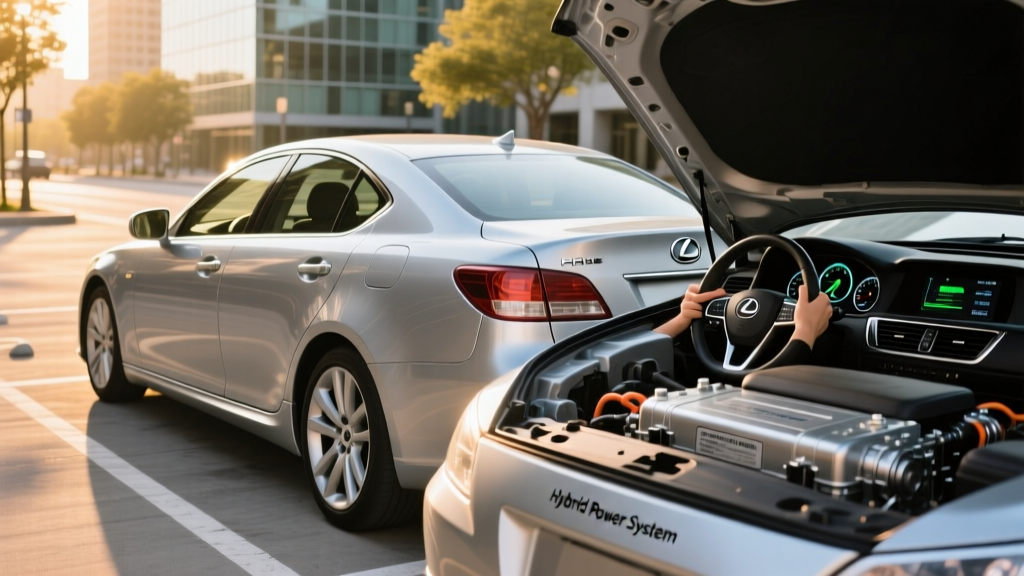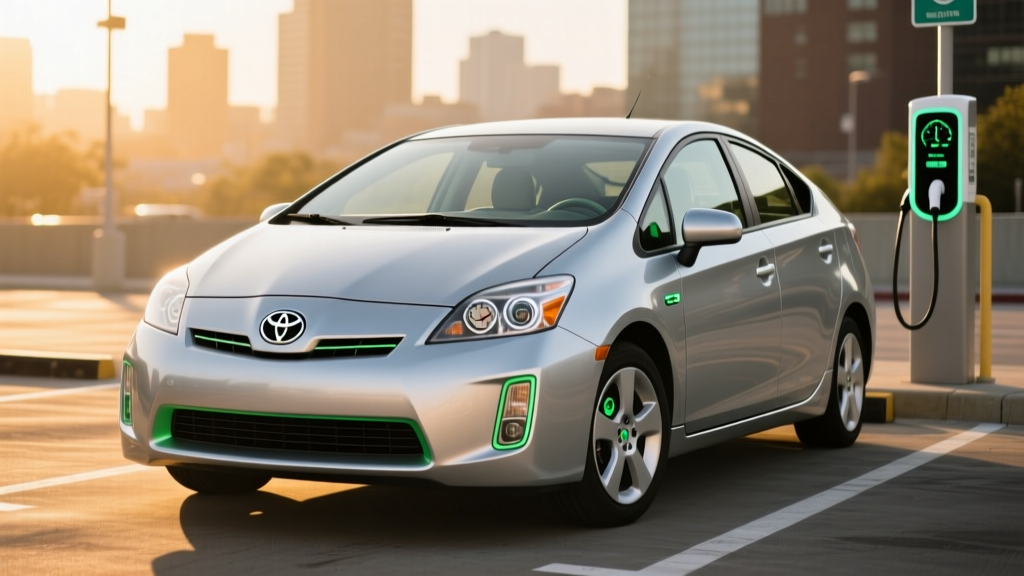
The 2008 Toyota Prius remains one of the most consequential hybrid vehicles ever sold in the United States. As a second-generation (XW20) model, it helped mainstream the conventional hybrid (HEV) concept at a time when most buyers had never heard the term. Nearly two decades later, thousands of these cars are still on the road — and used-car shoppers still search for them by name. This guide covers everything a 2026 buyer or current owner needs to know: real-world MPG, hybrid battery health, replacement costs, and whether a 2008 Prius still makes financial sense today.
2008 Prius Powertrain and Hybrid System Overview
The 2008 Toyota Prius uses Toyota's Hybrid Synergy Drive (HSD), a series-parallel full-hybrid system that pairs a 1.5-liter inline-4 Atkinson-cycle gasoline engine (70 hp) with a 50 kW (67 hp) permanent-magnet electric motor. Combined system output is 110 horsepower. Power flows through an electronically controlled continuously variable transmission (eCVT) — not a belt-driven CVT, but a planetary gearset that blends engine and motor torque seamlessly.
A 201.6-volt nickel-metal hydride (NiMH) traction battery with approximately 1.3 kWh of total capacity sits behind the rear seat. This is a conventional hybrid (HEV), not a plug-in hybrid (PHEV). The battery charges exclusively through regenerative braking and the gasoline engine — there is no plug, no charging port, and no electric-only driving range beyond brief low-speed maneuvers (typically under 1 mile at speeds below 25 mph).
Fuel Economy: EPA Ratings vs. Real-World MPG
The EPA rated the 2008 Toyota Prius at 48 mpg city / 45 mpg highway / 46 mpg combined under the revised 2008 testing cycle. (Earlier 2004–2007 models carried higher window-sticker numbers under the old, less rigorous EPA methodology — a common source of confusion among owners.)
| Metric | MPG |
|---|---|
| City | 48 |
| Highway | 45 |
| Combined | 46 |
| Fuel Tank Capacity | 11.9 gal |
| EPA Total Range | ~547 miles |
Source: fueleconomy.gov — 2008 Toyota Prius
Real-World MPG: What Owners Actually Report
Hybrids tend to perform close to or even above their EPA city rating because regenerative braking recovers energy in stop-and-go traffic. However, highway-heavy commutes and cold climates reduce efficiency. Based on aggregated owner data from Fuelly and long-term testing archives:
- City-dominant driving (warm climate): 44–50 mpg — some hypermilers report mid-50s with careful technique
- Mixed commuting: 40–46 mpg
- Highway-dominant (70+ mph sustained): 38–42 mpg — aerodynamic drag and the small engine working harder reduce efficiency
- Cold weather (below 30°F): 35–40 mpg — the engine runs more often to maintain cabin heat and battery temperature
Bottom line: expect 40–46 mpg combined in typical mixed driving. That's remarkably close to the EPA sticker and still competitive with many 2026 compact hybrids.
Hybrid Battery Lifespan, Warranty, and Replacement Cost
The NiMH traction battery is the single biggest ownership question for any used Prius. Toyota originally warranted the hybrid battery for 8 years / 100,000 miles in most states, and 10 years / 150,000 miles in California Air Resources Board (CARB) states. By 2026, every 2008 Prius is well past factory warranty coverage.
How Long Do 2008 Prius Batteries Last?
NiMH batteries in the second-gen Prius typically last 150,000–200,000 miles or 12–18 years before significant degradation triggers a warning light. Many 2008 models have already had at least one battery replacement. Key degradation factors:
- Heat exposure: Batteries in hot-climate states (AZ, TX, NV) degrade faster — the cabin-vented cooling system is marginal by modern standards
- Mileage: Higher-mileage examples are more likely on a replacement battery
- Calendar aging: Even low-mileage survivors face age-related cell imbalance at 18 years old
Battery Replacement Cost in 2026
| Option | Cost Range | Notes |
|---|---|---|
| New OEM Toyota battery | $2,000–$2,500 | Dealership installed; best reliability; may be discontinued for this model year |
| Refurbished/remanufactored battery | $800–$1,500 | Aftermarket shops; 1–3 year warranty typical; quality varies widely |
| Individual module replacement | $300–$600 | Replace only bad cells; requires hybrid-savvy technician; short-term fix |
| Used salvage battery | $400–$800 | From wrecked Prius; gamble on remaining life; not recommended |
For a 2008 Prius valued at $3,000–$5,500 in 2026, a $2,000+ OEM battery replacement can represent 40–60% of the car's value — a critical factor in the buy-or-pass decision.
Reliability and Common Issues Beyond the Battery
The second-generation Prius earned a strong reliability reputation overall. The HSD powertrain, eCVT, and gasoline engine are mechanically robust — many examples exceed 250,000 miles with basic maintenance. However, 18-year-old vehicles have age-related concerns that go beyond the hybrid battery:
- Inverter coolant pump: A known failure point. If the pump fails, the inverter can overheat and destroy itself — a $1,500–$2,500 repair. Check for recalls (Toyota issued an extended warranty campaign for some model years).
- Combination meter (dashboard display): The central MFD screen can fail or go dark. Repair or replacement runs $200–$500.
- Brake actuator: The regenerative braking system's hydraulic actuator can fail on high-mileage units. Replacement is $1,200–$1,800.
- 12V auxiliary battery: Located in the rear cargo area; a standard maintenance item ($150–$250). If this dies, the car won't start even if the traction battery is full.
- Catalytic converter theft: The Prius is a top target for catalytic converter thieves due to precious-metal content. Replacement: $800–$1,500.
Who Should Buy a 2008 Prius in 2026?
Pros
- 40–46 mpg real-world still beats most 2026 gas compacts
- Extremely low running costs (fuel + minimal maintenance)
- Proven, well-documented powertrain — any hybrid shop can service it
- Low purchase price ($3,000–$5,500 used)
- No plug required — works for apartment dwellers
Cons
- Hybrid battery likely at end-of-life; $800–$2,500 replacement
- No modern safety tech (no AEB, no lane-keep, no blind-spot monitoring)
- Dated interior, no Apple CarPlay/Android Auto
- Poor crash-test ratings by 2026 standards
- Slow acceleration (0–60 mph in ~10.0 seconds)
Decision Framework: 2008 Prius vs. Alternatives
Choose the 2008 Prius if: You need ultra-cheap commuting on a tight budget, you drive city-heavy miles where hybrid efficiency shines, and you can absorb a potential $1,000–$2,000 battery repair.
Choose a newer used hybrid (2016+ Prius, 2018+ Camry Hybrid) if: You want modern safety features (Toyota Safety Sense), a remaining battery warranty, and CarPlay integration. Expect $12,000–$20,000.
Choose a used PHEV (Prius Prime, RAV4 Prime) if: You have home charging access and want 25–44 miles of electric-only commuting with a gas backup. Expect $18,000–$30,000+.
Choose a full BEV (used Bolt, Model 3) if: You can charge at home, your commute is under 200 miles, and you want zero tailpipe emissions with lower per-mile energy costs. Expect $12,000–$25,000+.
Tax Credits and Incentives for a 2008 Prius
The 2008 Toyota Prius is a conventional hybrid (HEV), not a plug-in vehicle. This means it does not qualify for the federal §30D Clean Vehicle Credit (which applies only to BEVs and PHEVs with plug-in capability). The original federal hybrid tax credit for the Prius phased out completely for Toyota in 2007, so even original 2008 buyers received no federal credit.
On the used market, there is no federal used-EV credit applicable to the 2008 Prius either — the §25E used clean vehicle credit ($4,000) applies only to qualifying used BEVs and PHEVs, not conventional hybrids.
Some states offer modest incentives for hybrids (HOV lane access, registration discounts), but these vary by jurisdiction and many have expired for older models. Check your state's DMV and energy office for current programs.
Ownership Economics in 2026
At 46 mpg combined and a national average regular gasoline price around $3.30/gallon (early 2026), the 2008 Prius costs approximately $0.072 per mile in fuel. Compare this to a typical 2008 non-hybrid compact at 25 mpg combined ($0.132/mile) — the Prius saves roughly $900 per year for a driver covering 15,000 miles annually.
Maintenance costs remain low: oil changes every 5,000 miles (the 1.5L engine takes just 3.9 quarts of 5W-30), tire rotations, and brake pads that often last 80,000+ miles thanks to regenerative braking reducing mechanical brake wear.
Insurance is inexpensive for a vehicle of this age and value — typically $600–$900/year depending on coverage level and driver profile.
Frequently Asked Questions
How many MPG does the 2008 Toyota Prius get?
The EPA rates the 2008 Prius at 48 mpg city / 45 mpg highway / 46 mpg combined. Real-world owners typically see 40–46 mpg combined, with city driving often matching or exceeding the EPA city figure thanks to regenerative braking.
Is the 2008 Prius a plug-in hybrid?
No. The 2008 Prius is a conventional hybrid (HEV). It has no charging port and cannot be plugged in. The battery charges through regenerative braking and the gasoline engine. Toyota introduced the plug-in Prius (later called Prius Prime) starting with the 2012 model year.
How much does it cost to replace the hybrid battery?
A new OEM battery runs $2,000–$2,500 installed at a dealership. Refurbished aftermarket batteries cost $800–$1,500. Individual cell-module repairs start around $300–$600 but are often temporary fixes. Given the car's 2026 market value of $3,000–$5,500, battery replacement is a significant percentage of vehicle value.
Is the 2008 Prius still reliable after 18 years?
The powertrain (engine, eCVT, hybrid system) is mechanically robust and many examples exceed 250,000 miles. However, age-related issues — hybrid battery failure, inverter coolant pump, brake actuator, and dashboard electronics — are common and can be costly relative to the car's value. A pre-purchase inspection by a hybrid-qualified technician is essential.
Does the 2008 Prius qualify for any tax credit in 2026?
No. The 2008 Prius is a conventional hybrid and does not qualify for the federal §30D Clean Vehicle Credit or the §25E used-EV credit. The original Toyota hybrid credit phased out in 2007. Check your state for any remaining hybrid incentives, though most target newer or plug-in vehicles.
Should I buy a 2008 Prius or a newer used hybrid?
If your budget is under $6,000 and you accept the battery-replacement risk, the 2008 Prius delivers outstanding fuel economy at a rock-bottom purchase price. If you can spend $12,000–$18,000, a 2016+ Prius or Camry Hybrid gives you Toyota Safety Sense, a fresher battery, and modern infotainment — with better crash protection.