Quick Verdict: A Pioneer Worth Considering on the Used Market
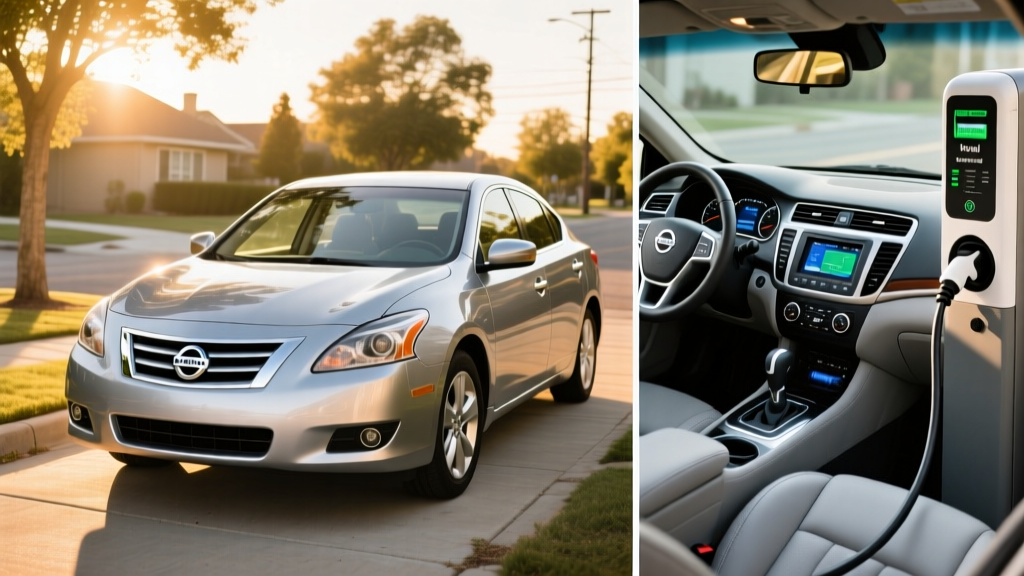
The 2008 Nissan Altima Hybrid represents an early chapter in mainstream hybrid adoption — Nissan's first attempt at a gasoline-electric sedan, built using Toyota-licensed hybrid technology. With an EPA-estimated 35 city / 33 highway / 34 combined MPG, it remains competitive with some modern non-hybrid midsize sedans, though it has been surpassed by current-generation hybrids like the Toyota Camry Hybrid (44–52 MPG combined) and Honda Accord Hybrid (48 MPG combined).
For used-car shoppers in 2026 weighing a budget-friendly hybrid against a conventional gas car or a newer plug-in hybrid, the Altima Hybrid offers honest fuel savings without plug-in complexity. But its age — now 18 model years old — raises legitimate questions about hybrid battery health, replacement costs, and whether the savings justify the risk. This guide breaks down every number you need to decide.
HEV vs. PHEV: Where the Altima Hybrid Fits
Before evaluating the 2008 Altima Hybrid's specs, it's critical to distinguish between the two hybrid architectures available in the used market:
| Feature | Conventional Hybrid (HEV) | Plug-In Hybrid (PHEV) |
|---|---|---|
| Charging Required? | No — regenerative braking & engine charge the battery | Yes — plug in for electric-only range |
| Electric-Only Range | None (motor assists engine at low speeds) | Typically 20–50 miles (modern PHEVs) |
| Battery Size | Small (1–2 kWh) | Larger (8–25 kWh) |
| Federal Tax Credit (New) | Not eligible under §30D | Up to $7,500 (subject to sourcing/income rules) |
| 2008 Altima Hybrid? | Yes — this is an HEV | No — Nissan never offered a PHEV Altima |
The 2008 Altima Hybrid is a conventional series-parallel hybrid (HEV). You never plug it in. Its 1.6 kWh nickel-metal hydride (NiMH) battery charges through regenerative braking and the gasoline engine. This means zero charging infrastructure concerns — but also zero electric-only driving range. For buyers who want plug-in capability, you'd need to look at vehicles like the used Toyota Prius Prime or a newer Ford Escape PHEV.
Fuel Economy: EPA Ratings vs. Real-World MPG
The 2008 Altima Hybrid's fuel economy was competitive at launch and remains respectable for a midsize sedan nearly two decades later.
| Driving Cycle | EPA Estimate | Real-World Expectation |
|---|---|---|
| City | 35 MPG | 33–37 MPG (hybrids often beat EPA city) |
| Highway | 33 MPG | 29–33 MPG (hybrid advantage diminishes at sustained speed) |
| Combined | 34 MPG | 30–35 MPG depending on driving mix |
Why city MPG often exceeds the EPA sticker: Hybrid systems recapture energy during stop-and-go braking and allow the engine to shut off at idle. If your commute is heavy urban traffic, expect results at or above 35 MPG city. Highway-dominant drivers will see the gap narrow, as the 2.5L four-cylinder engine carries the load at sustained speeds with less electric motor assistance.
For context, the 2008 gasoline-only Altima 2.5S achieved an EPA 23 city / 31 highway / 26 combined MPG. The hybrid's 8 MPG combined advantage translates to roughly 1.2 fewer gallons per 100 miles — saving approximately $250–$350 per year at 15,000 miles driven and $3.20/gallon regular unleaded (per fueleconomy.gov estimates).
Powertrain & Performance Specs
| Specification | 2008 Nissan Altima Hybrid |
|---|---|
| Engine | 2.5L inline-4 (QR25DE) — 158 HP |
| Electric Motor | AC synchronous — 30 kW (40 HP) |
| Combined Net Output | 198 HP |
| Transmission | eCVT (electronically controlled CVT) |
| Battery Chemistry | NiMH (Nickel-Metal Hydride) |
| Battery Capacity | ~1.6 kWh (gross) |
| 0–60 MPH | ~7.4 seconds |
| Drivetrain | Front-wheel drive |
| Curb Weight | ~3,480 lbs |
| Plug-In Charging | No — HEV only |
| DC Fast Charge | No |
Nissan licensed Toyota's Hybrid Synergy Drive architecture for this generation, which is why the eCVT behavior and regenerative braking feel familiar to Prius drivers of the same era. The 198 combined horsepower was genuinely quick for a 2008 midsize hybrid — the Camry Hybrid of the same year produced 192 HP. Acceleration is smooth and linear, with the electric motor filling torque gaps during the CVT's ratio transitions.
Hybrid Battery Health: Lifespan, Warranty & Replacement Cost
This is the single most important consideration for anyone buying a 2008 Altima Hybrid in 2026. The original NiMH battery pack is now 18 years old. Even with low mileage, NiMH cells degrade with time and heat exposure.
Battery Warranty (When New)
- Hybrid Battery: 8 years / 100,000 miles (10 years / unlimited miles in California and states adopting CARB emissions standards)
- Hybrid System Components: 8 years / 100,000 miles
- Status in 2026: All original factory warranty coverage has expired for every 2008 Altima Hybrid
Battery replacement cost: A remanufactured NiMH battery pack for the 2008 Altima Hybrid typically costs $1,500–$2,500 including installation at an independent hybrid specialist. A brand-new OEM battery from Nissan, if still available, can exceed $3,000–$4,000. Several aftermarket suppliers offer reconditioned packs with 1–3 year warranties.
What to check before buying:
- Request a hybrid battery health scan (State of Health / SoH reading) from a shop with Nissan Consult-III or an equivalent OBD-II hybrid diagnostic tool
- Look for the "Check Hybrid System" warning light — a common indicator of cell imbalance or failure
- Ask whether the battery has already been replaced; some owners proactively replaced packs around the 120,000–150,000 mile mark
- Check for individual cell voltage imbalance reports in vehicle history forums
Reliability context: The 2008 Altima Hybrid's Toyota-sourced hybrid drivetrain has proven more durable than Nissan's own CVT transmissions of the same era (which plagued non-hybrid Altimas with premature failures). The eCVT in the hybrid is fundamentally different from the belt-driven Jatco CVT and has a much stronger longevity record. According to owner reports on hybrid-specific forums, many original batteries lasted 150,000–200,000 miles before requiring replacement, though age-related degradation is now the primary concern regardless of mileage.
Pricing & Tax Credit Eligibility
Original MSRP (2008): The Altima Hybrid launched at approximately $25,900 (before destination), available only in a single well-equipped trim level.
Used market pricing (2026): Expect to pay $3,500–$7,000 for a 2008 Altima Hybrid depending on mileage, condition, and battery health. Examples with a recently replaced battery command a $1,000–$1,500 premium.
Federal tax credit: The 2008 Altima Hybrid did qualify for a federal tax credit of up to $2,350 when new under the Energy Policy Act of 2005. However, Nissan's hybrid credit allocation was fully phased out by 2010 after reaching the 60,000-unit manufacturer cap. In 2026, no federal tax credit is available for any used hybrid (HEV). The IRS §30D clean vehicle credit applies only to qualifying new plug-in vehicles (BEVs and PHEVs meeting battery sourcing, income, and MSRP requirements — see IRS.gov §30D guidelines). Used EV and PHEV purchases may qualify for up to $4,000 under §25E, but this credit does not apply to conventional hybrids like the Altima Hybrid.
State incentives: A handful of states offer modest incentives for used hybrid purchases or hybrid battery replacements. Check your state's energy office or DMV for current programs, as these vary significantly by jurisdiction and change annually.
Who Should Buy the 2008 Altima Hybrid?
Pros
- 34 MPG combined saves $250–$350/year vs. gas-only Altima
- Toyota-licensed hybrid system with strong reliability track record
- eCVT avoids the CVT failures that plagued gas Altimas
- 198 HP — genuinely quick for its era
- No plug-in charging required; zero infrastructure dependency
- Low used purchase price ($3,500–$7,000)
Cons
- Original battery is 18 years old — replacement likely needed
- MPG surpassed by modern hybrids (Camry Hybrid: 52 city)
- No electric-only range; not a PHEV
- No federal tax credit available
- Limited trim and option availability (single trim)
- NiMH battery chemistry heavier and less energy-dense than modern Li-ion
Hybrid vs. PHEV vs. EV: Which Fits Your Situation?
| Your Situation | Best Choice | Why |
|---|---|---|
| No home charging access; want fuel savings | Used HEV (like this Altima Hybrid) | No plug needed; instant MPG improvement |
| Home charger available; short daily commute | Used PHEV (e.g., Prius Prime, Escape PHEV) | 20–40 mi electric-only covers most commutes |
| Home charger + long-term savings priority | Used BEV (e.g., Leaf, Model 3) | Lowest fuel/maintenance cost; §25E used credit up to $4,000 |
| Budget under $5,000; need reliable commuter | Used HEV with verified battery health | Lowest entry cost; proven tech |
| Want maximum MPG with modern tech | New 2026 Camry Hybrid or Accord Hybrid | 44–52 MPG; full warranty; current safety tech |
The 2008 Altima Hybrid makes the most sense for budget-conscious buyers who cannot charge at home, want better fuel economy than a gas sedan, and are willing to budget $1,500–$2,500 for a potential battery replacement. If you can charge at home, a used PHEV or BEV offers dramatically lower per-mile energy costs and may qualify for the federal used clean vehicle credit (§25E, up to $4,000 for qualifying used EVs and PHEVs priced under $25,000).
2008 Altima Hybrid FAQ
How many MPG does the 2008 Nissan Altima Hybrid get?
The EPA rates the 2008 Altima Hybrid at 35 city / 33 highway / 34 combined MPG. Real-world results typically range from 30–37 MPG depending on driving conditions. City-heavy drivers often match or slightly exceed the EPA city figure thanks to regenerative braking and engine stop-start.
Does the 2008 Altima Hybrid need to be plugged in?
No. It is a conventional hybrid (HEV), not a plug-in hybrid (PHEV). The battery charges through regenerative braking and the gasoline engine. There is no charging port and no electric-only driving range.
How far can it go on electric only?
Zero miles on electric-only power. The electric motor assists the gasoline engine during acceleration and low-speed driving, but cannot propel the car independently for any meaningful distance. For electric-only capability, you need a PHEV like the Toyota Prius Prime (25–40 miles electric) or a full BEV.
Is the 2008 Altima Hybrid reliable?
The hybrid powertrain itself — sourced from Toyota's licensed Hybrid Synergy Drive — has a strong reliability record. The eCVT is far more durable than the belt-driven CVT found in non-hybrid Altimas of the same era. The primary reliability concern in 2026 is age-related NiMH battery degradation. At 18 years old, most original batteries are near or past end-of-life and may require replacement ($1,500–$2,500 for a remanufactured pack).
What does a replacement hybrid battery cost?
A remanufactured NiMH battery pack costs $1,500–$2,500 installed at an independent hybrid shop. A new OEM Nissan battery, if available, can exceed $3,500. Some owners opt for individual cell replacement ($500–$800) if only a few cells have failed, though this is a temporary fix on an aging pack.
Does the 2008 Altima Hybrid qualify for any tax credit?
No. The original federal hybrid tax credit (up to $2,350) phased out after Nissan reached its 60,000-unit cap. In 2026, no federal tax credit exists for purchasing a used conventional hybrid. The IRS §30D credit applies only to qualifying new plug-in vehicles, and the §25E used vehicle credit applies only to used BEVs and PHEVs — not HEVs.
Should I buy a 2008 Altima Hybrid or a newer used hybrid?
If your budget is under $7,000 and you factor in a potential $2,000 battery replacement, the Altima Hybrid can still deliver meaningful fuel savings as a commuter car. However, a 2013–2017 Toyota Prius or a 2014+ Honda Accord Hybrid will deliver 45+ MPG combined with a younger battery and more modern safety features. Budget $10,000–$14,000 for these alternatives and you'll likely face fewer age-related maintenance issues.
Sources: fueleconomy.gov — 2008 Nissan Altima Hybrid, IRS.gov — Clean Vehicle Credits, NHTSA — 2008 Nissan Altima Hybrid