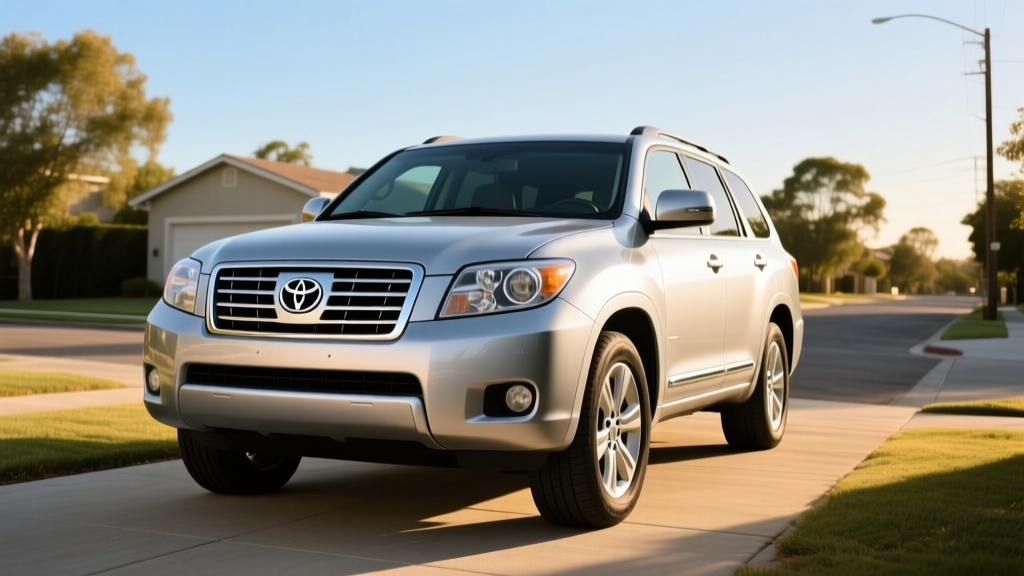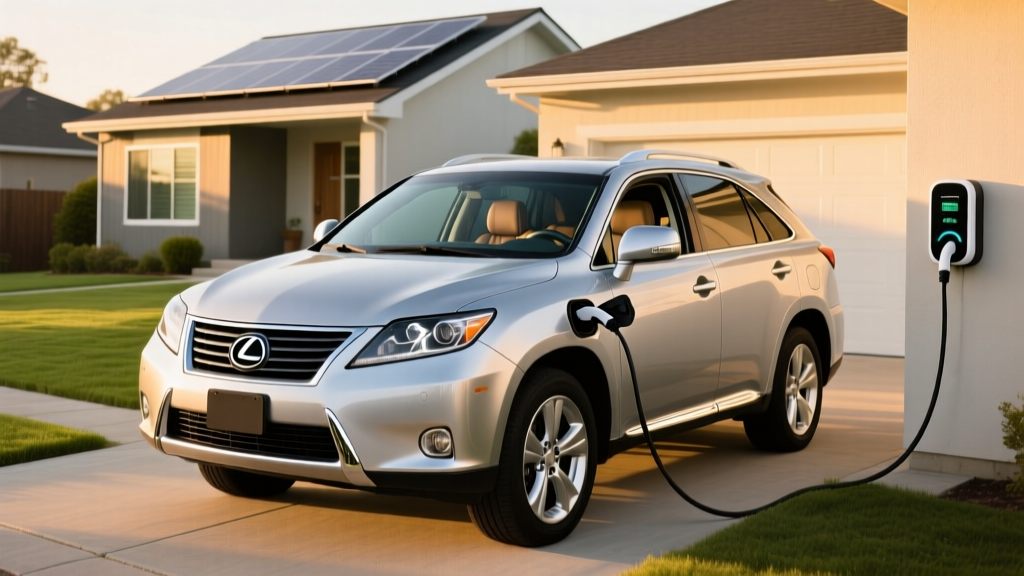
The 2008 Lexus RX 400h hybrid was one of the first luxury SUVs to pair a V6 with an electric motor system, offering a compelling alternative to the gas-only RX 350 at a time when hybrid technology was still proving itself. Nearly two decades later, it remains a popular used-vehicle search — buyers want to know if the hybrid powertrain holds up, what real-world fuel economy looks like, and whether a 17-year-old hybrid battery is a ticking time bomb. This guide answers those questions with hard data.
2008 Lexus RX 400h Hybrid: Powertrain and Performance Specs
The RX 400h uses Toyota's Hybrid Synergy Drive (THS II), a power-split system combining a 3.3-liter V6 gasoline engine with two electric motor-generators and a nickel-metal hydride (NiMH) battery pack. This is a conventional hybrid (HEV) — it cannot be plugged in. The battery charges through regenerative braking and engine power.
| Specification | Value |
|---|---|
| Engine | 3.3L V6 (3MZ-FE) |
| Gas Engine Output | 211 hp @ 5,600 rpm |
| Electric Motor Output | 167 hp (front motor) |
| Combined System Horsepower | 272 hp |
| Transmission | eCVT (planetary gearset) |
| Drivetrain | AWD (e-four: rear electric motor for rear wheels) |
| Hybrid Battery Chemistry | NiMH (Nickel-Metal Hydride) |
| Hybrid Battery Capacity | ~1.9 kWh (nominal, non-plug-in) |
| 0–60 mph | ~7.4 seconds |
| Curb Weight | ~4,475 lbs |
The e-four AWD system is notable: instead of a mechanical driveshaft to the rear wheels, a separate 67-hp rear electric motor engages when traction is needed. This means the RX 400h operates as front-wheel drive under normal conditions, with the rear motor providing torque on demand. It's effective in rain and light snow but not a substitute for a dedicated off-road system.
Fuel Economy: EPA Ratings vs. Real-World MPG
The EPA rates the 2008 Lexus RX 400h hybrid at 31 mpg city / 27 mpg highway / 29 mpg combined according to fueleconomy.gov. For a 4,475-pound luxury SUV in 2008, those numbers were exceptional — the gas-only RX 350 AWD of the same year was rated at just 18/24/20 mpg.
| Model | City MPG | Highway MPG | Combined MPG |
|---|---|---|---|
| 2008 RX 400h (HEV) | 31 | 27 | 29 |
| 2008 RX 350 AWD (Gas) | 18 | 24 | 20 |
Over 15,000 miles per year, the RX 400h saves roughly 220 gallons of fuel compared to the RX 350 — about $660 annually at $3.00/gallon. That's meaningful, but the real value proposition depends heavily on the purchase price and battery condition.
HEV vs. PHEV vs. EV: Which Is Right for You?
The 2008 RX 400h is a conventional hybrid (HEV). To put it in context with modern alternatives:
| Feature | HEV (e.g., RX 400h) | PHEV (e.g., 2026 RAV4 Prime) | BEV (e.g., 2026 Tesla Model Y) |
|---|---|---|---|
| Plug-in Charging | No | Yes (Level 1/2) | Yes (Level 1/2/DC) |
| Electric-Only Range | N/A (motor assists engine) | ~42 miles | ~310 miles (EPA) |
| Total Range | ~500 miles | ~600+ miles combined | ~310 miles |
| Home Charging Needed | No | Recommended | Essential |
| Tailpipe Emissions | Reduced | Low (when charged) | None |
| Federal Tax Credit | None (expired) | Up to $3,750–$7,500* | Up to $7,500* |
| Best For | No charging access, short budget | Home charging + short commutes | Home charging + low operating cost |
*Federal tax credit eligibility under IRS §30D depends on MSRP caps, buyer income limits, battery sourcing requirements, and manufacturer phase-outs. Consult irs.gov or a tax professional for current-year eligibility.
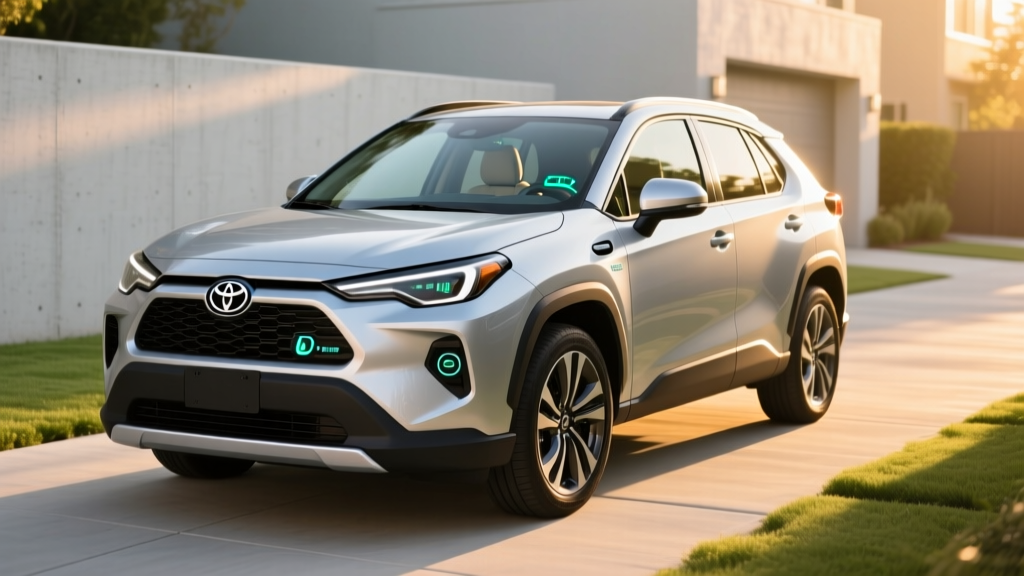
The RX 400h makes sense for buyers who want improved fuel economy without any lifestyle change — no plug, no app, no charging planning. If you have home charging access and a commute under 40 miles, a modern PHEV like the Toyota RAV4 Prime or the Lexus NX 450h+ offers dramatically better efficiency on electric power alone.
Hybrid Battery Lifespan, Reliability, and Replacement Cost
The NiMH battery pack in the RX 400h is the single biggest concern for used buyers. Here's what the data shows:
Battery longevity: Toyota/Lexus NiMH hybrid batteries have an excellent track record. Many RX 400h and Prius batteries last 150,000–200,000 miles before significant degradation. However, age is now the primary factor — a 2008 battery is 17+ years old regardless of mileage. Heat is the biggest enemy of NiMH cells, so vehicles from hot climates (AZ, TX, FL) may see earlier failures.
Replacement cost: A new OEM Lexus hybrid battery for the RX 400h costs approximately $3,500–$5,000 installed at a dealership. Refurbished or reconditioned batteries are available for $1,500–$2,500 installed through independent hybrid specialists. Some shops offer individual cell module replacement for $500–$1,000 if only a few cells have failed, though this is a temporary fix on an aged pack.
Reliability beyond the battery: The 3MZ-FE V6 engine is proven and durable. The eCVT transmission has no traditional clutch packs or bands — it's a planetary gearset that's extremely reliable. The main wear items are the same as any 17-year-old vehicle: suspension bushings, brakes (though regen extends pad life significantly), and electronics. The RX 400h consistently scores well in long-term reliability surveys; NHTSA records show no systemic powertrain complaints.
What Does a 2008 RX 400h Cost in 2026?
The original MSRP of the 2008 RX 400h was approximately $43,455 (including destination). Today, as a used vehicle, pricing depends entirely on mileage, condition, and battery health:
- High mileage (140,000+ mi), fair condition: $5,000–$7,000
- Average mileage (90,000–130,000 mi), good condition: $7,500–$10,500
- Low mileage (under 80,000 mi), excellent condition: $11,000–$14,000
Tax credit eligibility: The RX 400h originally qualified for a federal hybrid tax credit of $2,200, but this credit phased out for Toyota/Lexus vehicles in 2007 after they hit the 60,000-unit cap. There is no federal tax credit available for purchasing a used 2008 RX 400h today. The used clean vehicle credit under §25E (up to $4,000) applies only to used EVs and PHEVs with at least 4 miles of electric-only range — the RX 400h, as a conventional HEV, does not qualify.
Pros and Cons of Buying a 2008 RX 400h Today
Pros
- 29 MPG combined — 45% better than the gas RX 350
- 272 hp provides confident highway merging
- Lexus build quality and interior materials
- Proven, durable eCVT powertrain
- No plug-in charging required
- Regenerative braking extends brake pad life
- Quiet, smooth ride quality
Cons
- Hybrid battery is 17+ years old — replacement likely needed
- No federal or state tax credits available
- Outdated infotainment (no Bluetooth audio, no backup camera standard)
- Highway MPG lower than city (27 mpg hwy)
- NiMH battery less efficient than modern lithium-ion packs
- Insurance costs may be higher than gas RX 350
- Limited modern safety tech (no automatic emergency braking, lane-keep)
Who Should Buy the 2008 Lexus RX 400h Hybrid?
- You want a reliable luxury SUV on a budget under $10,000
- You drive primarily in city or suburban traffic where hybrid efficiency shines
- You have no access to plug-in charging (apartment, street parking)
- You can budget $2,000–$4,000 for a potential hybrid battery replacement
- You prioritize fuel savings and smoothness over modern tech features
- You have home charging and a commute under 40 miles (a PHEV eliminates most gas use)
- You want current safety features (AEB, lane-keep, adaptive cruise)
- You want to take advantage of federal or state EV/PHEV incentives
- You plan to keep the vehicle 10+ years and want modern battery chemistry (LFP/NMC with 8-year warranties)
Pre-Purchase Checklist for a Used RX 400h
If you're evaluating a specific 2008 RX 400h, request these items before committing:
- Hybrid battery health check: A Lexus dealer or hybrid specialist can read the battery's state of health (SoH) via OBD-II scanner. Ask for the delta between the highest and lowest cell module voltages — a delta over 0.3V indicates aging cells.
- Hybrid system warning history: Check for any past "Check Hybrid System" codes. Common codes include P0A80 (replace hybrid battery) and P0A7F (hybrid battery pack deterioration).
- Inverter coolant pump: The RX 400h had a recall for the hybrid inverter coolant pump. Verify recall completion via the VIN on nhtsa.gov/recalls.
- Brake actuator condition: The regenerative braking system uses an electro-hydraulic brake actuator that can fail expensively ($1,500–$2,500). Listen for unusual pump cycling or firm pedal feel.
- Maintenance records: Verify timing belt replacement (due at ~90,000 miles or 7 years — overdue on most 2008 examples), transmission fluid service, and inverter coolant changes.
Frequently Asked Questions
How many MPG does the 2008 Lexus RX 400h hybrid get?
The EPA rates it at 31 city / 27 highway / 29 combined. Real-world city driving often yields 30–33 mpg thanks to regenerative braking, while sustained highway driving at 75+ mph may return 24–26 mpg. Cold weather reduces efficiency by 10–15%.
Can you plug in the 2008 RX 400h to charge?
No. The RX 400h is a conventional hybrid (HEV), not a plug-in hybrid (PHEV). The battery charges exclusively through regenerative braking and the gasoline engine. There is no charging port.
How far can the RX 400h drive on electric power alone?
Not meaningfully. The NiMH battery holds roughly 1.9 kWh and the system is designed for motor-assist, not electric-only driving. You may creep at very low speeds (under 25 mph) for a few hundred yards on electric power, but the engine engages almost immediately under any load.
What does it cost to replace the hybrid battery?
A new OEM battery runs $3,500–$5,000 installed at a dealer. Refurbished batteries from independent hybrid shops cost $1,500–$2,500 installed. Individual cell module replacement is possible for $500–$1,000 but may not be cost-effective on a 17-year-old pack.
Is the 2008 RX 400h reliable?
Yes, with caveats. The V6 engine, eCVT transmission, and hybrid system are proven durable. The primary risk is the aged NiMH battery. Beyond that, standard 17-year-old vehicle maintenance applies — suspension, brakes, seals, and electronics. The RX 400h has fewer moving parts than the gas RX 350 (no traditional transmission, extended brake life from regen).
Does the 2008 RX 400h qualify for any tax credit?
No. The original federal hybrid credit for this model phased out in 2007. The current used clean vehicle credit (§25E, up to $4,000) does not apply because the RX 400h is a conventional HEV, not a PHEV or BEV. No state incentives apply to conventional hybrids in most jurisdictions.
How does the RX 400h compare to a modern hybrid like the 2026 Lexus RX 350h?
The 2026 RX 350h is rated at 36 mpg combined (EPA) with a modern 2.5L four-cylinder hybrid system, lithium-ion battery, full suite of safety tech (Lexus Safety System+ 3.0), and current infotainment. It starts around $53,000. The 2008 RX 400h delivers about 20% less fuel economy but at roughly 80% lower cost — the trade-off is technology, warranty coverage, and safety features.