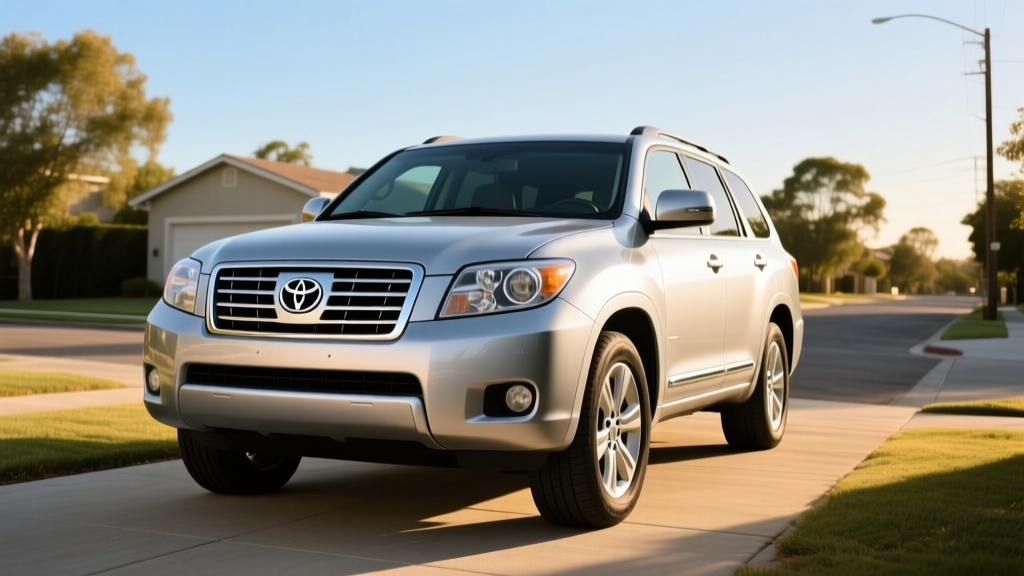
The 2007 Toyota Highlander Hybrid occupies a unique space in the used-SUV market. As one of the first mainstream three-row hybrid crossovers ever sold, it proved that a 4,500-pound family hauler could sip fuel like a midsize sedan of its era. Nearly two decades later, the 07 Highlander Hybrid remains a budget-friendly entry point for buyers who want hybrid efficiency without the complexity of a plug-in vehicle — provided they understand what a 19-year-old hybrid battery really means for ownership costs.
This guide covers everything a prospective buyer or current owner needs to know: EPA and real-world fuel economy, the HEV vs. PHEV distinction, powertrain specs, battery longevity, replacement costs, and whether this early-generation hybrid still makes sense in 2026.
Fuel Economy: EPA Ratings vs. Real-World MPG
The 2007 Highlander Hybrid is a conventional hybrid electric vehicle (HEV). It cannot be plugged in. It charges its own battery through regenerative braking and the gasoline engine. This is fundamentally different from a plug-in hybrid (PHEV) or a battery-electric vehicle (BEV).
| Driving Condition | EPA Estimate | Real-World Expectation |
|---|---|---|
| City | 31 MPG | 28–33 MPG |
| Highway | 25 MPG | 22–26 MPG |
| Combined | 26 MPG | 24–28 MPG |
The city-biased rating is typical of Toyota's Hybrid Synergy Drive system. At low speeds and in stop-and-go traffic, the electric motor does most of the work, and regenerative braking recovers energy that a conventional vehicle would waste as heat. On the highway, the 3.3-liter V6 carries more of the load, and aerodynamic drag reduces the hybrid advantage.
Real-world results depend heavily on driving style and battery health. A well-maintained 07 Highlander Hybrid with a healthy battery pack can match or slightly exceed the EPA city number. A degraded battery — common on examples with original nickel-metal hydride (NiMH) packs — will drop fuel economy by 2–5 MPG as the engine compensates for reduced electric assist. According to fueleconomy.gov, owners of this generation report an average of roughly 24–25 MPG combined, which aligns with expectations for a vehicle of this age.
HEV vs. PHEV vs. EV: Where Does the 07 Highlander Hybrid Fit?
Buyers cross-shopping hybrids in 2026 face three distinct electrification paths. Understanding the differences is essential before evaluating any used hybrid.
| Feature | HEV (This Vehicle) | PHEV (e.g., RAV4 Prime) | BEV (e.g., Tesla Model Y) |
|---|---|---|---|
| Plug-in charging | No — self-charging | Yes — Level 1/2 | Yes — Level 1/2/DC |
| Electric-only range | ~1 mile at low speed | 30–42 miles typical | 250–350+ miles |
| Gasoline required | Always | After battery depletes | Never |
| Federal tax credit (new) | None | Up to $7,500 (§30D) | Up to $7,500 (§30D) |
| Tailpipe emissions | Reduced vs. gas | Zero in EV mode | Zero |
| Used-vehicle credit | Not eligible | Up to $4,000 (§25E) | Up to $4,000 (§25E) |
The 07 Highlander Hybrid's advantage is simplicity. There is no plug, no charging schedule to manage, and no range anxiety. You fuel it like any other gasoline vehicle and the hybrid system handles the rest. Its disadvantage is that it cannot drive on electricity alone for meaningful distances — the electric motor assists the engine but cannot propel the SUV independently beyond very low-speed parking maneuvers.
Powertrain Specs: V6 Meets Hybrid Synergy Drive
Toyota paired a 3.3-liter 3MZ-FE V6 engine with a high-torque electric motor and a continuously variable transmission (eCVT). The system was rated at 272 combined horsepower — more than the non-hybrid V6 Highlander of the same year — and it delivered that power through a seamless, gearless drivetrain.
| Specification | 2007 Highlander Hybrid |
|---|---|
| Engine | 3.3L V6 (3MZ-FE), 208 HP |
| Electric motor | 143 HP (front), additional rear motor on AWD |
| Combined system output | 272 HP |
| Transmission | eCVT (planetary gearset) |
| Drivetrain | FWD or electronic AWD (AWD-i) |
| Battery type | NiMH (nickel-metal hydride) |
| Battery capacity | ~1.6 kWh (gross) |
| 0–60 MPH | ~7.4 seconds |
| Towing capacity | 3,500 lbs |
| Curb weight | ~4,500 lbs |
The AWD-i system uses a separate rear electric motor rather than a mechanical driveshaft. This eliminates the weight and friction of a traditional AWD system but limits the rear axle's torque contribution to lower speeds. On slippery surfaces, the system is effective; for serious off-road use, it is not.
Battery Health, Lifespan, and Replacement Costs
The single biggest concern with any used hybrid — and especially a 2007 model — is the traction battery. The 07 Highlander Hybrid uses a nickel-metal hydride (NiMH) pack, which was the industry standard before lithium-ion chemistry became dominant. NiMH batteries are durable and tolerant of temperature extremes, but they do degrade with age and heat exposure.
Original Warranty: Toyota's hybrid battery warranty was 8 years / 100,000 miles (10 years / 150,000 miles in CARB states including California, New York, Massachusetts, and others). For a 2007 model, all factory warranty coverage has expired.
Expected Lifespan: NiMH packs in this generation typically last 120,000–180,000 miles or 12–18 years before significant degradation triggers a check-engine light (codes P0A80 or P0A7F are common).
Replacement Cost: A new OEM battery from Toyota runs approximately $3,000–$4,000 installed. Reconditioned or aftermarket packs range from $1,500–$2,500 installed. Individual cell replacement by a specialist can cost $500–$1,000 but is a temporary fix.
Before purchasing a 2007 Highlander Hybrid, insist on a hybrid battery health check. Many Toyota dealerships can run a diagnostic that shows individual module voltage balance. A pack with more than 0.3 volts of variance between modules is nearing end of life. Independent hybrid specialists often offer this service for $50–$100.
Pricing in 2026: What Should You Pay?
The 2007 Highlander Hybrid originally carried an MSRP of approximately $33,705 for the base FWD model and $35,155 for the AWD Limited. In the 2026 used market, values depend heavily on mileage, condition, and — critically — whether the hybrid battery has been replaced.
Expect to pay roughly $4,500–$7,500 for a well-maintained example with 130,000–170,000 miles and a healthy or recently replaced battery. Examples with the original battery and no service records should be discounted by at least $2,000 to account for imminent replacement costs. Low-mileage survivors under 100,000 miles occasionally list for $8,000–$10,000, though at that price, newer used hybrids become competitive.
Regarding tax credits: the 07 Highlander Hybrid does not qualify for the federal §30D new-vehicle credit (the vehicle is long discontinued) or the §25E used-EV credit. The §25E credit applies only to used BEVs and PHEVs with a battery capacity of at least 7 kWh, and conventional HEVs like this one do not meet the threshold. Check the IRS used vehicle credit page for current eligibility rules.
Reliability Record and Ownership Costs
The 2007 Highlander Hybrid's mechanical reliability is generally strong. The 3MZ-FE V6 is one of Toyota's most durable engines, routinely reaching 250,000+ miles with basic maintenance. The eCVT transmission — which has no belts, clutches, or traditional gears — is among the most reliable transmissions Toyota has ever built. Consumer surveys and long-term ownership reports consistently rank this generation above average for powertrain durability.
The weak points are predictable for a vehicle of this age: suspension components (struts, bushings, sway bar links), the power steering pump (hydraulic, not electric), and interior wear. The inverter coolant pump is a known failure item — if it fails, the hybrid system shuts down. Replacement runs $300–$500.
Insurance costs are low by modern standards. The vehicle's age, modest replacement value, and strong safety record keep premiums competitive. Annual insurance for a typical driver averages $800–$1,200 depending on state and coverage level.
Pros
- 26 MPG combined in a three-row SUV — still competitive for the class
- 272 HP provides confident highway merging and passing
- Proven Toyota reliability with widely available parts
- No plug-in charging required — ideal for apartment dwellers
- 3,500-lb towing capacity covers light trailers and boats
- Low insurance and registration costs
Cons
- NiMH battery replacement is likely overdue or imminent ($1,500–$4,000)
- Dated interior with no modern infotainment or driver-assist features
- No eligibility for any federal EV or hybrid tax credit
- AWD-i system is less capable than mechanical AWD in deep snow
- Highway MPG drops to 22–25 — less efficient than modern hybrids
- Safety technology limited to ABS, stability control, and side airbags
Who Should Buy the 2007 Highlander Hybrid — and Who Shouldn't
The 07 Highlander Hybrid makes sense for a specific buyer: someone who needs three rows of seating, wants better fuel economy than a conventional V6 SUV, cannot install a home charger, and has a budget under $8,000. It is a practical commuter and family vehicle for buyers who prioritize low operating costs over modern technology.
It does not make sense for buyers who want electric-only driving, the latest safety features (automatic emergency braking, lane-keeping assist, adaptive cruise control), or a vehicle that qualifies for tax incentives. Those buyers should look at a newer used PHEV like the Toyota RAV4 Prime or a BEV like the Hyundai Ioniq 5, both of which offer significantly more technology and, in the case of the PHEV, up to 42 miles of electric-only range.
Frequently Asked Questions
How many MPG does the 2007 Highlander Hybrid actually get?
The EPA rates it at 31 city / 25 highway / 26 combined. In real-world driving, expect 24–28 MPG combined depending on driving style, terrain, and battery health. City driving yields the best results because the hybrid system maximizes electric assist and regenerative braking at low speeds.
Can I plug in the 2007 Highlander Hybrid to charge?
No. This is a conventional hybrid (HEV), not a plug-in hybrid (PHEV). The battery charges itself through regenerative braking and the gasoline engine. There is no charging port and no electric-only driving range beyond low-speed maneuvers.
How much does it cost to replace the hybrid battery?
A new OEM NiMH battery from Toyota costs approximately $3,000–$4,000 installed. Reconditioned or aftermarket packs range from $1,500–$2,500. Some hybrid specialists offer individual cell replacement for $500–$1,000, though this is a partial fix. Factor this cost into any purchase decision for a 2007 model.
Is the 2007 Highlander Hybrid reliable?
Yes, with caveats. The V6 engine and eCVT transmission are extremely durable. The hybrid battery is the primary reliability concern at this age — expect it to need replacement if it hasn't been done already. The inverter coolant pump and suspension components are secondary items to inspect before purchase.
Does the 2007 Highlander Hybrid qualify for any tax credit?
No. The federal §30D new-vehicle credit does not apply to discontinued models, and the §25E used-vehicle credit requires a battery capacity of at least 7 kWh — the 07 Highlander Hybrid's NiMH pack is approximately 1.6 kWh. Conventional hybrids are not eligible for federal electrification incentives under current IRS rules.
How does this compare to a modern hybrid SUV?
The current Toyota Highlander Hybrid (2026 model year) achieves 35–36 MPG combined with a more refined interior and full suite of driver-assist features. However, a new model starts around $42,000. The 2007 model offers roughly 70% of the fuel efficiency at roughly 15% of the price — a strong value proposition for budget-conscious buyers who can accept older technology and potential battery replacement costs.
HEV vs. PHEV vs. EV — which should I choose?
Choose an HEV like the 07 Highlander Hybrid if you want hybrid efficiency with zero lifestyle changes — no plugging in, no charging apps, no range planning. Choose a PHEV if you have home charging access and want 30–40 miles of daily electric driving with a gas engine for road trips. Choose a BEV if you want zero tailpipe emissions, the lowest per-mile fuel cost, and have reliable charging access. The right answer depends on your driving patterns, housing situation, and budget.