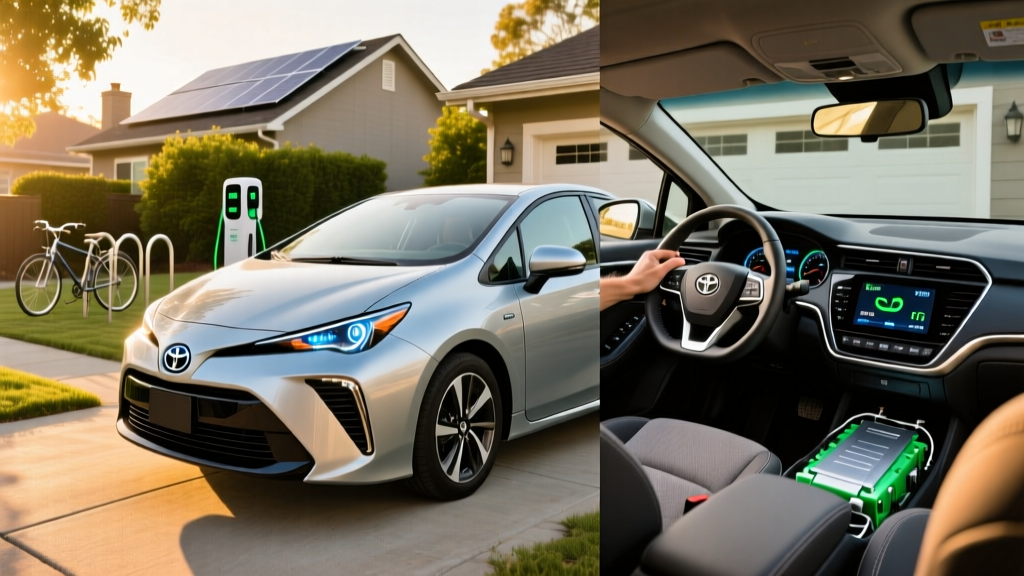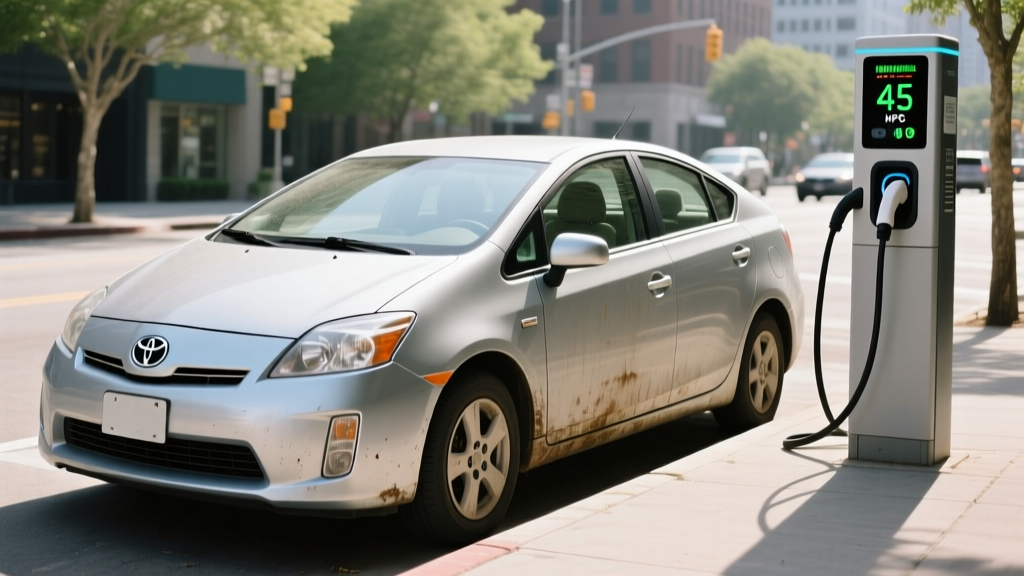
The 2008 Toyota Prius is the vehicle that proved hybrid technology wasn't a niche experiment — it was a mass-market reality. Nearly two decades later, this second-generation (XW20) Prius remains one of the most fuel-efficient used cars you can buy, routinely commanding strong resale values and racking up well past 200,000 miles with basic maintenance. For budget-conscious buyers in 2026 who want maximum MPG without plugging in, the 2008 hybrid Prius deserves a hard look — but only if you understand what you're signing up for with a 17-year-old hybrid battery.
This guide covers the exact fuel economy numbers, powertrain specs, battery longevity data, replacement costs, and ownership economics you need to decide whether a used 2008 Prius is a smart buy or a looming repair bill.
2008 Prius Fuel Economy: EPA Numbers vs. Real-World MPG
The EPA rated the 2008 Toyota Prius at 48 MPG city / 45 MPG highway / 46 MPG combined. Those figures were class-leading in 2008 and remain competitive against many modern hybrids today. But real-world results tell a more nuanced story.
| Metric | EPA Estimate | Real-World Expectation (2026) |
|---|---|---|
| City MPG | 48 MPG | 44–50 MPG (hybrids excel in stop-and-go) |
| Highway MPG | 45 MPG | 40–44 MPG (aero drag + smaller engine working harder) |
| Combined MPG | 46 MPG | 42–47 MPG (depends on driving mix) |
| Fuel Tank Capacity | 11.9 gallons | ~500–550 miles per tank |
The 2008 Prius's Atkinson-cycle engine and regenerative braking system make it particularly efficient in city driving, where the electric motor handles low-speed propulsion and braking recovers energy that would otherwise be lost. On the highway, the 1.5-liter four-cylinder engine works harder, and real-world highway MPG often drops to the low 40s — especially at speeds above 70 mph or in cold weather.
HEV vs. PHEV: Where the 2008 Prius Fits
The 2008 Prius is a conventional hybrid electric vehicle (HEV). It does not plug in. It has no meaningful electric-only range. It generates all its electricity internally through the gasoline engine and regenerative braking. This is a critical distinction from the later Prius Prime (introduced for the 2017 model year), which is a plug-in hybrid (PHEV) with an EPA-rated electric-only range and a charging port.
| Feature | HEV (2008 Prius) | PHEV (e.g., Prius Prime) | BEV (Full Electric) |
|---|---|---|---|
| Plugs in? | No | Yes (Level 1/2) | Yes (Level 1/2/DC) |
| Electric-only range | ~1 mile at low speed | 25–44 miles (model-dependent) | 200–400+ miles |
| Gasoline required? | Yes, always | Yes, after battery depletes | No |
| Home charging needed? | No | Recommended for max benefit | Essential |
| Federal tax credit (§30D)? | No | Up to $7,500 (if eligible) | Up to $7,500 (if eligible) |
| Best for | No plug access, budget buyers | Home charging + short commutes | Home charging + low running costs |
If you have access to home or workplace charging and a commute under 40 miles, a modern PHEV or BEV will likely save you more money on fuel. But if you park on the street, live in an apartment without charging access, or simply want the lowest upfront cost with no behavioral changes, the 2008 HEV Prius still delivers outstanding fuel economy with zero plug-in hassle.
Powertrain Specs: Engine, Motor, and Combined Output
The 2008 Prius uses Toyota's Hybrid Synergy Drive (HSD) system — a series-parallel full hybrid architecture that was remarkably sophisticated for its era. Here are the exact numbers:
| Component | Specification |
|---|---|
| Gasoline Engine | 1.5L inline-4, Atkinson cycle (1NZ-FXE) |
| Engine Power | 76 hp @ 5,000 rpm / 82 lb-ft torque @ 4,200 rpm |
| Electric Motor (MG2) | Permanent magnet synchronous, 67 hp / 295 lb-ft |
| Combined Net Output | 110 hp |
| Transmission | Planetary eCVT (no traditional gears or belts) |
| Hybrid Battery | 1.3 kWh nickel-metal hydride (NiMH), 201.6V nominal |
| 0–60 mph | ~10.0 seconds |
| Drivetrain | Front-wheel drive |
| Curb Weight | ~2,932 lbs |
The 1.3 kWh NiMH battery pack is tiny by modern standards — a 2026 Prius Prime PHEV packs an 13.6 kWh lithium-ion battery. But the 2008 system never needed a large pack. It uses the battery as a buffer: capturing regenerative braking energy and deploying it for electric assist during acceleration, then recharging via the gasoline engine at cruise. The result is seamless operation that most drivers never think about.
Hybrid Battery Longevity: Degradation, Warranty, and Replacement Cost
This is the single biggest concern for anyone considering a 2008 Prius in 2026. The NiMH battery pack is now 17+ years old. Here's what you need to know.
How Long Do 2008 Prius Batteries Actually Last?
Toyota's NiMH packs in the second-gen Prius have proven remarkably durable. Data from owner communities and repair shops shows:
- Original battery lifespan: 150,000–250,000 miles or 12–20 years is typical before significant degradation triggers a check-engine light (codes P0A80 or similar)
- Degradation symptoms: Reduced MPG (often dropping to 35–40 MPG), reduced electric-assist, battery fan running loudly, "red triangle of death" warning
- Failure mode: Usually one or two weak modules (cells) within the 28-module pack, not the entire battery
Battery Replacement Options and Costs (2026 Pricing)
| Option | Cost Range | Warranty | Notes |
|---|---|---|---|
| New OEM Toyota battery | $2,000–$2,500 (parts + labor) | Typically 1 year / 12,000 miles from dealer | Best longevity but diminishing ROI on a 2008 car |
| Refurbished/reconditioned pack | $800–$1,500 (installed) | 1–3 years typical | Rebalanced modules from salvage packs; quality varies by shop |
| Aftermarket new pack | $1,200–$1,800 (installed) | 2–3 years typical | New NiMH modules from third-party suppliers |
| Single-module repair | $300–$600 | None on unreplaced modules | Viable if only 1–2 modules are weak; rest of pack must be healthy |
| Used/junkyard battery | $400–$800 (installed) | 30–90 days typical | High risk — unknown remaining life |
For a 2008 Prius with a market value of $4,000–$7,000 depending on mileage and condition, a $2,500 OEM battery replacement represents a significant percentage of the car's value. Most buyers opt for a refurbished pack or a reputable aftermarket replacement, which restores full MPG and performance for a more reasonable investment.
2008 Prius Reliability and Common Issues Beyond the Battery
The 2008 Prius earned strong reliability ratings during its prime and has aged better than most vehicles of its era. According to NHTSA records, it has relatively few recalls for its model year. But at 17+ years old, certain wear items deserve attention:
- Hybrid battery cooling fan: Located behind the rear passenger seat. Accumulates dust and pet hair over time, causing overheating and accelerated battery degradation. Clean or replace the fan filter ($20–$50 part).
- Inverter coolant pump: A known weak point. If the pump fails, the inverter can overheat and cause a $2,000+ repair. Check for inverter coolant flow (visible turbulence in the reservoir) before buying.
- Brake actuator: The electro-hydraulic brake system can develop issues around 150,000+ miles. Symptoms include a firm pedal and warning lights. Replacement runs $1,200–$1,800.
- Catalytic converter: Prius cats are high-value targets for theft due to their precious metal content. Replacement: $800–$1,500. Consider a catalytic converter shield ($150–$300 installed).
- Combination meter (dashboard): Some 2004–2009 Prius units develop dead pixels or complete failure. Refurbished units available for $200–$400.
- 12V auxiliary battery: Located in the rear cargo area. A standard AGM replacement costs $150–$250. If this dies, the car won't start even with a healthy hybrid battery.
Pricing, Tax Credits, and Ownership Economics in 2026
The 2008 Prius is long out of production, so we're dealing entirely with the used market. Here's where things stand:
| Condition / Mileage | Typical Price Range |
|---|---|
| Under 100k miles, excellent, original battery | $6,500–$8,500 |
| 100k–150k miles, good, battery replaced | $5,000–$7,000 |
| 150k–200k miles, fair, original battery | $3,500–$5,000 |
| 200k+ miles, running, needs work | $2,000–$3,500 |
Federal Tax Credit Eligibility
The 2008 Toyota Prius does not qualify for the federal §30D new clean vehicle credit — that credit applies only to new vehicles meeting current battery-sourcing, MSRP, and buyer income requirements outlined on IRS.gov.
However, if you purchase a used 2008 Prius from a licensed dealer for $25,000 or less, it may qualify for the Used Clean Vehicle Credit (IRC §25E) — worth up to $4,000 or 30% of the sale price (whichever is less). The requirements:
- Vehicle must be at least 2 model years old (2008 qualifies)
- Sale price must be $25,000 or less (virtually all 2008 Prius sales qualify)
- Buyer income limits: $75,000 single / $112,500 head of household / $150,000 joint (modified AGI)
- Must purchase from a licensed dealer (private-party sales excluded)
- Credit can be claimed once per vehicle (VIN-based)
- Buyer can elect point-of-sale transfer to reduce purchase price directly
At typical 2008 Prius prices of $4,000–$7,000, the 30% calculation yields a credit of $1,200–$2,100 — a meaningful discount that effectively covers a future battery repair or several years of the fuel savings advantage over a conventional gas car.
Annual Fuel Cost Comparison
At 46 MPG combined and a national average gas price of roughly $3.30/gallon (early 2026), driving 12,000 miles per year costs approximately $860 annually in fuel. Compare that to a 2008 Toyota Camry 4-cylinder at ~25 MPG combined ($1,584/year) or a 2008 Honda CR-V at ~23 MPG ($1,722/year). The Prius saves $700–$900 per year in fuel alone — enough to recoup its purchase premium over a comparable non-hybrid within 3–5 years.
Who Should Buy a 2008 Hybrid Prius — and Who Shouldn't
✓ Buy It If:
- You need the cheapest possible fuel-efficient daily driver
- You don't have access to home or workplace charging
- Your commute is heavily stop-and-go (city driving maximizes hybrid advantage)
- You want a proven, well-documented platform with abundant aftermarket parts
- You're willing to budget $1,000–$2,000 for a potential battery replacement
- You drive 10,000–15,000+ miles/year (high mileage maximizes fuel savings)
✗ Skip It If:
- You want modern safety tech (no standard AEB, lane-keep, or blind-spot monitoring)
- You prioritize acceleration (10-second 0–60 is leisurely)
- You want electric-only driving for short trips (consider a used PHEV or BEV)
- You drive primarily highway miles at high speeds (hybrid advantage shrinks to ~5–8 MPG over efficient gas cars)
- You live in a state with strict emissions testing and the car has an aging catalytic converter
- You can afford a newer hybrid (2016+ third-gen Prius or a used Prius Prime PHEV offer better tech and remaining battery life)
Pre-Purchase Inspection Checklist for a Used 2008 Prius
If you're serious about buying, here's what to verify before handing over cash:
- Hybrid battery health check: Use a scan tool (Techstream or an OBD-II reader with hybrid data) to check battery block voltage delta. A healthy pack shows less than 0.3V difference between the highest and lowest module blocks. Greater than 0.5V delta signals imminent failure.
- Inverter coolant flow: Open the inverter coolant reservoir (under the hood, pink fluid). With the car in READY mode, you should see visible turbulence indicating the pump is working.
- Regenerative braking test: On a safe downhill stretch, lift off the accelerator. The car should slow noticeably as regen engages. If braking feels purely mechanical, the hybrid system may have issues.
- Check for stored codes: Even if no warning lights are on, scan for pending or stored diagnostic trouble codes. P0A80 (replace hybrid battery) is the one to watch for.
- Battery fan inspection: Remove the rear passenger-side vent cover and check for dust/hair buildup. A clogged fan accelerates battery degradation.
- Service records: Ask whether the hybrid battery has ever been replaced. A documented replacement with a transferable warranty is a strong positive.
Frequently Asked Questions
How many MPG does the 2008 Hybrid Prius get?
The EPA rates it at 48 city / 45 highway / 46 combined MPG. Real-world owners average 42–47 MPG depending on driving style, climate, and battery health. City driving typically returns the highest numbers thanks to regenerative braking and electric assist at low speeds.
How far can the 2008 Prius go on electric only?
Effectively zero miles in any practical sense. The 2008 Prius is a conventional hybrid (HEV), not a plug-in. It can creep at very low speeds (under 25 mph) for roughly half a mile to a mile on battery alone under light load, but the gasoline engine engages almost immediately under normal driving. If you want meaningful electric-only range, look at a Prius Prime PHEV (25–44 miles electric-only depending on model year).
Is the 2008 Prius reliable, and what does a battery replacement cost?
Yes, the 2008 Prius is among the most reliable vehicles of its era, with many examples exceeding 250,000 miles. The primary wear item is the NiMH hybrid battery, which typically lasts 150,000–250,000 miles. Replacement costs range from $300 for a single-module repair to $2,500 for a new OEM pack, with refurbished packs in the $800–$1,500 range representing the best value for most owners. Beyond the battery, the inverter coolant pump and brake actuator are the most common costly repairs.
Does the 2008 Prius qualify for any tax credit?
Not the new-vehicle §30D credit. However, it may qualify for the Used Clean Vehicle Credit (IRC §25E) if purchased from a licensed dealer for $25,000 or less. The credit is 30% of the sale price up to a maximum of $4,000, subject to buyer income caps ($75k single / $150k joint). At typical 2008 Prius prices of $4,000–$7,000, expect a credit of roughly $1,200–$2,100. Verify current eligibility rules at IRS.gov and consult a tax professional.
Hybrid vs. PHEV vs. EV — which should I choose?
Choose the 2008 Prius HEV if you lack charging access, want the lowest purchase price, and drive mostly city miles. Choose a PHEV (like a used Prius Prime, 2017+) if you have home charging and a short commute — you'll drive most days on electricity alone and use gas only for longer trips. Choose a full EV (BEV) if you have reliable home charging, want the lowest per-mile fuel cost, and are ready to plan around charging infrastructure for road trips. The 2008 Prius remains the lowest-barrier entry point to exceptional fuel economy with zero lifestyle changes required.
What's the difference between kW and kWh, and why does it matter for hybrids?
kW (kilowatts) measures power — the rate of energy flow, like how hard the electric motor can push at any instant. kWh (kilowatt-hours) measures energy — the total capacity of the battery, like the size of a fuel tank. The 2008 Prius's battery holds 1.3 kWh of energy and its motor delivers up to 50 kW of power. In a PHEV or BEV, these numbers are much larger (13–100+ kWh batteries, 100–300+ kW motors). For HEVs, the kWh figure matters less because the battery is constantly being recharged by the engine and regen — you never "empty" it in normal driving.