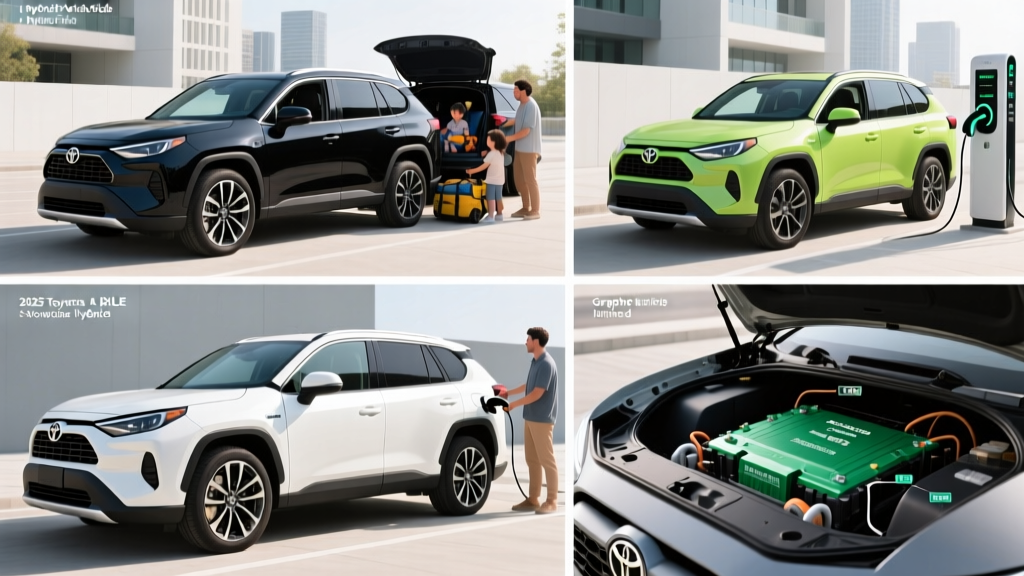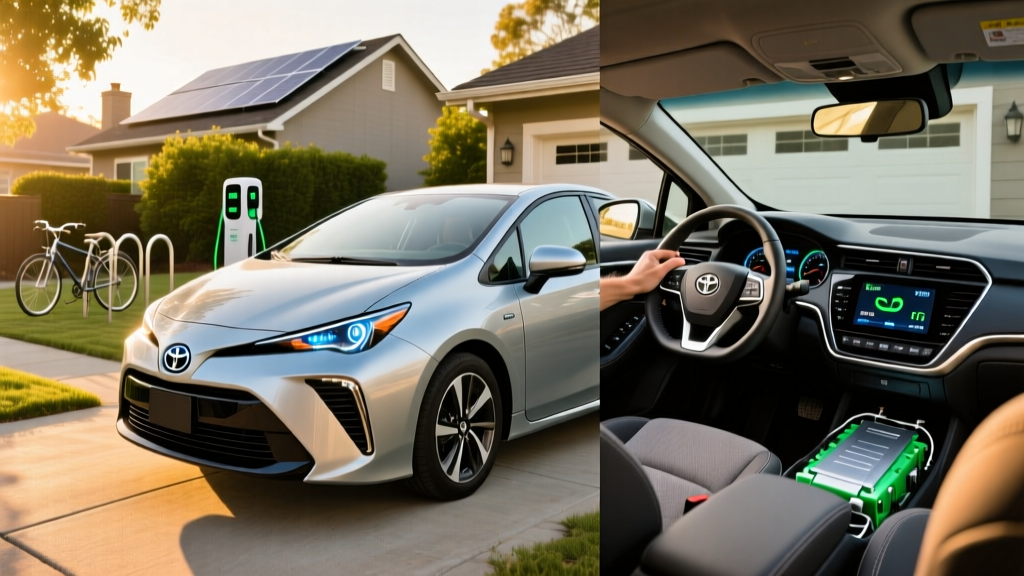
The fourth-generation Toyota Prius (XW50) launched for the 2016 model year with a radical restyle and a reworked hybrid powertrain that pushed fuel economy into uncharted territory for a mainstream sedan. If you're researching the 2017 Toyota Prius hybrid MPG as a used-car buyer in 2026, you're looking at a vehicle that remains one of the most efficient non-plug-in cars ever sold — and one that's now depreciated into an attractive budget-commuter bracket.
This guide covers the official EPA numbers, what you'll actually see at the pump, the hybrid battery's expected lifespan nine years into service, and how the 2017 Prius stacks up against modern PHEVs and full EVs for today's buyers.
2017 Toyota Prius EPA MPG: The Official Numbers
The 2017 Prius was offered in several trims, and EPA ratings vary slightly depending on wheel size and equipment weight. The high-efficiency Prius Two Eco trim (with lighter 15-inch wheels and low-rolling-resistance tires) achieved the top rating, while heavier trims with 17-inch alloy wheels saw a small reduction.
| Trim Group | City MPG | Highway MPG | Combined MPG | Annual Fuel Cost* |
|---|---|---|---|---|
| Prius Two Eco (15" wheels) | 58 | 53 | 56 | ~$850 |
| Prius One/Two/Three/Four (15"-17") | 54 | 50 | 52 | ~$950 |
| Prius Prime (PHEV, combined gas) | 54 | 50 | 52 | Varies by EV ratio |
*Annual fuel cost based on 15,000 miles/year at $3.10/gallon (EPA estimate methodology, fueleconomy.gov). Actual costs vary with local fuel prices and driving mix.
For context, the 56 MPG combined rating on the Two Eco made the 2017 Prius the most fuel-efficient gasoline-powered car without a plug that you could buy at the time — a distinction it held for several years.
Real-World MPG: What Owners Actually Report
Toyota's hybrid system excels in city driving, where regenerative braking and electric-motor assist do the heavy lifting. The EPA city figure (54-58 MPG) is one of the rare cases where the city number exceeds the highway number — a hallmark of Toyota's Hybrid Synergy Drive.
- City commuting (stop-and-go): 50–58 MPG — often matches or exceeds EPA
- Highway cruising (70-75 mph): 43–48 MPG — aerodynamic drag reduces efficiency
- Mixed driving (typical owner): 48–53 MPG
- Cold weather (below 35°F): 40–46 MPG — engine runs more for cabin heat, battery less efficient
Owner-reported data on Fuelly and Prius forums consistently shows lifetime averages in the 48–53 MPG range for mixed driving. Drivers who stay below 65 mph on the highway and maximize city EV-mode coasting can push past 55 MPG regularly. Heavy-footed highway driving at 80+ mph drops that to the low 40s — still impressive, but well below the sticker.
Hybrid Powertrain: Engine, Motor, and Combined Output
The 2017 Prius pairs a 1.8-liter Atkinson-cycle four-cylinder engine with two motor-generators and a planetary gearset (Toyota's e-CVT). This is a conventional series-parallel hybrid — it cannot be plugged in and has no meaningful electric-only driving range beyond low-speed parking-lot maneuvers.
| Specification | Value |
|---|---|
| Engine | 1.8L 4-cyl Atkinson-cycle (95 hp / 105 lb-ft) |
| Electric Motor (MG2, drive) | 71 hp / 120 lb-ft |
| Combined Net System Output | 121 hp |
| Transmission | e-CVT (planetary gearset) |
| Hybrid Battery | 0.75 kWh (NiMH, standard) / 1.31 kWh (Li-ion, Two Eco) |
| Drivetrain | Front-wheel drive (AWD-e not available until 2019) |
| 0–60 mph | ~9.8 seconds |
| Curb Weight | 3,042–3,108 lbs |
The 0.75 kWh nickel-metal hydride (NiMH) battery in most trims is tiny by modern standards — it exists to buffer regenerative energy and provide brief electric assist, not to drive the car independently. The Two Eco trim uses a slightly different lithium-ion pack for minor weight savings. Neither battery supports plug-in charging.
HEV vs. PHEV: The 2017 Prius vs. 2017 Prius Prime
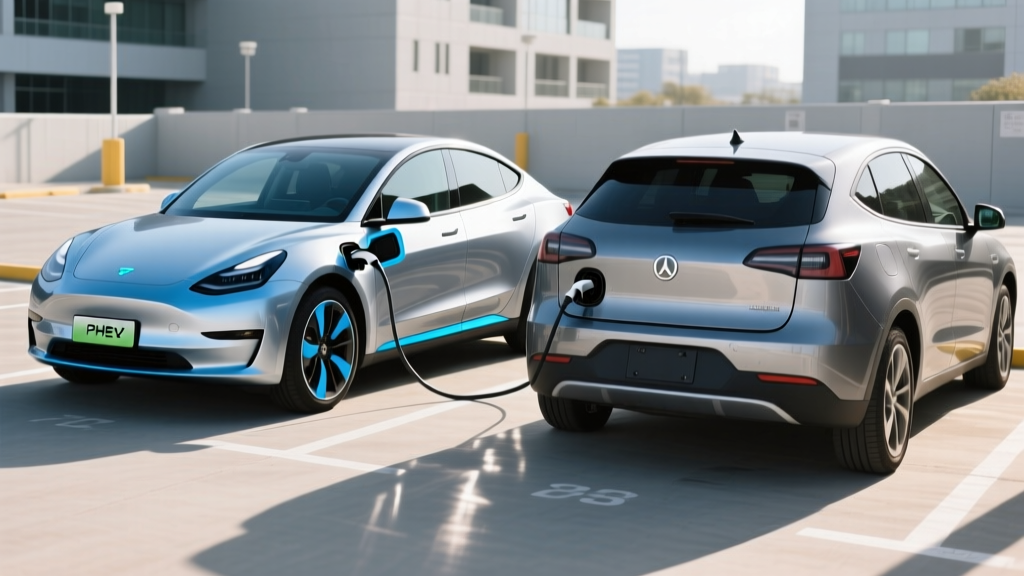
Toyota also sold the 2017 Prius Prime alongside the standard Prius. The Prime is a plug-in hybrid (PHEV) with a larger 8.8 kWh lithium-ion battery, an EPA-rated 25 miles of electric-only range, and a total combined range of approximately 640 miles. It can be plugged into a Level 1 (120V) outlet for a full charge in about 5.5 hours or a Level 2 (240V) charger in roughly 2.5 hours. The Prime does not support DC fast charging.
If you want plug-in capability, look specifically for a Prius Prime badge — the standard Prius has no plug port and no EV-only range.
Hybrid Battery Longevity: 9-Year Check-In and Replacement Cost
For a 2017 model now entering its ninth year on the road, the hybrid battery is the single biggest concern for used buyers. Here's what the data shows:
- Original warranty: 8 years / 100,000 miles (10 years / 150,000 miles in CARB states: CA, NY, MA, and others adopting California emissions standards)
- Expected battery lifespan: 150,000–200,000+ miles with normal use (based on fleet and taxi data)
- Warranty status in 2026: Expired for most non-CARB vehicles; some CARB-state examples may retain coverage through 2027 if under 150k miles
- Replacement cost (OEM new): $2,200–$2,900 (dealer-installed, varies by region)
- Replacement cost (reconditioned/refurbished): $1,000–$1,600 (aftermarket options widely available)
- Individual cell/module repair: $400–$800 (replacing failed modules rather than full pack, offered by specialist shops)
NiMH hybrid batteries degrade gradually rather than failing suddenly. A degraded pack might hold 60-70% of its original capacity, resulting in slightly lower MPG (the engine kicks on more frequently) and reduced regenerative braking effectiveness. Most 2017 Prius examples with under 120,000 miles still have functional original batteries. High-mileage examples (150k+) are statistically more likely to need attention — budget accordingly.
Toyota's hybrid system has proven exceptionally reliable. The Prius consistently earns above-average reliability ratings from Consumer Reports, and the hybrid transaxle (e-CVT) has no clutch packs or bands to wear out like a conventional automatic.
HEV vs. PHEV vs. EV: Which Should You Buy in 2026?
The 2017 Prius competes in the used market against newer PHEVs and affordable full EVs. Here's a practical decision framework:
| Factor | 2017 Prius (HEV) | 2018-2020 Prius Prime (PHEV) | 2018-2020 Chevy Bolt EV |
|---|---|---|---|
| Used Price Range | $12,000–$17,000 | $16,000–$22,000 | $14,000–$19,000 |
| Electric-Only Range | None (EV coast only) | 25 miles (2017-19) | 238 miles |
| Needs Charging Access? | No | No (but benefits greatly) | Yes (essential) |
| Fuel Cost (15k mi/yr) | ~$900/yr gas | ~$450–$700 (gas+electric) | ~$500/yr electricity |
| Maintenance | Low (oil changes, brakes last 80k+) | Low (same + battery care) | Very low (no oil, minimal brakes) |
| Tax Credit (used, 2026) | Not eligible | Up to $4,000 (§25E used EV credit) | Up to $4,000 (§25E used EV credit) |
- You have no access to home or workplace charging
- You want the lowest possible purchase price and simplest ownership
- Your commute is mostly city/suburban stop-and-go (where the Prius excels)
- You drive under 15,000 miles per year and want minimal fuel cost without lifestyle change
- You can charge at home (even a 120V outlet covers the 25-mile battery overnight)
- Your daily commute is under 25 miles round-trip (you'll rarely use gas)
- You want EV-like daily driving but gas flexibility for road trips
- You may qualify for the §25E used clean vehicle credit (up to $4,000, income limits apply)
- You have reliable Level 2 home charging
- Your daily driving is under 200 miles and you rarely take 300+ mile road trips
- You want zero tailpipe emissions and the lowest per-mile energy cost
- You can absorb potentially higher insurance premiums
Does the 2017 Prius Qualify for Any Tax Credits?
The short answer: no federal tax credit applies to the 2017 standard Prius as a new or used purchase in 2026. Here's why:
- §30D New Clean Vehicle Credit: Only applies to new plug-in vehicles (BEVs and PHEVs with ≥7 kWh battery). The standard Prius is a non-plug-in HEV — ineligible.
- §25E Used Clean Vehicle Credit (up to $4,000): Applies only to used plug-in EVs and PHEVs purchased from a dealer for $25,000 or less. The standard Prius HEV does not qualify because it cannot be plugged in.
- Prius Prime exception: A used 2017 Prius Prime may qualify for the §25E credit (up to $4,000 or 30% of sale price, whichever is lower) if purchased from a licensed dealer for ≤$25,000, subject to buyer income caps ($75k single / $150k joint AGI). Confirm eligibility with your tax professional and the IRS §25E guidelines.
- State incentives: Some states (notably California via CVRP rebates) offered incentives for hybrids at purchase — these applied at original sale and do not transfer to used buyers. Check your state's current programs for any applicable used-EV or efficiency rebates.
Pros and Cons: 2017 Prius as a Used Buy in 2026
Pros
- Outstanding real-world MPG: 48–53 MPG mixed driving is achievable without hypermiling
- Proven reliability: Hybrid powertrain routinely exceeds 200,000 miles; e-CVT has no wearable friction components
- Low running costs: ~$900/year in fuel; brake pads often last 80,000+ miles thanks to regen; insurance is affordable
- Practical hatchback: 24.6 cu ft cargo area behind rear seats; usable for groceries, luggage, and small furniture
- Depreciated price: $12,000–$17,000 puts it in budget-territory with a cost-per-mile that's hard to beat
- Standard Toyota Safety Sense P: Pre-collision braking, lane departure alert, automatic high beams, and full-speed adaptive cruise control — impressive for a 2017 model
Cons
- Modest power: 121 net hp and a 9.8-second 0–60 make highway merging deliberate, not quick
- Highway MPG drops off: Expect mid-40s at 70+ mph — the city-biased tuning shows its limits on long freeway commutes
- Rear-seat space is tight: Sloping roofline cuts headroom; tall passengers will notice
- Infotainment feels dated: The 2017 Entune system lacks Apple CarPlay/Android Auto (added for 2020 refresh)
- No plug-in option: If you want EV-mode commuting, you need the Prime variant or a different vehicle entirely
- Battery age risk: At 9 years old, budget $1,000–$2,900 for potential hybrid battery replacement within your ownership window
Frequently Asked Questions
How many MPG does the 2017 Toyota Prius get in real driving?
Most owners report 48–53 MPG in mixed driving. City-heavy commuters can see 54–58 MPG thanks to regenerative braking and frequent electric-motor assist. Highway-only driving at 70+ mph typically yields 43–48 MPG. Cold weather (below 35°F) can drop efficiency to 40–46 MPG due to increased engine operation for cabin heating.
Does the 2017 Prius need to be plugged in?
No. The standard 2017 Prius is a conventional hybrid (HEV). It charges its small battery entirely through regenerative braking and the gasoline engine. You never plug it in. Only the Prius Prime variant has a plug-in port and electric-only driving capability.
How long does the 2017 Prius hybrid battery last, and what does replacement cost?
Toyota's NiMH hybrid batteries typically last 150,000–200,000+ miles. The original warranty was 8 years/100,000 miles (10 years/150,000 miles in CARB states). In 2026, most 2017 examples are out of warranty. An OEM replacement costs $2,200–$2,900 installed; reconditioned packs run $1,000–$1,600; individual module repair can be as low as $400–$800 at specialist shops.
Is the 2017 Prius Prime a better buy than the standard Prius?
The Prius Prime offers 25 miles of electric-only range (on 2017–2019 models) and can serve as a daily EV commuter if you charge at home. However, it costs $3,000–$5,000 more on the used market and adds ~300 lbs of battery weight. If you can't charge at home, the standard Prius is the simpler, cheaper choice with nearly identical gas-only MPG.
Does a used 2017 Prius qualify for any federal tax credit?
The standard 2017 Prius (HEV) does not qualify for any federal tax credit — it's not a plug-in vehicle. However, a used 2017 Prius Prime (PHEV) purchased from a dealer for $25,000 or less may qualify for the §25E used clean vehicle credit of up to $4,000, subject to buyer income limits. Consult a tax professional and review IRS guidelines before relying on credit eligibility.
Is the 2017 Prius a good car to buy used in 2026?
Yes, for the right buyer. It's one of the cheapest vehicles to fuel and maintain on the road, with proven 200k+ mile longevity. The main risk is hybrid battery age — factor $1,500–$2,500 into your budget as a contingency. If you need a no-fuss, ultra-efficient commuter and don't have home charging access, the 2017 Prius remains a benchmark choice nearly a decade after it was built.