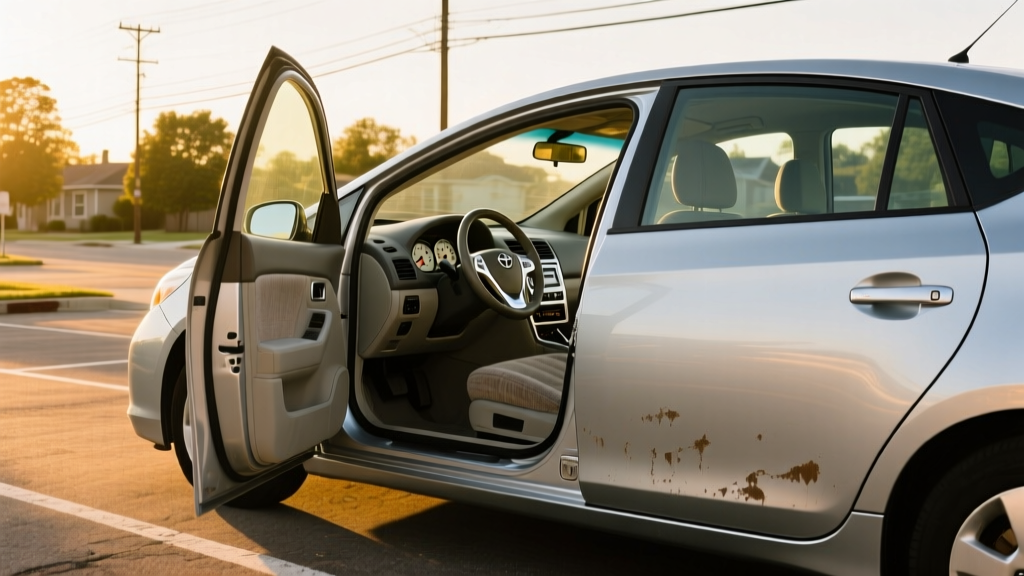
The 2007 Toyota Prius Hybrid Touring remains one of the most recognizable nameplates in the used-hybrid market. Nearly two decades after it rolled off the line, this second-generation (XW20) Prius continues to attract budget-conscious commuters, rideshare drivers, and eco-minded buyers who want proven hybrid efficiency without the premium of a newer model. But buying a 19-year-old hybrid comes with specific questions: What kind of real-world fuel economy can you expect? How long does the hybrid battery last, and what does replacement cost? And how does this conventional hybrid (HEV) compare to modern plug-in hybrids (PHEVs) and full battery-electric vehicles (BEVs)?
This guide breaks down the 2007 Prius Touring with hard data — EPA figures, powertrain specs, battery longevity research, and ownership economics — so you can decide whether this pioneer still earns a spot in your driveway.
HEV vs PHEV: Understanding What the 2007 Prius Actually Is
Before diving into specs, it is essential to distinguish between hybrid types, because confusion here leads to wrong purchase decisions.
Conventional Hybrid (HEV) — 2007 Toyota Prius
- No plug required. The battery recharges via regenerative braking and the gasoline engine.
- No electric-only driving range beyond very low-speed, short-distance creep (under ~1 mile at parking-lot speeds).
- Gasoline is the sole fuel. You never need to think about charging infrastructure.
Plug-In Hybrid (PHEV) — e.g., Toyota Prius Prime
- Plugs in to charge. Larger battery (typically 10-14 kWh usable) provides 25-44 miles of electric-only range.
- Gas engine kicks in after electric range is depleted, functioning like a conventional hybrid.
- May qualify for federal tax credits under IRS §30D rules (subject to MSRP caps, income limits, and battery-sourcing requirements).
The 2007 Toyota Prius — including the Touring trim — is a conventional series-parallel hybrid (HEV). It has a small 1.3 kWh nickel-metal hydride (NiMH) traction battery that you never plug in. If you are looking for electric-only commuting, you need a PHEV or a full BEV. If you want set-it-and-forget-it fuel efficiency with zero charging hassle, the HEV format is exactly right.
Powertrain Specs: 1.5L Atkinson-Cycle Engine + Electric Motor
| Specification | 2007 Prius Touring |
|---|---|
| Engine | 1.5L 4-cylinder Atkinson-cycle (1NZ-FXE) |
| Engine HP / Torque | 76 hp @ 5,000 rpm / 82 lb-ft @ 4,200 rpm |
| Electric Motor | Permanent-magnet synchronous (500V system) |
| Motor HP / Torque | 67 hp / 295 lb-ft |
| Combined Net HP | 110 hp |
| Transmission | eCVT (planetary gearset, no traditional belt/pulleys) |
| Drivetrain | Front-wheel drive |
| Traction Battery | 1.3 kWh NiMH (201.6V nominal) |
| 0-60 mph | ~10.4 seconds |
| Curb Weight | ~2,932 lbs |
| Fuel Tank | 11.9 gallons |
The Prius uses Toyota's Hybrid Synergy Drive, which blends power from the gasoline engine and electric motor through a planetary gearset. This eCVT has no fixed gear ratios and no traditional belt-and-pulley CVT components — it is one of the most durable transmissions ever put into mass production. The combined 110 net horsepower is modest by 2026 standards, but the electric motor's 295 lb-ft of instant torque gives the Prius surprisingly responsive acceleration from a stop.
Fuel Economy: EPA Ratings and Real-World MPG
| Driving Cycle | EPA Estimate | Real-World Expectation |
|---|---|---|
| City | 60 MPG | 50-58 MPG |
| Highway | 51 MPG | 44-50 MPG |
| Combined | 46 MPG (revised EPA method) | 42-50 MPG |
Source: EPA Fuel Economy Guide — 2007 Toyota Prius
Several factors influence your actual MPG:
- Tire condition and pressure: Under-inflated tires can drop MPG by 2-4 MPG. The Touring trim came with 16-inch alloy wheels and slightly wider tires (195/55R16) versus the base model's 15-inch setup, which costs roughly 1-2 MPG compared to the base trim.
- Battery health: A degraded NiMH battery reduces the electric motor's assist capability, forcing the gas engine to work harder. Expect a 3-6 MPG penalty with a significantly worn battery.
- Climate: Cold weather (below 40°F) reduces battery efficiency and increases engine warm-up time. Winter MPG can drop to 38-42 in northern climates.
- Driving style: Aggressive acceleration and sustained speeds above 70 mph reduce hybrid efficiency. The Prius rewards smooth, anticipatory driving.
How many MPG does the 2007 Prius Hybrid Touring get?
Under the current revised EPA methodology, the 2007 Prius is rated at 60 city / 51 highway / 46 combined MPG (original sticker showed 55 combined under old testing). In real-world mixed driving, most owners see 42-50 MPG combined. Highway-heavy commutes at 75+ mph may yield 40-44 MPG, while gentle city driving in moderate weather can push past 52 MPG.
Touring Trim: What You Get Over the Base Prius
The 2007 Prius Touring was the top trim level and added several features over the base and Package models:
- 16-inch alloy wheels with 195/55R16 tires (vs. 15-inch on base)
- Integrated GPS navigation system with 6.5-inch touchscreen
- JBL premium audio with 9 speakers and subwoofer
- Bluetooth hands-free phone capability
- Smart Key System with push-button start
- Fog lights and rear spoiler
- Vehicle Stability Control (VSC) and traction control
The navigation system, while cutting-edge for 2007, uses DVD-based mapping that is long out of date. Most owners rely on a phone mount and smartphone navigation. The JBL audio system and Bluetooth remain genuinely useful, and Smart Key is a convenience you will appreciate daily.
Hybrid Battery Longevity and Replacement Cost
The single biggest concern for any used-hybrid buyer is the traction battery. Here is what the data shows:
How Long Does the 2007 Prius NiMH Battery Last?
NiMH batteries in the second-generation Prius (2004-2009) have demonstrated remarkable longevity in fleet and owner data:
- Average lifespan: 150,000-200,000 miles or 12-15 years under normal use
- Best-case: Numerous owners report original batteries exceeding 250,000 miles with gradual capacity loss
- Worst-case: Batteries in extremely hot climates (Arizona, Texas) with frequent deep cycling may fail around 120,000-140,000 miles
- Failure mode: NiMH batteries rarely fail catastrophically. Instead, individual cells weaken over time, reducing electric-assist capability and lowering MPG gradually. The car remains drivable but less efficient.
Battery Replacement Options and Costs (2026 Pricing)
| Option | Cost Range | Warranty | Notes |
|---|---|---|---|
| New OEM Toyota battery | $2,200 - $2,800 (parts + labor) | 3 yr / 36,000 mi | Dealer-installed; most reliable option |
| Remanufactured battery | $1,200 - $1,800 | 1-3 years varies | Weak cells replaced; quality varies by vendor |
| Used/salvage battery | $500 - $900 | 30-90 days typical | Risky — unknown remaining life |
| Individual cell/module replacement | $300 - $600 | None to 1 year | DIY-friendly for experienced technicians; requires reconditioning equipment |
Is the 2007 Prius reliable, and what is battery replacement cost?
Yes — the second-generation Prius is widely regarded as one of the most reliable vehicles Toyota has ever built. The eCVT transmission, Atkinson-cycle engine, and hybrid electronics have proven exceptionally durable. Consumer Reports has consistently given this generation above-average reliability ratings. If the hybrid battery needs replacement, budget $1,500-$2,800 depending on whether you choose a remanufactured or new OEM unit. Given that a well-maintained 2007 Prius can easily reach 250,000+ miles, a battery replacement is often economically justified.
Hybrid vs PHEV vs EV: Which Powertrain Fits Your Needs?
The 2007 Prius competes in the used market against newer conventional hybrids, modern PHEVs, and affordable used BEVs. Here is how to decide:
| Factor | 2007 Prius (HEV) | Modern PHEV (e.g., 2026 Prius Prime) | Used BEV (e.g., 2019-2022 Leaf/Bolt) |
|---|---|---|---|
| Purchase Price | $4,000 - $7,500 | $33,000 - $38,000 (new) | $12,000 - $20,000 |
| Fuel/Energy Cost per Mile | ~$0.07/mi (gas @ $3.20) | ~$0.04/mi (electric) + $0.06/mi (gas) | ~$0.04/mi (electric) |
| Home Charging Needed? | No | Recommended (120V OK, 240V ideal) | Essential (240V Level 2 strongly recommended) |
| Electric-Only Range | None (HEV) | 35-44 miles | 150-260 miles (depending on model/age) |
| Tax Credit Eligibility | None | Up to $3,750-$7,500 (§30D) | Up to $4,000 (used EV credit, §25E) |
| Maintenance Cost | Low (proven platform) | Low-moderate (warranty-covered) | Very low (no engine, fewer fluids) |
| Best For | Tight budget, no charging access, high-mileage commuting | Short electric commute + road-trip flexibility | Home charging access, mostly under 150 mi/day |
Choose the 2007 Prius HEV if:
- Your total vehicle budget is under $8,000
- You lack access to home or workplace charging (apartment, street parking)
- You drive 20,000+ miles per year and need maximum fuel savings with zero charging logistics
- You want a proven, simple platform that any independent mechanic can service
- You are buying a second car or a commuter beater
Look at a PHEV or BEV instead if:
- You have home charging and want to eliminate most gasoline use
- You want modern safety features (automatic emergency braking, lane-keeping assist — absent on the 2007 Prius)
- You qualify for federal or state EV/PHEV tax credits that significantly reduce the effective price
- You want a quieter, smoother, more responsive driving experience
Does the 2007 Prius Qualify for Any Tax Credit?
No. The 2007 Toyota Prius does not qualify for any current federal tax credit.
- The original §30D hybrid tax credit (up to $3,150 for the Prius) expired for Toyota vehicles in 2007 after Toyota hit the 50,000-unit phase-out threshold. This credit applied only to the original purchaser.
- The current §30D Clean Vehicle Credit (up to $7,500) applies only to new plug-in vehicles (PHEVs and BEVs) meeting battery-sourcing, MSRP, and buyer-income requirements. Conventional hybrids like the 2007 Prius are excluded entirely. See IRS §30D guidelines for current rules.
- The §25E Used Clean Vehicle Credit (up to $4,000) applies only to used PHEVs and BEVs, not conventional hybrids.
Some states and local utilities offer rebates for used hybrid purchases, but these vary widely by jurisdiction. Check your state energy office or utility provider for current programs.
Ownership Costs: What to Budget in 2026
Here is a realistic annual ownership cost estimate for a 2007 Prius Touring driven 15,000 miles per year:
| Expense | Annual Estimate |
|---|---|
| Fuel (15,000 mi ÷ 46 MPG × $3.20/gal) | ~$1,043 |
| Insurance (varies by state/driver) | $800 - $1,400 |
| Maintenance (oil, brakes, tires, fluids) | $400 - $700 |
| Registration + taxes | $100 - $300 |
| Hybrid battery reserve (amortized) | $150 - $200/yr |
| Total Annual Cost | $2,493 - $3,643 |
For comparison, a similarly aged 2007 Honda Civic (non-hybrid, ~30 MPG combined) would cost approximately $1,600/year in fuel alone — over $550 more. The Prius hybrid premium pays for itself in fuel savings within the first year of typical driving.
Notable maintenance advantages of the Prius:
- Brake pads last 80,000-100,000+ miles thanks to regenerative braking handling most deceleration
- No traditional transmission fluid changes — the eCVT uses ATF that Toyota considers "lifetime" (though many mechanics recommend a drain-and-fill at 120,000 miles)
- No starter motor or alternator — the MG1 motor/generator handles both functions, eliminating two common failure points
- Timing chain (not belt) — no scheduled replacement interval
Pros and Cons: Honest Assessment for Used Buyers
Pros
- Proven 46 MPG combined (real-world 42-50 MPG)
- Exceptional long-term reliability — 250,000+ mile examples are common
- Low annual maintenance and fuel costs
- No charging infrastructure needed
- Spacious hatchback cargo area (50.2 cu ft with rear seats folded)
- Strong resale value even at high mileage
- Extensive aftermarket and independent mechanic support
Cons
- No modern safety tech (no AEB, blind-spot monitoring, or lane-keeping)
- Dated infotainment — navigation DVD maps are obsolete
- Modest 110 hp feels slow for highway merging (10.4s 0-60)
- NiMH battery will likely need replacement if original (budget $1,500-$2,800)
- Road and wind noise at highway speeds
- Touring trim's 16-inch wheels sacrifice 1-2 MPG vs base 15-inch setup
- No federal tax credit eligibility
Frequently Asked Questions
How far can the 2007 Prius go on electric only?
Effectively zero miles in any practical sense. The 2007 Prius is a conventional hybrid (HEV), not a plug-in. The 1.3 kWh NiMH battery can propel the car at very low speeds (under 25 mph) for roughly half a mile in EV mode, but the gas engine starts automatically under any meaningful acceleration or load. If electric-only driving is a priority, look at the Toyota Prius Prime (PHEV), which offers 35-44 miles of electric-only range depending on model year.
Is it worth buying a 2007 Prius with 200,000 miles?
It can be — if the price reflects the mileage and the hybrid battery has been recently replaced or tested. The 1NZ-FXE engine and eCVT transmission routinely exceed 300,000 miles with basic maintenance. The key variable is battery health. Ask for a hybrid battery health report (many dealers and independent shops can pull this via Toyota's Techstream diagnostic tool). If the battery shows significant degradation, negotiate the replacement cost ($1,500-$2,800) into the purchase price.
What are common problems with the 2007 Prius?
The most reported issues are: (1) hybrid battery degradation — expected at this age if original; (2) combination meter (instrument cluster) failure — the dashboard display goes blank, and this is a known defect with refurbished replacements available for $200-$400; (3) water pump failure — the engine water pump is a wear item around 120,000-150,000 miles ($200-$350 replacement); and (4) catalytic converter theft — the Prius is a frequent target due to precious-metal content in its cat. An aftermarket catalytic converter shield ($150-$250 installed) is strongly recommended.
Can I convert the 2007 Prius to a plug-in hybrid?
Aftermarket PHEV conversion kits existed for the second-generation Prius (notably from Enginer and Hymotion), adding 10-30 miles of electric-only range. However, these kits are largely discontinued, unsupported, and incompatible with modern charging standards. The conversion cost ($8,000-$12,000) far exceeds the value of the vehicle. If you want plug-in capability, purchase a factory PHEV instead.
How does the 2007 Prius Touring compare to the 2026 Prius?
The 2026 Toyota Prius produces 196 hp (nearly double), achieves an EPA-estimated 57 MPG combined on the LE trim, includes Toyota Safety Sense 3.0 (AEB, lane-keeping, adaptive cruise), and features a modern 8-inch or 12.3-inch touchscreen with wireless Apple CarPlay and Android Auto. However, it starts at approximately $29,000 — roughly 4-6x the cost of a used 2007 Prius Touring. The efficiency gap is only ~11 MPG combined, making the 2007 model remarkably competitive on a dollars-per-MPG basis.
Does the 2007 Prius qualify for any tax credit?
No. The original federal hybrid tax credit for the Prius expired in 2007 for new purchases and was only available to the original buyer. Current federal credits (§30D for new, §25E for used) apply exclusively to plug-in vehicles — PHEVs and BEVs — not conventional hybrids. Check your state and local utility for possible used-hybrid rebates, which vary by jurisdiction.