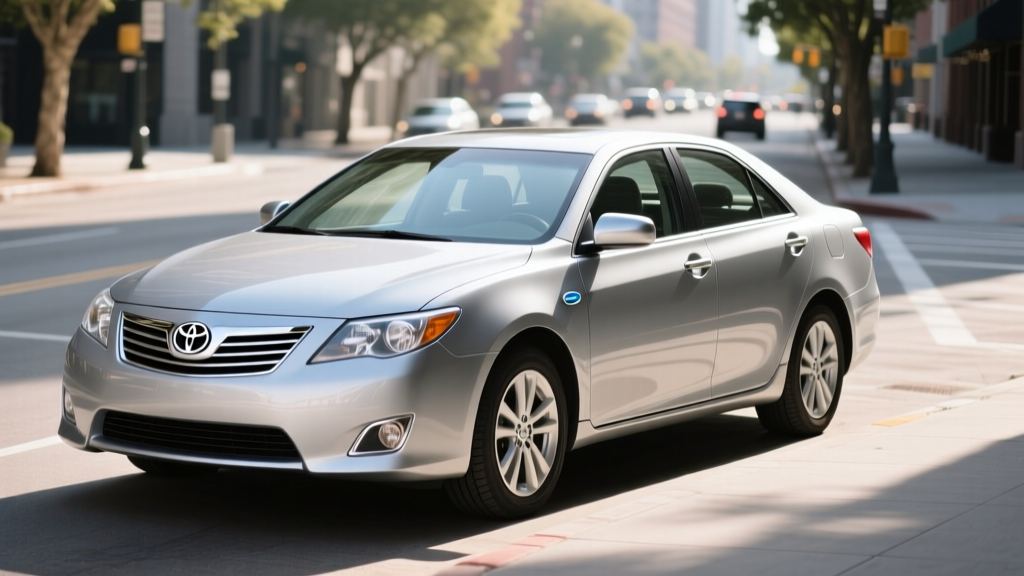
The 2007 Toyota Camry Hybrid was Toyota's first attempt at bringing hybrid efficiency to America's best-selling midsize sedan. Nearly two decades later, used examples still populate roads and resale listings, and buyers researching the MPG Toyota Camry Hybrid 2007 model often want one core question answered: does this early hybrid still deliver meaningful fuel savings?
The short answer is yes — but with important caveats around battery age, replacement cost, and how this first-generation Hybrid Synergy Drive system compares to modern hybrid and plug-in hybrid options available in 2026. This guide covers the exact EPA numbers, real-world fuel economy data, battery health considerations, and whether a 2007 Camry Hybrid makes financial sense as a used purchase today.
2007 Toyota Camry Hybrid: EPA MPG and Official Fuel Economy
The 2007 Camry Hybrid is a conventional hybrid electric vehicle (HEV). It does not plug in. It charges its own small battery through regenerative braking and the gasoline engine. According to fueleconomy.gov, the EPA rates the 2007 Camry Hybrid as follows:
| Metric | Value |
|---|---|
| City MPG | 33 MPG |
| Highway MPG | 34 MPG |
| Combined MPG | 33 MPG |
| Annual Fuel Cost (est.) | ~$1,550 (at $3.30/gal) |
| Fuel Type | Regular unleaded (87 octane) |
For context, the conventional 2007 Camry with the 2.4L four-cylinder engine and automatic transmission was EPA-rated at 21 city / 30 highway / 24 combined MPG. The hybrid variant represented a roughly 38% improvement in combined fuel economy — a significant gap that translated to roughly 150 additional miles per tank under mixed driving.
Real-World MPG vs. the EPA Sticker
Toyota's Hybrid Synergy Drive system in the 2007 Camry pairs a 2.4-liter Atkinson-cycle four-cylinder engine with an electric motor and a continuously variable transmission (CVT). Like most Toyota hybrids, this system tends to meet or slightly exceed its EPA city rating in real-world stop-and-go driving because regenerative braking recovers energy that a gas-only car wastes as heat.
- City driving: 31–36 MPG (hybrids excel here; regen braking dominates)
- Highway driving: 30–34 MPG (electric assist is minimal at sustained speed)
- Combined mixed driving: 30–35 MPG
- Cold weather penalty: Expect 3–5 MPG reduction in winter (engine runs more for cabin heat)
Owner-reported data on Fuelly and similar platforms clusters around 31–34 MPG combined for well-maintained examples. A degraded hybrid battery will reduce these figures by 2–4 MPG as the system relies more heavily on the gasoline engine.
The key variable for 2026 buyers is battery health. A 2007 Camry Hybrid with its original nickel-metal hydride (NiMH) traction battery — now 19 years old — is very likely to show reduced electric-motor assist, lower MPG, and more frequent engine cycling. More on this below.
HEV vs. PHEV vs. EV: Where the 2007 Camry Hybrid Fits
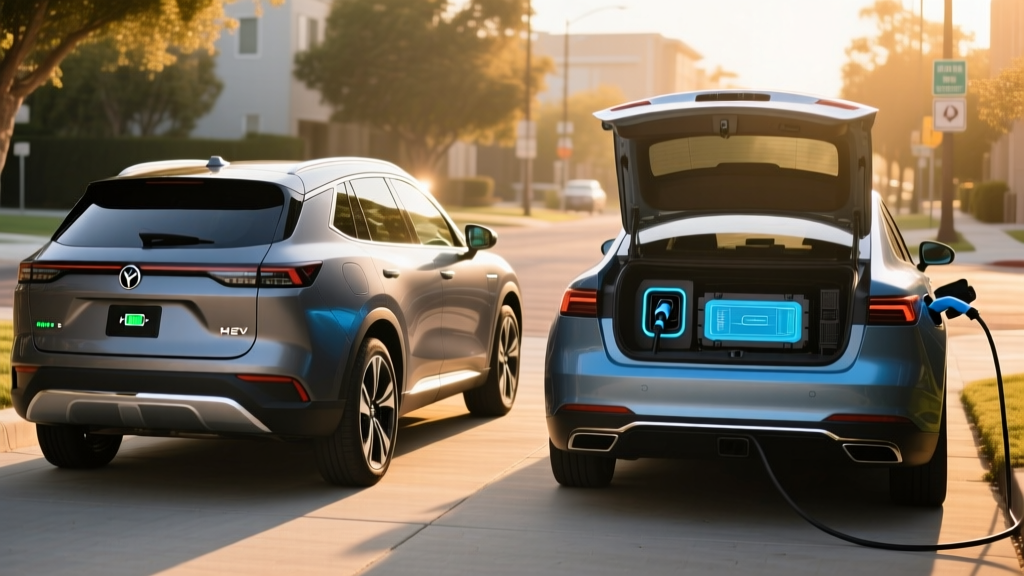
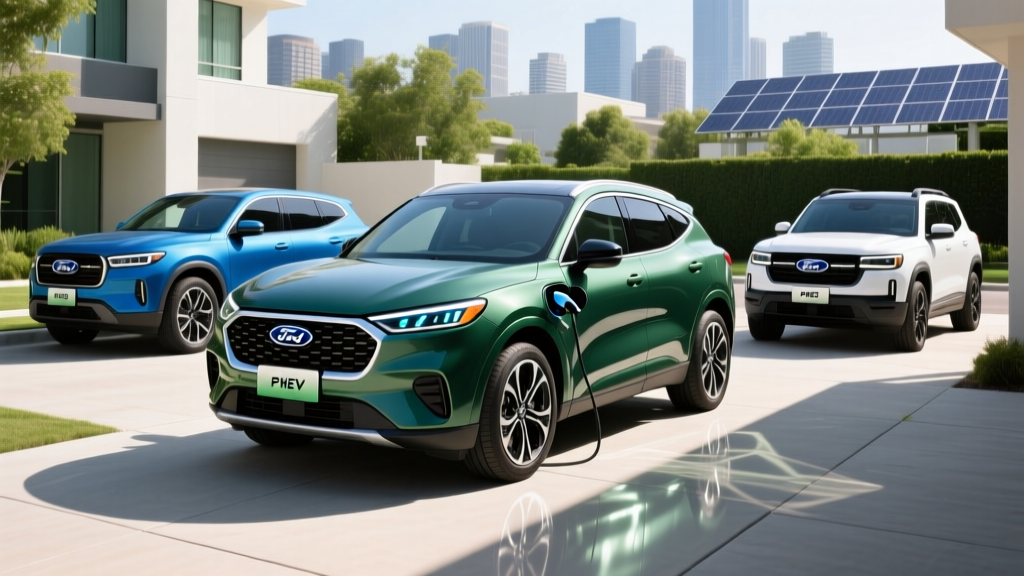
The 2007 Camry Hybrid is a conventional hybrid (HEV). It has no plug, no electric-only driving mode, and no external charging capability. Understanding this distinction matters because Toyota now sells the 2026 Camry in both HEV and no-PHEV-only configurations, and competitors offer plug-in hybrid sedans.
| Feature | HEV (2007 Camry Hybrid) | PHEV (e.g., 2026 Toyota Prius Prime) | BEV (e.g., 2026 Tesla Model 3) |
|---|---|---|---|
| Plugs in? | No | Yes | Yes |
| Electric-only range | 0 miles (motor assists only) | ~44 miles | 272–363 miles |
| Total range | ~580 miles | ~600+ miles (electric + gas) | 272–363 miles |
| Federal tax credit (new) | None | Up to $7,500 (§30D) | Up to $7,500 (§30D) |
| Home charging needed | No | Recommended (Level 2) | Required |
| Gas station visits | Regular | Reduced (if charging daily) | Never |
If your daily commute is under 15 miles and you can charge at home, a modern PHEV or BEV will dramatically outperform the 2007 Camry Hybrid in operating cost. But if you need a low-upfront-cost commuter with no charging infrastructure requirements, a used HEV like this Camry still has a role.
Powertrain Specs: Engine, Motor, and Combined Output
The 2007 Camry Hybrid uses Toyota's second-generation Hybrid Synergy Drive. Here are the exact figures:
| Component | Specification |
|---|---|
| Gasoline Engine | 2.4L Atkinson-cycle inline-4 (2AZ-FXE) |
| Engine Horsepower | 147 hp @ 6,000 rpm |
| Engine Torque | 138 lb-ft @ 4,400 rpm |
| Electric Motor | Permanent-magnet synchronous (3JM) |
| Motor Horsepower | 40 hp (30 kW) |
| Combined Net Horsepower | 192 hp |
| Transmission | eCVT (electronically controlled CVT) |
| Traction Battery | NiMH, ~1.6 kWh (gross), ~0.9 kWh usable |
| 0–60 mph | ~8.4 seconds |
| Drivetrain | Front-wheel drive |
The 192 combined horsepower made the 2007 Camry Hybrid one of the quicker hybrids of its era, and it still feels adequate in 2026 city traffic. The eCVT is gearless and smooth, though some drivers note a "rubber-band" sensation under hard acceleration — a characteristic of all Toyota hybrid CVTs.
Battery Health, Lifespan, and Replacement Cost
This is the single most important factor when evaluating any 2007 Camry Hybrid today. The original NiMH traction battery was designed for a 10-year service life. At 19 years old, most surviving examples have either already received a replacement battery or are running on significantly degraded cells.
- Toyota hybrid battery warranty (original): 8 years / 100,000 miles (10 years / 150,000 miles in CARB states including CA, NY, MA, and others)
- Current status: All original warranties expired by 2017 at the latest
- Battery chemistry: Nickel-metal hydride (NiMH) — less energy-dense than modern lithium-ion but extremely durable in moderate climates
Battery Replacement Options and Costs (2026)
| Option | Cost Range | Warranty | Notes |
|---|---|---|---|
| New OEM Toyota battery | $3,500–$4,500 (installed) | 3 years / unlimited miles | Dealership only; often exceeds vehicle value |
| Remanufactured battery (e.g., Green Bean Battery) | $1,500–$2,200 (installed) | Limited lifetime or 3–5 years | Most popular choice for older Camrys; replaces only failed modules |
| Used/salvage battery | $500–$1,000 (parts only) | 30–90 days typical | Risky — unknown remaining life; not recommended |
| Individual module replacement (DIY) | $200–$600 (parts) | None | Requires high-voltage safety knowledge; replaces only bad cells |
A remanufactured battery from a reputable supplier is the most financially rational choice. It typically restores original MPG figures and costs roughly 25–40% of what a new OEM pack runs. If the asking price on a 2007 Camry Hybrid is $4,000 and it needs a $1,800 battery, you're effectively paying $5,800 — still reasonable for a 33-MPG commuter, but negotiate accordingly.
Signs of a Degraded Hybrid Battery
- Fuel economy has dropped 3–6 MPG below EPA rating
- The gasoline engine cycles on and off more frequently than normal
- The state-of-charge meter on the dash fluctuates rapidly
- A hybrid system warning light or check engine light (code P0A80 or similar)
- Reduced regenerative braking feel
Is the 2007 Camry Hybrid Reliable?
The 2007 Camry Hybrid earned a strong reliability reputation, consistent with Toyota's mid-2000s build quality. The 2AZ-FXE engine is a proven design shared with the Camry, RAV4, and Highlander of that era, though it has a known (and well-documented) oil consumption issue at higher mileage that owners should monitor. The eCVT transaxle is one of the most durable transmissions Toyota has ever built — it has no traditional gears, clutch packs, or torque converter to wear out.
According to NHTSA records, the 2007 Camry Hybrid has relatively few recalls, with the primary concerns being standard mechanical items rather than hybrid-system failures. The hybrid-specific components — inverter, motor-generators, and battery control module — have proven extremely reliable when the traction battery is maintained or replaced.
The biggest reliability risk in 2026 is not the hybrid system itself but the age of ancillary components: suspension bushings, engine mounts, the 12V auxiliary battery, and the air conditioning compressor. Budget $500–$1,500 in deferred maintenance for any 19-year-old vehicle regardless of powertrain.
Does the 2007 Camry Hybrid Qualify for Any Tax Credit?
No. The 2007 Camry Hybrid does not qualify for any federal tax credit in 2026. The current IRS §30D Clean Vehicle Credit applies only to new qualifying plug-in electric vehicles (PHEVs and BEVs) that meet battery sourcing, MSRP caps, and buyer income limits. Conventional hybrids like this Camry have not been eligible for a federal purchase credit since the original Hybrid Vehicle Credit expired for Toyota in 2007.
For used EV buyers, the IRS §25E Used Clean Vehicle Credit offers up to $4,000 (or 30% of sale price, whichever is less) for qualifying used plug-in vehicles — but again, conventional HEVs are excluded. The 2007 Camry Hybrid's only financial incentive at purchase is its low upfront cost on the used market, typically $3,000–$6,000 depending on mileage and condition.
Pricing and 2026 Used Market Value
The 2007 Camry Hybrid's original MSRP was approximately $26,480 — a roughly $3,000 premium over the four-cylinder LE. In today's used market, values have settled firmly in budget-commuter territory:
- High mileage (150,000+ mi), fair condition: $2,500–$4,000
- Average mileage (100,000–150,000 mi), good condition: $4,000–$6,000
- Lower mileage (under 100,000 mi), excellent condition: $5,500–$7,500
When comparing against the 2026 Toyota Camry Hybrid (EPA-rated 51 MPG combined, starting at ~$29,995), the fuel economy gap is substantial. But the 2007 model's appeal is strictly about low acquisition cost. At $4,000 with a fresh remanufactured battery, it's a sub-$6,000 commuter delivering 33 MPG — a cost-per-mile proposition that's hard to beat if you can't or don't want to finance a new vehicle.
Who Should Buy the 2007 Camry Hybrid — and Who Shouldn't
- You need a sub-$6,000 commuter with better-than-average fuel economy
- You have no access to home or workplace charging (rules out PHEVs and BEVs)
- You drive primarily in city traffic where hybrid efficiency shines
- You're comfortable budgeting for a potential battery replacement
- You want Toyota reliability without new-car depreciation
- You want modern safety tech (no standard AEB, lane-keep, or blind-spot monitoring on the 2007 model)
- Your highway commute exceeds 40 miles daily (a modern hybrid or BEV will save more)
- You can access home Level 2 charging — a used PHEV or BEV will cost less per mile
- You want Apple CarPlay, Android Auto, or modern infotainment
- The vehicle you're eyeing still has its original 19-year-old battery and no service records
Frequently Asked Questions
How many MPG does the 2007 Toyota Camry Hybrid get?
The EPA rates it at 33 city / 34 highway / 33 combined MPG. Real-world driving typically yields 30–35 MPG combined, with city driving sometimes exceeding the EPA estimate thanks to regenerative braking. A degraded hybrid battery will reduce these numbers by 2–4 MPG.
Does the 2007 Camry Hybrid need to be plugged in?
No. It is a conventional hybrid (HEV), not a plug-in hybrid. The battery charges itself through regenerative braking and the gasoline engine. You fuel it like any other car at a gas station.
How long does the hybrid battery last in a 2007 Camry?
The original NiMH battery was designed for roughly 10 years or 150,000 miles. Most 2007 examples have either had a replacement or are running on a degraded pack. A quality remanufactured battery typically lasts 5–8 additional years.
What does it cost to replace the hybrid battery?
A remanufactured battery installed by a hybrid specialist costs $1,500–$2,200. A new OEM battery from Toyota runs $3,500–$4,500 installed. DIY module-level repair is possible for $200–$600 in parts but requires high-voltage safety precautions.
Is the 2007 Camry Hybrid more reliable than the gas Camry?
Overall reliability is comparable, but the hybrid adds the traction battery as a potential repair item. The eCVT transmission is actually more reliable than the conventional automatic used in gas Camrys because it has fewer moving parts. The 2AZ-FXE engine shares the oil-consumption issue found in the standard 2AZ-FE.
How does the 2007 Camry Hybrid compare to the 2026 Camry Hybrid?
The 2026 Camry Hybrid achieves an EPA-estimated 51 MPG combined — a 55% improvement over the 2007 model — and includes standard Toyota Safety Sense 3.0 with AEB, lane-keeping, and adaptive cruise control. However, a 2026 model starts around $29,995. The 2007 model trades modern efficiency and safety for a sub-$6,000 purchase price.
Does the 2007 Camry Hybrid qualify for any tax credit?
No. Federal EV and PHEV tax credits under IRS §30D and §25E apply only to plug-in vehicles. Conventional hybrids have not been eligible for federal purchase incentives since Toyota's original hybrid credit phase-out in 2007.