Quick Verdict: A Pioneer That Still Commutes
The 2007 Nissan Altima Hybrid was Nissan's first gasoline-electric sedan sold in the United States, leveraging Toyota's Hybrid Synergy Drive technology under a licensing agreement. Nearly two decades later, this conventional hybrid (HEV) still shows up on used-car lots and private listings, typically priced between $3,000 and $6,000 depending on mileage and condition. With an EPA-rated 35 MPG combined, it remains competitive with some modern non-hybrid midsize sedans — though buyers need to weigh the age of the hybrid battery against the low purchase price.
This guide covers everything a 2026 used-car shopper needs to know: real-world fuel economy, the Toyota-sourced powertrain, battery degradation realities, replacement costs, and whether this early hybrid still makes financial sense versus a newer HEV, PHEV, or full EV.
HEV vs. PHEV vs. EV: Where the 2007 Altima Hybrid Fits
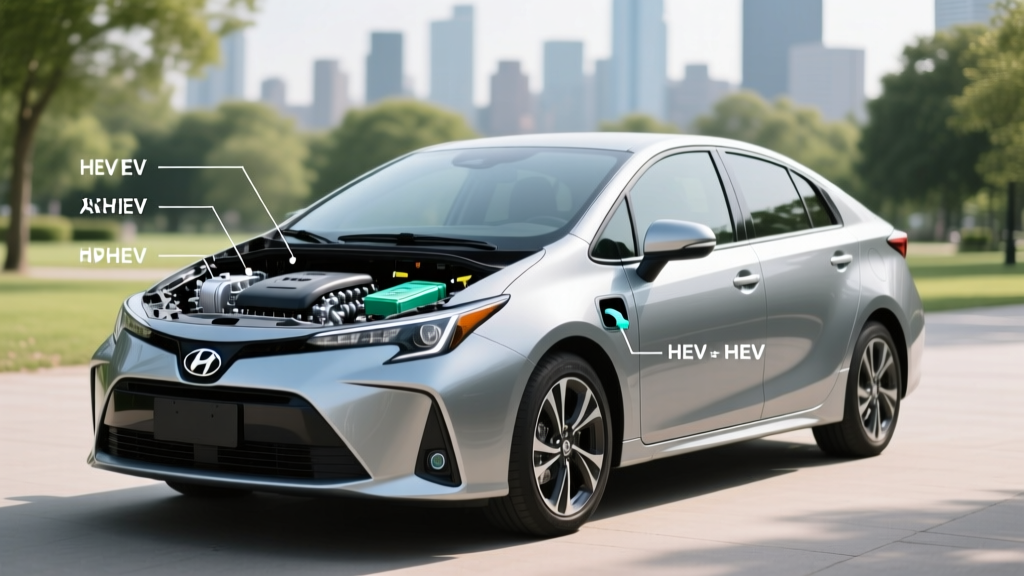
Conventional Hybrid (HEV): The 2007 Altima Hybrid is an HEV. It charges its small battery through regenerative braking and the gasoline engine. You never plug it in. The electric motor assists the gas engine to reduce fuel consumption, but the car cannot drive on electricity alone for meaningful distances.
Plug-in Hybrid (PHEV): A PHEV has a larger battery (typically 8–25 kWh) that you charge from a wall outlet or public charger, giving 20–50 miles of electric-only driving before the gas engine kicks in. The 2007 Altima Hybrid is not a PHEV — it has no plug, no electric-only range, and no MPGe rating.
Battery Electric Vehicle (BEV): A full EV runs entirely on electricity with 200–400+ miles of range, no gasoline engine, and zero tailpipe emissions. Examples in 2026 include the Tesla Model 3, Hyundai Ioniq 6, and Chevrolet Equinox EV.
If you're cross-shopping, understand that the 2007 Altima Hybrid competes on upfront cost alone. Modern PHEVs like the Toyota Prius Prime offer 44 miles of electric-only range and 48 MPG combined as a hybrid, while a used 2020+ Toyota RAV4 Hybrid delivers 40 MPG combined — but both command significantly higher used prices.
Fuel Economy: EPA Ratings and Real-World MPG
| Metric | EPA Rating | Real-World Expectation |
|---|---|---|
| City MPG | 36 MPG | 33–38 MPG (hybrids often exceed EPA in stop-and-go) |
| Highway MPG | 33 MPG | 30–34 MPG (less regenerative braking benefit at steady speed) |
| Combined MPG | 35 MPG | 31–35 MPG |
| Fuel Tank Capacity | 20.0 gallons | |
| Estimated Total Range | ~650–700 miles per tank | |
Source: EPA Fuel Economy
Like most Toyota-sourced hybrid systems of this era, the Altima Hybrid excels in city driving where regenerative braking and electric motor assist do the most work. Owners who drive primarily urban routes frequently report matching or slightly exceeding the 36 MPG city sticker. Highway driving is less impressive — at sustained 70+ MPH speeds, the 2.5-liter four-cylinder does most of the work, and fuel economy drops closer to 30 MPG.
Age factor: A 2007 model with 150,000+ miles and an aging hybrid battery may see a 2–5 MPG drop from original ratings. If the battery is degraded, the engine runs more often to compensate, eroding the hybrid advantage. We'll cover battery health assessment below.
Powertrain: Toyota's Hybrid System Under a Nissan Badge
| Specification | Detail |
|---|---|
| Engine | 2.5L inline-4 (QR25DE), 158 HP @ 5,600 RPM |
| Electric Motor | Permanent magnet synchronous, 40 HP (30 kW) |
| Combined System Output | 198 HP |
| Transmission | eCVT (electronically controlled continuously variable) |
| Drivetrain | Front-wheel drive |
| Hybrid Battery | Nickel-Metal Hydride (NiMH), ~1.3 kWh (nominal) |
| 0–60 MPH | ~7.6 seconds (estimated) |
The 2007 Altima Hybrid uses Toyota's third-generation Hybrid Synergy Drive — the same architecture found in the contemporary Toyota Camry Hybrid. Nissan licensed this system rather than developing its own. The result is a proven, well-understood powertrain with extensive third-party repair knowledge available.
The eCVT is not a traditional belt-driven CVT; it uses a planetary gearset to blend power from the gas engine and electric motor. This design is inherently robust and avoids the belt-cone failure modes that plague conventional CVTs. Many Toyota-sourced eCVTs have exceeded 250,000 miles without internal failure.
Hybrid Battery: Lifespan, Degradation, and Replacement Cost
Original Warranty: Nissan covered the hybrid battery for 8 years / 100,000 miles (10 years / 150,000 miles in CARB states including California, New York, and others). As of 2026, all original warranty coverage has expired on every 2007 Altima Hybrid.
Expected Battery Lifespan: NiMH hybrid batteries from this Toyota system typically last 150,000–200,000 miles or 12–18 years before significant capacity loss. Many fail around the 15-year mark due to cell imbalance rather than total wear.
Replacement Options (2026 pricing):
- OEM new battery (Nissan dealer): $2,500–$3,500 (parts + labor) — availability may be limited
- Aftermarket refurbished/remanufactured: $1,200–$2,000 installed
- Used salvage battery: $400–$800 (risky — unknown remaining life)
- Individual cell module replacement: $600–$1,000 at a hybrid specialist (replaces only the weak modules, requires reconditioning and balancing)
The NiMH battery in the Altima Hybrid is far simpler and cheaper to replace than a modern EV's lithium-ion traction battery (which can run $8,000–$20,000+). Because the pack is small (~1.3 kWh) and uses well-understood NiMH chemistry, independent hybrid shops across the country service these regularly.
Before buying used: Ask for a hybrid battery health check. A qualified technician can read the battery's State of Health (SoH) via OBD-II, check individual module voltages for imbalance, and perform a charge-discharge cycle test. A healthy pack should show module voltages within 0.2V of each other at rest. If the seller won't allow a battery inspection, budget $1,500–$2,500 for a likely replacement within your first year of ownership.
Driving Experience, Interior, and Practicality
The 2007 Altima Hybrid was offered in a single, well-equipped trim level. Standard features included automatic climate control, a power driver's seat, keyless entry, and a 6-speaker audio system. The interior materials and build quality are typical of mid-2000s Nissan — functional but not luxurious, with hard plastics on the lower dash and door panels.
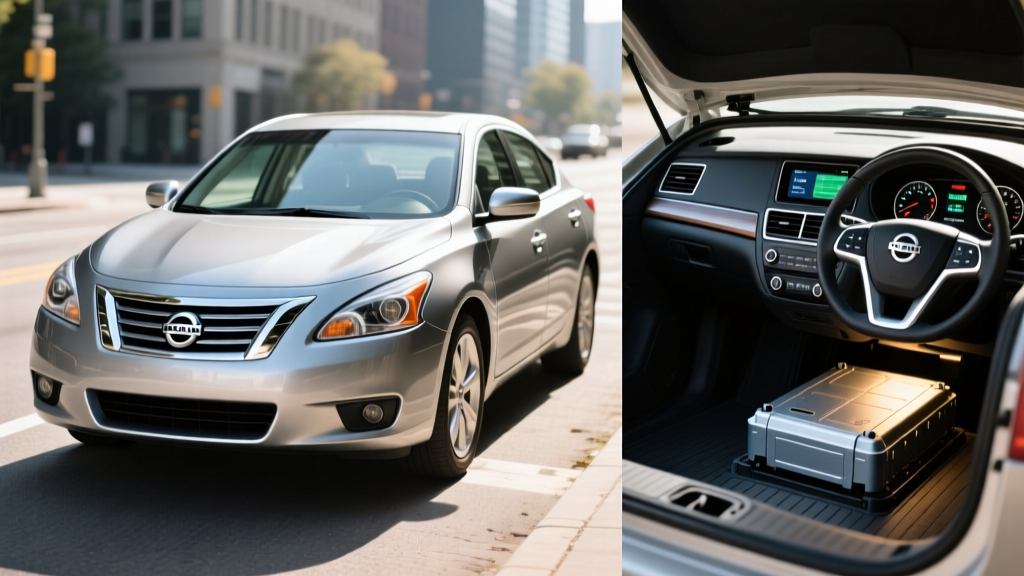
Cargo space: The hybrid battery occupies space behind the rear seats, reducing trunk capacity to approximately 13.1 cubic feet (down from 15.3 cu ft in the gas-only Altima). The rear seats do not fold down, limiting utility for longer cargo.
Driving feel: The electric motor provides smooth, quiet low-speed acceleration. The transition between electric and gas power is seamless — typical of Toyota's system. At highway speeds, the 198 combined HP provides adequate passing power. The eCVT keeps engine RPM steady, which some drivers find monotonous but which contributes to the car's efficiency.
Ride quality: The Altima rides on a stiffer suspension than the Camry Hybrid, giving it slightly more engaging handling at the cost of some ride comfort over rough pavement. Road noise is noticeable at highway speeds.
Pricing, Tax Credits, and Ownership Costs in 2026
Because the 2007 Altima Hybrid is a used vehicle nearly 20 years old, it does not qualify for the federal §30D new clean vehicle tax credit, which applies only to new vehicle purchases meeting MSRP caps, buyer income limits, and battery sourcing requirements.
Used EV/Hybrid Credit (§25E): The federal used clean vehicle credit of up to $4,000 (30% of sale price, max $4,000) applies only to used plug-in EVs and fuel cell vehicles — not conventional hybrids like the Altima Hybrid. This car does not qualify.
State incentives: Most state-level hybrid incentives available in 2007–2010 have long since expired. Check your state's current programs, but do not expect any purchase incentive for a 2007 HEV.
| Cost Factor | 2007 Altima Hybrid (Used) | 2025 Toyota Camry Hybrid (New, for comparison) |
|---|---|---|
| Purchase Price | $3,000–$6,000 | $28,700–$35,000 MSRP |
| Federal Tax Credit | None | Varies by sourcing — check IRS |
| Combined MPG | 35 MPG | 51 MPG (LE trim) |
| Annual Fuel Cost (12,000 mi) | ~$1,165 (at $3.40/gal) | ~$800 (at $3.40/gal) |
| Insurance (avg/year) | $900–$1,200 | $1,400–$1,800 |
| Battery Replacement Risk | High (age) | Minimal (under warranty) |
The Altima Hybrid's advantage is its rock-bottom purchase price. If you can acquire one for $4,000 in good condition with a healthy battery, the total first-year cost of ownership (purchase + fuel + insurance) can be under $6,500 — dramatically less than any new hybrid. The risk is the unknown remaining life of the hybrid battery and other age-related maintenance (suspension, brakes, cooling system).
Who Should Buy the 2007 Altima Hybrid?
Pros
- Very low purchase price ($3,000–$6,000)
- Toyota-sourced hybrid system with extensive repair knowledge
- 35 MPG combined still beats most gas-only midsize sedans
- Cheap battery replacement vs. modern EVs ($1,200–$2,500)
- No plug-in charging required — just add gas
- Strong city MPG from regenerative braking
Cons
- All original warranties expired — battery failure is your cost
- Reduced trunk space (13.1 cu ft) from battery placement
- No modern safety tech (no AEB, lane-keep, blind-spot monitoring)
- Outdated infotainment (no Apple CarPlay, Android Auto, or Bluetooth audio on most)
- Fuel economy trails modern hybrids by 15+ MPG
- 150,000+ miles typical — other components also aging
Choose the 2007 Altima Hybrid if: You need the cheapest possible fuel-efficient commuter, you drive primarily in the city, you're comfortable budgeting $1,500–$2,500 for a potential battery replacement, and you understand this car lacks modern safety and tech features.
Choose a newer hybrid (2018+ Camry/Prius Hybrid) if: You want better fuel economy (50+ MPG), modern safety features, remaining warranty coverage, and can spend $12,000–$22,000 on the used market.
Choose a PHEV if: You have home charging access, want 25–50 miles of electric-only commuting, and qualify for the §30D tax credit on a new purchase.
Choose a full EV if: You have reliable home charging, want minimal maintenance, and your daily driving is under 200 miles round-trip.
Pre-Purchase Inspection Checklist
If you're seriously considering a 2007 Altima Hybrid, insist on these checks before handing over money:
- Hybrid battery SoH scan: Any hybrid-capable shop or even a ScanGauge OBD-II tool can read module voltages and battery temperature data. Look for balanced modules and no stored hybrid system codes.
- Check for "Check Hybrid System" warnings: If the seller recently cleared codes, they may not reappear for 50–100 miles. A clean scan is more trustworthy than a recently reset ECU.
- Brake actuator test: The regenerative braking system uses an electric brake actuator. Listen for unusual clicking or grinding during brake application. Replacement runs $800–$1,500.
- Inverter coolant: The hybrid system has its own coolant loop separate from the engine. Verify it has been serviced and the coolant level is correct.
- 12V auxiliary battery: Like all hybrids, the Altima has a standard 12V battery that powers electronics and boots the hybrid system. A weak 12V battery can cause bizarre electrical gremlins.
- General 2.5L engine checks: The QR25DE engine is generally reliable but watch for oil consumption (a known issue in pre-2010 examples), timing chain rattle on cold start, and head gasket weeping at high mileage.
Frequently Asked Questions
How many MPG does the 2007 Nissan Altima Hybrid get?
The EPA rates the 2007 Altima Hybrid at 36 MPG city, 33 MPG highway, and 35 MPG combined. In real-world driving, city commuters often see 33–38 MPG, while highway-heavy drivers may see 30–34 MPG. An aging hybrid battery can reduce these figures by 2–5 MPG.
Does the 2007 Altima Hybrid need to be plugged in?
No. The 2007 Altima Hybrid is a conventional hybrid (HEV), not a plug-in hybrid. It charges its battery through regenerative braking and the gasoline engine. There is no charging port — you simply fill it with gasoline like any other car.
How far can the 2007 Altima Hybrid drive on electric power alone?
Not far at all. Like most conventional hybrids of its era, the Altima Hybrid can creep at very low speeds (under ~25 MPH) on electric power for perhaps a quarter to half a mile. It is not designed for electric-only driving. The electric motor's primary role is to assist the gas engine and reduce fuel consumption, not to replace it.
Is the 2007 Altima Hybrid reliable?
The Toyota-sourced hybrid powertrain (eCVT, motor, and control electronics) has proven very reliable — many examples exceed 200,000 miles. The main concern at this age is the NiMH hybrid battery, which typically degrades significantly after 12–18 years. Budget for a battery replacement or reconditioning within your ownership period. The 2.5L engine is adequate but watch for oil consumption issues common to the QR25DE.
How much does it cost to replace the hybrid battery?
In 2026, expect to pay $1,200–$2,000 for a refurbished/remanufactured battery installed at an independent hybrid shop, or $2,500–$3,500 for a new OEM battery at a Nissan dealer (if still available). Cell-level module replacement at a specialist runs $600–$1,000. These costs are modest compared to modern EV battery replacements.
Does the 2007 Nissan Altima Hybrid qualify for any tax credit?
No. The federal §30D new clean vehicle credit applies only to new vehicles. The §25E used clean vehicle credit applies only to plug-in EVs and fuel cell vehicles, not conventional hybrids. No state incentives currently target a 2007 HEV purchase. You will pay the full negotiated price with no purchase incentive.
Is the 2007 Altima Hybrid a Toyota or a Nissan?
It's a Nissan vehicle that uses Toyota's licensed Hybrid Synergy Drive system. The body, interior, chassis, and branding are Nissan. The hybrid powertrain (engine, eCVT, motor, battery, and control system) is Toyota-designed. This means hybrid-specific repairs benefit from the massive Toyota hybrid repair ecosystem, while body and interior parts are Nissan-specific.
How does it compare to a 2007 Toyota Camry Hybrid?
The 2007 Camry Hybrid uses the same core hybrid system but pairs it with a 2.4L engine (vs. Nissan's 2.5L) and produces 192 combined HP. The Camry Hybrid is EPA-rated at 33 city / 34 highway / 33 combined — slightly lower than the Altima Hybrid on paper. The Camry offers a larger trunk and softer ride; the Altima offers slightly sportier handling and marginally better EPA city MPG. Both share the same hybrid battery longevity profile.