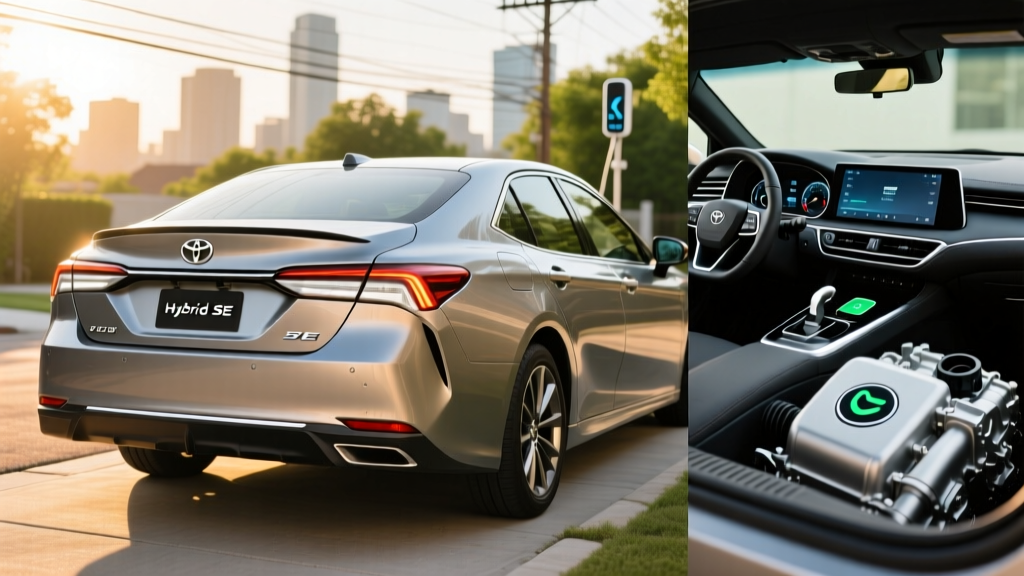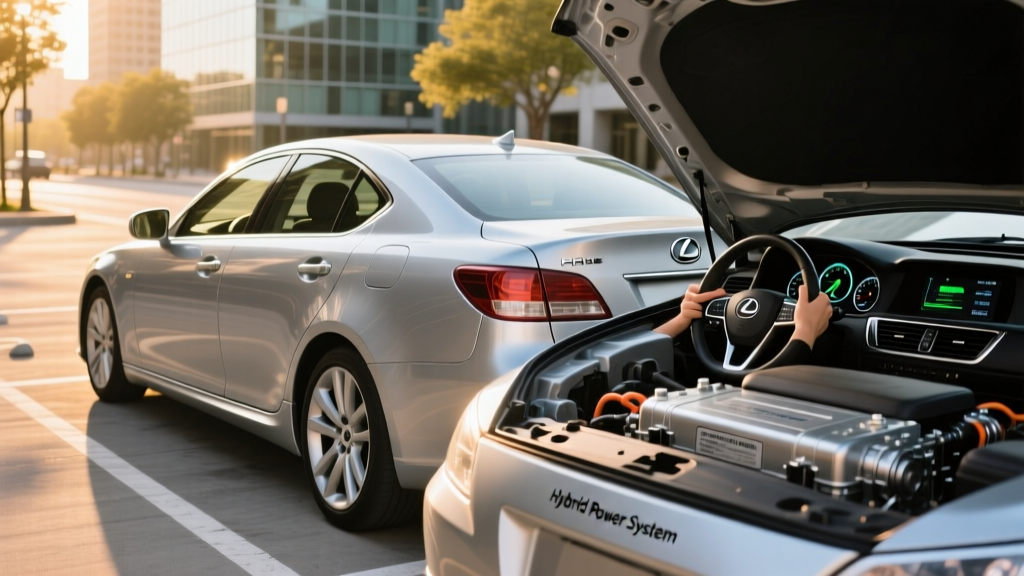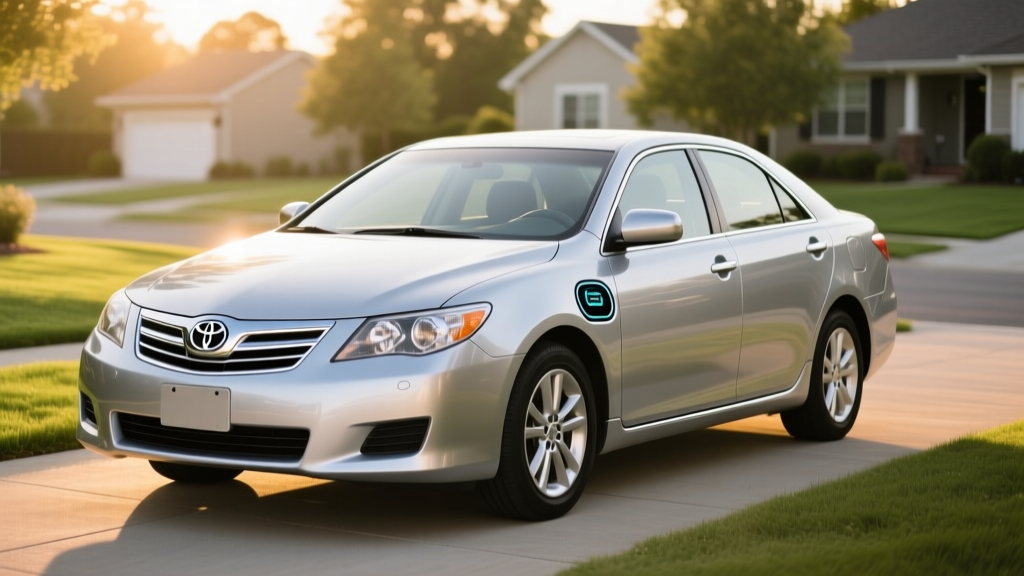
The 2007 Toyota Camry Hybrid was one of the first mainstream midsize sedans to pair a four-cylinder gasoline engine with an electric motor and a nickel-metal-hydride (NiMH) battery pack. Nearly two decades later, it remains a popular entry on the used-hybrid market — buyers search for 2007 hybrid Camry mpg figures because this car's fuel-economy reputation is a primary reason it still changes hands. Below, we break down the exact EPA numbers, real-world efficiency expectations, battery longevity, replacement costs, and whether this first-generation Camry Hybrid still makes financial sense in 2026.
2007 Camry Hybrid MPG: EPA Numbers vs Real-World Results
The EPA rated the 2007 Toyota Camry Hybrid at 33 mpg city / 34 mpg highway / 34 mpg combined under the revised testing cycle that took effect for the 2008 model year (the original window-sticker numbers were higher at 40/38, but the EPA retested and adjusted). These are the figures you should use for comparison today, as they reflect the modern testing methodology.
| Driving Cycle | EPA MPG | Real-World Expectation |
|---|---|---|
| City | 33 mpg | 34–38 mpg (hybrids excel in stop-and-go) |
| Highway | 34 mpg | 30–33 mpg (less regen opportunity at steady speed) |
| Combined | 34 mpg | 31–36 mpg depending on driving mix |
The counterintuitive part — city MPG roughly matching or exceeding highway MPG — is a hallmark of conventional hybrids (HEVs). Regenerative braking recaptures kinetic energy in stop-and-go traffic, and the electric motor handles low-speed acceleration where gasoline engines are least efficient. On long, flat highway cruises at 70–75 mph, the 2.4-liter four-cylinder does most of the work alone, and aerodynamic drag erodes the hybrid advantage.
Owner-reported data on fueleconomy.gov shows a wide spread: some drivers log 36–38 mpg in warm climates with gentle driving, while cold-climate owners and aggressive drivers report 27–30 mpg. Battery age is the wild card — a degraded NiMH pack reduces the motor's contribution and pushes the engine to work harder, dropping real-world MPG by 2–5 mpg in severe cases.
Powertrain: Engine, Motor, and Combined Output
The 2007 Camry Hybrid uses Toyota's Hybrid Synergy Drive (HSD) system, the same architecture found in the contemporary Prius but scaled up for a midsize sedan.
| Gasoline Engine | 2.4L inline-4 (2AZ-FXE, Atkinson cycle) |
| Engine Horsepower | 147 hp @ 6,000 rpm |
| Electric Motor | Permanent-magnet synchronous, 40 hp (30 kW) |
| Combined Net Horsepower | 192 hp |
| Transmission | eCVT (planetary gearset, no fixed gears) |
| Battery Pack | NiMH, ~1.6 kWh (nominal), 244.8V |
| Drivetrain | Front-wheel drive |
| 0–60 mph | ~8.4 seconds |
| Curb Weight | ~3,680 lbs |
The combined 192 hp figure is not a simple sum of engine and motor peak outputs — the gasoline engine and electric motor reach maximum power at different RPMs, and the planetary gearset blends them through the eCVT. The result is smooth, stepless acceleration that feels adequate for highway merging but not sporty. The Atkinson-cycle engine sacrifices some low-end torque for thermal efficiency, which is why the electric motor's instant torque fills the gap off the line.
HEV vs PHEV vs EV: Where the 2007 Camry Hybrid Fits
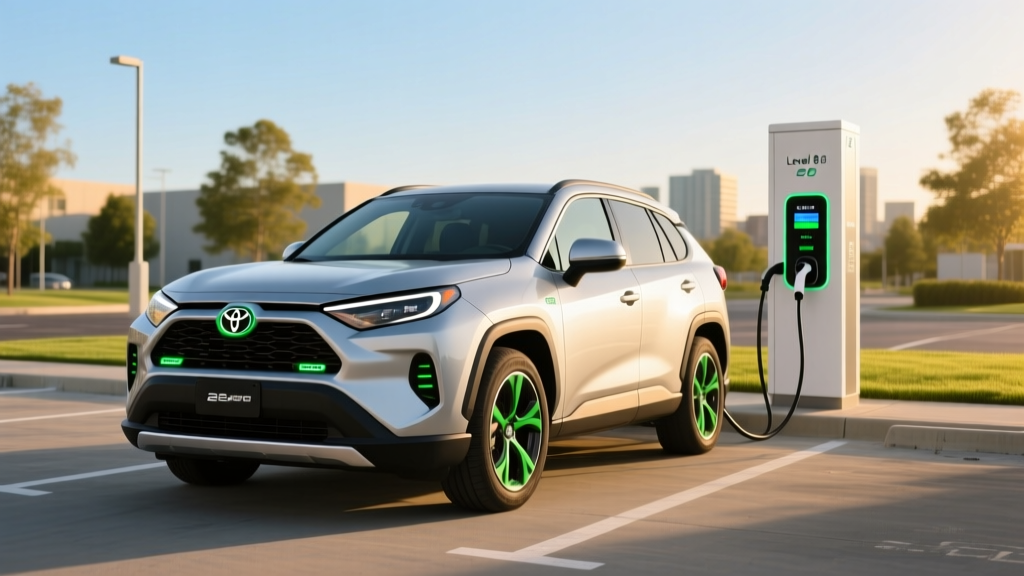
The 2007 Camry Hybrid is a conventional hybrid (HEV) — it has no plug, no electric-only driving range to speak of, and its small NiMH battery recharges exclusively through regenerative braking and the gasoline engine. This is fundamentally different from a plug-in hybrid (PHEV) or a battery-electric vehicle (BEV).
| Feature | HEV (2007 Camry Hybrid) | PHEV (e.g., 2026 RAV4 Prime) | BEV (e.g., 2026 Model Y) |
|---|---|---|---|
| Plug Required? | No | Yes (Level 1/2) | Yes (Level 1/2/DC) |
| Electric-Only Range | ~0.5 mi at low speed | 35–42 mi | 260–330+ mi |
| Battery Size | ~1.6 kWh | ~18.1 kWh | 60–82 kWh |
| Fuel Source | Gasoline only | Gasoline + grid electricity | Grid electricity only |
| Federal Tax Credit (New) | None | Up to $7,500 (§30D) | Up to $7,500 (§30D) |
| Home Charging Needed? | No | Recommended | Essential |
The 2007 Camry Hybrid's electric motor assists the engine and enables brief electric-only creeping at very low speeds (under ~25 mph, light throttle), but this is measured in fractions of a mile — not a usable EV range. If you want meaningful electric-only commuting, you need a PHEV or BEV.
Battery Life, Degradation, and Replacement Cost
This is the single biggest concern for anyone shopping a 19-year-old hybrid. The 2007 Camry Hybrid's NiMH battery pack was warranted for 8 years / 100,000 miles (10 years / 150,000 miles in California Air Resources Board states). That factory warranty expired long ago for every surviving example.
NiMH packs in Toyota's HSD system have proven remarkably durable in practice. Many first-generation Camry Hybrids and Priuses have reached 200,000+ miles on original batteries, though with measurable capacity loss. Degradation manifests as reduced electric-motor assist, more frequent engine cycling, and a 2–5 mpg drop from original fuel economy.
When replacement is necessary, here are the realistic cost tiers:
- Toyota OEM new pack: $2,500–$3,500 (parts only, dealer install adds $500–$800)
- Remanufactured pack (e.g., Green Bean Battery, Dorman): $1,200–$2,000 installed — the most popular choice for a car of this age and value
- Individual module replacement: $300–$600 at a hybrid-specialist shop — viable if only 1–2 of the 34 modules have failed, but a temporary fix if the rest of the pack is aging
Given that a clean 2007 Camry Hybrid trades for roughly $4,000–$7,000 in 2026 depending on mileage and condition, a $3,000+ OEM battery replacement rarely makes financial sense. Most owners opt for remanufactured packs or sell the vehicle when the battery fails.
Is the 2007 Camry Hybrid Reliable?
Beyond the battery, the 2007 Camry Hybrid benefits from one of the most reliable powertrains Toyota has built. The 2AZ-FXE engine is a derivative of the ubiquitous 2AZ-FE, a workhorse four-cylinder found in millions of Toyotas and Scions. The eCVT has no clutch packs, bands, or torque converter to wear out — the planetary gearset has three moving components and is essentially bulletproof under normal maintenance.
Known issues specific to this model year include:
- Inverter coolant pump failure: The electric inverter that manages power between the battery, motor, and engine has its own dedicated coolant pump. These can fail around 120,000–160,000 miles (~$400–$600 repair). Toyota issued a recall for some model years — verify the VIN on nhtsa.gov/recalls.
- Brake actuator wear: The regenerative braking system uses a complex electro-hydraulic actuator. Replacement runs $1,200–$1,800 if it fails — uncommon but expensive.
- 12V auxiliary battery: Like any car, the standard 12V battery needs replacement every 4–6 years. In the Camry Hybrid, it's located in the trunk and is a Group 35 size.
- Dashboard cracking: A cosmetic but widespread issue on 2007–2009 Camrys. Toyota extended the warranty for this on some models.
Overall, the 2007 Camry Hybrid earns a strong reliability reputation, with the caveat that any 19-year-old vehicle will need age-related maintenance — suspension bushings, struts, hoses, and seals regardless of powertrain type.
Does the 2007 Camry Hybrid Qualify for Any Tax Credit?
No. The 2007 Camry Hybrid does not qualify for any federal tax credit as a used purchase in 2026. Here's why:
- The IRS §30D clean vehicle credit applies to new qualifying PHEVs and BEVs only — conventional HEVs have never been eligible for §30D.
- The Used Clean Vehicle Credit (§25E, up to $4,000) applies only to used BEVs and PHEVs with a battery capacity of at least 7 kWh — the Camry Hybrid's 1.6 kWh NiMH pack does not meet this threshold, and it is an HEV, not a PHEV.
- The original hybrid-vehicle tax incentives that existed in 2006–2007 (a separate, now-expired credit under the Energy Policy Act of 2005) phased out for Toyota in 2007 after the company hit the 60,000-unit manufacturer cap.
Bottom line: there is no federal incentive for buying a 2007 Camry Hybrid today. Some states or local utilities offer rebates for used hybrid purchases, but these vary widely by jurisdiction — check your state energy office or utility provider for current programs.
Who Should Buy a 2007 Camry Hybrid in 2026?
- You need a low-cost commuter ($4,000–$7,000 budget) and want better fuel economy than a gas-only sedan
- You have no access to home or workplace charging (no plug needed)
- You drive primarily in city/suburban traffic where the hybrid system shines
- You value Toyota's reliability track record and cheap, widely available parts
- You want to reduce fuel consumption without the upfront cost of a newer PHEV or BEV
- You want electric-only commuting (PHEVs offer 30–42 miles; BEVs offer 250+)
- You want to qualify for federal or state tax credits
- You want modern safety features (AEB, lane-keep, blind-spot monitoring — absent on the 2007 model)
- You drive more than 15,000 miles/year and want to minimize long-term maintenance risk on a 19-year-old vehicle
- You want DC fast-charging capability for road trips
Pros and Cons: The Honest Assessment
- Proven 33–34 mpg EPA combined; often exceeds EPA in city driving
- No plug required — works with existing fueling habits
- Toyota reliability; eCVT and 2AZ-FXE engine are long-lived
- Low purchase price on the used market ($4K–$7K)
- Widely available parts and hybrid-literate mechanics nationwide
- Comfortable ride quality and spacious rear seat for a midsize sedan
- Original battery warranty expired; replacement is a $1,200–$3,500 gamble
- No modern ADAS features (no AEB, no lane-keep, no adaptive cruise)
- Dated infotainment — no Bluetooth audio streaming, no backup camera standard
- Highway MPG drops below EPA at 75+ mph; not a strong road-trip performer
- No federal tax credit or incentive available
- Brake actuator failure, while rare, is a $1,200+ repair
- Dashboard cracking is a known cosmetic defect
Frequently Asked Questions
How many MPG does the 2007 Hybrid Camry get?
The EPA rates the 2007 Toyota Camry Hybrid at 33 mpg city, 34 mpg highway, and 34 mpg combined. In real-world driving, owners typically see 31–36 mpg combined, with city-heavy driving sometimes pushing above the EPA city figure thanks to regenerative braking. A degraded battery will reduce these numbers by 2–5 mpg.
Does the 2007 Camry Hybrid need to be plugged in?
No. The 2007 Camry Hybrid is a conventional hybrid (HEV), not a plug-in hybrid (PHEV). Its battery recharges through regenerative braking and the gasoline engine. There is no charging port, and you fuel it exclusively at gas stations.
How far can the 2007 Camry Hybrid drive on electric power alone?
Less than one mile, and only at very low speeds (under ~25 mph with light throttle). This is not a usable electric-only range — it's a brief assist mode. If you need meaningful electric-only commuting, consider a PHEV like the Toyota RAV4 Prime (42 miles EV) or a BEV.
What does a replacement battery cost for the 2007 Camry Hybrid?
A remanufactured NiMH battery pack costs $1,200–$2,000 installed, which is the most common route for a car of this age. A new OEM Toyota pack runs $2,500–$3,500 for parts alone. Individual module replacement is possible for $300–$600 but is often a temporary fix on an aging pack.
Is the 2007 Camry Hybrid reliable?
Yes, with caveats. The powertrain (2AZ-FXE engine + eCVT) is among Toyota's most durable. The main risk is the aging NiMH battery pack, which is now 19 years old on all examples. Secondary concerns include the inverter coolant pump, brake actuator, and cosmetic dashboard cracking. Verify recall status on NHTSA before purchasing.
Does the 2007 Camry Hybrid qualify for any tax credit?
No. Conventional hybrids (HEVs) do not qualify for the federal §30D clean vehicle credit or the §25E used clean vehicle credit. The original hybrid tax incentives that existed in 2007 phased out for Toyota that same year. No federal incentive is available for purchasing this vehicle in 2026.
Is the 2007 Camry Hybrid better than a gas-only 2007 Camry?
For fuel economy, yes — the gas-only 2007 Camry 4-cylinder is rated at 24 mpg combined (21 city / 31 highway), while the hybrid achieves 34 mpg combined. That's roughly a 30% improvement in combined driving, saving approximately $400–$600 per year in fuel at 15,000 miles driven and $3.30/gallon. However, the hybrid carried a higher original MSRP and now carries battery-replacement risk that the gas model does not.