Verdict: The RAV4 Hybrid and RAV4 Prime Remain the Segment Benchmark
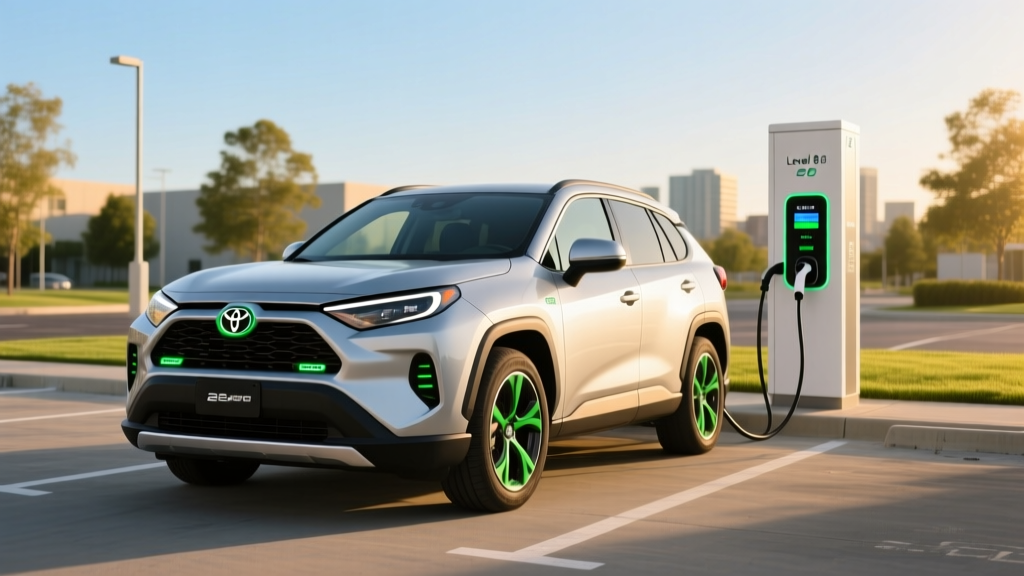
The 2025 Toyota RAV4 Hybrid continues to dominate the compact SUV segment for good reason: it delivers an EPA-estimated 39 MPG combined without ever needing to be plugged in, offers standard all-wheel drive, and starts under $34,000. For buyers who want electric-only commuting capability, the RAV4 Prime plug-in hybrid extends that formula with 42 miles of zero-emission driving and a combined 302 horsepower. Both versions avoid the range anxiety and charging infrastructure dependence of a full battery-electric vehicle while still meaningfully cutting fuel consumption.
Below, we dissect the exact specs, real-world efficiency, pricing, tax-credit eligibility, and long-term battery reliability data you need before choosing between the conventional hybrid (HEV), the plug-in hybrid (PHEV), or stepping to a full EV.
HEV vs PHEV: Understanding the Two RAV4 Electrified Options
Toyota sells two distinct electrified RAV4 variants, and confusing them is the most common buyer mistake. Here is the fundamental difference:
RAV4 Hybrid (HEV) — Conventional Hybrid
- No plug required. The battery recharges through regenerative braking and the gasoline engine.
- Always fueled by gas, but the electric motor assists to dramatically improve MPG.
- Lower upfront cost and zero change to your fueling routine.
- No federal tax credit under current IRS §30D rules.
RAV4 Prime (PHEV) — Plug-In Hybrid
- Plugs in to charge a larger battery that powers 42 miles of electric-only driving.
- Gas engine kicks in after the battery depletes, operating as a conventional hybrid.
- Higher upfront cost but eligible for federal and state incentives.
- Best for commuters with home charging and sub-40-mile round trips.
If you cannot install a Level 2 home charger or your daily round-trip commute exceeds 42 miles regularly, the conventional HEV is the more practical choice. If you can charge at home and most of your driving falls within the electric range, the Prime effectively functions as an EV on weekdays and a hybrid on road trips.
Fuel Economy: EPA Ratings and Real-World MPG
Fuel economy is where the RAV4 Hybrid earns its reputation. According to fueleconomy.gov, the 2025 RAV4 Hybrid AWD achieves:
| Model | City MPG | Highway MPG | Combined MPG |
|---|---|---|---|
| RAV4 Hybrid AWD (LE/XLE/XSE/Limited) | 41 | 38 | 39 |
| RAV4 Prime AWD (SE/XSE) — Gas Only Mode | 40 | 36 | 38 |
| RAV4 Prime AWD — Combined MPGe (Electric+Gas) | 94 MPGe | 38 MPG (gas) | |
| RAV4 Gas AWD (2.5L, non-hybrid baseline) | 27 | 35 | 30 |
Real-World MPG Expectations
City driving: The RAV4 Hybrid frequently exceeds its EPA city rating. Regenerative braking recaptures energy at every stoplight, and the engine shuts off at idle. Owners routinely report 42-44 MPG in urban driving.
Highway driving: Expect 35-37 MPG at sustained 70-75 mph speeds. Hybrids lose their city advantage on the open road where the gasoline engine runs continuously. Cold weather (below 35°F) can drop highway figures to 33-34 MPG due to increased engine warm-up time and cabin heating demand.
RAV4 Prime in EV mode: The EPA rates it at 94 MPGe combined when using its electric range. In practice, expect 3.0-3.5 miles per kWh in moderate temperatures — roughly 126-147 MPGe equivalent. Once the battery depletes, it reverts to ~38 MPG as a conventional hybrid.
Powertrain Specs: Horsepower, Engine, and Electric Motors
| Specification | RAV4 Hybrid (HEV) | RAV4 Prime (PHEV) |
|---|---|---|
| Gasoline Engine | 2.5L 4-cylinder (176 hp) | 2.5L 4-cylinder (177 hp) |
| Electric Motors | Front: 88 kW / Rear: 40 kW | Front: 134 kW / Rear: 40 kW |
| Combined System Horsepower | 219 hp | 302 hp |
| 0-60 mph | 7.4 seconds | 5.7 seconds |
| Drivetrain | AWD (electronic rear motor) | AWD (electronic rear motor) |
| Transmission | eCVT | eCVT |
| Towing Capacity | 1,750 lbs | 2,500 lbs |
| Battery Capacity (gross) | 1.6 kWh (NiMH) | 18.1 kWh (Lithium-ion) |
| Usable Battery Capacity | ~1.0 kWh | ~14.9 kWh |
The RAV4 Prime's 302 combined horsepower makes it the quickest RAV4 Toyota has ever sold, outrunning even the turbocharged four-cylinder competitors. That power comes from a larger front electric motor (134 kW vs 88 kW) paired with the same 2.5-liter Atkinson-cycle engine.
RAV4 Prime: Electric-Only Range, Charging, and Battery Details
The RAV4 Prime's 18.1 kWh lithium-ion battery pack (approximately 14.9 kWh usable after the system buffer) delivers an EPA-estimated 42 miles of electric-only range. Total combined range — electric plus a full 14.5-gallon fuel tank — exceeds 600 miles.
Charging the RAV4 Prime
| Charging Level | Power | Time (0-100%) | Connector |
|---|---|---|---|
| Level 1 (120V household outlet) | 1.4 kW | ~12 hours | J1772 |
| Level 2 (240V, 16A) | 3.3 kW | ~4.5 hours | J1772 |
| Level 2 (240V, 32A) — Prime XSE w/ Premium Pkg | 6.6 kW | ~2.5 hours | J1772 |
| DC Fast Charging | Not supported — no DC fast charge port | ||
Critical detail: The RAV4 Prime does not support DC fast charging. This is a deliberate Toyota engineering decision — the battery is sized for overnight home charging and daily commuting, not road-trip fast charging. Once the electric range depletes, the gasoline engine takes over seamlessly. If you need DC fast charging, you are looking at a full BEV like the Toyota bZ4X or Hyundai Ioniq 5.
Important trim distinction: Only the RAV4 Prime XSE with the Premium Package includes the 6.6 kW onboard charger. The SE trim and XSE without the Premium Package are limited to 3.3 kW Level 2 charging, effectively doubling charge times. Verify the onboard charger spec before purchasing.
Pricing, Trims, and Tax Credit Eligibility
| Model & Trim | MSRP (incl. destination) | Federal Tax Credit |
|---|---|---|
| RAV4 Hybrid LE | $33,595 | Not eligible |
| RAV4 Hybrid XLE | $35,120 | Not eligible |
| RAV4 Hybrid XSE | $38,475 | Not eligible |
| RAV4 Hybrid Limited | $41,155 | Not eligible |
| RAV4 Prime SE | $44,515 | Up to $7,500* |
| RAV4 Prime XSE | $48,590 | Up to $7,500* |
*Federal tax credit eligibility is subject to IRS §30D rules. See details below.
Federal Tax Credit: §30D Eligibility for the RAV4 Prime
The RAV4 Prime (PHEV only — not the standard RAV4 Hybrid) may qualify for the federal plug-in vehicle tax credit. Under current IRS §30D rules, eligibility depends on:
- Vehicle MSRP cap: SUVs must be under $80,000 MSRP — both RAV4 Prime trims qualify.
- Buyer income cap: Modified AGI must not exceed $150,000 (single), $225,000 (head of household), or $300,000 (married filing jointly).
- Battery sourcing requirements: Critical minerals and battery components must meet escalating percentage thresholds from qualified sources. Toyota's supply chain has adapted, but verify current-year compliance on the IRS qualified vehicles list before purchase.
- Point-of-sale transfer: As of 2024, buyers can transfer the credit to the dealer at purchase, reducing the sale price directly rather than waiting for a tax refund. This requires dealer participation and IRS registration.
- Tax liability: The credit is non-refundable — it can only reduce your federal tax liability to zero, not generate a refund beyond that.
Consult a tax professional and check the fueleconomy.gov tax credit page for the most current qualified vehicle list before committing to a purchase.
The conventional RAV4 Hybrid (HEV) does not qualify for any federal tax credit — §30D applies only to plug-in vehicles with at least 7 kWh of battery capacity. Some states and utilities offer rebates for conventional hybrids, but these vary widely by jurisdiction. Check your state energy office and local utility for current programs.
Battery Warranty, Reliability, and Replacement Cost
Toyota Hybrid Battery Warranty
Coverage: 10 years or 150,000 miles (whichever comes first) on the hybrid battery pack and all hybrid system components, for all 50 states. This applies to both the RAV4 Hybrid (HEV) and the RAV4 Prime (PHEV).
Capacity retention threshold: Toyota warrants the battery against defects and against falling below a specified capacity level under normal use. If the battery fails to hold sufficient charge within the warranty period, Toyota replaces it at no cost.
Previous coverage: Toyota extended hybrid battery warranty from the prior 8-year/100,000-mile standard beginning with the 2020 model year. All 2025 RAV4 Hybrid and Prime models carry the 10/150k coverage.
Real-World Reliability Data
Toyota's hybrid powertrain is among the most proven in the industry, with over 25 years of continuous production since the 1997 Prius. The RAV4 Hybrid specifically has been in production since 2016, giving it nearly a decade of field data.
Battery longevity: Toyota's nickel-metal hydride (NiMH) pack in the conventional hybrid and the lithium-ion pack in the Prime are both designed to last the life of the vehicle. Real-world data from fleet operators and high-mileage owners shows hybrid batteries commonly reaching 200,000+ miles with minimal degradation. The hybrid system's battery management system (BMS) maintains a state-of-charge buffer — the HEV never fully charges or fully depletes its small pack, dramatically reducing cell stress.
Replacement cost if out of warranty:
- RAV4 Hybrid (HEV) battery: $2,000–$4,000 for a new OEM replacement, plus labor (~$500–$800). Refurbished units are available for $1,000–$2,000.
- RAV4 Prime (PHEV) battery: $6,000–$9,000 for a new OEM pack, plus labor. The larger lithium-ion pack is significantly more expensive but is also more robustly managed.
For context, the average RAV4 Hybrid owner will spend $5,000–$7,000 less on fuel over 150,000 miles compared to the gas-only RAV4, more than offsetting a potential out-of-warranty battery replacement.
Who Should Buy the RAV4 Hybrid, the Prime, or a Full EV?
Choose the RAV4 Hybrid (HEV) if:
- You cannot install a home charger (apartment, street parking, no garage).
- You want maximum simplicity — no plugs, no apps, no charging planning.
- Your budget is under $40,000 and you don't qualify for the PHEV tax credit.
- You drive a mix of city and highway and want consistent 38-42 MPG everywhere.
- You plan to keep the vehicle 10+ years and value Toyota's long-term reliability track record.
Choose the RAV4 Prime (PHEV) if:
- You have access to Level 2 home charging (garage or dedicated parking with a 240V outlet).
- Your daily round-trip commute is 42 miles or less — you may go months without visiting a gas station.
- You want the performance bump (302 hp, 5.7-second 0-60) alongside efficiency.
- You qualify for the $7,500 federal tax credit, effectively bringing the Prime SE price close to the Hybrid Limited.
- You take occasional long road trips and don't want to rely on DC fast-charging infrastructure.
Choose a Full EV (like the Toyota bZ4X, Hyundai Ioniq 5, or Tesla Model Y) if:
- You want zero tailpipe emissions and zero gasoline purchases.
- You have reliable home charging and your area has robust public DC fast-charging networks.
- Your daily driving is predictable and within the EV's real-world range (accounting for cold-weather losses of 20-30%).
- You want the lowest per-mile fuel cost — electricity at $0.13/kWh costs roughly $0.04/mile vs. $0.12–$0.15/mile for gas in a hybrid.
Pros, Cons, and Ownership Considerations
Pros
- Class-leading fuel economy (39 MPG combined HEV, 94 MPGe Prime)
- Standard AWD on every hybrid and Prime trim
- 10-year/150,000-mile hybrid battery warranty
- RAV4 Prime: 42 miles EV range covers most commutes
- RAV4 Prime: 302 hp makes it genuinely quick (5.7s to 60)
- No range anxiety — gas engine provides 400+ mile total range
- Strong resale value; RAV4 consistently ranks in top 5 for retention
- Proven Toyota Safety Sense 2.5+ ADAS suite standard
Cons
- RAV4 Prime has limited availability — dealer markups remain common
- No DC fast charging on the Prime (Level 2 only)
- HEV does not qualify for any federal tax credit
- Infotainment system trails competitors in responsiveness and design
- Cabin noise under hard acceleration (eCVT drone from the 2.5L engine)
- Towing capacity limited to 1,750 lbs (HEV) / 2,500 lbs (Prime)
- RAV4 Prime requires premium fuel for maximum performance (regular is acceptable with slight power reduction)
- Long wait times for Prime orders — some markets see 6-12 month delays
Frequently Asked Questions
How many MPG does the 2025 Toyota RAV4 Hybrid get?
The 2025 RAV4 Hybrid AWD is EPA-rated at 41 city / 38 highway / 39 combined MPG. In real-world city driving, many owners report 42-44 MPG thanks to aggressive regenerative braking. Highway driving at 70+ mph typically yields 35-37 MPG. Cold weather reduces all figures by 2-4 MPG.
How far can the RAV4 Prime go on electric only?
The RAV4 Prime delivers an EPA-estimated 42 miles of electric-only range on a full charge. In moderate temperatures at city speeds, you may see 44-46 miles. In cold weather (below 35°F) or at sustained highway speeds, expect 32-36 miles before the gas engine engages. Total combined range (electric + full gas tank) exceeds 600 miles.
Does the RAV4 Hybrid need to be plugged in?
No. The conventional RAV4 Hybrid (HEV) never plugs in. Its small 1.6 kWh battery charges exclusively through regenerative braking and the gasoline engine. You fuel it exactly like a regular gas car — just with significantly better MPG. Only the RAV4 Prime (PHEV) requires plug-in charging to access its electric-only range.
Is the RAV4 Hybrid reliable and what does battery replacement cost?
Toyota's hybrid system is one of the most reliable powertrains in the automotive industry, backed by over 25 years of production data. The hybrid battery is warranted for 10 years/150,000 miles. Out-of-warranty replacement costs approximately $2,000–$4,000 for the HEV and $6,000–$9,000 for the Prime PHEV. In practice, Toyota hybrid batteries routinely exceed 200,000 miles without requiring replacement.
Does the 2025 RAV4 Hybrid qualify for a tax credit?
The conventional RAV4 Hybrid (HEV) does not qualify for the federal §30D tax credit — it is not a plug-in vehicle. The RAV4 Prime (PHEV) may qualify for up to $7,500, subject to buyer income limits ($150K single / $300K married filing jointly), the $80,000 SUV MSRP cap, and battery-sourcing requirements. Verify current eligibility on the IRS qualified vehicles list before purchase. Some states and utilities offer additional rebates for both HEV and PHEV models.
How long does it take to charge the RAV4 Prime at home?
On a standard 120V household outlet (Level 1), a full charge takes approximately 12 hours. On a 240V Level 2 charger at 3.3 kW (SE and base XSE), it takes about 4.5 hours. With the available 6.6 kW onboard charger (XSE with Premium Package), charge time drops to roughly 2.5 hours. The RAV4 Prime does not support DC fast charging.
Hybrid vs PHEV vs EV — which should I choose?
Choose the HEV if you lack home charging access and want a simple, fuel-efficient gas vehicle. Choose the PHEV if you can charge at home, commute under 42 miles daily, and want EV-like commuting with gas-engine road-trip flexibility. Choose a full EV if you have reliable home charging, want zero gasoline expenses, and your area has adequate public DC fast-charging infrastructure for longer trips. The PHEV is the lowest-risk bridge option for buyers not yet ready to commit fully to electric.