Quick Verdict: Honda's Early Hybrid Experiment
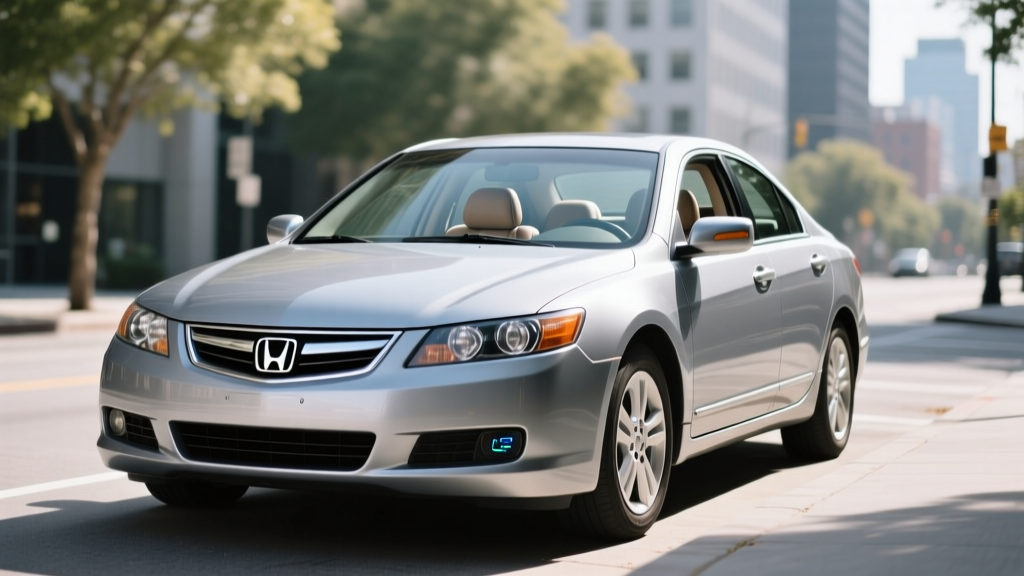
The 2007 Honda Accord Hybrid occupies a unique place in electrified automotive history. As one of the earliest mainstream hybrid sedans, it paired Honda's Integrated Motor Assist (IMA) system with a 3.0-liter V6 to deliver 255 combined horsepower and an EPA-estimated 25 MPG combined. For used-car shoppers in 2026 researching the 2007 Honda Accord Hybrid, the critical questions center on IMA battery longevity, real-world fuel economy, and whether this nearly two-decade-old hybrid still makes financial sense versus a modern HEV, PHEV, or full EV.
Here's what you need to know before buying one today: the Accord Hybrid is a conventional hybrid (HEV), meaning it never plugs in. It recovers energy through regenerative braking and uses its gasoline engine as the sole energy source. If you're looking for electric-only driving or a plug, this isn't it — but as a used V6 sedan with modest fuel savings, it still has a role.
HEV vs. PHEV: Where the 2007 Accord Fits
Before diving into specs, it's essential to understand the distinction between conventional hybrids and plug-in hybrids, because the 2007 Accord Hybrid is strictly a conventional HEV.
| Feature | Conventional Hybrid (HEV) | Plug-In Hybrid (PHEV) |
|---|---|---|
| Plugs in to charge? | No — self-charging via engine + regen | Yes — Level 1 or Level 2 |
| Electric-only range | None (motor assists engine only) | 20–50 miles typical (2026 models) |
| Battery size | 0.5–2.0 kWh | 13–25 kWh |
| Federal tax credit (new) | None under current §30D rules | Up to $7,500 (with sourcing/income limits) |
| 2007 Accord Hybrid? | Yes — this is what it is | No |
The Accord Hybrid's IMA system uses a small 0.6 kWh nickel-metal hydride (NiMH) battery pack mounted behind the rear seat. This battery cannot propel the car on electric power alone — instead, it provides torque assist during acceleration and captures energy during braking. The gasoline V6 remains the primary motivator at all times.
Fuel Economy: EPA Ratings vs. Real-World MPG
The 2007 Honda Accord Hybrid carries EPA ratings that, by 2026 standards, look modest. But context matters: in 2007, these numbers were competitive with four-cylinder sedans while delivering V6 acceleration.
| Driving Cycle | EPA Estimate | Real-World Expectation |
|---|---|---|
| City | 25 MPG | 23–27 MPG |
| Highway | 34 MPG | 30–35 MPG |
| Combined | 28 MPG* | 25–30 MPG |
*Note: The EPA revised its testing methodology for the 2008 model year. Under the pre-2008 testing cycle, Honda advertised 25 city / 37 highway. The figures above reflect the revised EPA estimates as reported on fueleconomy.gov.
Real-world considerations for a 2007 model in 2026:
- Battery age matters enormously. A 19-year-old NiMH pack that has never been replaced will have significant capacity loss, reducing regen effectiveness and city MPG. Expect 2–4 MPG less than original ratings if the IMA battery is degraded.
- City vs. highway split. Hybrids shine in stop-and-go traffic where regen recaptures braking energy. If your commute is mostly highway, the Accord Hybrid's advantage over the non-hybrid V6 Accord (rated at 21 city / 30 highway) shrinks considerably.
- Cold weather penalty. NiMH batteries lose efficiency in freezing temperatures. Expect a 5–10% MPG drop in winter months, similar to what modern hybrids experience.
Powertrain Specs: V6 Muscle Meets Electric Assist
| Specification | 2007 Honda Accord Hybrid |
|---|---|
| Engine | 3.0L V6 i-VTEC |
| Electric motor | IMA (Integrated Motor Assist), 15 kW |
| Combined horsepower | 255 hp @ 6,000 rpm |
| Combined torque | 232 lb-ft @ 5,000 rpm |
| Transmission | 5-speed automatic |
| Drivetrain | Front-wheel drive |
| Battery type | NiMH (nickel-metal hydride) |
| Battery capacity | ~0.6 kWh |
| 0–60 mph | ~6.7 seconds (est.) |
| Electric-only driving | None |
| Plug-in charging | Not supported |
Honda's IMA system in this generation used Variable Cylinder Management (VCM), which could shut down three of the six cylinders under light-load cruising to save fuel. Combined with the electric motor's torque fill during acceleration, the result was a V6 sedan that could out-accelerate its four-cylinder competitors while returning slightly better fuel economy. The 255-hp figure made it one of the most powerful hybrids on the road in 2007.
IMA Battery Lifespan, Warranty & Replacement Cost
This is the single most important ownership question for any used hybrid buyer, and it's especially critical for a 2007 model.
Original Warranty (when new): Honda covered the IMA battery for 8 years / 80,000 miles (10 years / 150,000 miles in CARB states like California, New York, and Massachusetts). All original factory coverage expired no later than 2017.
Expected Battery Lifespan: NiMH packs in the IMA system typically last 120,000–180,000 miles before significant degradation, though some have exceeded 200,000 miles with gentle use. Heat and frequent deep discharge cycles accelerate wear.
Replacement Cost (2026):
- OEM Honda replacement: $2,500–$3,800 (parts + labor, dealer)
- Aftermarket/remanufactured pack: $1,200–$2,200
- Individual cell replacement (DIY/specialist): $400–$800
Signs of IMA battery failure to watch for:
- IMA warning light on the dashboard
- Noticeable drop in city fuel economy (3+ MPG below expected)
- Reduced regenerative braking feel
- The battery gauge on the instrument cluster rarely shows a full charge
- Check engine light with IMA-related OBD-II codes (e.g., P0A7F, P0AC0)
If you're shopping for a 2007 Accord Hybrid in 2026, ask the seller directly whether the IMA battery has been replaced. A car with a fresh aftermarket pack (with receipt) is worth significantly more than one riding on the original 19-year-old NiMH cells. Budget at least $1,500–$2,000 for an imminent battery replacement if the pack is original.
Reliability & Common Issues Beyond the Battery
The seventh-generation Honda Accord (2003–2007) is generally regarded as one of the more reliable sedans of its era. The V6 engine and five-speed automatic are well-understood powertrain components with wide parts availability. However, the hybrid variant adds complexity that conventional Accords don't carry.
Known issues specific to the Accord Hybrid:
- IMA battery failure (as detailed above) — the most common and costly hybrid-specific problem
- VCM-related oil consumption — cylinder deactivation can lead to piston ring wear and oil burning over time; check for blue exhaust smoke and low oil levels
- Electric power steering — the Accord Hybrid used an electric rack (to allow engine-off assist), which can fail and cost $800–$1,200 to replace
- Transmission shudder — some owners report torque converter shudder at 30–50 mph; a fluid flush sometimes helps, but a failing converter runs $1,500+
For reliability data, check the NHTSA recall database for any open recalls on the specific VIN you're considering. Honda issued several recalls for this generation Accord related to airbags (Takata inflators) — ensure these have been addressed.
Tax Credits & Purchase Economics in 2026
Let's be direct: the 2007 Honda Accord Hybrid does not qualify for any federal tax credit under current IRS §30D rules. The federal new clean vehicle credit applies only to new plug-in vehicles (BEVs and PHEVs) meeting battery sourcing, MSRP, and buyer income requirements. Conventional hybrids have never qualified for the modern §30D credit, and any hybrid-specific incentives that existed in 2007 (the old "Alternative Motor Vehicle Credit") expired long ago.
Used purchase economics:
- Typical asking price (2026): $2,500–$5,500 depending on mileage, condition, and battery status
- Insurance: Minimal premium over a conventional Accord — insurers treat it as a standard V6 sedan
- Annual fuel cost: At 27 MPG combined and $3.40/gallon gas, roughly $1,890/year for 15,000 miles driven
- vs. non-hybrid V6 Accord: The hybrid saves roughly $150–$250/year in fuel over the conventional 2007 V6 model (24 MPG combined) — a modest return that takes years to offset an IMA battery replacement
The financial case for this car in 2026 rests on its purchase price and condition, not on fuel savings. A well-maintained example with a recently replaced IMA battery can be a solid budget sedan. But the fuel savings alone won't justify paying a premium over the non-hybrid Accord.
Who Should Buy the 2007 Accord Hybrid (and Who Shouldn't)
Pros
- 255 hp from a smooth V6 — genuinely quick for its era
- VCM cylinder deactivation provides real highway fuel savings
- Honda build quality and wide parts availability
- No plug-in infrastructure needed — works like any gas car
- Low purchase price in the used market
Cons
- IMA battery replacement is expensive and likely overdue
- MPG advantage over the non-hybrid V6 is modest (2–4 MPG)
- No electric-only driving capability
- Hybrid-specific parts (IMA motor, electric power steering) add cost
- No federal or state tax credit eligibility
- 19-year-old NiMH tech is far behind modern lithium-ion hybrids
Buy the 2007 Accord Hybrid if:
- You want a cheap, powerful V6 sedan and find one with a recently replaced IMA battery
- You have no access to home or workplace charging (ruling out PHEVs and EVs)
- You drive mostly city miles where regen provides the most benefit
- You're mechanically inclined and comfortable with potential hybrid-system repairs
Skip it and consider instead if:
- Better used hybrid: A 2016+ Toyota Prius (52 MPG combined, modern lithium-ion battery, far lower running costs) or a 2018+ Honda Accord Hybrid (48 MPG combined, two-motor system, much more efficient)
- PHEV for plug-in access: A used Toyota Prius Prime (25 miles electric-only) or Chrysler Pacifica Hybrid
- Full EV: A used Chevrolet Bolt EV (259 miles EPA range, qualifies for the used EV tax credit of up to $4,000 under §25E if under $25,000 and bought from a dealer)
Frequently Asked Questions
How many MPG does the 2007 Honda Accord Hybrid get?
The EPA rates the 2007 Accord Hybrid at 25 city / 34 highway / 28 combined MPG (under revised testing). Real-world owners report 23–30 MPG combined depending on driving mix, climate, and IMA battery condition. A degraded battery will push figures toward the low end.
Does the 2007 Accord Hybrid need to be plugged in?
No. The 2007 Accord Hybrid is a conventional hybrid (HEV). It charges its small NiMH battery through regenerative braking and the gasoline engine. There is no plug, no charging port, and no electric-only driving mode.
Is the 2007 Honda Accord Hybrid reliable?
The underlying Accord platform is reliable, but the hybrid-specific components — particularly the IMA battery and electric power steering — add failure points that conventional Accords don't have. Budget for an IMA battery replacement ($1,200–$3,800) if it hasn't been done recently.
What does it cost to replace the IMA battery?
An OEM Honda replacement runs $2,500–$3,800 at a dealer. Aftermarket or remanufactured packs cost $1,200–$2,200 installed. Some specialists offer individual cell replacement for $400–$800, but this is a partial fix.
Does the 2007 Accord Hybrid qualify for any tax credit?
No. The 2007 Accord Hybrid does not qualify for the federal §30D new clean vehicle credit (which requires a plug-in vehicle) or the §25E used EV credit (which also requires a plug-in BEV or PHEV). No current federal incentive applies to this conventional hybrid.
Hybrid vs. PHEV vs. EV — which should I choose?
If you can charge at home and drive under 40 miles daily, a PHEV or EV will save far more on fuel than this 2007 hybrid. If you have zero charging access and want a budget sedan, a conventional HEV (this Accord or a newer Prius) works without lifestyle change. For maximum savings in 2026, a used BEV like the Chevy Bolt EV (eligible for the $4,000 used-EV credit) dramatically undercuts any hybrid on per-mile fuel cost.
How far can the 2007 Accord Hybrid drive on electric only?
Zero miles. The IMA system cannot propel the car on electric power alone. The electric motor only assists the V6 engine during acceleration and recovers energy during braking. The gasoline engine runs whenever the car is moving under power.
Sources: fueleconomy.gov — 2007 Honda Accord Hybrid, IRS §30D Clean Vehicle Credit rules, NHTSA recall lookup.