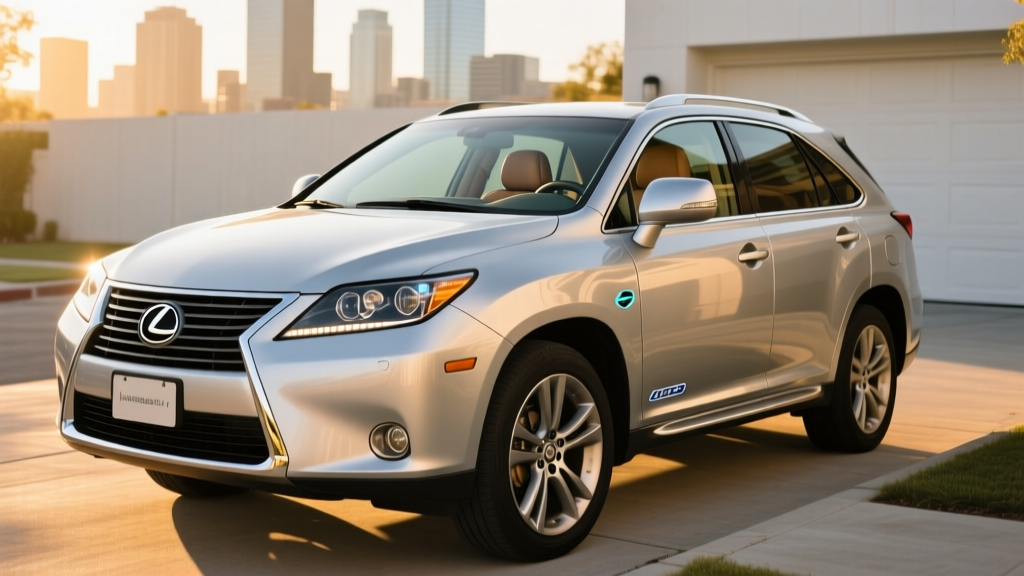
The Original Luxury Hybrid: 2006 Lexus RX 400h at a Glance
The 2006 Lexus RX 400h holds a distinct place in automotive history — it was the first luxury-branded hybrid SUV sold in the United States, arriving at dealerships in spring 2005 as a 2006 model. Built on the second-generation RX platform (XU30), it paired a 3.3-liter V6 with Toyota's Hybrid Synergy Drive system to deliver V8-like acceleration with four-cylinder fuel consumption. Nearly two decades later, it remains a popular used-vehicle search, with buyers drawn to its low entry price, proven Toyota hybrid reliability, and surprisingly modern powertrain architecture.
This guide covers everything a prospective used buyer needs: real-world MPG versus EPA stickers, hybrid battery lifespan and replacement costs, powertrain specifications, and how the RX 400h compares to modern hybrid and plug-in hybrid SUVs you can buy today.
The 2006 Lexus RX 400h is a conventional hybrid (HEV), not a plug-in hybrid. It cannot be plugged in, has no electric-only driving range, and recharges its small nickel-metal hydride (NiMH) battery exclusively through regenerative braking and the gasoline engine. If you're looking for a Lexus RX you can plug in for electric-only miles, that didn't arrive until the 2026 Lexus RX 450h+ plug-in hybrid.
2006 Lexus RX 400h Fuel Economy: EPA vs Real-World MPG
The EPA rated the 2006 Lexus RX 400h at 31 MPG city / 27 MPG highway / 28 MPG combined for the all-wheel-drive model (the only drivetrain offered in the U.S.). For a 4,500-pound luxury SUV in 2006, those numbers were remarkable — the non-hybrid RX 330 AWD of the same year managed just 18/24/20 MPG.
| Metric | City | Highway | Combined |
|---|---|---|---|
| EPA Rating | 31 MPG | 27 MPG | 28 MPG |
| Real-World (Owner Avg.) | 26–29 MPG | 25–28 MPG | 26–28 MPG |
| Non-Hybrid RX 330 AWD (2006) | 18 MPG | 24 MPG | 20 MPG |
Source: fueleconomy.gov
Real-World MPG: What Owners Actually Report
Two decades of owner data from Fuelly and Edmunds forums paints a consistent picture: most 2006 RX 400h owners average between 25 and 28 MPG combined in mixed driving. City-heavy drivers who take advantage of the hybrid system's low-speed electric assist tend to hit the higher end of that range. Highway-only driving at 75+ MPH drops efficiency to around 24–26 MPG because the hybrid system provides minimal benefit at sustained high speeds and the vehicle's aerodynamic drag increases significantly.
Cold weather reduces MPG by roughly 10–15% due to longer engine warm-up cycles (the engine must run to provide cabin heat) and increased rolling resistance. Expect 23–25 MPG combined in winter months in northern climates.
Important caveat for used buyers: A 2006 RX 400h with a degraded hybrid battery will see noticeably lower MPG — often dropping to 22–24 MPG combined — because the system can no longer rely on electric assist and the engine runs more frequently. Battery health is the single biggest variable in used RX 400h fuel economy.
Powertrain and Performance Specifications
The RX 400h's powertrain was sophisticated for its era and remains capable today. Toyota's Hybrid Synergy Drive (second generation) combines a naturally aspirated V6 with two electric motor-generators and a planetary gearset that functions as a continuously variable transmission.
| Specification | Value |
|---|---|
| Engine | 3.3L V6 (3MZ-FE), 211 hp @ 5,600 rpm |
| Front Electric Motor (1EM) | 123 kW (165 hp), 247 lb-ft |
| Rear Electric Motor (2EM) | 50 kW (67 hp), 96 lb-ft |
| Net System Horsepower | 272 hp |
| Transmission | eCVT (planetary gearset, no traditional gears) |
| 0–60 MPH | 7.3 seconds |
| Drivetrain | AWD (electronic rear axle, no driveshaft) |
| Curb Weight | 4,510 lbs |
| Towing Capacity | 3,500 lbs |
The 272 net system horsepower figure made the RX 400h the quickest RX model in 2006, outpacing the 230-hp RX 330 by a significant margin. The 7.3-second 0–60 time was competitive with V8-powered luxury SUVs of the era. The rear electric motor provides the AWD functionality — there is no mechanical driveshaft connecting the front and rear axles. Instead, the rear motor engages automatically when the system detects front-wheel slip or during hard acceleration.
Hybrid Battery: Chemistry, Lifespan, and Replacement Cost
The 2006 RX 400h uses a nickel-metal hydride (NiMH) traction battery — not the lithium-ion chemistry found in modern hybrids and EVs. The pack is rated at approximately 6.5 kWh total capacity (with only about 1.5–2.0 kWh usable due to the hybrid system's charge-sustaining design, which keeps the battery between roughly 40% and 80% state of charge to maximize longevity).
Lexus originally warranted the hybrid battery for 8 years / 100,000 miles (extended to 10 years / 150,000 miles in California and states that adopted California emissions standards). By 2026, every 2006 RX 400h is well past original warranty coverage.
Expected lifespan: NiMH hybrid batteries in the Toyota/Lexus system typically last 150,000–200,000 miles before significant degradation. Many RX 400h examples have exceeded 200,000 miles on the original pack, though capacity loss of 20–30% is common at that mileage.
Replacement cost (2026):
• Remanufactured battery (Dorman, GreenBean): $1,500–$2,500 installed
• New OEM Lexus battery: $3,500–$5,000 installed
• Individual cell/module reconditioning: $500–$1,200 (specialist shops)
Signs of Hybrid Battery Degradation
If you're evaluating a used 2006 RX 400h, watch for these indicators of battery wear:
- Reduced MPG: A drop from 27–28 to 22–24 MPG combined suggests the battery can no longer provide meaningful electric assist.
- Frequent engine cycling: The engine starts and stops more often than normal, even at low speeds or when stopped.
- Rapid state-of-charge swings: The battery gauge on the dash moves quickly between charge and discharge rather than staying stable.
- Check engine / hybrid system warning lights: Codes P0A80 (hybrid battery pack deterioration) or individual module voltage-difference codes indicate cell imbalance.
A hybrid battery health check at a Lexus dealer or independent hybrid specialist (using Toyota's Techstream diagnostic software) can reveal the battery's internal resistance and module voltage spread — the two best predictors of remaining life.
HEV vs PHEV vs EV: Where Does the RX 400h Fit in 2026?
The hybrid landscape has evolved dramatically since 2006. Today's buyers choose between three electrified powertrain types, each with different trade-offs:
| Feature | HEV (e.g., 2006 RX 400h) | PHEV (e.g., 2026 RX 450h+) | BEV (e.g., 2026 Tesla Model Y) |
|---|---|---|---|
| Plug-in Required? | No | Yes (for EV range) | Yes |
| Electric-Only Range | ~1 mi (low-speed only) | 35–42 mi (typical) | 250–330 mi |
| Combined MPG / MPGe | 28 MPG | 64 MPGe / 35 MPG gas-only | 122 MPGe |
| Home Charging Needed? | No | Recommended (Level 2) | Essential (Level 2) |
| Federal Tax Credit (§30D) | Not eligible | Up to $7,500 (if eligible) | Up to $7,500 (if eligible) |
| Used Entry Price (2026) | $5,000–$9,000 | $55,000–$70,000 (new) | $25,000–$45,000 (used) |
Who Should Choose the 2006 RX 400h?
The RX 400h is the right choice if you:
- Need a low-cost, reliable AWD crossover with no charging infrastructure requirements
- Drive 15,000+ miles per year and want better fuel economy than a gas-only SUV
- Don't have access to home or workplace charging (apartment, street parking)
- Want a proven Toyota/Lexus hybrid system with widely available aftermarket battery replacements
- Are budgeting under $10,000 for a vehicle purchase
Look at a modern PHEV or full EV instead if you:
- Have home charging and a commute under 40 miles (a PHEV like the 2026 Toyota RAV4 Prime covers most trips on electricity alone)
- Want to qualify for the federal §30D tax credit (up to $7,500 for qualifying new PHEVs and EVs with income, MSRP, and battery-sourcing requirements)
- Need modern safety technology (the 2006 RX lacks automatic emergency braking, lane-keeping assist, blind-spot monitoring, and adaptive cruise control)
- Want the lowest possible fuel cost per mile (home-charged EVs run at roughly $0.04–$0.06 per mile vs. the RX 400h's ~$0.11–$0.14 per mile at current gas prices)
Reliability, Maintenance, and Common Issues
The 2006 RX 400h benefits from Toyota's extensive hybrid system development. The Hybrid Synergy Drive has proven to be one of the most reliable powertrains in automotive history, with the eCVT transmission in particular showing exceptional durability — there are no traditional gears, clutches, or belts to wear out. The planetary gearset is essentially bulletproof under normal use.
Common Issues to Inspect
- Hybrid battery degradation: As discussed above, this is the primary cost risk. Budget $2,000–$3,500 for a replacement within your first few years of ownership on a high-mileage example.
- Inverter coolant pump: The hybrid system's dedicated coolant pump can fail (recall was issued for some model years). Check for recall completion. Replacement: ~$400–$600.
- Brake actuator: The electro-hydraulic brake system (which blends regenerative and friction braking) can develop faults. A failing actuator triggers multiple warning lights and results in a firm, non-regenerative brake pedal. Replacement cost: $1,200–$2,000.
- 12V auxiliary battery: Located in the rear cargo area, the 12V battery powers vehicle electronics and must be in good condition for the hybrid system to boot. A dead 12V battery will prevent the car from starting even if the hybrid pack is fully charged.
- Water pump and timing belt: The 3MZ-FE V6 uses a timing belt (not a chain) that should be replaced every 90,000 miles. Cost: $600–$900 including the water pump.
Despite these items, the RX 400h consistently earns above-average reliability scores from owner surveys. The hybrid system actually reduces wear on several components: regenerative braking extends brake pad life (many owners report 80,000–100,000 miles on original pads), and the engine runs fewer total hours than in a conventional vehicle, reducing oil degradation and engine wear.
Tax Credits and Used Purchase Pricing in 2026
The 2006 Lexus RX 400h does not qualify for any federal tax credit. The IRS §30D Clean Vehicle Credit applies only to new vehicles meeting current battery-sourcing and critical-mineral requirements, and the now-expired used-EV credit (§25E, up to $4,000) applied only to plug-in electric vehicles and fuel cell vehicles — not conventional hybrids.
As of early 2026, used 2006 RX 400h pricing typically falls in these ranges:
- 150,000–200,000 miles, fair condition: $4,500–$6,500
- 100,000–150,000 miles, good condition: $6,500–$8,500
- Under 100,000 miles, excellent condition: $8,500–$12,000
These prices assume the hybrid battery is functional but may be degraded. A recent battery replacement with documentation adds $1,500–$3,000 in resale value.
Pros and Cons: The Honest Assessment
Pros
- Proven Toyota/Lexus hybrid reliability with 200,000+ mile potential
- 272 hp and 7.3-second 0–60 — still quick by modern standards
- 28 MPG combined is respectable for a 4,500-lb AWD SUV
- No charging infrastructure needed — just fill up with gas
- Low purchase price ($5K–$9K for most examples)
- Widely available aftermarket battery replacements at reasonable cost
- Lexus build quality: quiet cabin, comfortable ride, premium materials
Cons
- Hybrid battery replacement is likely needed ($2,000–$5,000)
- No modern ADAS features (no AEB, no lane-keeping, no blind-spot monitoring)
- Dated infotainment — no Apple CarPlay, Android Auto, or Bluetooth audio streaming
- NiMH battery is heavier and less efficient than modern lithium-ion packs
- Not eligible for any federal or state tax credits
- Fuel economy advantage over modern hybrids has narrowed significantly
- Brake actuator replacement is expensive if it fails
Frequently Asked Questions
How many MPG does the 2006 Lexus RX 400h get?
The EPA rates it at 31 city / 27 highway / 28 combined MPG. Real-world owners typically report 25–28 MPG combined depending on driving style, climate, and hybrid battery health. City driving tends to yield better results than highway driving due to more frequent regenerative braking opportunities.
Is the 2006 Lexus RX 400h a plug-in hybrid?
No. The 2006 RX 400h is a conventional hybrid (HEV). It cannot be plugged in and has no meaningful electric-only range. The gasoline engine and regenerative braking keep the battery charged. If you want a plug-in Lexus RX, look at the 2026 RX 450h+ PHEV, which offers approximately 37 miles of electric-only range.
How long does the hybrid battery last and what does replacement cost?
The NiMH hybrid battery typically lasts 150,000–200,000 miles. Replacement costs range from $1,500–$2,500 for a remanufactured pack to $3,500–$5,000 for a new OEM battery, installed. Several aftermarket companies (Dorman, GreenBean) offer remanufactured batteries with 3-year warranties.
Does the 2006 RX 400h qualify for any tax credit?
No. Conventional hybrids do not qualify for the federal §30D Clean Vehicle Credit or the §25E used-vehicle credit. Those credits are reserved for plug-in electric vehicles and fuel cell vehicles that meet specific battery-sourcing, MSRP, and buyer-income requirements. No state currently offers incentives for used conventional hybrids either.
Is the 2006 RX 400h reliable?
Yes, with caveats. The Toyota/Lexus hybrid powertrain is among the most reliable ever produced. The eCVT transmission, planetary gearset, and motor-generators rarely fail. The main reliability concerns are age-related: hybrid battery degradation, the brake actuator, inverter coolant pump, and standard wear items on a 20-year-old vehicle. Properly maintained examples routinely exceed 250,000 miles.
How does the RX 400h compare to a modern hybrid like the 2026 Toyota RAV4 Hybrid?
The 2026 RAV4 Hybrid delivers 39 MPG combined (vs. 28 for the RX 400h), has a full suite of ADAS features (Toyota Safety Sense 3.0), modern infotainment with wireless CarPlay, and a new-vehicle warranty. However, it starts at approximately $33,000 — roughly 4–6 times the cost of a used RX 400h. The choice comes down to budget, desired features, and whether you value lower running costs enough to justify the higher purchase price.