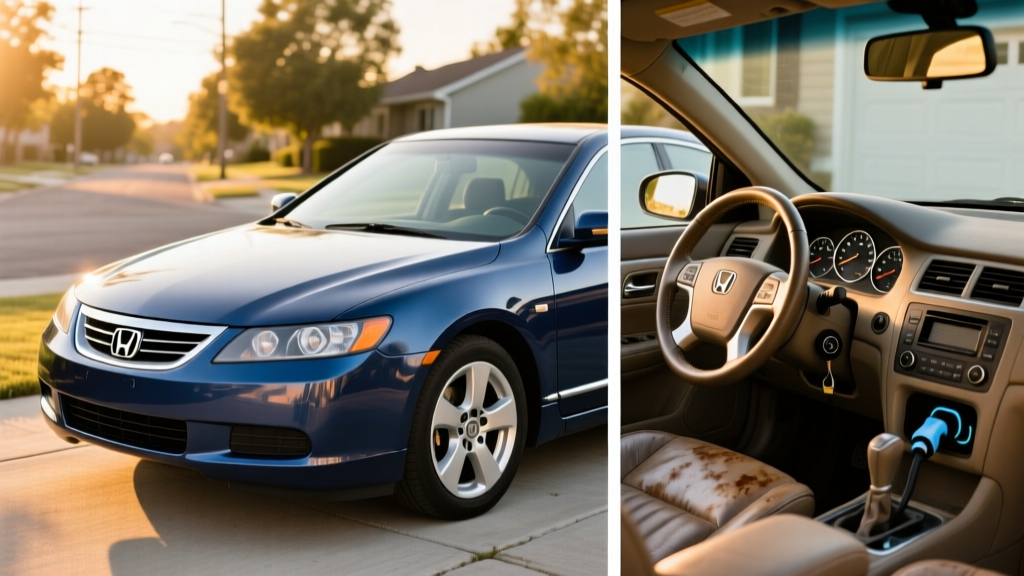
The 2006 Honda Accord V6 Hybrid occupies a unique space in automotive history. It was Honda's first V6 hybrid and one of the earliest mainstream hybrid sedans to pair a six-cylinder engine with an electric assist motor. Nearly two decades later, used-car shoppers still search for it — drawn by the promise of V6 power with hybrid efficiency at a bargain price. But does a 20-year-old hybrid hold up? This guide breaks down the real-world ownership picture: fuel economy, the Integrated Motor Assist (IMA) battery system, replacement costs, and whether this pioneering hybrid still makes sense in 2026 versus a modern HEV, PHEV, or full EV.
2006 Accord Hybrid: Conventional HEV, Not a Plug-In
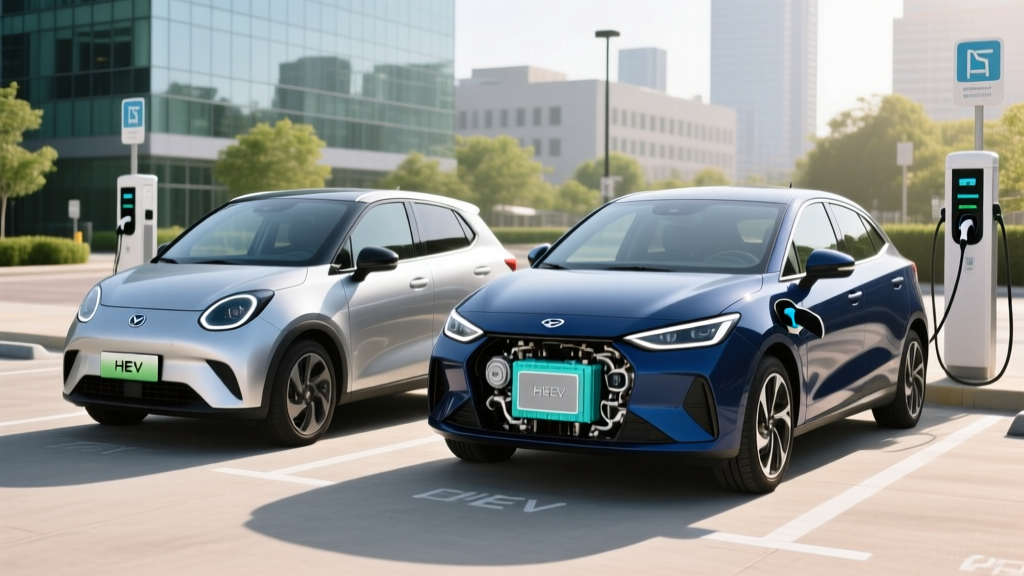
HEV vs PHEV — What's the Difference?
The 2006 Honda Accord V6 Hybrid is a conventional hybrid electric vehicle (HEV). It cannot be plugged in. The small battery pack recharges exclusively through regenerative braking and the gasoline engine. You will never need a charger, a garage outlet, or a public charging station.
A plug-in hybrid (PHEV), by contrast, has a larger battery (typically 10–25 kWh) that charges from a wall outlet or public charger and delivers 20–50 miles of electric-only driving before the gas engine takes over. The 2006 Accord Hybrid predates mainstream PHEV technology by several years and offers zero electric-only range.
Honda's Integrated Motor Assist (IMA) system in this car is fundamentally different from Toyota's Hybrid Synergy Drive of the same era. The IMA uses a single thin electric motor sandwiched between the engine and transmission to assist the V6 under acceleration and capture energy during braking. It cannot propel the car on electric power alone at any meaningful speed. The system's simplicity is both its strength (fewer failure points) and its limitation (modest efficiency gains compared to full hybrid systems).
EPA Fuel Economy and Real-World MPG
| Driving Cycle | EPA MPG |
|---|---|
| City | 29 MPG |
| Highway | 37 MPG |
| Combined | 32 MPG |
Source: U.S. EPA / fueleconomy.gov
For context, the non-hybrid 2006 Accord V6 with the 5-speed automatic was rated at 21 city / 30 highway / 24 combined. The hybrid's 8 MPG combined advantage was substantial for 2006 — roughly a 33% improvement.
Real-World MPG: What Owners Actually Report
Conventional hybrids like this one tend to exceed EPA city estimates in stop-and-go traffic because regenerative braking recovers energy that a gas-only car wastes as heat. Many owners on forums and fuel-tracking sites report 30–34 MPG in mixed driving. Highway driving at sustained 70+ MPH sees less hybrid benefit, and real-world figures often land closer to 32–35 MPG on the highway.
However, a critical caveat for 2026 buyers: battery age matters. If the IMA battery pack has degraded significantly, the electric motor provides less assist, the engine works harder, and real-world fuel economy can drop to 24–27 MPG — erasing much of the hybrid advantage. More on battery health below.
Powertrain Specs: V6 Meets Electric Assist
| Engine | 3.0L V6 (SOHC i-VTEC) with cylinder deactivation |
| Electric Motor | IMA thin-profile DC brushless motor (15 kW / ~20 hp peak assist) |
| Combined Horsepower | 255 hp @ 6,000 rpm |
| Combined Torque | 232 lb-ft @ 5,000 rpm |
| Transmission | 5-speed automatic |
| Drivetrain | Front-wheel drive |
| 0–60 mph | ~6.7 seconds (est.) |
| Battery Type | Nickel-Metal Hydride (NiMH), ~0.6 kWh nominal |
| EPA Combined MPG | 32 MPG |
| Fuel Tank | 17.1 gallons |
| Total Driving Range | ~547 miles |
| Original MSRP (2006) | $30,140 |
| Typical Used Price (2026) | $3,500–$6,500 depending on mileage and condition |
The 3.0L V6 featured Honda's Variable Cylinder Management (VCM), which could shut down three cylinders under light-load cruising. Combined with IMA electric assist during acceleration, the system delivered V6 performance when you needed it and four-cylinder-like efficiency when you didn't. At 255 combined horsepower, this was actually the most powerful Accord Honda had built at the time.
IMA Battery Health, Lifespan, and Replacement Cost
Original Battery Warranty
When new, Honda warranted the IMA battery for 8 years / 80,000 miles (10 years / 150,000 miles in CARB states including California, New York, Massachusetts, and others adopting California emissions standards). That warranty has long expired for every 2006 model on the road today.
How Long Does the IMA Battery Last?
The NiMH battery pack in the 2006 Accord Hybrid typically lasts 100,000 to 150,000 miles before significant degradation, though many have failed earlier (80,000–100,000 miles) and some have lasted beyond 180,000 miles. Heat, frequent deep discharge cycles, and long periods of inactivity accelerate degradation. At nearly 20 years old, any original battery is living on borrowed time.
Battery Replacement Cost
As of 2026, replacement options include:
- Remanufactured IMA battery: $1,200–$2,000 (parts + labor at an independent hybrid specialist)
- New OEM Honda battery: $2,500–$3,800 (if still available through Honda parts channels — supply is dwindling)
- Used/salvage battery: $400–$800, but carries significant risk given the age of all available cores
Many owners of high-mileage examples choose a remanufactured pack from hybrid specialists like BumbleBee Batteries or Dorman's aftermarket NiMH line. The replacement process takes 2–3 hours and does not require dealership-level equipment.
Warning Signs of IMA Battery Degradation
- IMA warning light on the dashboard
- Noticeable drop in fuel economy (3–5+ MPG below normal)
- Reduced acceleration assist (the car feels sluggish off the line)
- Recalibration cycles (the state-of-charge meter drops and recharges frequently)
- Background charging running constantly (the engine running at higher RPM at stops to charge the battery)
If you're inspecting a used 2006 Accord Hybrid, ask whether the IMA battery has been replaced and request documentation. A fresh remanufactured battery is actually a positive — it means you won't face that expense for another decade.
Reliability: What to Expect From a 20-Year-Old Hybrid
The 2006 Accord Hybrid's powertrain is mechanically robust. The J30A V6 engine is one of Honda's most durable mills, routinely reaching 250,000+ miles with basic maintenance. The 5-speed automatic transmission in this generation is generally reliable, though it's wise to verify that transmission fluid has been changed at proper intervals (every 30,000–60,000 miles).
Non-hybrid reliability concerns carry over from the standard Accord V6:
- VCM-related issues: Variable Cylinder Management can lead to carbon buildup, oil consumption, and in some cases, engine mount vibration. Some owners opt for a VCM disable device (~$100–$150) to prevent these problems.
- Power steering hose leaks: A known issue on 2003–2007 Accord V6 models; the high-pressure hose can develop leaks.
- Suspension components: At this age, control arm bushings, ball joints, and sway bar links are likely due for replacement if not already addressed.
- Brake system: Regenerative braking reduces wear on the friction brakes, so rotors and pads often last longer than on non-hybrid models — but calipers can seize from age and inactivity.
Overall, the hybrid-specific components (IMA motor, inverter, battery) are no more failure-prone than the conventional drivetrain, provided the battery has been maintained or replaced. According to NHTSA records, the 2006 Accord Hybrid has no unusual pattern of safety recalls beyond standard Accord campaigns.
Hybrid vs PHEV vs EV: Which Fits You in 2026?
| Factor | 2006 Accord V6 Hybrid (HEV) | Modern HEV (e.g., 2026 Toyota Camry Hybrid) | Modern PHEV (e.g., 2026 Toyota RAV4 Prime) | Full EV (e.g., 2026 Hyundai Ioniq 6) |
|---|---|---|---|---|
| Used/Purchase Price | $3,500–$6,500 | $29,000–$38,000 | $44,000–$55,000 | $38,000–$52,000 |
| Combined MPG / MPGe | 32 MPG | 52 MPG | 38 MPG + 42 mi electric | 140 MPGe |
| Needs Plug-In Charging? | No | No | Yes (for EV range) | Yes (always) |
| Electric-Only Range | 0 miles | 0 miles | ~42 miles | ~340 miles |
| Federal Tax Credit (§30D) | None | None | Up to $7,500* | Up to $7,500* |
| Maintenance Cost (Annual Est.) | $800–$1,500 | $400–$700 | $400–$800 | $200–$400 |
| Safety Tech (ADAS) | None (pre-ADAS era) | TSS 3.0 (L2) | TSS 3.0 (L2) | Highway Driving Assist (L2) |
*Federal §30D tax credit eligibility depends on MSRP caps, buyer income limits, battery component sourcing, and critical mineral requirements. Check current rules at IRS.gov. Credit may be transferred to the dealer at point of sale.
Decision Framework: Who Should Buy the 2006 Accord V6 Hybrid?
Choose this car if:
- Your budget is under $7,000 and you need a reliable daily driver
- You want hybrid efficiency without plugging in or changing your fueling habits
- You value V6 acceleration (255 hp, ~6.7 sec 0–60) in an efficient sedan
- You're comfortable with basic DIY maintenance or have a trusted independent mechanic
- You drive 10,000–15,000 miles/year and want to reduce fuel costs vs a non-hybrid V6
Look elsewhere if:
- You want modern safety features (automatic emergency braking, blind-spot monitoring, lane-keeping)
- You need a warranty — nothing on this car is still covered
- Your commute is short and predictable — a modern PHEV could eliminate gas entirely on weekdays
- You want the lowest possible fuel cost — a full EV at $0.04–$0.06/mile (home charging) beats 32 MPG at current gas prices
- You're risk-averse about a potential $1,500–$3,000 battery replacement
Tax Credits and Incentives: Does It Qualify?
No. The 2006 Honda Accord V6 Hybrid does not qualify for any current federal tax credit. The IRS §30D Clean Vehicle Credit applies only to new plug-in electric vehicles (BEVs and PHEVs) meeting specific battery sourcing, MSRP, and buyer income requirements. Conventional hybrids (HEVs) have not qualified for a federal purchase credit since the original hybrid tax credits expired for Honda in 2008.
Some states and localities offer minimal incentives for used vehicle purchases or for scrapping older vehicles, but these programs vary widely by jurisdiction and change frequently. Check your state's environmental or energy agency website for current programs.
The Bottom Line: Is the 2006 Accord Hybrid Worth It in 2026?
Pros
- Low purchase price ($3,500–$6,500)
- 32 MPG combined from a 255-hp V6 sedan
- No plug-in charging needed — refuel at any gas station
- Proven J30A V6 engine durability
- Regenerative braking extends brake pad life
- Spacious midsize sedan with 14 cu-ft trunk
Cons
- IMA battery likely needs replacement ($1,200–$3,800)
- No modern ADAS safety features (no AEB, no lane assist)
- Fuel economy far behind modern hybrids (Camry Hybrid: 52 MPG)
- No federal tax credit or incentives
- VCM system can cause oil consumption and engine mount issues
- Dwindling parts availability for hybrid-specific components
The 2006 Honda Accord V6 Hybrid is a compelling budget buy for drivers who want a powerful, efficient sedan without the complexity or cost of a plug-in vehicle. Its 32 MPG combined was impressive in 2006 and remains respectable today for a V6 — but modern hybrids have moved the goalposts dramatically. A 2026 Camry Hybrid achieves 52 MPG combined with a full warranty, modern safety tech, and no battery replacement anxiety.
If your budget allows $30,000+, a new or late-model hybrid is the smarter long-term play. But if you need reliable transportation for under $7,000 and can budget for a potential IMA battery replacement, the 2006 Accord V6 Hybrid delivers a unique blend of performance and efficiency that still holds up — provided you go in with eyes open about its age and limitations.
Frequently Asked Questions
How many MPG does the 2006 Honda Accord V6 Hybrid get?
The EPA rates it at 29 city / 37 highway / 32 combined MPG. Real-world owners typically report 28–34 MPG in mixed driving, though a degraded IMA battery can drop this to 24–27 MPG.
Is the 2006 Honda Accord Hybrid a plug-in hybrid?
No. It is a conventional hybrid (HEV). You never plug it in. The small NiMH battery recharges through regenerative braking and the gasoline engine.
How far can it go on electric-only power?
Zero miles. The IMA system cannot drive the car on electric power alone at any meaningful speed. The electric motor only assists the V6 engine during acceleration.
How much does it cost to replace the hybrid battery?
A remanufactured IMA battery costs $1,200–$2,000 installed at a hybrid specialist. A new OEM battery (if available) runs $2,500–$3,800. Used/salvage batteries are cheaper ($400–$800) but risky given the age of all available units.
Is the 2006 Accord Hybrid reliable?
The V6 engine and transmission are highly reliable. The main risk is IMA battery failure, which is a near-certainty at this vehicle's age if the battery hasn't already been replaced. Non-hybrid issues (VCM oil consumption, power steering hose leaks, suspension wear) should also be inspected.
Does the 2006 Honda Accord Hybrid qualify for any tax credit?
No. Federal hybrid tax credits for Honda vehicles expired in 2008, and current §30D credits apply only to new plug-in vehicles (BEVs and PHEVs). No state or federal incentive is available for this vehicle in 2026.
Should I buy the 2006 Accord Hybrid or save for a modern hybrid?
If your budget is strictly under $7,000, the 2006 Accord Hybrid is one of the best options at that price point — just budget $1,500 for a battery replacement. If you can spend $25,000+, a late-model used hybrid (2020+ Camry Hybrid, Accord Hybrid, or Hyundai Sonata Hybrid) will deliver 45–52 MPG, modern safety features, and remaining warranty coverage.