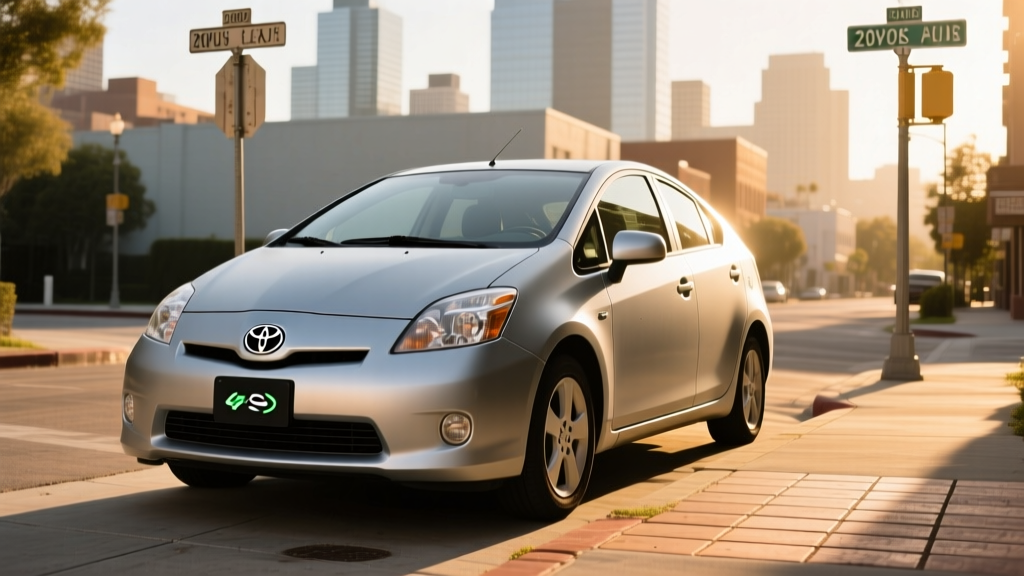
Before plug-in hybrids, before the RAV4 Prime, before the Prius Prime existed, there was the original Toyota Prius — the car that proved gasoline-electric hybridization could work at scale in the United States. The 2002 Prius hybrid (technically the first-generation NHW11 model, sold in the US for model years 2001–2003) wasn't just a science experiment. It was a real, daily-drivable sedan that delivered fuel economy numbers that stunned the automotive world and laid the groundwork for every hybrid and PHEV on the road today.
If you're searching for information on the 2002 Prius hybrid — whether you've spotted one still running in a driveway, you're researching hybrid longevity, or you want to understand how far hybrid technology has come — this guide covers everything: the original specs, real-world fuel economy, battery lifespan, and how the 2002 Prius stacks up against modern 2026 hybrid and PHEV alternatives.
2002 Toyota Prius: The Hybrid That Started It All in America
Toyota introduced the first-generation Prius in Japan in December 1997, making it the world's first mass-produced hybrid passenger car. The US-market version arrived in mid-2000 as a 2001 model year vehicle and continued largely unchanged through 2003. The 2002 model year falls squarely in this first-generation (NHW11) run.
This was a conventional hybrid (HEV) — not a plug-in hybrid (PHEV). The distinction matters: the 2002 Prius generated all its electricity onboard through regenerative braking and its gasoline engine. There was no plug, no charging port, and no electric-only driving range. You simply filled it with gas and drove, while the hybrid system quietly optimized efficiency behind the scenes.
Conventional Hybrid (HEV): Charges its small battery internally via the engine and regenerative braking. No plug required. Cannot drive on electric power alone for meaningful distances. Example: 2002 Prius, 2026 Toyota Camry Hybrid.
Plug-in Hybrid (PHEV): Has a larger battery you charge via a plug. Offers 20–45+ miles of electric-only range before the gas engine kicks in. Example: 2026 Toyota Prius Prime, RAV4 Prime.
Fuel Economy: How Many MPG Does the 2002 Prius Hybrid Get?
The 2002 Toyota Prius was rated by the EPA at fuel economy figures that were remarkable for the era — and still respectable today. Here's the official breakdown from fueleconomy.gov:
| Metric | Value |
|---|---|
| City MPG | 52 MPG |
| Highway MPG | 45 MPG |
| Combined MPG | 48 MPG |
| Fuel Tank Capacity | 11.9 gallons |
| Total Range (estimated) | ~571 miles |
A note on EPA methodology: The 2002 Prius was rated under the older, pre-2008 EPA testing cycle, which generally produced more optimistic numbers than the revised methodology used today. Under current EPA testing standards, the same powertrain would likely be rated closer to 42–44 MPG combined. For comparison, the 2026 Toyota Prius LE (fifth generation) is EPA-rated at 57 MPG combined under the modern, stricter test cycle — a meaningful improvement.
Real-World MPG: What Owners Actually Saw
One of the defining characteristics of conventional hybrids — and the 2002 Prius was no exception — is that real-world city driving often exceeds the EPA city estimate. This is because the hybrid system recaptures energy during stop-and-go braking and runs the electric motor more heavily at low speeds, where a gasoline engine is least efficient.
Owner reports from forums like PriusChat and early Edmunds reviews consistently documented real-world combined fuel economy in the 42–48 MPG range, with city driving sometimes pushing above 50 MPG in warm weather. Highway-only driving at 75+ MPH typically dropped efficiency to the low-to-mid 40s, as the gasoline engine shoulders more of the load at sustained high speeds.
Cold weather also took a toll. In freezing temperatures, the 2002 Prius's nickel-metal hydride (NiMH) battery was less efficient, and the engine ran more frequently to provide cabin heat, often dropping real-world winter MPG to the mid-to-high 30s.
Powertrain and Technical Specifications
The 2002 Prius used Toyota's first-generation Hybrid Synergy Drive (then called the Toyota Hybrid System, or THS). Here's what was under the hood:
| Component | Specification |
|---|---|
| Gasoline Engine | 1.5L inline-4 (1NZ-FXE), Atkinson cycle |
| Engine Horsepower | 70 HP @ 4,500 RPM |
| Engine Torque | 82 lb-ft @ 4,200 RPM |
| Electric Motor Output | 44 HP (33 kW) |
| Combined Net Horsepower | ~100 HP |
| Transmission | eCVT (planetary gearset) |
| Hybrid Battery | 1.78 kWh NiMH (274V nominal) |
| Drivetrain | Front-wheel drive |
| 0–60 MPH | ~12.5 seconds |
| Curb Weight | ~2,765 lbs |
The Atkinson-cycle gasoline engine was key to the Prius's efficiency. By delaying intake valve closure, the Atkinson cycle sacrifices some power density in exchange for greater thermal efficiency — a trade-off the hybrid system's electric motor compensates for during acceleration. This same fundamental architecture persists in Toyota hybrids through 2026, though with vastly refined components.
The 1.78 kWh nickel-metal hydride (NiMH) battery pack was tiny by modern standards — a 2026 Prius Prime PHEV carries an 13.6 kWh lithium-ion pack — but it was sufficient for the brief electric-only assist bursts the first-gen system required. The NiMH chemistry was chosen for its durability and thermal stability, and it proved remarkably long-lived.
Hybrid Battery Lifespan, Reliability, and Replacement Cost
The single biggest concern for any used hybrid buyer — and a question the 2002 Prius helped answer for the entire industry — is battery longevity. The first-generation Prius has now been on the road for over two decades, providing an extraordinary real-world dataset on hybrid battery degradation.
Toyota warranted the hybrid battery for 8 years / 100,000 miles (10 years / 150,000 miles in California Air Resources Board states). This set the industry standard — and as of 2026, Toyota still provides a 10-year / 150,000-mile hybrid battery warranty on all new hybrid and PHEV models nationwide.
Real-World Battery Longevity
Data from owner communities, salvage yards, and independent hybrid shops paints a consistent picture: the first-generation Prius NiMH battery typically lasted between 100,000 and 150,000 miles before significant capacity loss triggered a check-engine light or noticeable fuel economy decline. Some units exceeded 200,000 miles; others failed earlier, particularly in hot climates where thermal stress accelerated cell degradation.
By 2026, any surviving 2002 Prius has almost certainly had its original battery replaced at least once — likely twice. The good news is that replacement costs have dropped dramatically:
- Remanufactured NiMH pack (independent shop): $1,000–$1,800 installed
- New OEM Toyota pack: $2,000–$3,000+ installed (limited availability for first-gen)
- Individual module replacement (reconditioning): $500–$900 at specialist hybrid shops
The broader reliability story is strong. The 2002 Prius's planetary eCVT transmission — which has no traditional gears, belts, or clutches to wear — proved nearly bulletproof. The gasoline engine, running the mild Atkinson cycle, experienced less stress than conventional engines. The most common failure points were the 12V auxiliary battery (a standard maintenance item), the combination meter display, and occasionally the inverter coolant pump.
2002 Prius vs 2026 Toyota Prius: 24 Years of Hybrid Evolution
The most instructive way to appreciate the 2002 Prius is to compare it directly with its current-generation descendant. The 2026 Toyota Prius LE represents the fifth generation and is dramatically more efficient, more powerful, and more refined:
| Specification | 2002 Prius (Gen 1) | 2026 Prius LE (Gen 5) |
|---|---|---|
| EPA Combined MPG | 48 MPG* | 57 MPG |
| Combined Horsepower | ~100 HP | 194 HP |
| 0–60 MPH | ~12.5 sec | ~7.2 sec |
| Hybrid Battery | 1.78 kWh NiMH | ~1.1 kWh Lithium-ion |
| Engine | 1.5L I4 | 2.0L I4 |
| Battery Warranty | 8 yr / 100k mi | 10 yr / 150k mi |
| MSRP (base, when new) | ~$19,995 | ~$29,445 |
| Body Style | 4-door sedan | 5-door liftback |
*2002 EPA combined MPG was rated under the older, more lenient test cycle. Under current methodology, the figure would be approximately 42–44 MPG.
The gains are striking: nearly 100 more horsepower, a 0–60 time cut nearly in half, a 9 MPG combined improvement (under the stricter modern test), and a battery chemistry shift from NiMH to lithium-ion that reduced pack weight while improving charge/discharge efficiency. The 2026 Prius also offers an available all-wheel-drive (AWD-e) variant and the Prius Prime PHEV sibling with 44 miles of electric-only range.
Does the 2002 Prius Qualify for Any Tax Credit?
No. The 2002 Prius does not qualify for any federal electric vehicle or plug-in hybrid tax credit under current IRS rules.
Here's why, with context on how hybrid incentives work:
- Federal §30D Clean Vehicle Credit: This credit (up to $7,500) applies only to new plug-in electric vehicles and PHEVs meeting specific battery capacity, critical-mineral sourcing, MSRP, and buyer income requirements. Conventional hybrids like the 2002 Prius have never qualified. The original Prius hybrid credit — which existed under older legislation — was a much smaller credit (up to $3,150) that phased out for Toyota in 2007 after the brand hit 50,000 qualifying units.
- Used EV Credit (§25E): Up to $4,000 for used plug-in vehicles purchased from a dealer. Again, this requires a plug-in capable vehicle (BEV or PHEV), not a conventional hybrid.
- State incentives: Some states offered hybrid tax credits or HOV lane access for the original Prius when new (notably California, Colorado, and Virginia), but these have long since expired or been replaced by EV-focused programs.
For current incentive information, always check IRS.gov's clean vehicle credit page and your state's energy office, as rules change frequently.
Hybrid vs PHEV vs EV: Which Fits Your Needs in 2026?
The 2002 Prius proved that hybridization works. But the landscape it spawned is now diverse, and choosing between a conventional hybrid, a plug-in hybrid, and a full battery-electric vehicle (BEV) depends on your driving patterns, charging access, and budget.
| Factor | HEV (e.g., Camry Hybrid) | PHEV (e.g., Prius Prime) | BEV (e.g., Tesla Model 3) |
|---|---|---|---|
| Plug-in Required? | No | Yes (optional) | Yes (mandatory) |
| Electric-Only Range | ~1 mile or less | 25–45 miles | 250–400+ miles |
| Home Charging Needed? | No | Recommended | Essential |
| Federal Tax Credit (new) | None | Up to $7,500* | Up to $7,500* |
| Best For | No charging access, simplicity | Short commute + road trips | Home charging + low running cost |
| Fuel Cost (per mile) | ~$0.08–$0.10 | ~$0.03–$0.10 | ~$0.03–$0.05 |
*§30D credit eligibility depends on MSRP caps ($55,000 for cars, $80,000 for SUVs/trucks), buyer income limits, battery sourcing requirements, and point-of-sale transfer rules. Always verify at IRS.gov before purchasing.
You live in an apartment or lack home charging access. You want maximum fuel efficiency without changing your refueling habits. You frequently drive long highway distances where PHEV electric range is quickly exhausted. You want the lowest purchase price in an electrified vehicle. The conventional hybrid — the direct descendant of what the 2002 Prius pioneered — remains the right tool for these jobs.
Pros and Cons of the 2002 Prius Hybrid
Pros
- Proven 42–48 MPG real-world combined efficiency
- Extraordinarily reliable planetary eCVT transmission
- Low cost of entry on the used market ($1,500–$4,000)
- Set the template for all modern hybrids
- Strong parts availability and enthusiast community
- No plug required — works with existing gas infrastructure
Cons
- Sluggish acceleration (~12.5 sec 0–60 MPH)
- NiMH battery nearing or past end-of-life on all surviving examples
- Minimal safety tech by modern standards (no ESC standard, no airbags beyond front)
- Small, cramped interior with limited cargo space
- No electric-only driving capability
- No federal or state tax credits available
Frequently Asked Questions
How many MPG does the 2002 Prius hybrid get?
The 2002 Toyota Prius is EPA-rated at 52 city / 45 highway / 48 combined MPG under the older test methodology. Real-world driving typically yields 42–48 MPG combined, with city driving sometimes exceeding 50 MPG and highway driving at 75+ MPH dropping to the low 40s. Cold weather can reduce efficiency to the mid-30s.
Is the 2002 Prius a plug-in hybrid?
No. The 2002 Prius is a conventional hybrid (HEV). It charges its battery entirely through regenerative braking and the gasoline engine. There is no plug, no charging port, and no meaningful electric-only range. Toyota did not introduce the Prius Prime plug-in hybrid until the 2017 model year.
How much does it cost to replace the hybrid battery in a 2002 Prius?
A remanufactured NiMH battery pack installed at an independent hybrid specialist typically costs $1,000–$1,800. Individual module replacement (reconditioning) can be done for $500–$900. New OEM packs are increasingly difficult to source for the first-generation model. Given the vehicle's age and low resale value, battery replacement may exceed the car's market value.
Is a 2002 Prius still reliable in 2026?
The mechanical design is robust — the eCVT and Atkinson-cycle engine experience minimal wear. However, any 24-year-old vehicle will have age-related issues: rubber components, suspension bushings, the 12V battery, and electronics. The hybrid battery is the most expensive potential failure point. A well-maintained 2002 Prius with a recently replaced battery can still be a reliable daily driver, but parts availability and the vehicle's low market value make major repairs hard to justify economically.
Does the 2002 Prius qualify for any tax credit?
No. The 2002 Prius is a conventional hybrid and does not qualify for the federal §30D Clean Vehicle Credit, the §25E Used EV Credit, or any current state EV incentive. The original hybrid tax credit that applied to early Prius models was a smaller credit (up to $3,150) that phased out for Toyota in 2007.
Should I buy a used 2002 Prius or a newer hybrid?
Unless you're a hybrid enthusiast or need an ultra-cheap commuter car under $3,000, a newer hybrid makes more financial sense. A 2020+ Toyota Corolla Hybrid (52 MPG combined, modern safety tech, full warranty) or a 2026 Prius LE (57 MPG, 194 HP) delivers far better efficiency, safety, performance, and peace of mind. The 2002 Prius's value today is primarily historical — it's the car that proved hybrids work.