The 2002 Honda Civic Hybrid holds a unique place in automotive history. As Honda's first gasoline-electric hybrid sold in the United States, it arrived just as Toyota's Prius was establishing the segment. For collectors, used-car researchers, and anyone searching for "2002 honda hybrid" to evaluate a surviving example, understanding this pioneering vehicle's specs, real-world fuel economy, and battery longevity is essential — especially when comparing it against modern hybrids and PHEVs available in 2026.
This guide covers the original 2002 Civic Hybrid's powertrain, EPA fuel economy, Integrated Motor Assist (IMA) system, battery warranty history, and what buying or owning one looks like today. We also contrast conventional hybrid (HEV) technology with the plug-in hybrid (PHEV) and full EV options that have since overtaken it.
What Was the 2002 Honda Hybrid?
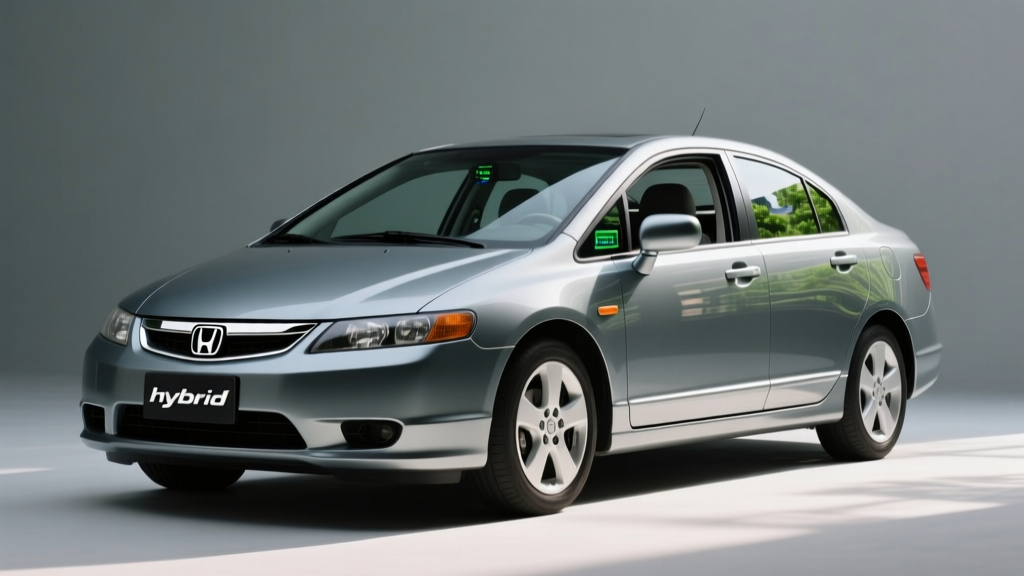
The 2002 Honda Civic Hybrid (first generation, model code ES1) was a conventional hybrid electric vehicle (HEV). It paired a small gasoline engine with an electric motor sandwiched between the engine and transmission — Honda's proprietary Integrated Motor Assist (IMA) system. Unlike a plug-in hybrid, it could not be charged from a wall outlet; its small battery recharged exclusively through regenerative braking and engine power.
Honda introduced the Civic Hybrid in Japan in late 2001 and brought it to the US market for the 2003 model year (sold from spring 2002 onward). It competed directly with the first-generation Toyota Prius (XW20), offering a more conventional sedan silhouette compared to the Prius's distinctive hatchback shape.
2002 Honda Civic Hybrid: Powertrain & Specifications
| Spec | Value |
|---|---|
| Engine | 1.3L inline-4 (i-DSI lean-burn) |
| Engine Output | 85 hp @ 5,700 rpm / 87 lb-ft torque |
| Electric Motor (IMA) | 15 kW (20 hp) / 76 lb-ft torque |
| Combined System Output | 93 hp @ 5,700 rpm |
| Transmission | 5-speed manual or CVT (continuously variable) |
| IMA Battery | Nickel-Metal Hydride (NiMH), ~0.4 kWh (nominal) |
| Drivetrain | Front-wheel drive |
| Curb Weight | ~2,645 lbs (CVT) |
| 0–60 mph | ~11.5 seconds (est.) |
| Original MSRP | $19,995 (2003 model year) |
The IMA system was elegantly simple by today's standards. A thin, brushless DC motor mounted directly on the engine's crankshaft provided assist during acceleration and captured energy during braking. The 1.3L i-DSI engine featured twin spark plugs per cylinder and lean-burn combustion — technologies aimed at squeezing maximum efficiency from every drop of fuel. Unlike Toyota's Hybrid Synergy Drive, which could propel the Prius on electric power alone at low speeds, the IMA system always required the gasoline engine to be turning; the electric motor could not drive the wheels independently.
Fuel Economy: EPA MPG & Real-World Results
| Transmission | City | Highway | Combined |
|---|---|---|---|
| 5-Speed Manual | 46 MPG | 51 MPG | 48 MPG |
| CVT Automatic | 48 MPG | 47 MPG | 47 MPG |
Source: EPA Fuel Economy
These numbers were remarkable for 2002 and remain competitive with many modern non-hybrid compacts. The manual transmission version actually achieved higher highway MPG than city — unusual for a hybrid — because the IMA system's regenerative braking benefit was more pronounced with the CVT's programming.
Real-World MPG vs. EPA Sticker
Owner reports on forums like CleanMPG and GreenHybrid consistently showed real-world fuel economy between 40 and 50 MPG combined, with drivers practicing hypermiling techniques occasionally exceeding 55 MPG. However, several factors pulled real-world results below the EPA sticker:
- Battery degradation: As the NiMH pack aged (typically after 80,000–120,000 miles), IMA assist diminished and fuel economy dropped 3–6 MPG.
- Cold weather: Winter driving reduced efficiency by 10–15%, consistent with all hybrids due to increased engine idling for cabin heat and reduced battery performance.
- Highway speeds above 70 mph: Aerodynamic drag overwhelmed the lean-burn engine's efficiency advantage.
- A/C usage: The engine-driven compressor reduced MPG by 2–4 in summer conditions.
For a surviving 2002 Civic Hybrid today, expect 38–45 MPG combined if the IMA battery is original and degraded, or 44–48 MPG if the battery has been replaced or refurbished.
IMA Battery: Lifespan, Warranty & Replacement Cost
The IMA battery pack in the first-generation Civic Hybrid used nickel-metal hydride (NiMH) cells — the same chemistry found in the contemporaneous Toyota Prius. While NiMH is robust and tolerant of temperature extremes, it degrades with time and charge cycles. Common failure patterns included:
- Capacity loss: After 100,000+ miles, the pack stored less energy, reducing regenerative braking capture and acceleration assist.
- Cell imbalance: Individual cells weakened unevenly, triggering the IMA warning light and diagnostic trouble codes (typically P1447 or P1600).
- Calendar aging: Even low-mileage examples suffered degradation; NiMH chemistry degrades over 15–20+ years regardless of use.
Battery Replacement Cost (2026 Estimates)
| Option | Cost (Parts + Labor) | Warranty |
|---|---|---|
| OEM Honda (if available) | $2,500–$3,500 | 12 months |
| Aftermarket remanufactured | $1,200–$2,000 | 1–3 years |
| DIY reconditioning / cell replacement | $300–$800 | None (at your risk) |
| Used junkyard pack | $200–$600 | 30–90 days |
Given that a running 2002–2005 Civic Hybrid has a 2026 market value of roughly $2,000–$4,500 depending on condition and mileage, a new OEM battery often exceeds the vehicle's worth. Most owners opt for aftermarket remanufactured packs or DIY grid-charging reconditioning (a process that balances cells using an external charger). Honda discontinued the OEM IMA battery for this generation several years ago, making new-old-stock units rare.
Is the 2002 Civic Hybrid Reliable?
Beyond the IMA battery, the first-generation Civic Hybrid proved mechanically durable. The 1.3L i-DSI engine is under-stressed and can exceed 200,000 miles with basic maintenance. The CVT transmission in this generation used a traditional torque-converter-start design (not the problematic start-clutch design of later models), and failure rates were low. Common non-hybrid issues included:
- Standard Civic wear items: suspension bushings, wheel bearings, A/C compressor
- 12V auxiliary battery (standard lead-acid, unrelated to the IMA pack)
- Oxygen sensor and catalytic converter at high mileage
The biggest reliability risk today is purchasing an example with a dead or dying IMA battery — which, at 20+ years old, is nearly every surviving original pack.
HEV vs PHEV vs EV: Where Does the 2002 Civic Hybrid Fit?
The automotive landscape has transformed dramatically since 2002. Here's how the original Civic Hybrid's technology compares to what's available to buyers in 2026:
| Feature | 2002 Civic Hybrid (HEV) | 2026 Honda Accord Hybrid (HEV) | 2026 Toyota RAV4 Prime (PHEV) | 2026 Honda Prologue (BEV) |
|---|---|---|---|---|
| Powertrain | 1.3L + IMA | 2.0L + 2-motor | 2.5L + 2-motor | Battery electric |
| Combined Output | 93 hp | 204 hp | 302 hp | 288 hp (AWD) |
| EPA Combined MPG / MPGe | 48 MPG | 48 MPG | 94 MPGe / 38 MPG | 99 MPGe |
| Electric-Only Range | None | ~0.5 mi (low speed) | 42 miles | 296 miles |
| Battery (kWh) | ~0.4 (NiMH) | 1.1 (Li-ion) | 18.1 (Li-ion) | 85 (Li-ion) |
| Plug-In Charging | No | No | Yes (Level 1/2) | Yes (L1/L2/DC) |
| Federal Tax Credit | None | None | Up to $7,500* | Up to $7,500* |
| Starting MSRP | $19,995 (2003) | ~$34,990 | ~$44,900 | ~$48,800 |
* Federal §30D tax credit eligibility depends on MSRP caps, buyer income limits, battery component sourcing, and critical mineral requirements per IRS rules. PHEV credits are prorated based on battery capacity. Always consult a tax professional.
Who Should Choose What?
- You lack access to home or workplace charging
- You want maximum simplicity — no plug, no range planning
- Your driving is mostly city/suburban where regenerative braking shines
- Budget is a priority (HEVs carry a smaller price premium over gas models)
- You can charge at home (Level 1 or 2) but also take longer road trips
- Your daily commute is under 40 miles (covers most errands on electric only)
- You want EV-like daily driving with a gas-engine safety net
- You want to capture the federal tax credit (subject to eligibility rules)
- You have reliable home Level 2 charging
- Your daily driving is under 250 miles and you can plan road-trip charging
- You want zero tailpipe emissions and the lowest per-mile fuel cost
- You want the strongest tax credit and lowest maintenance costs
Tax Credits: Did the 2002 Civic Hybrid Qualify?
The 2002–2005 Civic Hybrid was eligible for a modest federal income tax deduction (not a credit) under the Clean Fuel Vehicle deduction that existed at the time — up to $2,000 for the 2003 model year, phasing down in subsequent years. This was not the same as the modern §30D Clean Vehicle Credit. The deduction expired for this vehicle long ago and has no relevance for a used purchase in 2026.
For used hybrid purchases today, the federal Used Clean Vehicle Credit (§25E) provides up to $4,000 or 30% of the sale price (whichever is lower) — but only for vehicles with a battery capacity of at least 7 kWh. The 2002 Civic Hybrid's ~0.4 kWh NiMH pack falls far short of this threshold, making it ineligible for any current federal tax credit or deduction.
State incentives vary widely. Some states like California, Colorado, and Oregon have offered rebates for used hybrids or efficient vehicles, but most programs have shifted focus to PHEVs and BEVs. Check your state's energy office or Alternative Fuels Data Center for current programs.
Buying a 2002 Honda Civic Hybrid in 2026: Pros & Cons
Pros
- Remarkable fuel economy (44–48 MPG) even by 2026 standards
- Low purchase price ($2,000–$4,500 used)
- Proven mechanical durability beyond the IMA system
- Lightweight and nimble in city driving
- Historical significance as Honda's US hybrid pioneer
- No plug required — fuel anywhere
Cons
- IMA battery almost certainly degraded or failed (replacement needed)
- Only 93 hp — sluggish by modern standards
- No electric-only driving capability
- No DC fast charging, no plug-in option
- Outdated safety features (no ESC, side airbags optional)
- No federal or state tax credit eligibility
- OEM replacement parts increasingly scarce
Frequently Asked Questions
How many MPG does the 2002 Honda Civic Hybrid get?
The EPA rated the 2003 model year Civic Hybrid at 48 MPG combined (manual) or 47 MPG combined (CVT), with city/highway figures of 46/51 and 48/47 respectively. Real-world owners typically report 40–50 MPG combined depending on battery condition, driving style, and climate. A degraded IMA battery can drop real-world economy to 38–42 MPG.
Can the 2002 Civic Hybrid drive on electric power only?
No. The IMA system requires the gasoline engine to be running whenever the car is moving. The electric motor assists the engine but cannot independently propel the vehicle. This is a fundamental difference from modern full-hybrid systems (like Toyota's Hybrid Synergy Drive) that can operate in EV mode at low speeds, and from PHEVs that offer 20–50 miles of pure electric range.
How much does it cost to replace the IMA battery?
In 2026, expect to pay $1,200–$2,000 for a remanufactured aftermarket IMA battery (installed) or $300–$800 for a DIY cell-replacement or grid-charging reconditioning. A new OEM Honda battery, if one can be found, runs $2,500–$3,500. Given the vehicle's current market value of $2,000–$4,500, most owners choose the aftermarket or DIY route.
Is the 2002 Honda Civic Hybrid reliable?
The gasoline engine, transmission, and chassis are very reliable and can exceed 200,000 miles with standard maintenance. The primary reliability concern is the IMA battery, which degrades with age and mileage. At 20+ years old, any original battery is at end-of-life. Once the IMA battery is replaced or refurbished, the car remains dependable for daily driving.
Does the 2002 Civic Hybrid qualify for any tax credit in 2026?
No. The federal Used Clean Vehicle Credit (§25E) requires a minimum battery capacity of 7 kWh; the Civic Hybrid's ~0.4 kWh pack does not qualify. No current federal tax credit, deduction, or incentive applies to this vehicle. State-level incentives for used hybrids are rare and vary by jurisdiction — consult your state's energy office for details.
Should I buy a 2002 Civic Hybrid or a modern hybrid?
If budget is your primary constraint and you're comfortable with an older vehicle that will likely need a battery replacement, a surviving Civic Hybrid offers outstanding MPG for very little money. However, a modern hybrid like the 2026 Toyota Corolla Hybrid (~$24,000, 50 MPG combined, full warranty, modern safety tech) or a used 2018–2022 Prius ($15,000–$22,000, 52+ MPG) provides far better value when you factor in reliability, safety, warranty, and available tax credits on PHEV alternatives.
The Legacy: What the 2002 Civic Hybrid Taught the Industry
Honda's first hybrid proved that a mainstream automaker could integrate electric assist into a conventional, affordable compact car. The IMA concept — a thin motor between engine and transmission — was simpler and cheaper than Toyota's power-split device, though less capable. Over three generations (2002–2015), Honda refined IMA across the Civic, Insight, CR-Z, and Accord, ultimately abandoning it in favor of the two-motor i-MMD system used in today's Honda hybrids.
For anyone researching a "2002 honda hybrid" today, the Civic Hybrid is best appreciated as a historical milestone and a budget-friendly high-MPG commuter — not as a practical alternative to the far more capable, efficient, and warrantied hybrids, PHEVs, and EVs available in 2026. If you find a clean example at the right price and are prepared for a battery investment, it remains a frugal and historically significant daily driver.