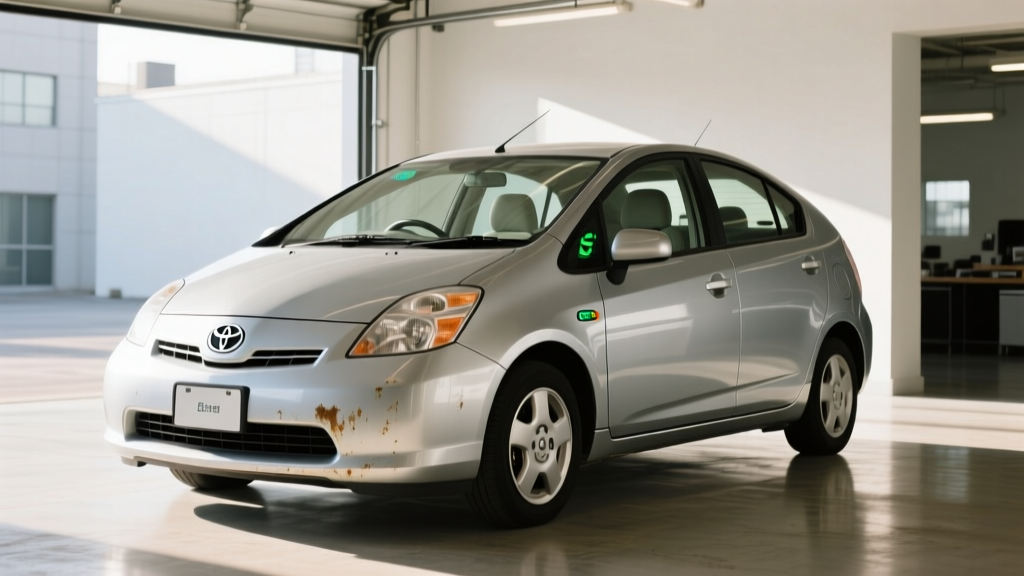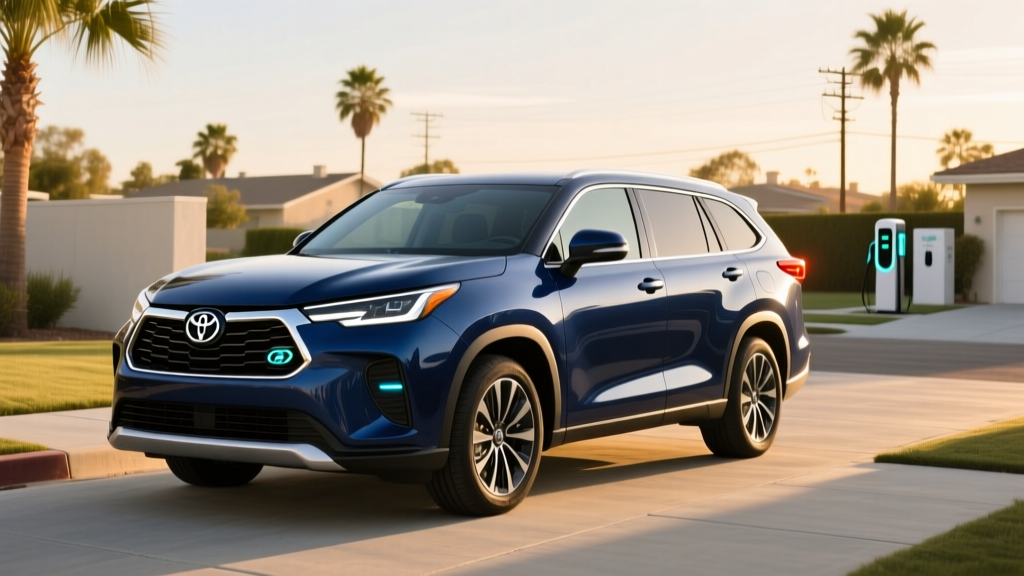
The 2006 Toyota Highlander Hybrid in 2026: What Buyers and Owners Need to Know
The 2006 Toyota Highlander Hybrid holds a unique place in automotive history. It was one of the first mainstream hybrid SUVs sold in the United States, arriving when Toyota's Hybrid Synergy Drive was still a novelty rather than an industry standard. Nearly two decades later, many of these vehicles are still on the road — a testament to Toyota's early hybrid engineering. But if you're considering buying a used 06 Toyota Highlander Hybrid in 2026, or you currently own one and are weighing repair costs against replacement, you need hard data on fuel economy, battery longevity, and how this pioneer stacks up against the electrified options available today.
This guide covers the specific mechanical reality of the 2006 model year Highlander Hybrid, its EPA-rated and real-world MPG, the state of its hybrid battery after 20 years, and whether it still makes financial sense as daily transportation.
HEV vs. PHEV: Where the 2006 Highlander Hybrid Fits
The 2006 Highlander Hybrid is a conventional hybrid electric vehicle (HEV). It cannot be plugged in, has no electric-only driving range, and charges its small nickel-metal hydride (NiMH) battery exclusively through regenerative braking and the gasoline engine. This is fundamentally different from a plug-in hybrid (PHEV) like the current Toyota RAV4 Prime or a full battery-electric vehicle (BEV) like the Hyundai Ioniq 5.
| Feature | HEV (2006 Highlander Hybrid) | PHEV (e.g., 2026 RAV4 Prime) | BEV (e.g., 2026 Ioniq 5) |
|---|---|---|---|
| Plug-in charging | No | Yes (120V/240V) | Yes (120V/240V/DC fast) |
| Electric-only range | 0 miles | ~42 miles | ~300+ miles |
| Battery size | ~1.9 kWh (NiMH) | 18.1 kWh (Li-ion) | 77.4 kWh (Li-ion) |
| Federal tax credit | No (expired) | Up to $7,500 (§30D, if eligible) | Up to $7,500 (§30D, if eligible) |
| Refueling | Gasoline only | Gasoline + electricity | Electricity only |
The distinction matters because some used-car listings conflate "hybrid" with "plug-in." The 06 Highlander Hybrid requires no charging infrastructure. You fuel it with gasoline and the hybrid system handles the rest. That simplicity is both its advantage (no charging access needed) and its limitation (no electric-only miles, no tax credits).
Fuel Economy: EPA Ratings and Real-World MPG
The 2006 Toyota Highlander Hybrid came equipped with a 3.3-liter V6 engine paired with Toyota's Hybrid Synergy Drive system, producing a combined 208 horsepower. It was available in front-wheel drive (FWD) and all-wheel drive (AWD-i, using a rear electric motor) configurations. Here are the official EPA figures, sourced from fueleconomy.gov:
| Configuration | City MPG | Highway MPG | Combined MPG |
|---|---|---|---|
| FWD (2006 Highlander Hybrid) | 31 | 27 | 29 |
| AWD-i (2006 Highlander Hybrid) | 31 | 27 | 28 |
For a 4,300-pound three-row SUV in 2006, those numbers were remarkable — the non-hybrid V6 Highlander rated just 18 city / 24 highway. The hybrid system delivered a roughly 40% improvement in city driving.
Real-World MPG: What to Expect in 2026
After 20 years of service, real-world fuel economy for a 2006 Highlander Hybrid depends heavily on the condition of the hybrid battery, engine maintenance, and driving habits:
- Healthy battery, city driving: 26–30 MPG (hybrids typically match or slightly exceed EPA city ratings in stop-and-go traffic due to regenerative braking)
- Healthy battery, highway driving: 24–27 MPG (aerodynamic drag and the vehicle's weight work against it at sustained speeds)
- Degraded battery: 20–24 MPG combined (the system defaults to engine-heavy operation, losing much of the hybrid benefit)
- Cold weather (below 30°F): Expect a 10–15% reduction as the engine runs more frequently to provide cabin heat and the battery's charge-acceptance drops
The critical variable is battery health. A 20-year-old NiMH pack that has never been replaced will almost certainly show significant degradation. The hybrid system will still function — it won't strand you — but the electric motor assists less, regenerative braking captures less energy, and the V6 does more of the work.
Powertrain Details and Battery Specifications
| Specification | 2006 Toyota Highlander Hybrid |
|---|---|
| Engine | 3.3L V6 (3MZ-FE) |
| Engine horsepower | 208 hp (combined system output) |
| Electric motor (front) | Permanent magnet synchronous |
| Electric motor (rear, AWD-i only) | Rear-mounted, provides AWD assist |
| Transmission | eCVT (electronically controlled continuously variable) |
| Hybrid battery type | Nickel-metal hydride (NiMH) |
| Hybrid battery capacity | ~1.9 kWh (nominal) |
| Hybrid battery voltage | ~288V |
| Curb weight | ~4,345 lbs (FWD) / ~4,500 lbs (AWD-i) |
| Towing capacity | 3,500 lbs |
| Seating | 7 passengers (3 rows) |
The 3MZ-FE V6 is a well-documented Toyota engine known for longevity when properly maintained. The eCVT transmission — which uses planetary gearsets rather than belts or pulleys — has proven extremely durable. The weak point in any 20-year-old hybrid is the battery pack.
Hybrid Battery Longevity, Warranty, and Replacement Cost
This is the single most important factor in evaluating a 2006 Highlander Hybrid today. Toyota originally warranted the hybrid battery for 8 years / 100,000 miles (extended to 10 years / 150,000 miles in California and other CARB-emission states). That factory coverage expired long ago for every 2006 model on the road.
Original warranty: 8 yr / 100,000 mi (10 yr / 150,000 mi in CARB states) — expired
Typical NiMH battery lifespan: 150,000–200,000 miles or 12–15 years under normal use
2026 reality: Most original batteries have failed or are significantly degraded
Battery Replacement Options and Costs
If you're buying or owning a 2006 Highlander Hybrid, budget for battery replacement. Here are the realistic options:
| Option | Cost Range | Notes |
|---|---|---|
| New OEM Toyota battery | $3,000–$4,000 (installed) | Best reliability; may be hard to source for a 2006 model |
| Refurbished/reconditioned pack | $1,500–$2,500 (installed) | Rebuilt with tested cells; variable quality depending on vendor |
| Used battery from salvage | $500–$1,200 + installation | Highest risk — unknown remaining life; could fail within months |
| Individual cell/module replacement | $400–$800 (if DIY-capable) | Requires diagnostic equipment to identify failed modules; temporary fix |
Given the vehicle's current market value (typically $3,000–$6,000 in 2026 depending on mileage and condition), a $3,500 OEM battery replacement represents a significant percentage of the car's worth. This economic reality is the primary reason many 2006 Highlander Hybrids are retired rather than repaired.
Is the 2006 Highlander Hybrid Reliable?
Toyota's early hybrid systems earned a reputation for exceptional reliability, and the 2006 Highlander Hybrid is consistent with that record — with one caveat. The powertrain (engine, eCVT, power electronics) is robust and commonly reaches 200,000+ miles with basic maintenance. NHTSA records show few systemic complaints beyond age-expected wear items.
The reliability question in 2026 comes down to the battery. If the battery has been replaced within the last 3–5 years with a quality unit, the vehicle can continue providing dependable, efficient transportation. If the battery is original, factor in an imminent replacement or accept reduced fuel economy.
Tax Credits and Incentives: What Applies in 2026?
The 2006 Toyota Highlander Hybrid does not qualify for any current federal tax credit. Here's why:
- The original IRS §30D clean vehicle credit applies only to new vehicles purchased new in the current tax year.
- Toyota's hybrid credit (under the older Energy Policy Act incentive structure) was capped at 60,000 units per manufacturer and phased out for Toyota by 2007.
- The used-EV credit (up to $4,000 under §25E) applies only to qualified used BEVs and PHEVs sold for $25,000 or less through a dealer — conventional HEVs like the 2006 Highlander Hybrid are not eligible.
- No state currently offers incentives for purchasing a 20-year-old conventional hybrid.
If you're shopping for a three-row hybrid SUV and tax credits matter, you'll need to look at new or recent-model PHEVs (like the Toyota Grand Highlander Hybrid, which is an HEV and also doesn't qualify, or plug-in options from other manufacturers) or BEVs that meet current §30D sourcing, MSRP, and income requirements.
Who Should Buy (or Keep) a 2006 Highlander Hybrid in 2026?
The 06 Toyota Highlander Hybrid occupies a narrow but real use case in the current market:
- Low purchase price ($3,000–$6,000 used)
- Strong city MPG for a 7-passenger SUV (26–30 real-world)
- Proven powertrain durability (engine + eCVT)
- No charging infrastructure needed
- 3,500-lb towing capacity
- AWD-i provides competent all-weather traction
- Hybrid battery likely needs replacement ($1,500–$4,000)
- No tax credits or incentives available
- Dated safety features (no standard ESC, no backup camera)
- Older infotainment (no Apple CarPlay/Android Auto)
- Higher emissions than modern hybrids or EVs
- Limited parts availability for hybrid-specific components
Decision Framework: Hybrid vs. PHEV vs. EV for a 3-Row SUV
Choose the 2006 Highlander Hybrid (or a similar used HEV) if: Your budget is under $7,000, you drive mostly in the city, you have no access to home charging, and you can absorb a potential $2,000 battery replacement.
Choose a newer used HEV (2018+ Highlander Hybrid, Sienna Hybrid) if: Your budget is $20,000–$35,000, you want modern safety tech and a battery with remaining life, and you don't want to plug in.
Choose a PHEV (Grand Cherokee 4xe, RAV4 Prime, Sorento PHEV) if: You have home Level 2 charging, your daily commute is under 40 miles, you want electric-only weekday driving with gasoline flexibility for road trips, and you want to capture the §30D tax credit (up to $7,500, subject to income, MSRP, and battery-sourcing rules).
Choose a BEV (Kia EV9, Tesla Model X, Rivian R1S) if: You want zero tailpipe emissions, have reliable home charging, drive under 300 miles daily, and want the lowest per-mile fuel cost and minimal maintenance.
How the 06 Highlander Hybrid Compares to Modern Hybrids
To put the 2006 model in context, here's how its fuel economy compares to the current-generation Toyota Highlander Hybrid and other popular three-row options:
| Vehicle | City MPG | Highway MPG | Combined MPG | Powertrain |
|---|---|---|---|---|
| 2006 Highlander Hybrid (FWD) | 31 | 27 | 29 | 3.3L V6 HEV |
| 2026 Highlander Hybrid (FWD) | 36 | 35 | 36 | 2.5L I4 HEV |
| 2026 Toyota Sienna (FWD) | 36 | 36 | 36 | 2.5L I4 HEV |
| 2026 Kia Sorento Hybrid (FWD) | 34 | 31 | 32 | 1.6L Turbo I4 HEV |
The 2026 Highlander Hybrid delivers roughly 24% better combined fuel economy than its 2006 ancestor while offering more interior space, modern safety systems (Toyota Safety Sense 3.0 with automatic emergency braking, lane-keeping, and adaptive cruise), and a battery covered by Toyota's current 10-year / 150,000-mile hybrid battery warranty.
Frequently Asked Questions
How many MPG does the 2006 Toyota Highlander Hybrid get?
The EPA rated the 2006 Highlander Hybrid at 31 city / 27 highway / 29 combined (FWD). In real-world 2026 driving with a healthy battery, expect 26–30 MPG city and 24–27 MPG highway. With a degraded original battery, combined MPG may drop to 20–24.
Does the 2006 Highlander Hybrid need to be plugged in?
No. It is a conventional hybrid (HEV), not a plug-in hybrid (PHEV). The battery charges through regenerative braking and the gasoline engine. There is no charging port and no electric-only driving mode.
How far can the 2006 Highlander Hybrid go on electric only?
Zero miles. The 2006 Highlander Hybrid's system was not designed for electric-only propulsion. The electric motor assists the gasoline engine during acceleration and low-speed maneuvers, but the V6 engine is always running when the vehicle is in motion (unlike modern Toyota hybrids that can sustain EV mode at very low speeds for short distances).
What does it cost to replace the hybrid battery in a 2006 Highlander Hybrid?
A new OEM battery costs approximately $3,000–$4,000 installed. Refurbished packs run $1,500–$2,500. Used salvage batteries are $500–$1,200 but carry significant risk. Given the vehicle's $3,000–$6,000 market value, the replacement cost is a major economic consideration.
Is the 2006 Toyota Highlander Hybrid reliable?
The powertrain (3.3L V6 and eCVT) is highly reliable and commonly exceeds 200,000 miles. The primary reliability concern in 2026 is the hybrid battery, which has exceeded its expected 12–15 year lifespan. Other age-related items (suspension bushings, seals, electronics) should be inspected as with any 20-year-old vehicle.
Does the 2006 Highlander Hybrid qualify for any tax credit?
No. The original federal hybrid tax credit for this vehicle phased out in 2007 and was only available to the original purchaser. The current §30D clean vehicle credit and the §25E used-EV credit both exclude conventional hybrids — they apply only to plug-in hybrids and battery-electric vehicles.
Should I buy a 2006 Highlander Hybrid or save for a newer hybrid?
If your budget is strictly under $7,000 and you need a three-row SUV with good city fuel economy, a 2006 Highlander Hybrid with a recently replaced battery can be a rational choice. If you can stretch to $18,000–$25,000, a 2017–2020 Highlander Hybrid offers substantially better MPG (30–31 combined), modern safety features, and a battery with meaningful remaining life. The per-year cost of ownership often favors the newer vehicle once you factor in repairs, fuel savings, and safety.
How does the 06 Highlander Hybrid compare to a full EV for a family SUV?
A modern three-row BEV like the Kia EV9 (EPA range ~270–300 miles, ~$54,900 MSRP) offers dramatically lower fuel and maintenance costs, instant torque, and zero tailpipe emissions — but requires home charging access and a significantly higher upfront investment. The 2006 Highlander Hybrid costs a fraction as much to acquire but will cost more per mile to fuel and maintain over time. For families with charging access and higher budgets, a BEV is the more forward-looking choice. For those on a tight budget without charging access, the 2006 hybrid remains a functional, if aging, option.