The Great Sedan Debate: Hybrid Premium vs. Gasoline Savings
In an automotive landscape increasingly dominated by crossovers and SUVs, the midsize sedan remains the undisputed king of commuter efficiency. For drivers facing long daily commutes and volatile gas prices, the choice between a traditional gasoline-powered sedan and a hybrid electric vehicle (HEV) is no longer just about environmental impact—it is a strict mathematical calculation. But does the upfront "hybrid premium" actually pay for itself at the pump? To answer this, we have conducted a data-driven comparison analysis of the top three midsize sedans on the market: the Toyota Camry, Honda Accord, and Hyundai Sonata. By pitting their gasoline variants directly against their hybrid counterparts, we can quantify the exact 5-year fuel savings and determine which vehicle offers the best return on investment (ROI).
Our Data-Driven Methodology
To ensure an apples-to-apples comparison, we established a standardized baseline for our 5-year ownership model. According to the U.S. Department of Energy and EPA Fuel Economy guidelines, the average American drives approximately 15,000 miles per year. Therefore, our analysis projects fuel costs over a 5-year period, totaling 75,000 miles. We have applied a conservative national average fuel price of $3.50 per gallon for regular unleaded (87 octane), which aligns with recent AAA national averages. All MPG figures are sourced directly from the EPA's combined city/highway ratings. It is important to note that while real-world results vary based on driving habits, topography, and climate, EPA combined ratings provide the most reliable standardized metric for comparative financial modeling.
Matchup 1: Toyota Camry Gas vs. Toyota Camry Hybrid
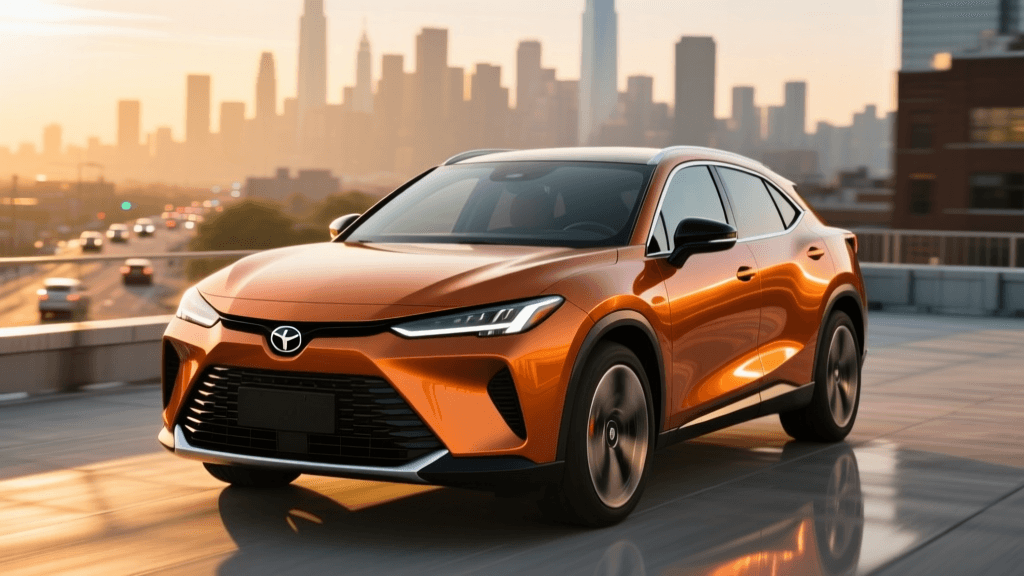
The Toyota Camry has long been the benchmark for midsize reliability, but its hybrid variant is where the engineering truly shines. The standard 2.5-liter 4-cylinder Camry LE delivers a respectable 32 MPG combined (28 city / 39 highway). However, the Camry Hybrid LE utilizes Toyota’s fourth-generation hybrid synergy drive, pairing a 2.5-liter Atkinson-cycle engine with an electric motor and a planetary eCVT gearset. This setup yields an astonishing 52 MPG combined (51 city / 53 highway).
The Math: Over 75,000 miles, the gas Camry will consume roughly 2,343 gallons of fuel, costing $8,200. The Camry Hybrid will consume just 1,442 gallons, costing $5,047. Total 5-Year Fuel Savings: $3,153. With the hybrid premium typically hovering around $2,000 over the base gas model, the Camry Hybrid achieves a break-even point in roughly 3.2 years, making it a pure profit generator for the remainder of the ownership cycle.
Matchup 2: Honda Accord Gas vs. Honda Accord Hybrid
Honda takes a fundamentally different engineering approach to hybridization. While the standard 1.5-liter turbocharged Accord EX achieves 32 MPG combined (29 city / 37 highway), the Accord Hybrid utilizes an innovative two-motor system that operates primarily as a series hybrid. The gas engine acts as a generator to feed the electric drive motor, only engaging the mechanical clutch to the front wheels at high highway cruising speeds. This results in an EPA rating of 44 MPG combined (46 city / 41 highway).
As noted by the Alternative Fuels Data Center (AFDC), series-hybrid systems excel in stop-and-go city traffic where regenerative braking is maximized. The Math: The gas Accord will cost $8,200 in fuel over 5 years. The Accord Hybrid will consume 1,704 gallons, costing $5,964. Total 5-Year Fuel Savings: $2,236. Honda has strategically positioned the hybrid powertrain on higher, sportier trims (like the Sport and Touring), meaning the upfront premium includes aesthetic and technology upgrades alongside the powertrain, slightly diluting the pure fuel-cost ROI but vastly improving the overall ownership experience and resale value.
Matchup 3: Hyundai Sonata Gas vs. Hyundai Sonata Hybrid
The Hyundai Sonata Hybrid offers a compelling middle ground. Unlike the eCVT setups in the Toyota and Honda, Hyundai pairs its 2.0-liter hybrid powertrain with a traditional 6-speed automatic transmission, providing a more familiar, stepped driving feel. The gas-powered Sonata SEL achieves 32 MPG combined (28 city / 38 highway), while the Sonata Hybrid SEL jumps to an impressive 47 MPG combined (44 city / 51 highway), aided by a unique solar roof panel that trickles charge to the 12V battery, reducing alternator drag.
The Math: The gas Sonata mirrors the others at $8,200 for 5-year fuel costs. The Sonata Hybrid requires 1,595 gallons, totaling $5,582. Total 5-Year Fuel Savings: $2,618. Given a historical trim premium of roughly $2,000, the Sonata Hybrid pays for its hybrid tax in about 3.8 years, yielding a net positive return of over $600 by the end of year five.
5-Year Cost of Ownership Data Table
| Vehicle Model (Base Trim Compared) | EPA Combined MPG | Gallons Used (75k Miles) | 5-Year Fuel Cost (@ $3.50/gal) | Est. Hybrid Premium | Net 5-Year ROI |
|---|---|---|---|---|---|
| Toyota Camry LE (Gas) | 32 MPG | 2,343 | $8,200 | N/A | N/A |
| Toyota Camry Hybrid LE | 52 MPG | 1,442 | $5,047 | ~$2,000 | +$1,153 |
| Honda Accord EX (Gas) | 32 MPG | 2,343 | $8,200 | N/A | N/A |
| Honda Accord Hybrid Sport | 44 MPG | 1,704 | $5,964 | ~$3,000* | -$764* |
| Hyundai Sonata SEL (Gas) | 32 MPG | 2,343 | $8,200 | N/A | N/A |
| Hyundai Sonata Hybrid SEL | 47 MPG | 1,595 | $5,582 | ~$2,000 | +$618 |
*Note: The Honda Accord Hybrid is bundled into higher trims with added features, making a direct powertrain-only premium calculation difficult. The negative ROI reflects the raw fuel math against the trim jump, but residual value and performance metrics often offset this in real-world appraisals.
Real-World Variables: City vs. Highway Commuting
Data tables provide a baseline, but your specific commute dictates your actual savings. According to extensive testing by Consumer Reports, hybrid systems exhibit the most dramatic efficiency gains in urban environments. If your daily route consists of heavy stop-and-go traffic, the Toyota Camry Hybrid's 51 MPG city rating will drastically outperform its 39 MPG highway rating, accelerating your break-even timeline to under three years. Conversely, if you are a regional sales representative who spends 90% of your time cruising at 75 MPH on rural interstates, the efficiency gap between the gas and hybrid models narrows significantly, as the electric motor provides minimal assistance at sustained high speeds.
Beyond the Pump: Maintenance and Resale Value
When calculating total ROI, fuel is only one variable. Hybrid sedans benefit from reduced wear and tear on traditional components:
- Brake Longevity: Regenerative braking handles the majority of low-speed deceleration. It is common for hybrid sedans to exceed 70,000 miles on a single set of factory brake pads, saving owners $300-$500 in maintenance during the 5-year window.
- Transmission Durability: Toyota and Honda utilize eCVTs, which lack the complex clutch packs, bands, and torque converters found in traditional automatic transmissions, historically leading to lower long-term failure rates.
- Resale Premium: As automakers phase out internal combustion engines, market data shows that used hybrid sedans retain their value significantly better than their gas-only counterparts, often recouping the initial hybrid premium at the point of sale.
Final Verdict: Which Hybrid Sedan Wins the ROI Race?
When analyzing the raw data, the Toyota Camry Hybrid is the undisputed champion of financial efficiency. Its massive 20-MPG advantage over its gas counterpart, combined with a relatively low entry price for the Hybrid LE trim, guarantees a positive ROI well before the 5-year mark. It is the ultimate data-driven choice for the budget-conscious commuter.
However, if driving dynamics and premium cabin technology are factored into your personal value equation, the Honda Accord Hybrid justifies its higher upfront cost with superior torque delivery, a more engaging chassis, and excellent long-term residual value. The Hyundai Sonata Hybrid remains the sleeper pick for drivers who despise the "drone" of a CVT transmission and prefer the traditional shifting feel of a 6-speed automatic, all while securing a highly respectable $2,618 in fuel savings. Ultimately, the math proves that in the midsize sedan segment, skipping the hybrid option is leaving thousands of dollars on the table.