The Economics of Electric-Only Range
Plug-in hybrid electric vehicles (PHEVs) represent the ultimate bridge between traditional internal combustion and full electrification. However, the true financial value of a PHEV is not found in its hybrid gas mileage; it is found in its electric-only range. If your daily commute falls within a PHEV's battery envelope, you are effectively driving an electric vehicle, completely bypassing the volatility of gasoline prices. According to the U.S. Department of Energy's FuelEconomy.gov, maximizing EV mode can reduce annual fuel costs by up to 60 percent for average commuters.
But how do we measure value? A high electric range is only valuable if the cost of the vehicle and the cost of charging align with your budget. In this guide, we rank the best PHEVs on the market by their EPA-estimated electric-only range, breaking down the MSRP, battery size, cost-per-mile, and long-term asset value to determine which models offer the best return on investment.
Top PHEVs Ranked by Electric Range and Value
1. Toyota Prius Prime (44 Miles)
The 2024 Toyota Prius Prime offers an EPA-estimated 44 miles of electric range in the SE trim, making it the undisputed king of commuter efficiency. Powered by a 13.6 kWh lithium-ion battery pack, it represents the pinnacle of entry-level PHEV value. With an MSRP starting around $33,000, the cost-per-mile on electricity is staggering. Assuming a national average electricity rate of $0.16 per kWh, fully charging the Prius Prime costs roughly $1.85. That equates to just $0.04 per mile. Compare this to a standard 30 MPG gasoline vehicle with fuel at $3.50 per gallon, which costs $0.11 per mile. Over a 15,000-mile annual commute where 10,000 miles are covered in EV mode, the Prius Prime saves the driver nearly $700 annually in fuel costs alone. However, its 3.3 kW onboard charger means Level 2 public charging is slow, making home charging the primary value driver.
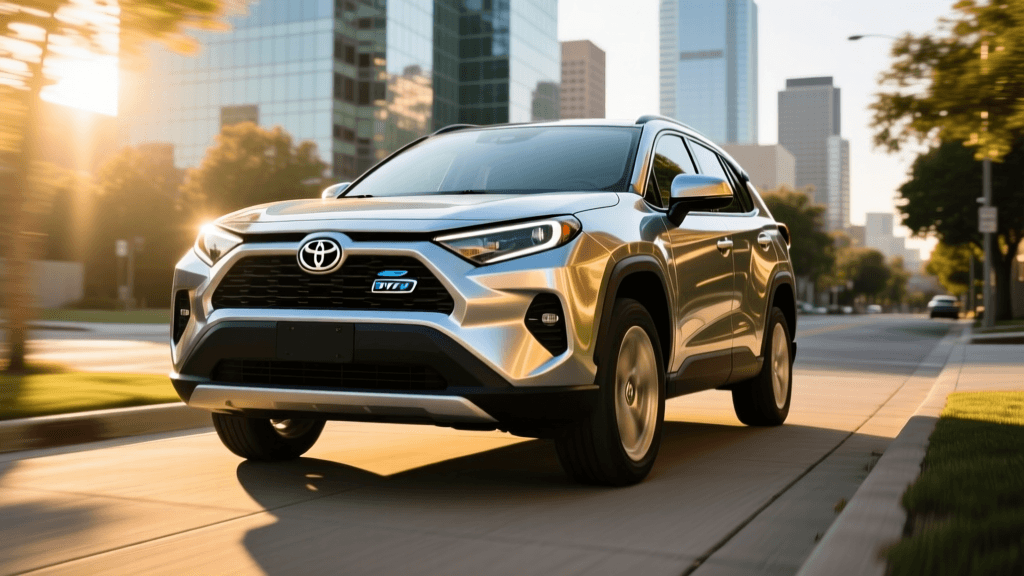
2. Toyota RAV4 Prime (42 Miles)
Moving to the family SUV segment, the Toyota RAV4 Prime delivers 42 miles of electric range. Its larger 18.1 kWh battery and standard electronic on-demand AWD make it a powerhouse. The value proposition here shifts from pure budget-friendliness to long-term asset retention. The RAV4 Prime frequently suffers from steep dealer markups due to high demand, which can initially skew its MSRP value. However, its 6.6 kW onboard charger allows it to recharge in about 2.5 hours on a Level 2 charger, making it highly viable for workplace charging. If your office offers free Level 2 charging, the RAV4 Prime's operational cost drops to near zero for daily driving. Furthermore, Toyota hybrids consistently lead the industry in resale value, meaning the premium paid upfront is heavily mitigated when it is time to sell or trade in the vehicle.
3. Lexus NX 450h+ (37 Miles)
For luxury buyers, the Lexus NX 450h+ provides 37 miles of electric range. Sharing its powertrain architecture with the RAV4 Prime, the NX 450h+ elevates the cabin experience and sound deadening. The MSRP hovers around $58,000, pushing it out of the realm of budget buys. However, the cost-value breakdown shines when factoring in fuel grades. Luxury SUVs typically require premium unleaded fuel, which can cost $0.50 to $0.80 more per gallon than regular. By completing a 35-mile daily commute strictly on electrons, NX owners entirely bypass the premium fuel tax during the week, reserving the gas engine only for weekend road trips where its 36 MPG combined hybrid efficiency still outperforms traditional luxury competitors.
4. BMW X5 xDrive50e (38 Miles)
The BMW X5 xDrive50e boasts an impressive 38 miles of electric range courtesy of a massive 25.7 kWh battery. With an MSRP exceeding $73,000, it is a premium investment. Yet, it often qualifies for the full $7,500 federal tax credit, which instantly improves its lease or purchase value. The X5's value is also found in its seamless transition between EV and gas modes, offering 50 MPGe combined. For high-income earners in states with expensive gasoline like California, the ability to run a 6,000-pound luxury SUV on off-peak utility rates transforms its daily operational cost from exorbitant to remarkably reasonable.
5. Kia Sportage PHEV (34 Miles)
The Kia Sportage PHEV offers 34 miles of electric range and starts at an MSRP of roughly $39,000. While its range is slightly lower than the Toyota offerings, its value proposition is anchored by Kia's industry-leading 10-year/100,000-mile powertrain warranty and 10-year battery coverage. For buyers anxious about long-term battery degradation and replacement costs, which can exceed $8,000 out of warranty, the Sportage PHEV offers unparalleled peace of mind. Its 7.2 kW onboard charger is also notably faster than the Prius and Lexus, allowing for quick top-ups during grocery runs or errands, thereby maximizing the utility of its 34-mile battery envelope.
Cost and Value Comparison Matrix
The following table illustrates the core financial metrics for our top-ranked PHEVs, assuming an average residential electricity cost of $0.16 per kWh and a gasoline price of $3.50 per gallon.
| Model | EV Range | Est. MSRP | Battery Size | Est. Full Charge Cost | EV Cost/Mile |
|---|---|---|---|---|---|
| Toyota Prius Prime | 44 mi | $33,000 | 13.6 kWh | $1.85 | $0.04 |
| Toyota RAV4 Prime | 42 mi | $43,000 | 18.1 kWh | $2.46 | $0.06 |
| BMW X5 xDrive50e | 38 mi | $73,000 | 25.7 kWh | $3.49 | $0.09 |
| Lexus NX 450h+ | 37 mi | $58,000 | 18.1 kWh | $2.46 | $0.07 |
| Kia Sportage PHEV | 34 mi | $39,000 | 13.8 kWh | $1.88 | $0.06 |
Factoring in the Federal Tax Credit
When calculating the true cost of a PHEV, you must account for federal and state incentives. Under the current IRS Clean Vehicle Tax Credits, qualifying PHEVs can receive up to $7,500 in tax credits, provided they meet strict battery component and critical mineral sourcing requirements, and the buyer falls within specific income caps. For example, the Chrysler Pacifica PHEV and certain configurations of the Jeep Grand Cherokee 4xe have historically qualified, drastically altering their value proposition compared to non-qualifying imports. Always verify the latest eligibility on the IRS website or the EPA's Green Vehicle Guide before purchasing, as these lists are updated regularly.
Calculating Your Personal Break-Even Point
A common critique of PHEVs is the 'PHEV Premium'—the extra cost over a standard hybrid or gas vehicle. For instance, a RAV4 Prime can cost up to $10,000 more than a standard RAV4 Hybrid. If you are only saving $700 a year on fuel, the mathematical break-even point on fuel alone is over 14 years. However, this narrow view ignores secondary value factors:
- Tax Credits and Rebates: A $3,750 or $7,500 federal credit instantly slashes the premium.
- State Incentives: States like California, Colorado, and New York offer additional rebates ranging from $1,000 to $4,000.
- HOV Lane Access: In heavily congested metros, single-occupant carpool lane access can save hundreds of hours a year. Time is money.
- Maintenance Savings: PHEVs use regenerative braking, drastically extending the life of brake pads and rotors. Furthermore, if you drive mostly on electricity, your gas engine runs less, requiring fewer oil changes and extending the lifespan of internal combustion components.
Maximizing Your PHEV Investment: Home Charging
To extract the maximum financial value from a PHEV, you must charge at home using off-peak electricity rates. Relying on public DC Fast Charging or Level 2 networks will often cost between $0.30 and $0.50 per kWh, entirely erasing your cost advantage over gasoline.
Pro-Tip: Contact your local utility provider to enroll in a Time-of-Use (TOU) plan. By scheduling your PHEV to charge between 12:00 AM and 5:00 AM, you can often secure electricity rates as low as $0.08 per kWh, cutting your already low fuel costs in half.
While every PHEV comes with a Level 1 (120V) charging cord, it only adds about 3 to 5 miles of range per hour. To fully replenish a 40-mile battery overnight, investing in a Level 2 (240V) home charger is highly recommended. According to the Environmental Protection Agency (EPA), installing a dedicated 240V NEMA 14-50 outlet typically costs between $500 and $1,500 depending on your electrical panel's capacity. This upfront investment ensures your vehicle is always topped off and ready to maximize its electric-only range every morning.
Final Verdict on PHEV Value
If your priority is pure, unadulterated commuter savings, the Toyota Prius Prime is the undisputed value champion, offering 44 miles of range for an incredibly low entry price. For families needing space and all-weather capability without sacrificing EV range, the Toyota RAV4 Prime justifies its premium through unmatched resale value and rapid Level 2 charging speeds. Luxury buyers should look to the Lexus NX 450h+ to avoid premium fuel costs, while the Kia Sportage PHEV remains the safest bet for long-term warranty protection. By matching your daily mileage to the right battery envelope and utilizing cheap home charging, a PHEV can be the most financially sound automotive decision you make this decade.