Introduction: The Gold Standard of Electrification
Toyota did not just enter the hybrid vehicle market; they effectively created it for the masses. Since the introduction of the original Prius over two decades ago, Toyota has sold tens of millions of hybrid vehicles globally. Today, almost every model in their lineup offers a hybrid variant. However, with such a vast selection and decades of accumulated lore, a significant amount of misinformation has taken root among car buyers. From exaggerated fears about battery replacement costs to fundamental misunderstandings about how hybrid efficiency works in the real world, these myths can lead to costly purchasing mistakes.
In this comprehensive guide, we are busting the most common Toyota hybrid myths, highlighting frequent buyer mistakes, and ranking the best Toyota hybrid models based on verified efficiency data and long-term reliability metrics. Whether you are looking at a commuter sedan or a family-hauling SUV, understanding the reality behind Toyota's Hybrid Synergy Drive is crucial for making an informed decision.
Myth Busting: Separating Fact from Fiction
Myth #1: 'Hybrid Battery Replacements Will Bankrupt You'
The most pervasive myth in the automotive world is that once a hybrid battery fails out of warranty, the replacement cost will total the vehicle or force the owner into massive debt. Detractors often cite figures of $5,000 to $8,000 for a brand-new battery pack. While a complete OEM battery replacement can be expensive, this myth ignores three critical realities of modern Toyota ownership.
First, Toyota's hybrid battery warranty is exceptionally robust. As outlined in the official Toyota warranty documentation, hybrid batteries are covered for 10 years or 150,000 miles (whichever comes first) across all 50 states. Second, Toyota's fifth-generation hybrid systems utilize advanced thermal management and optimized charging algorithms that drastically extend battery lifespan. It is incredibly common for Toyota hybrid batteries to surpass 200,000 miles without major degradation. Finally, if a battery does fail post-warranty, owners are rarely forced to buy a brand-new pack. The hybrid battery reconditioning and replacement market has matured significantly, with refurbished modules and independent hybrid specialists offering complete replacements for a fraction of the dealership cost.
Myth #2: 'All Toyota Hybrids Get Incredible Highway MPG'
Many buyers assume that because a vehicle wears a Toyota Hybrid badge, it will achieve 50+ MPG on a cross-country road trip. This is a fundamental misunderstanding of hybrid physics. Hybrids excel in stop-and-go city traffic where regenerative braking captures kinetic energy and the electric motor handles low-speed acceleration. On the highway, the gasoline engine is doing the heavy lifting to overcome aerodynamic drag, and the heavy battery pack becomes dead weight.
For example, the Toyota Prius achieves an astonishing 57 MPG in the city, but drops to the mid-40s on the highway. If your commute consists of 90% uninterrupted highway driving at 75 MPH, a highly efficient traditional ICE (Internal Combustion Engine) or a diesel vehicle might actually rival or beat certain larger Toyota hybrids. According to the U.S. Department of Energy's Fuel Economy Guide, buyers must always look at the 'Combined' and 'Highway' MPG estimates, not just the headline-grabbing city numbers.
Common Buyer Mistakes to Avoid
Mistake #1: Blindly Upgrading to AWD-e
Toyota offers an electronic on-demand All-Wheel Drive (AWD-e) system on many of its hybrids, such as the Prius, Camry, and RAV4. This system uses a separate rear-mounted electric motor to power the rear wheels when slip is detected. While it provides excellent traction in light snow and rain, many buyers in temperate climates mistakenly check the AWD box out of habit. This mistake costs you fuel economy. Opting for AWD-e on a RAV4 Hybrid, for instance, drops your combined fuel economy by roughly 2 to 3 MPG compared to the FWD model, and slightly reduces cargo space due to the rear motor placement. If you live in a region with mild winters and stick to paved roads, stick with FWD to maximize your efficiency.
Mistake #2: Assuming All PHEVs Qualify for Federal Tax Credits
Plug-in Hybrid Electric Vehicles (PHEVs) like the RAV4 Prime and Prius Prime offer the best of both worlds: 40+ miles of pure electric range and a gas engine for road trips. However, a massive buyer mistake is assuming these vehicles automatically qualify for the $7,500 federal EV tax credit. Due to strict battery component sourcing and critical mineral requirements introduced by the Inflation Reduction Act, most Toyota PHEVs currently do not qualify for the federal incentive. Buyers must calculate their total cost of ownership based on the actual sticker price and local state/utility rebates, rather than factoring in a federal credit that may not apply.
Mistake #3: Ignoring the eCVT Transmission Reality
Some buyers avoid hybrids because they have read horror stories about failing Continuously Variable Transmissions (CVTs) in other brands. Toyota does not use a belt-and-pulley CVT. They use an eCVT (Electronic Continuously Variable Transmission), which is actually a planetary gearset that seamlessly blends power from the gas engine and electric motors. It has no belts, no clutches, and no torque converter. It is widely considered one of the most reliable and bulletproof transmissions ever engineered. Industry experts at Consumer Reports consistently highlight Toyota's eCVT as a primary reason for the brand's top-tier reliability scores.
The Ultimate Ranking: Best Toyota Hybrids by Efficiency & Reliability
Below is our definitive ranking of the current Toyota hybrid lineup, evaluated on EPA-verified efficiency, historical reliability data, and overall value proposition.
| Rank | Model | Powertrain | Combined MPG / MPGe | Reliability Outlook | Best For |
|---|---|---|---|---|---|
| 1 | Prius / Prius Prime | 2.0L 4-Cyl Hybrid / PHEV | 57 MPG / 127 MPGe | Exceptional | Commuters & Tech Enthusiasts |
| 2 | Camry Hybrid | 2.5L 4-Cyl Hybrid | 52 MPG | Exceptional | Midsize Sedan Buyers & Rideshare |
| 3 | RAV4 Hybrid / Prime | 2.5L 4-Cyl Hybrid / PHEV | 39 MPG / 94 MPGe | Excellent | Small Families & Outdoor Gear |
| 4 | Highlander Hybrid | 2.5L 4-Cyl Hybrid | 35 MPG | Very Good | Large Families (3-Row SUV) |
| 5 | Tundra i-FORCE MAX | 3.5L V6 Twin-Turbo Hybrid | 22 MPG | Good (Newer Tech) | Towing & Heavy Duty Utility |
Deep Dive: The Top Ranked Models
1. Toyota Prius & Prius Prime (The Efficiency Kings)
The completely redesigned Prius shattered the myth that hybrids must be slow and boring. With up to 196 horsepower in the Prime variant and a sleek, aerodynamic profile, the Prius is now a genuinely desirable driver's car. The standard Prius achieves up to 57 MPG combined, while the Prius Prime offers 44 miles of pure electric range. Reliability is virtually unmatched, as this platform represents the pinnacle of Toyota's decades-long hybrid refinement.
2. Toyota Camry Hybrid (The Sensational Sedan)
With the discontinuation of the gas-only Camry, the hybrid is now the standard. The Camry Hybrid LE boasts an incredible 52 MPG combined. It provides a smoother, quieter ride than the Prius and offers more interior volume. For high-mileage commuters and rideshare drivers, the Camry Hybrid's proven 2.5-liter dynamic force engine and eCVT combination is practically indestructible, routinely crossing the 300,000-mile mark with basic maintenance.
3. Toyota RAV4 Hybrid & Prime (The Family Favorite)
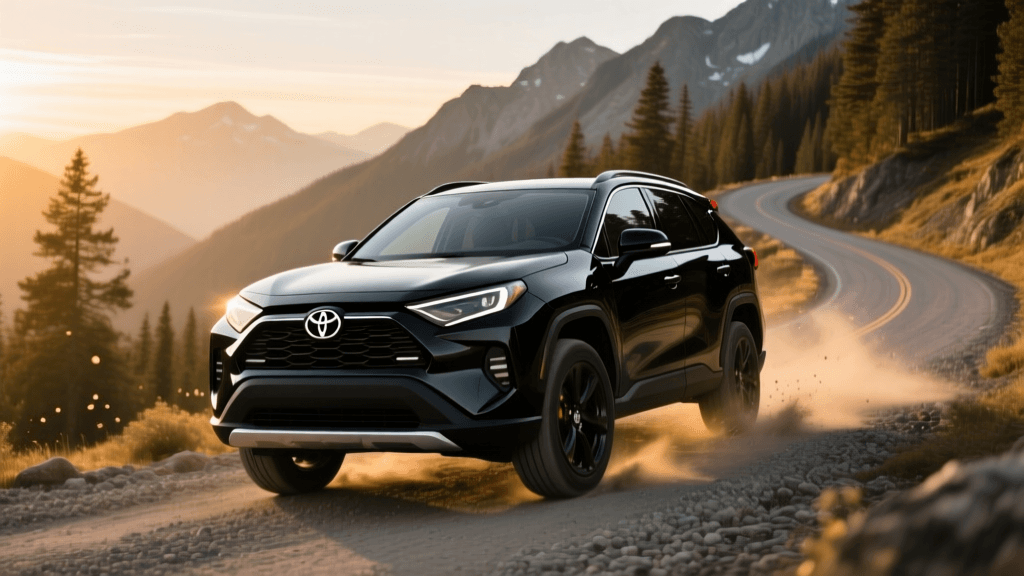
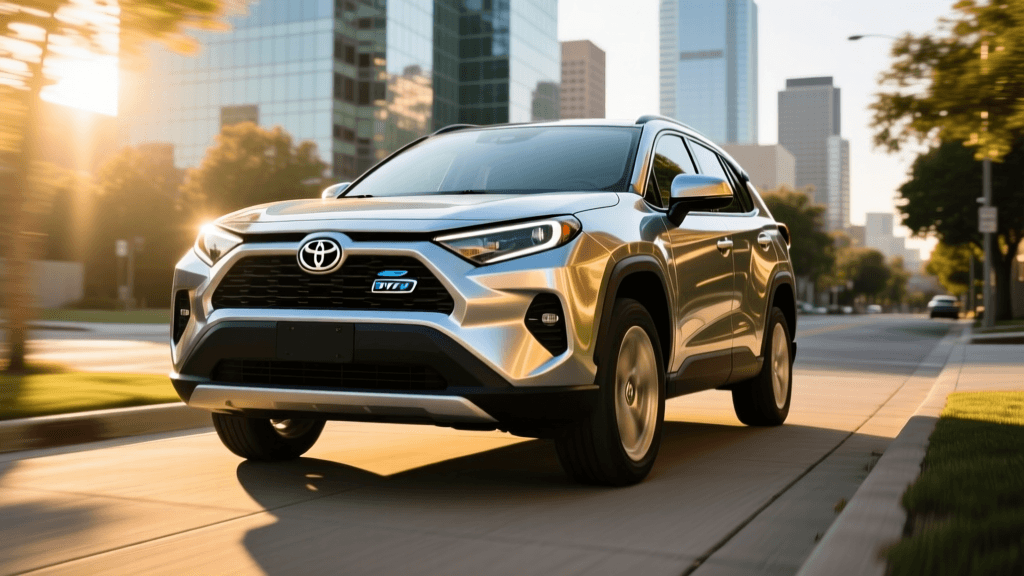
The RAV4 Hybrid is the best-selling non-truck in America for a reason. It delivers 39 MPG combined in a practical, spacious package. However, the RAV4 Prime is the true star if you can find one at MSRP. With 302 horsepower, standard AWD, and 42 miles of electric range, it outperforms almost everything in its class. Buyer Tip: The RAV4 Prime's battery is heavily shielded and liquid-cooled, contributing to its stellar long-term reliability profile.
4. Toyota Highlander Hybrid (The Three-Row Workhorse)
Getting 35 MPG combined in a three-row SUV seating up to eight people is a remarkable engineering feat. The Highlander Hybrid uses a 2.5-liter four-cylinder hybrid system that prioritizes efficiency over raw power. While it can feel slightly underpowered when fully loaded with passengers and cargo climbing steep grades, its reliability and fuel savings make it the smartest choice in the midsize SUV segment.
5. Toyota Tundra i-FORCE MAX (The Heavyweight)
The Tundra i-FORCE MAX busts the myth that hybrids are only for small cars. By placing the electric motor between the engine and the transmission, Toyota created a powertrain that produces 437 horsepower and a massive 583 lb-ft of torque. While 22 MPG is not 'Prius-level' efficient, it is highly respectable for a full-size, body-on-frame truck capable of towing over 10,000 pounds. Because this is a newer, more complex twin-turbo V6 hybrid setup, its long-term reliability is rated slightly lower than the naturally aspirated four-cylinder hybrids, but it remains a formidable machine.
'The beauty of Toyota's hybrid lineup is that you do not have to change your driving habits to see the benefits. You simply get in, drive, and let the planetary gearset do the work. That simplicity is the core of their reliability advantage.'
Conclusion: Trust the Data, Not the Rumors
When navigating the hybrid market, it is easy to fall victim to outdated myths regarding battery degradation or compromised highway performance. By looking at the empirical data provided by the EPA and long-term dependability studies, Toyota's hybrid lineup stands out as the safest, most efficient, and most reliable way to transition away from traditional gasoline-only vehicles. Whether you choose the ultra-efficient Prius, the practical RAV4 Hybrid, or the powerful Tundra i-FORCE MAX, avoiding common buyer mistakes like unnecessary AWD upgrades and misunderstanding tax credits will ensure you maximize both your fuel savings and your long-term satisfaction.