Why Small Hybrids Still Make Sense in 2026
Not every driver is ready for a full battery-electric vehicle. Apartment dwellers without home charging, frequent road-trippers, and budget-conscious commuters often find that small hybrid vehicles deliver the best balance of fuel savings, upfront affordability, and zero lifestyle compromise. In 2026, the compact hybrid segment is more competitive than ever, with conventional hybrids (HEVs) returning 50+ MPG and plug-in hybrids (PHEVs) offering 30–45 miles of electric-only driving before the gas engine kicks in.
This guide breaks down the top small hybrid vehicles available in the U.S. for the 2026 model year, with exact EPA figures, real-world expectations, powertrain specs, pricing, and tax-credit eligibility — the data you need to choose between an HEV, a PHEV, or a full EV.
HEV vs PHEV: What's the Difference?
Conventional Hybrid (HEV)
- No plug required. The battery recharges via regenerative braking and the gasoline engine.
- Battery size: Typically 1.0–1.6 kWh — too small for meaningful electric-only driving.
- Best for: Drivers without access to home or workplace charging who want maximum MPG with zero behavior change.
- Federal tax credit: None. HEVs do not qualify under IRS §30D.
Plug-In Hybrid (PHEV)
- Plugs in like an EV. Charges via Level 1 (120V) or Level 2 (240V) — no DC fast charging on most small PHEVs.
- Battery size: Typically 11–18 kWh, enabling 30–45 miles of electric-only range.
- Best for: Drivers with home charging who commute short distances on electricity but need gas-engine range for longer trips.
- Federal tax credit: Up to $7,500 under §30D if battery sourcing, MSRP caps, and buyer income limits are met (see details below).
Top Small Hybrid Vehicles for 2026: Side-by-Side Specs
The table below compares the most popular small hybrid vehicles currently on sale — spanning subcompact crossovers, compact hatchbacks, and compact SUVs. All figures reflect 2026 model-year EPA data and manufacturer MSRP at time of publication.
| Vehicle | Type | EPA Combined MPG / MPGe | EV Range (PHEV) | Battery (kWh) | Combined HP | Base MSRP |
|---|---|---|---|---|---|---|
| Toyota Prius (LE) | HEV | 57 MPG combined | — | 1.3 kWh (NiMH) | 194 hp | $29,445 |
| Toyota Prius Prime (SE) | PHEV | 52 MPG / 127 MPGe | 44 mi | 13.6 kWh (Li-ion) | 220 hp | $34,595 |
| Honda Civic Hybrid | HEV | 49 MPG combined | — | 1.1 kWh (Li-ion) | 200 hp | $30,595 |
| Hyundai Elantra Hybrid (Blue) | HEV | 54 MPG combined | — | 1.3 kWh (Li-ion) | 139 hp | $27,750 |
| Toyota Corolla Cross Hybrid | HEV | 43 MPG combined | — | 1.3 kWh (NiMH) | 196 hp | $31,290 |
| Kia Niro PHEV | PHEV | 48 MPG / 108 MPGe | 33 mi | 11.1 kWh (Li-ion) | 180 hp | $35,890 |
Sources: fueleconomy.gov, manufacturer press sites. MSRP excludes destination charges.
Fuel Economy Deep Dive: EPA Sticker vs. Real-World MPG
Hybrids have a well-documented quirk: they often exceed their EPA city rating in real-world stop-and-go driving, where regenerative braking shines, but may fall slightly short on sustained highway runs where the gas engine does most of the work.
| Vehicle | EPA City | EPA Highway | EPA Combined | Real-World Expectation |
|---|---|---|---|---|
| Toyota Prius (LE) | 57 MPG | 56 MPG | 57 MPG | 52–60 MPG (city-biased driving favors the high end) |
| Honda Civic Hybrid | 50 MPG | 47 MPG | 49 MPG | 45–52 MPG (strong city regen; highway closer to 44–46) |
| Hyundai Elantra Hybrid Blue | 53 MPG | 56 MPG | 54 MPG | 50–56 MPG (one of the most consistent HEVs across driving conditions) |
| Toyota Corolla Cross Hybrid | 45 MPG | 41 MPG | 43 MPG | 38–45 MPG (AWD and SUV aero reduce highway efficiency) |
| Toyota Prius Prime (PHEV, gas mode) | 52 MPG | 50 MPG | 52 MPG | 48–54 MPG once battery is depleted |
| Kia Niro PHEV (gas mode) | 49 MPG | 47 MPG | 48 MPG | 44–50 MPG depending on terrain and climate |
Cold-weather note: Expect a 5–10% MPG reduction in sub-freezing temperatures. The engine runs more often to heat the cabin, and battery chemistry becomes less efficient. This is less severe than the 20–30% range loss full EVs experience, but it's real.
PHEV Electric-Only Range and Charging: What You Need to Know
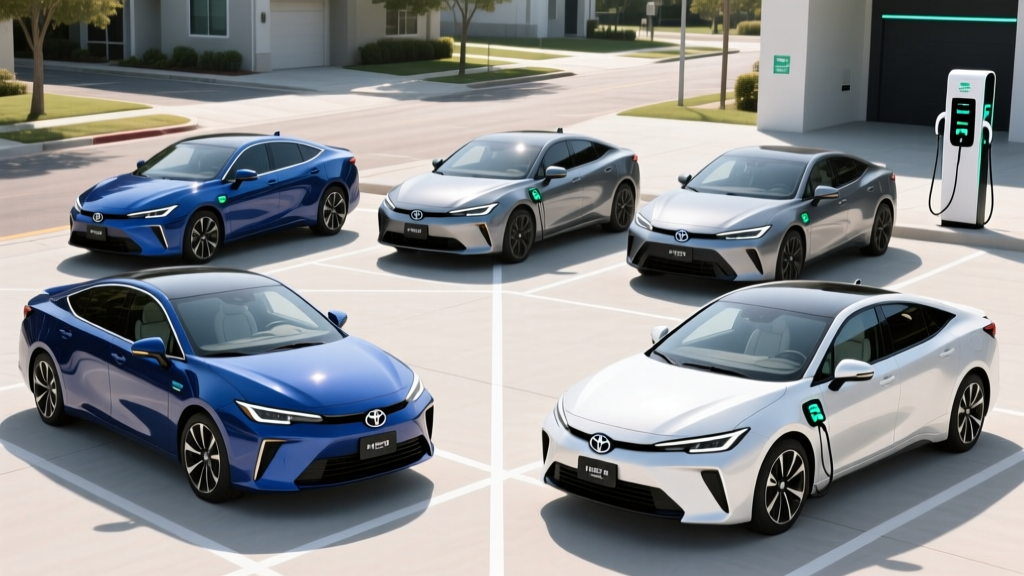
If you're considering a plug-in hybrid, electric-only range is the number that matters most for daily commuting. Here's how the 2026 small PHEVs stack up:
- Toyota Prius Prime (SE): 44 miles EPA electric range. With a combined gas + electric total range of approximately 600+ miles, range anxiety is essentially eliminated.
- Kia Niro PHEV: 33 miles EPA electric range. Total range roughly 560 miles.
Charging Times for Small PHEVs
Neither the Prius Prime nor the Niro PHEV supports DC fast charging — a deliberate trade-off to keep cost and weight down. For small PHEV batteries (11–14 kWh), Level 2 charging is fast enough to fully replenish overnight or during a workday.
| Vehicle | Battery Size | Level 1 (120V) Full Charge | Level 2 (240V, 3.6 kW) Full Charge | DC Fast Charge |
|---|---|---|---|---|
| Prius Prime | 13.6 kWh | ~11 hours | ~4 hours | Not supported |
| Kia Niro PHEV | 11.1 kWh | ~9 hours | ~3 hours | Not supported |
Practical tip: Most PHEV owners charge on a standard 120V household outlet overnight and never install a Level 2 charger. If your daily commute falls within the electric range, you may go months without visiting a gas station.
Pricing, Tax Credits, and Total Cost of Ownership
Small hybrid vehicles occupy a sweet spot: they carry a modest price premium over gas-only equivalents but avoid the higher upfront cost of full EVs. Here's the pricing landscape and incentive picture for 2026.
Federal Tax Credit Eligibility (PHEVs Only)
Under IRS §30D, qualifying PHEVs may be eligible for up to $7,500 in federal tax credits — but the rules are strict:
- MSRP cap: Vans, SUVs, and pickups must be under $80,000; sedans and hatchbacks under $55,000. Both the Prius Prime and Niro PHEV fall well under these limits.
- Buyer income cap: Modified AGI must not exceed $150,000 (single), $225,000 (head of household), or $300,000 (joint).
- Battery sourcing: A percentage of critical minerals and battery components must be sourced from the U.S. or free-trade-agreement countries. These thresholds increase annually, and some PHEV trims may lose partial or full credit eligibility year to year.
- Point-of-sale transfer: As of 2024, buyers can transfer the credit to the dealer at purchase, reducing the sale price directly rather than waiting for a tax refund.
Important: Conventional hybrids (HEVs) like the standard Prius, Civic Hybrid, and Elantra Hybrid do not qualify for any federal tax credit. Always verify current eligibility on fueleconomy.gov and consult a tax professional before relying on credit amounts.
5-Year Cost Snapshot: Hybrid vs. Gas vs. EV
At $3.50/gallon and 12,000 miles/year, a 50-MPG hybrid uses roughly $840 in fuel annually versus $1,680 for a 25-MPG gas car — a savings of ~$840/year or ~$4,200 over five years. Compared to a full EV charging at home ($0.14/kWh average), the EV may save an additional $300–$500/year in energy costs, but carries a higher purchase price and potential insurance premium increase.
Battery Reliability, Warranty, and Replacement Costs
Hybrid Battery Warranty: What's Covered
Federal emissions regulations mandate that hybrid and PHEV battery packs carry a minimum warranty of 8 years / 100,000 miles (10 years / 150,000 miles in CARB states including California, New York, and others). Most manufacturers match or exceed this baseline.
| Vehicle | Hybrid Battery Warranty | Estimated Out-of-Warranty Replacement |
|---|---|---|
| Toyota Prius / Prius Prime | 10 yr / 150,000 mi (all 50 states for 2026 MY) | $2,500–$4,000 (NiMH); $4,000–$6,000 (Li-ion Prime) |
| Honda Civic Hybrid | 8 yr / 100,000 mi (10/150k in CARB states) | $3,000–$5,000 |
| Hyundai Elantra Hybrid | 10 yr / 100,000 mi | $2,500–$4,500 |
| Kia Niro PHEV | 10 yr / 100,000 mi | $3,500–$5,500 |
Real-world longevity: Toyota's hybrid battery track record is among the best in the industry. Many Prius taxis and fleet vehicles have exceeded 200,000 miles on the original battery pack. Lithium-ion packs in newer models degrade gradually — expect 85–90% capacity retention at 100,000 miles under normal use. Total failure before 150,000 miles is uncommon.
For PHEVs, the larger battery undergoes deeper charge-discharge cycles, so some additional degradation is expected. However, manufacturers build in a buffer (typically 10–15% of total capacity is hidden from the user) to preserve usable range over the battery's life.
Hybrid vs. PHEV vs. Full EV: Which Is Right for You?
Choose a Conventional Hybrid (HEV) If:
- You don't have access to home or workplace charging
- You want maximum MPG with zero behavior change
- Your budget is under $32,000 and you don't want to wait for tax-credit paperwork
- You drive a mix of city and highway and want consistent 45–57 MPG
Choose a Plug-In Hybrid (PHEV) If:
- You can charge at home (even a standard 120V outlet works)
- Your daily commute is under 40 miles round-trip
- You want EV-like daily driving with gas-engine freedom for road trips
- You qualify for the §30D tax credit and want to reduce your effective purchase price
Choose a Full EV If:
- You have reliable Level 2 home charging
- Your daily driving is predictable and within 200–250 miles
- You want the lowest per-mile energy cost and near-zero drivetrain maintenance
- You qualify for the full $7,500 federal credit on an eligible EV
Pros and Cons of Small Hybrid Vehicles
Pros
- 45–57 MPG real-world — cuts fuel costs roughly in half vs. gas-only compacts
- No range anxiety — gas station infrastructure everywhere
- Lower purchase price than comparable EVs ($27K–$36K range)
- Minimal maintenance — no oil changes more frequent than gas cars; regenerative braking extends pad life
- Excellent reliability track record, especially Toyota and Hyundai/Kia hybrid systems
- Strong resale value — hybrids are in high demand in the used market
Cons
- HEVs don't qualify for federal tax credits
- Higher upfront cost than gas-only versions of the same model ($1,500–$3,000 premium)
- PHEVs require charging access to realize their efficiency advantage
- Less cargo space than larger SUVs or crossovers
- Performance is adequate but not thrilling (139–220 hp range)
- Highway MPG can dip below EPA estimates on sustained 75+ MPH runs
Frequently Asked Questions
How many MPG do small hybrid vehicles get?
The most efficient small hybrids in 2026 achieve 49–57 MPG combined (EPA). The Toyota Prius LE leads at 57 MPG combined, followed by the Hyundai Elantra Hybrid Blue at 54 MPG and the Honda Civic Hybrid at 49 MPG. In real-world city driving, many owners report matching or slightly exceeding these numbers thanks to regenerative braking.
How far can a small PHEV go on electric only?
The 2026 Toyota Prius Prime delivers 44 miles of EPA-rated electric-only range, while the Kia Niro PHEV provides 33 miles. For most commuters with a sub-40-mile round trip, this means weeks or months between fill-ups — as long as you charge regularly.
Do conventional hybrids need to be plugged in?
No. Conventional hybrids (HEVs) like the standard Prius, Civic Hybrid, and Elantra Hybrid charge their small battery packs entirely through regenerative braking and the gasoline engine. You never plug them in. Only plug-in hybrids (PHEVs) require external charging to access their electric-only range.
Are small hybrid vehicles reliable? What does battery replacement cost?
Hybrid systems from Toyota, Honda, and Hyundai/Kia have proven highly reliable over two decades of production. Hybrid batteries are warrantied for 8–10 years and 100,000–150,000 miles depending on the manufacturer and state. Out-of-warranty replacement typically costs $2,500–$5,500, though many packs last well beyond 200,000 miles.
Do small hybrid vehicles qualify for any tax credit?
Conventional hybrids (HEVs) do not qualify for the federal §30D clean vehicle credit. Plug-in hybrids (PHEVs) like the Prius Prime and Kia Niro PHEV may qualify for up to $7,500, subject to MSRP caps, buyer income limits, and battery-sourcing requirements. Check fueleconomy.gov for current eligibility, and consult a tax professional for your specific situation.
Should I buy a small hybrid or a full EV?
If you have home charging and a predictable commute under 250 miles, a full EV offers lower operating costs and less maintenance. If you lack charging access, frequently drive long distances, or want a lower purchase price, a small hybrid is the more practical choice. A PHEV splits the difference — offering EV-like commuting with gas-engine backup.