Quick Verdict: Toyota's Hybrid Strategy in 2025
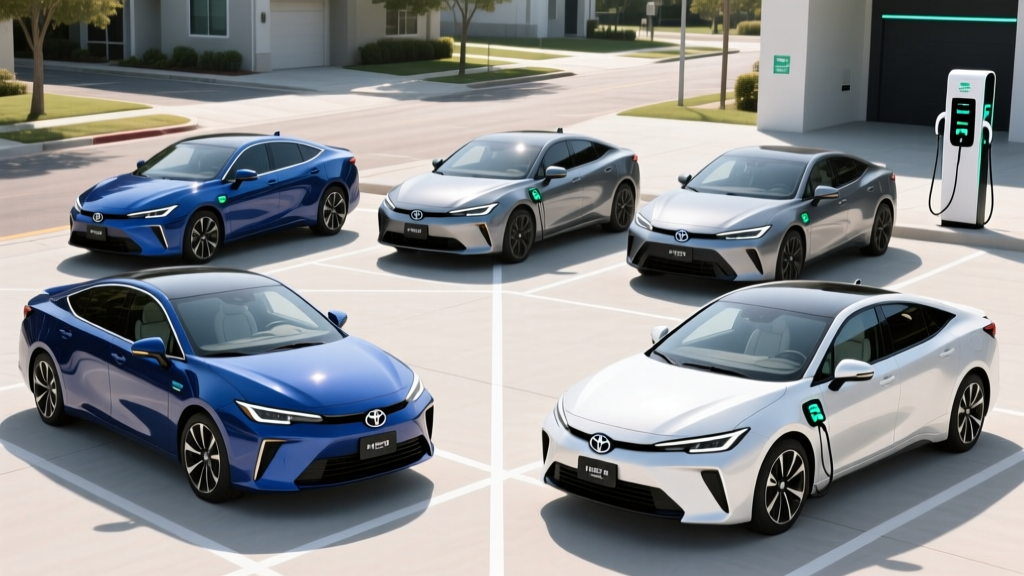
Toyota continues to bet heavily on hybridization rather than full electrification, and the 2025 lineup proves why that strategy resonates with buyers who aren't ready to commit to a battery electric vehicle (BEV). Across eight model families, Toyota offers conventional hybrids (HEVs) that never need plugging in and plug-in hybrids (PHEVs) that deliver genuine electric-only commuting range. The 2025 Toyota hybrid portfolio spans from the 57 MPG Prius to the RAV4 Prime's 42 miles of electric range — covering nearly every body style and budget in the mainstream market.
This guide breaks down every 2025 Toyota hybrid and plug-in hybrid with exact EPA figures, real-world expectations, pricing, tax credit eligibility, and ownership costs so you can identify which model fits your driving pattern.
HEV vs PHEV: What's the Difference?
Conventional Hybrid (HEV)
- How it works: A small battery (typically 1-2 kWh) captures energy from regenerative braking and the gas engine. You never plug it in.
- Electric-only driving: Minimal — usually under 1 mile at low speeds, mostly used to assist the gas engine.
- Best for: Drivers who want better MPG without changing any habits. No home charging required.
- 2025 Toyota examples: Prius, Camry Hybrid, Corolla Hybrid, RAV4 Hybrid, Highlander Hybrid, Sienna, Crown, Venza.
Plug-In Hybrid (PHEV)
- How it works: A larger battery (13-18 kWh usable) powers the car on electricity alone for 25-42 miles, then operates as a conventional hybrid once depleted.
- Electric-only driving: Genuine zero-emission commuting at highway speeds. Requires plugging in (Level 1 or Level 2) to realize the benefit.
- Best for: Drivers with home or workplace charging who commute under 40 miles round-trip but still want road-trip flexibility.
- 2025 Toyota examples: Prius Prime, RAV4 Prime.
The critical distinction: if you cannot charge at home or at work, a PHEV becomes an expensive HEV carrying dead battery weight. Only choose a PHEV if you have reliable access to a plug.
2025 Toyota Hybrid MPG & Efficiency Breakdown
Below is the complete EPA fuel economy picture for every 2025 Toyota hybrid. Note that Toyota's hybrid system — which pairs an Atkinson-cycle gas engine with one or two electric motors through a planetary gearset — excels in city driving, where regenerative braking and electric assist do the heavy lifting. Many owners report exceeding EPA city figures in stop-and-go traffic.
| Model | Type | City MPG | Highway MPG | Combined MPG | Combined HP | Base MSRP |
|---|---|---|---|---|---|---|
| Prius (LE) | HEV | 57 | 56 | 57 | 194 | $28,350 |
| Prius (XLE/Limited AWD) | HEV | 49 | 50 | 49 | 196 | $31,695 |
| Prius Prime (SE) | PHEV | — | — | 52 (hybrid mode) / 127 MPGe | 220 | $33,475 |
| Corolla Hybrid (LE) | HEV | 53 | 46 | 50 | 138 | $23,725 |
| Camry Hybrid (LE) | HEV | 53 | 50 | 51 | 225 | $29,495 |
| Camry Hybrid (SE/XLE AWD) | HEV | 51 | 49 | 50 | 232 | $30,790 |
| RAV4 Hybrid (LE) | HEV | 41 | 38 | 39 | 219 | $33,575 |
| RAV4 Prime | PHEV | — | — | 38 (hybrid) / 94 MPGe | 302 | $44,460 |
| Highlander Hybrid | HEV | 36 | 35 | 36 | 243 | $42,220 |
| Grand Highlander Hybrid | HEV | 36 | 32 | 34 | 243 | $45,505 |
| Sienna | HEV | 36 | 36 | 36 | 245 | $38,085 |
| Crown (XLE) | HEV | 42 | 41 | 41 | 236 | $42,350 |
| Venza | HEV | 40 | 37 | 39 | 219 | $36,420 |
Source: fueleconomy.gov — EPA estimates. Your actual mileage will vary with driving conditions, tire selection, and climate.
Real-World MPG vs. EPA: What Owners Actually See
Toyota hybrids consistently deliver close to — or above — their EPA city ratings in real-world urban driving. The Prius LE's 57 MPG combined is routinely matched by owners doing mixed suburban commuting. However, sustained highway driving above 75 mph drops most Toyota hybrids 3-5 MPG below their EPA highway figure. In cold weather (below 30°F), expect a 5-10% MPG reduction across the lineup as the engine runs longer to generate cabin heat. For PHEVs, cold weather also reduces electric-only range by 20-30% — the RAV4 Prime's 42-mile EPA electric range may shrink to 30-33 miles in freezing temperatures.
PHEV Deep Dive: Prius Prime & RAV4 Prime Electric Range
Toyota's two plug-in hybrids serve very different buyer profiles, but both share a critical advantage over full EVs: unlimited total range once the battery is depleted.
| Specification | Prius Prime (SE) | RAV4 Prime (SE) |
|---|---|---|
| Battery Capacity (usable) | ~10.9 kWh | ~14.9 kWh |
| Battery Chemistry | Lithium-ion (NMC) | Lithium-ion (NMC) |
| Electric-Only Range (EPA) | 44 miles | 42 miles |
| Total Combined Range | ~480 miles | ~520 miles |
| MPGe (electric mode) | 127 MPGe | 94 MPGe |
| Combined Horsepower | 220 hp | 302 hp |
| 0-60 mph | 6.6 sec | 5.7 sec |
| Level 1 Charge (120V) | ~11 hours | ~12 hours |
| Level 2 Charge (240V) | ~4 hours | ~2.5 hours |
| DC Fast Charging | No | No |
| Base MSRP | $33,475 | $44,460 |
A critical limitation: neither Toyota PHEV supports DC fast charging. This is common for PHEVs — their smaller batteries make DC charging infrastructure unnecessary for most use cases. You'll charge at home on Level 1 (a standard 120V outlet) or Level 2 (a 240V home charger). For the Prius Prime, overnight Level 1 charging is usually sufficient to replenish 44 miles of range. The RAV4 Prime's larger battery benefits significantly from a Level 2 home charger.
According to fueleconomy.gov, the Prius Prime SE achieves 127 MPGe in electric mode — meaning it uses energy at a rate equivalent to a vehicle getting 127 miles per gallon. Once the battery depletes, it operates as a conventional hybrid at 52 MPG combined.
Powertrain Architecture: How Toyota's Hybrid System Works
Every 2025 Toyota hybrid uses the company's Hybrid Synergy Drive (now in its fifth generation). The architecture is consistent across models:
- Engine: A 4-cylinder Atkinson-cycle gas engine optimized for efficiency over raw power. Displacement ranges from 1.8L (Corolla Hybrid) to 2.5L (RAV4, Camry, Highlander, Sienna).
- Motor-generators: Two electric motor-generators (MG1 and MG2) sit between the engine and a planetary gearset that functions as a continuously variable transmission (eCVT).
- Battery: A lithium-ion traction battery (1.0-2.0 kWh for HEVs, 10.9-14.9 kWh for PHEVs) positioned under the rear seat or cargo floor.
- AWD option: Select models add a rear electric motor (not mechanically linked to the front axle) providing on-demand all-wheel drive. AWD trims typically lose 1-3 MPG vs. FWD.
The result is seamless power delivery with no traditional gearshifts. The eCVT is among the most reliable transmissions in the industry — there are no belts, clutches, or bands to wear out.
Pricing, Tax Credits & Total Cost of Ownership
Toyota hybrids command a premium over their gas-only equivalents, but that premium has narrowed significantly. The 2025 Camry is now exclusively hybrid — there is no gas-only Camry — so the comparison shifts to competitors.
Federal Tax Credit Eligibility
Under IRS §30D rules, only plug-in hybrids (PHEVs) are eligible for the federal clean vehicle credit. Conventional hybrids (HEVs) do not qualify. For 2025 Toyota PHEVs:
- Prius Prime: May qualify for up to $7,500 — but eligibility depends on battery component and critical mineral sourcing requirements, buyer income caps ($150K single / $300K joint), and the $55,000 MSRP cap for sedans. The Prius Prime passes the MSRP cap easily.
- RAV4 Prime: Subject to the $80,000 MSRP cap for SUVs/pickups. Passes easily. Same income and sourcing requirements apply.
- Point-of-sale transfer: As of 2024, buyers can transfer the credit to the dealer at purchase, reducing the purchase price directly rather than waiting for a tax refund.
Verify current eligibility at IRS.gov qualified vehicles list. Sourcing requirements change annually, and a model's eligibility can shift mid-year. Consult a tax professional before relying on credit amounts.
| Cost Category | RAV4 Hybrid ($33,575) | Competitor Gas SUV ($31,500) |
|---|---|---|
| Purchase Price | $33,575 | $31,500 |
| Fuel (15K mi/yr, $3.50/gal) | $6,730 (39 MPG) | $10,500 (25 MPG) |
| Maintenance (5 yr) | ~$2,800 | ~$3,500 |
| Insurance (est. avg) | ~$7,500 | ~$7,000 |
| Depreciation (est.) | ~$12,000 | ~$14,000 |
| 5-Year Total | ~$62,605 | ~$66,500 |
The hybrid typically wins on total cost despite a higher purchase price, primarily through fuel savings and stronger resale value. Toyota hybrids historically depreciate slower than gas equivalents due to proven reliability and strong used-market demand.
Reliability & Battery Warranty: What to Expect
Toyota Hybrid Battery Warranty
Coverage: 10 years / 150,000 miles (whichever comes first) on the hybrid battery and all hybrid system components, including the inverter and motor-generators.
Applies to: All 2020+ Toyota hybrids (previously 8 years/100,000 miles for 2019 and earlier models).
What it covers: Battery capacity loss below a defined threshold, cell failures, inverter malfunction, and motor-generator defects.
Transferable: Yes — the warranty transfers to subsequent owners, which supports strong resale value.
Toyota's hybrid battery longevity is among the best-documented in the industry. Prius taxis routinely exceed 300,000 miles on the original battery. The fifth-generation hybrid system uses smaller, more thermally stable lithium-ion packs that experience less stress than earlier nickel-metal hydride designs.
If a hybrid battery does need replacement outside warranty, expect:
- Prius/Corolla Hybrid: $2,000 - $3,500 for a new OEM battery pack
- RAV4 Hybrid: $3,000 - $5,000
- RAV4 Prime (PHEV): $6,000 - $9,000 (larger battery)
- Refurbished options: $1,000 - $2,500 from third-party suppliers (varies by model)
For context, a conventional gas vehicle will likely need $3,000-$5,000 in transmission work over 200,000 miles — a cost Toyota's eCVT avoids entirely.
Who Should Buy a Toyota Hybrid vs. a Full EV or Gas Car?
Decision Framework
Choose a Toyota HEV (Prius, Camry, RAV4 Hybrid, Sienna) if:
- You cannot charge at home or at work
- You want maximum MPG without changing any habits
- You live in an apartment or park on the street
- You take frequent road trips and don't want to plan around charging
- Your budget is under $40,000 and you want proven reliability
Choose a Toyota PHEV (Prius Prime, RAV4 Prime) if:
- You have home Level 2 charging or can charge at work
- Your daily commute is under 40 miles round-trip
- You want to drive on electricity daily but need gas flexibility for road trips
- You want to reduce fuel consumption by 70-90% on most days
- You may qualify for the $7,500 federal tax credit (verify sourcing eligibility)
Choose a full BEV (e.g., Tesla Model Y, Hyundai Ioniq 5) if:
- You have reliable home charging and your daily driving is under 250 miles
- You want zero tailpipe emissions and minimal maintenance (no oil, no engine)
- You want the lowest per-mile fuel cost (electricity is typically $0.04-$0.06/mile vs. $0.12-$0.16/mile for a hybrid)
- You're comfortable with road-trip charging planning using DC fast-charger networks
Stick with a gas vehicle if:
- You drive fewer than 8,000 miles per year (fuel savings won't offset the hybrid premium)
- You regularly tow heavy loads beyond hybrid capacity
- You prioritize the lowest possible purchase price above all else
2025 Toyota Hybrid Pros & Cons
Pros
- Best-in-class fuel economy across most segments (Prius 57 MPG, Camry 51 MPG)
- No charging required for HEVs — zero lifestyle change
- 10-year/150,000-mile hybrid battery warranty
- eCVT reliability — virtually no transmission failures
- Strong resale value; hybrids hold value better than gas equivalents
- RAV4 Prime delivers 302 hp with 42 miles of electric range
- Prius redesign is genuinely attractive — no longer a penalty car
Cons
- No DC fast charging on PHEVs — limits electric-mode road trip utility
- RAV4 Prime availability remains constrained; dealer markups common
- HEVs do not qualify for federal tax credits
- Highway MPG drops noticeably above 75 mph
- Sienna and Highlander hybrid powertrains feel strained under heavy load
- Crown discontinuation rumored — limited long-term model certainty
- Interior tech (infotainment) still lags Hyundai/Kia competitors
Frequently Asked Questions
How many MPG does a 2025 Toyota hybrid get?
It varies by model. The Prius LE leads at 57 MPG combined (57 city / 56 highway). The Camry Hybrid achieves 51 combined, the Corolla Hybrid gets 50, and the RAV4 Hybrid returns 39 combined. All figures are EPA estimates from fueleconomy.gov. In real-world city driving, many owners match or slightly exceed these numbers thanks to Toyota's regenerative braking system. Highway driving above 75 mph typically drops MPG by 3-5 below the EPA highway estimate.
How far can the Toyota PHEVs go on electric only?
The 2025 Prius Prime SE delivers 44 miles of EPA-rated electric-only range. The RAV4 Prime provides 42 miles. In cold weather (below 30°F), expect 20-30% range reduction — so roughly 31-35 miles for the Prius Prime and 29-33 miles for the RAV4 Prime. Both vehicles seamlessly transition to hybrid mode once the battery is depleted, so there is no range anxiety.
Do Toyota hybrids need to be plugged in?
No — conventional Toyota hybrids (HEVs) like the Prius, Camry Hybrid, RAV4 Hybrid, and Sienna never need plugging in. They recharge their small batteries through regenerative braking and the gas engine. Only the plug-in hybrids (Prius Prime and RAV4 Prime) benefit from being plugged in, and they still function perfectly as regular hybrids if you forget to charge.
Is the Toyota hybrid battery reliable, and what does replacement cost?
Toyota hybrid batteries are among the most reliable in the industry. They're covered by a 10-year/150,000-mile warranty, and real-world data shows many lasting 200,000+ miles. If replacement is needed, expect $2,000-$3,500 for a Prius or Corolla Hybrid, $3,000-$5,000 for a RAV4 Hybrid, and $6,000-$9,000 for a RAV4 Prime. Refurbished batteries are available for $1,000-$2,500.
Does any 2025 Toyota hybrid qualify for a tax credit?
Only the plug-in hybrids — the Prius Prime and RAV4 Prime — may qualify for the federal §30D clean vehicle credit (up to $7,500). Conventional hybrids (HEVs) do not qualify for any federal tax credit. Eligibility depends on your income (under $150K single / $300K joint), battery sourcing compliance, and MSRP caps. Check the current IRS qualified vehicles list before purchasing, as sourcing requirements change and can affect eligibility mid-year. Some states offer additional rebates for PHEVs — check your state's energy office.
How long does it take to charge a Toyota PHEV at home?
On a standard 120V outlet (Level 1), the Prius Prime takes about 11 hours and the RAV4 Prime about 12 hours for a full charge — fine for overnight charging. With a 240V Level 2 home charger, the Prius Prime charges in roughly 4 hours and the RAV4 Prime in about 2.5 hours. Neither PHEV supports DC fast charging. A Level 2 home charger installation typically costs $500-$2,000 depending on your electrical panel's proximity to the parking spot.
Should I buy a Toyota hybrid or a full EV?
If you have home charging, drive under 250 miles daily, and want the lowest operating cost and zero tailpipe emissions, a full EV (BEV) is the better long-term choice. If you lack home charging, regularly drive long distances, live in extreme cold, or simply want to eliminate range planning, a Toyota hybrid offers massive fuel savings with zero lifestyle adjustment. The PHEV models (Prime series) are the middle ground — electric commuting with gas road-trip freedom.