The Heavyweights Enter the Ring
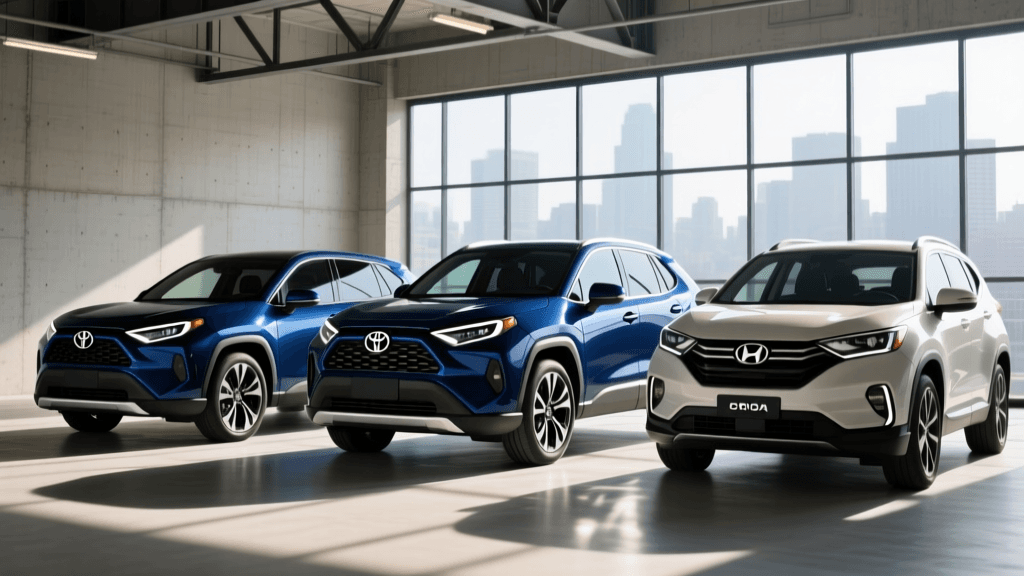
The compact hybrid crossover segment is arguably the most competitive space in the modern automotive market. Buyers no longer want to compromise; they demand the fuel-sipping efficiency of a compact sedan combined with the elevated seating position, all-weather capability, and cargo-hauling versatility of an SUV. When it comes to balancing miles per gallon (MPG) with everyday practicality, three nameplates consistently dominate the conversation: the Toyota RAV4 Hybrid, the Honda CR-V Hybrid, and the Hyundai Tucson Hybrid.
In this head-to-head product showdown, we are putting these three segment titans in the ring to determine which hybrid crossover truly reigns supreme. We will evaluate them based on real-world fuel economy, interior versatility, cargo capacity, drivetrain engineering, and overall value. Whether you are a daily commuter looking to minimize stops at the gas pump or a growing family needing maximum weekend cargo space, this comprehensive ranking will help you decide which hybrid crossover deserves a spot in your driveway.
Contender 1: Toyota RAV4 Hybrid (The Efficiency & Reliability King)
The Toyota RAV4 Hybrid has long been the benchmark for the segment. Utilizing Toyota’s venerable 2.5-liter four-cylinder hybrid powertrain, it produces a combined 219 horsepower. What makes the RAV4 Hybrid truly special is its standard Electronic On-Demand All-Wheel Drive (AWD), which employs a dedicated electric motor to power the rear wheels. This setup not only provides excellent traction in inclement weather but also contributes to its stellar EPA-estimated 41 MPG combined. According to data from the EPA Fuel Economy database, the RAV4 Hybrid consistently ranks at the top of the compact SUV class for efficiency. Its rugged, utilitarian interior offers excellent outward visibility, though some competitors have edged it out in terms of premium material quality.
Contender 2: Honda CR-V Hybrid (The Space & Comfort Champion)
Honda took its time introducing a hybrid to the latest CR-V generation, but the result is a masterclass in packaging and refinement. The CR-V Hybrid pairs a 2.0-liter four-cylinder engine with a two-motor hybrid system, generating 204 horsepower and 247 lb-ft of torque. Unlike the RAV4’s electric rear axle, the CR-V uses a mechanical AWD system linked to its hybrid powertrain, which provides a more traditional, connected feel when cornering. Where the CR-V truly shines is interior volume. Honda’s engineers have maximized the cabin space, resulting in a class-leading rear legroom and a massive cargo area that easily swallows strollers, golf clubs, and camping gear. As noted in Car and Driver's CR-V Hybrid Review, the ride quality and cabin quietness make it a favorite for long-distance family road trips.
Contender 3: Hyundai Tucson Hybrid (The Value & Tech Powerhouse)
The Hyundai Tucson Hybrid is the wildcard that punches well above its weight class. It boasts the highest horsepower of the trio at 226 hp, thanks to a 1.6-liter turbocharged four-cylinder engine mated to a 47.7 kW electric motor and a traditional six-speed automatic transmission. This conventional transmission gives the Tucson a more familiar acceleration feel compared to the continuously variable transmissions (CVTs) found in the Toyota and Honda. Furthermore, Hyundai loads the Tucson with high-end technology, premium materials, and class-leading warranty coverage. Its HTRAC AWD system is highly capable, and the bold, futuristic exterior design ensures it stands out in any grocery store parking lot.
Head-to-Head Specs: The Ultimate Crossover Comparison Chart
Before we dive into the nuanced driving and ownership experiences, let us look at the hard data. The following table breaks down the critical specifications that dictate versatility and efficiency.
| Feature | Toyota RAV4 Hybrid | Honda CR-V Hybrid | Hyundai Tucson Hybrid |
|---|---|---|---|
| Combined MPG (EPA) | 39 - 41 MPG | 37 - 40 MPG | 38 MPG |
| Total System Horsepower | 219 hp | 204 hp | 226 hp |
| Cargo Space (Behind Rear Seats) | 37.6 cu. ft. | 39.3 cu. ft. | 38.7 cu. ft. |
| Max Cargo Space (Seats Folded) | 69.8 cu. ft. | 76.5 cu. ft. | 80.3 cu. ft. |
| Max Towing Capacity | 1,750 lbs | 1,000 lbs | 2,000 lbs |
| AWD System Type | Electronic (Rear Electric Motor) | Mechanical (Driveshaft) | HTRAC (Mechanical/Clutch) |
| Powertrain Warranty | 8 Years / 100,000 Miles | 5 Years / 60,000 Miles | 10 Years / 100,000 Miles |
Round 1: Fuel Economy and Real-World MPG
When buying a hybrid, fuel economy is usually the primary motivator. The Toyota RAV4 Hybrid takes the crown in this category, particularly in the city where its regenerative braking and electric motor dominance shine. The EPA rates the XLE and lower trims at 41 MPG combined, while the sportier XSE and Woodland Edition trims drop slightly to 39 MPG due to larger wheels and more aggressive tires. In real-world mixed driving, owners frequently report achieving between 38 and 42 MPG, making it incredibly forgiving for heavy-footed drivers.
The Honda CR-V Hybrid follows closely behind. The front-wheel-drive models achieve 40 MPG combined, while the AWD versions dip to 37 MPG. However, the CR-V’s hybrid system is exceptionally smooth, and its aerodynamic profile helps it achieve excellent highway fuel economy, often surpassing the RAV4 on long, flat interstate cruises.
The Hyundai Tucson Hybrid is rated at 38 MPG combined across all trims. Because it utilizes a turbocharged engine and a traditional geared automatic transmission rather than a CVT, it can be slightly more sensitive to aggressive acceleration. If you drive it gently, hitting 38 MPG is easy, but push it hard, and you will see the fuel economy drop faster than in the Toyota or Honda.
Winner: Toyota RAV4 Hybrid. Its city MPG dominance and standard AWD efficiency make it the undisputed fuel-sipping champion.
Round 2: Cargo Capacity and Interior Versatility
Versatility is measured by how well a crossover adapts to your life, from grocery runs to moving furniture. Here, the Honda CR-V Hybrid is a packaging miracle. With 39.3 cubic feet of space behind the second row and a massive 76.5 cubic feet with the seats folded, it offers a low load floor and a wide, square opening that makes loading heavy items a breeze. The rear seats also recline and slide forward and backward, allowing you to prioritize either passenger legroom or cargo space on the fly.
The Hyundai Tucson Hybrid is a close second, offering 38.7 cubic feet behind the rear seats. However, when you fold the second row down, the Tucson expands to a cavernous 80.3 cubic feet, technically beating the Honda. The interior design is also more premium, featuring clever hidden air vents and a dual-screen setup that makes the cabin feel more expensive than its price tag suggests.
The Toyota RAV4 Hybrid offers 37.6 cubic feet of cargo space. While perfectly adequate for most families, the RAV4’s cargo area is slightly compromised by the placement of the hybrid battery and the rear electric motor, resulting in a slightly higher load floor and less overall volume than its rivals. The interior materials also lean heavily on hard, scratchy plastics, which can make the cabin feel louder and less refined.
Winner: Honda CR-V Hybrid. The sliding rear seats and incredibly well-thought-out cargo area give it the edge in everyday versatility.
Round 3: Drivetrain, AWD Systems, and Towing
Not all All-Wheel Drive systems are created equal, and this is where the engineering differences between these three crossovers become fascinating. The Toyota RAV4 Hybrid uses an independent rear electric motor. This means there is no mechanical driveshaft connecting the front and rear axles. It is incredibly efficient and provides instant torque to the rear wheels when slip is detected, but it is not designed for heavy off-roading or high-speed performance driving.
The Honda CR-V Hybrid utilizes a mechanical AWD system with a physical driveshaft. This provides a more natural, predictable feel when cornering in the rain or snow, and it allows for better power distribution at highway speeds. However, its towing capacity is limited to a mere 1,000 pounds, which rules out pulling even a small pop-up camper.
The Hyundai Tucson Hybrid is the sleeper hit for active lifestyles. It boasts a 2,000-pound towing capacity (when properly equipped), double that of the Honda. Its HTRAC AWD system is highly sophisticated, capable of sending up to 50% of the torque to the rear wheels, and it includes a dedicated 'Terra' drive mode for light off-road excursions. Furthermore, its 226 horsepower gives it the most confident passing power on the highway.
Winner: Hyundai Tucson Hybrid. For those who need to tow a small trailer or want the most powerful and traditional-feeling drivetrain, the Tucson takes this round.
Safety and Long-Term Ownership
A versatile family hauler must also be a safe and financially sound investment. All three vehicles are exceptionally safe, earning top marks from the Insurance Institute for Highway Safety (IIHS) and the National Highway Traffic Safety Administration (NHTSA). They all come standard with comprehensive suites of active safety features, including automatic emergency braking, lane-keeping assist, and adaptive cruise control.
Where they diverge is in long-term ownership costs and warranty coverage. Hyundai offers an industry-leading 10-year/100,000-mile powertrain warranty, providing unmatched peace of mind for buyers planning to keep their vehicles long-term. Toyota offers an 8-year/100,000-mile hybrid battery warranty and benefits from legendary resale value and historically low maintenance costs. Honda sits in the middle with a standard 5-year/60,000-mile powertrain warranty, though its reliability ratings remain stellar.
The Final Verdict: Which Hybrid Crossover Wins?
Choosing the 'best' hybrid crossover ultimately depends on your specific lifestyle needs, but here is how we rank them based on the balance of versatility and MPG:
1st Place: Honda CR-V Hybrid (Best Overall Versatility)
If your priority is interior space, family comfort, and a refined driving experience, the Honda CR-V Hybrid is the champion. It sacrifices only 1 MPG compared to the Toyota but gives you significantly more cargo room, a quieter cabin, and a more sophisticated mechanical AWD system. It is the ultimate do-it-all family hauler.
2nd Place: Toyota RAV4 Hybrid (Best for Pure MPG & Commuting)
The RAV4 Hybrid remains the undisputed king of fuel efficiency and rugged appeal. If your daily routine involves heavy stop-and-go city traffic, or if you prioritize maximizing your miles per gallon above all else, the RAV4 is the smartest financial choice. Its legendary reliability and massive resale value make it a bulletproof investment.
3rd Place: Hyundai Tucson Hybrid (Best for Tech, Power, & Towing)
The Tucson Hybrid is the best choice for buyers who want a premium interior feel, the most horsepower, and the ability to tow light trailers. Its traditional automatic transmission eliminates the 'rubber-band' feel of CVTs, and its class-leading warranty makes it a highly compelling, value-packed alternative to the Japanese stalwarts.