The Ultimate Hybrid Crossover Showdown
The compact crossover segment is the most fiercely contested battleground in the modern automotive industry. When you add hybrid powertrains into the mix, the stakes get even higher. Buyers are no longer willing to sacrifice driving dynamics or cargo space just to save a few dollars at the pump. They demand the ultimate Swiss Army knife of vehicles: something that can handle the daily school run, tackle weekend camping trips, and sip fuel like a compact sedan. According to the Alternative Fuels Data Center, hybrid electric vehicles bridge the gap between conventional gas engines and full EVs, offering exceptional fuel economy without the range anxiety. But which automaker has perfected this formula?
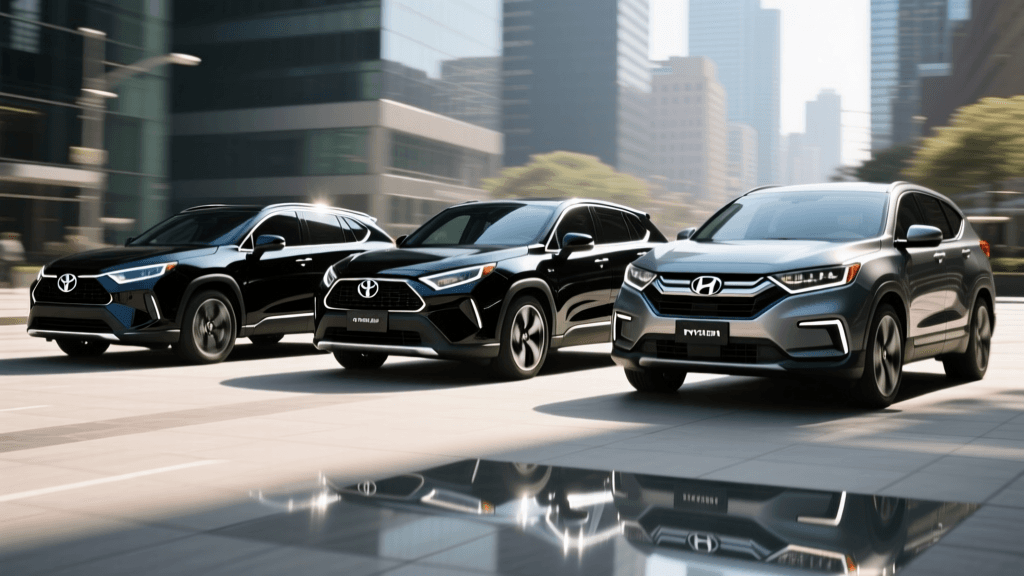
In this head-to-head product showdown, we are ranking the undisputed heavyweights of the hybrid crossover segment by versatility and miles per gallon (MPG). Our contenders are the Toyota RAV4 Hybrid, the Honda CR-V Hybrid, and the Hyundai Tucson Hybrid. We will dissect their cargo dimensions, real-world fuel efficiency, drivetrain refinement, and overall utility to crown the ultimate champion.
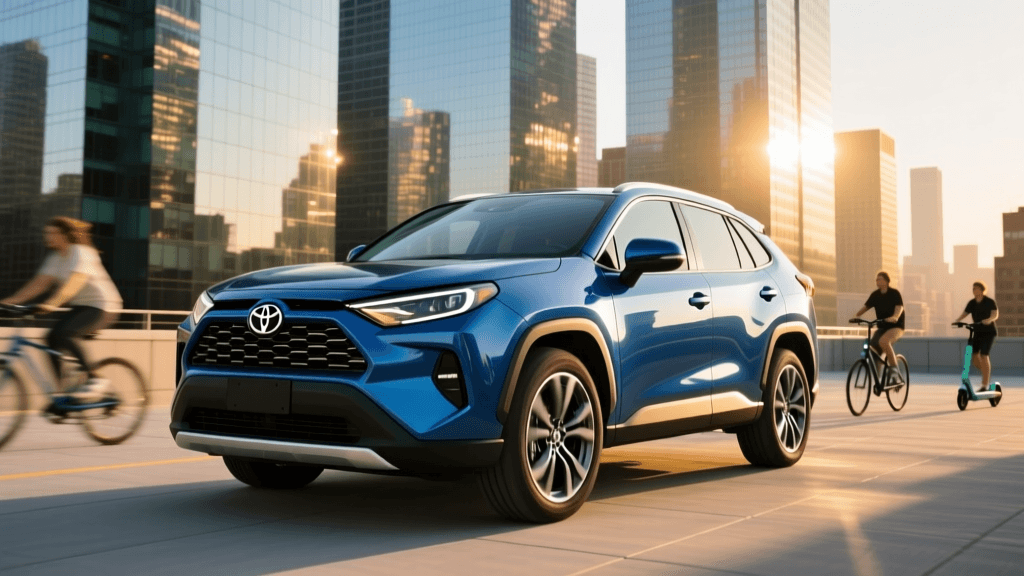
Contender 1: Toyota RAV4 Hybrid (The Efficiency King)
The Toyota RAV4 Hybrid has long been the benchmark for compact crossover efficiency. Powered by a 2.5-liter Dynamic Force four-cylinder engine paired with Toyota’s legendary e-CVT and electronic on-demand all-wheel drive (AWD), it generates a robust 219 horsepower. What truly sets the RAV4 Hybrid apart is its standard AWD system, which utilizes an independent rear electric motor to provide instant torque to the rear wheels when slip is detected.
In terms of fuel economy, the RAV4 Hybrid is a marvel, achieving an EPA-estimated 41 MPG city and 38 MPG highway, for a combined 40 MPG. This efficiency is validated by the U.S. Department of Energy's Fuel Economy Guide, which consistently ranks the RAV4 among the top non-plug-in AWD crossovers. However, versatility is where the RAV4 shows slight signs of age. While its 37.5 cubic feet of cargo space behind the second row is adequate, the load floor is slightly higher than its competitors due to the rear electric motor and battery placement. The infotainment system, though recently updated, still lags slightly behind the competition in terms of graphical crispness and processing speed.
Contender 2: Honda CR-V Hybrid (The Space and Comfort Champion)
Honda took a comprehensive approach to the latest generation CR-V Hybrid, prioritizing interior volume, ride refinement, and family-friendly ergonomics. Under the hood lies a 2.0-liter Atkinson-cycle engine mated to a two-motor hybrid system, producing a combined 204 horsepower. Unlike the Toyota, Honda offers the CR-V Hybrid in both FWD and AWD configurations, though the AWD system is vastly superior for versatility.
The CR-V Hybrid shines brightest in its cabin dimensions. It offers a class-leading 41.3 inches of rear legroom, making it the undisputed king of passenger comfort for growing families. Cargo space is equally impressive, boasting 39.3 cubic feet behind the rear seats. The driving experience is notably more refined than the RAV4, with a stiffer chassis and better sound deadening. Fuel economy is stellar, with the AWD Sport Touring model achieving an EPA-estimated 40 MPG city and 34 MPG highway. While the highway MPG dips slightly compared to the Toyota, the real-world usability of the interior space makes it a formidable contender.
Contender 3: Hyundai Tucson Hybrid (The Tech and Value Underdog)
Hyundai has aggressively targeted the hybrid market with the Tucson Hybrid, offering striking futuristic styling, a premium interior, and an industry-leading warranty. The Tucson utilizes a 1.6-liter turbocharged four-cylinder engine paired with a 44 kW electric motor and a traditional 6-speed automatic transmission. This is a critical differentiator: by avoiding a CVT, the Tucson delivers a more traditional, engaging driving feel with distinct gear shifts and zero 'rubber-band' acceleration effects.
Producing 226 horsepower, it is the most powerful of the three, and its HTRAC AWD system is highly capable in adverse weather. Fuel economy is rated at 38 MPG city and 38 MPG highway for a combined 38 MPG. The interior feels a half-class above its rivals, featuring dual 10.25-inch panoramic displays and excellent material quality. Cargo space is generous at 38.7 cubic feet. Hyundai also includes a 10-year/100,000-mile powertrain warranty, providing immense long-term value that Toyota and Honda cannot match.
Head-to-Head Comparison Matrix
| Metric | Toyota RAV4 Hybrid (AWD) | Honda CR-V Hybrid (AWD) | Hyundai Tucson Hybrid (AWD) |
|---|---|---|---|
| Combined MPG (EPA) | 40 MPG | 37 MPG | 38 MPG |
| Cargo Space (Behind 2nd Row) | 37.5 cu-ft | 39.3 cu-ft | 38.7 cu-ft |
| Rear Legroom | 37.8 inches | 41.3 inches | 41.3 inches |
| Max Towing Capacity | 1,750 lbs | 1,000 lbs | 2,000 lbs |
| Starting MSRP (Approx) | $33,425 | $35,395 | $34,460 |
Deep Dive: Versatility, Cargo, and Utility
When ranking by versatility, we must look beyond simple cubic footage. How easy is it to load? What can it tow? How does it handle rougher terrain?
- Cargo Usability: The Honda CR-V wins the pure volume test with 39.3 cubic feet and a remarkably low load floor, making it the easiest for loading heavy items like dog crates or large appliances. The Tucson follows closely with a wide, square opening. The RAV4’s slightly higher load lip and intrusive wheel wells make it the least practical for bulky items, despite its rugged exterior image.
- Towing Capability: If your definition of versatility includes pulling a small teardrop trailer or a pair of jet skis, the Hyundai Tucson takes the crown with a 2,000-pound towing capacity. The RAV4 is limited to 1,750 pounds, and the CR-V Hybrid is restricted to a mere 1,000 pounds, severely limiting its utility for outdoor enthusiasts.
- Ground Clearance and Off-Roading: The RAV4 Hybrid, particularly in the Woodland Edition trim, offers up to 8.6 inches of ground clearance and specialized TRD tuning, making it the most capable on dirt roads and snowy driveways. The Tucson and CR-V hover around 8.3 and 8.2 inches, respectively, which is adequate for light trails but less confidence-inspiring in deep snow.
Deep Dive: Real-World MPG and Drivetrain Dynamics
EPA estimates are a great starting point, but real-world driving reveals the true character of these hybrid systems. The Toyota RAV4 Hybrid remains the most consistent fuel sipper in stop-and-go city traffic, where its electric motors do the heavy lifting. However, the e-CVT can drone loudly under hard acceleration, such as merging onto a busy highway.
The Honda CR-V Hybrid offers the best compromise. Its two-motor system operates mostly as a series hybrid at lower speeds, driving the wheels with electric power while the gas engine acts as a generator. This results in incredibly smooth, EV-like acceleration in the city. On the highway, a lock-up clutch connects the engine directly to the wheels, improving efficiency and reducing the typical CVT drone.
The Hyundai Tucson Hybrid provides the most engaging drive. The 6-speed automatic transmission shifts predictably, and the turbocharged engine provides a surge of torque that the naturally aspirated Toyota and Honda lack. While it sacrifices 2 to 3 MPG compared to the RAV4 in city driving, the trade-off in driving enjoyment and passing power is well worth it for those who find CVTs uninspiring.
Safety and Family Peace of Mind
Versatility also means keeping your family safe in unpredictable scenarios. All three vehicles have earned top marks in crash testing. According to the Insurance Institute for Highway Safety (IIHS), the latest iterations of these crossovers have secured Top Safety Pick awards, featuring standard automatic emergency braking, lane-keeping assist, and adaptive cruise control.
Honda’s Honda Sensing suite is exceptionally smooth in its operation, particularly the lane-centering feature, which makes long highway road trips significantly less fatiguing. Toyota’s Safety Sense 3.0 is highly effective but can be overly sensitive with its audible warnings. Hyundai’s SmartSense is comprehensive, but the driver attention warning system can be easily triggered by minor head movements, leading to frequent dashboard chimes.
The Final Verdict: Who Wins the Showdown?
Crowning a single winner in this head-to-head showdown depends entirely on what you value most in your daily drive.
The Overall Winner for Versatility and Family Use: Honda CR-V Hybrid
If your primary goal is maximum interior space, passenger comfort, and a refined, quiet ride, the Honda CR-V Hybrid takes the top spot. It offers the best balance of excellent fuel economy, class-leading rear legroom, and a massive, easy-to-load cargo area. It is the ultimate family hauler that happens to be incredibly efficient.
The Winner for Pure MPG and Resale Value: Toyota RAV4 Hybrid
If squeezing every last drop of fuel out of your commute and maximizing long-term resale value are your top priorities, the Toyota RAV4 Hybrid remains the undisputed king. Its bulletproof reputation, standard AWD, and slightly superior city MPG make it the smartest financial choice for high-mileage commuters.
The Winner for Driving Dynamics and Tech: Hyundai Tucson Hybrid
For buyers who refuse to drive a boring CVT and want a premium-feeling interior with the best warranty in the business, the Hyundai Tucson Hybrid is the clear choice. Its traditional transmission, turbocharged torque, and highest towing capacity make it the most versatile option for active lifestyles that demand a bit more excitement behind the wheel.