The Truth About Toyota Hybrids: Separating Fact from Fiction
Toyota essentially invented the modern hybrid vehicle segment with the introduction of the Prius in 1997. Over two decades later, the automaker remains the undisputed king of hybridization. Yet, despite millions of sales and mountains of long-term data, the internet is still rife with outdated myths, misconceptions, and common buyer mistakes regarding Toyota's hybrid lineup. Whether you are looking at a compact sedan or a three-row family hauler, misunderstanding how Toyota's Hybrid Synergy Drive works can lead to poor purchasing decisions and improper maintenance.
In this guide, we are busting the most persistent myths about Toyota hybrid reliability and efficiency. Then, we will rank the best Toyota hybrid models on the market today based on real-world MPG data, long-term dependability, and overall value.
Myth #1: Hybrid Batteries Are a $5,000 Ticking Time Bomb
The Myth: You will inevitably need to replace the high-voltage hybrid battery every 100,000 miles, costing upwards of $5,000 and totaling the vehicle's value.
The Reality: This is perhaps the most damaging and entirely false myth in the automotive space. Toyota designs its hybrid battery packs with conservative state-of-charge windows. The system rarely allows the battery to charge to 100% or discharge to 0%, which drastically reduces chemical degradation. Furthermore, Toyota stands behind its hybrid components with an industry-leading warranty. According to Toyota's official warranty hub, the hybrid battery is covered for 10 years or 150,000 miles (whichever comes first) in all 50 states. In reality, it is incredibly common for Toyota Prius and Camry hybrid batteries to exceed 250,000 miles with zero loss in capacity. If a single cell module does fail outside of warranty, specialized hybrid repair shops can replace individual modules for a few hundred dollars, rather than replacing the entire pack.
Myth #2: Toyota SUV Hybrids Sacrifice Massive MPG for Size
The Myth: If you want the legendary 50+ MPG of a Prius, you must give up cargo space and ride height, because SUV hybrids are barely more efficient than their gas-only counterparts.
The Reality: Toyota's e-CVT (continuously variable transmission) and electric motor integration are so advanced that the efficiency penalty for moving to an SUV is surprisingly small. The RAV4 Hybrid, one of the best-selling SUVs in America, achieves an EPA-estimated 40 MPG combined. When you compare this to the data available on the EPA Fuel Economy Hybrid Guide, the RAV4 Hybrid sips fuel at a rate that rivals many compact, gas-only sedans from rival manufacturers. You do not have to sacrifice utility to achieve exceptional fuel economy.
The Ultimate Ranking: Best Toyota Hybrids by Efficiency & Reliability
Below is our definitive ranking of the best Toyota hybrid models, evaluated on fuel efficiency, historical reliability metrics, and everyday usability.
| Rank | Model | Powertrain | Combined MPG | Starting MSRP (Est.) | Best For |
|---|---|---|---|---|---|
| 1 | Toyota Prius | 2.0L 4-Cyl Hybrid | 57 MPG | $27,950 | Maximum Efficiency |
| 2 | Toyota Camry Hybrid | 2.5L 4-Cyl Hybrid | 52 MPG | $28,855 | Midsize Commuting |
| 3 | Toyota RAV4 Hybrid | 2.5L 4-Cyl Hybrid | 40 MPG | $31,725 | Compact SUV Utility |
| 4 | Toyota Highlander Hybrid | 2.5L 4-Cyl Hybrid | 36 MPG | $40,220 | Three-Row Families |
| 5 | Toyota Corolla Hybrid | 1.8L 4-Cyl Hybrid | 50 MPG | $23,500 | Budget-Conscious Buyers |
1. Toyota Prius & Prius Prime (The Efficiency Champions)
The fifth-generation Prius completely shattered the myth that hybrids must be slow and boring. With up to 194 horsepower on tap, the new Prius hits 0-60 mph in just 6.7 seconds while returning a mind-boggling 57 MPG combined in the FWD LE trim. For those with home charging capabilities, the Prius Prime (PHEV) offers up to 44 miles of pure electric range before the gas engine seamlessly engages. Reliability is virtually bulletproof, as the Prius platform has been refined over five distinct generations.
2. Toyota Camry Hybrid (The Midsize Marvel)
The Camry Hybrid is the gold standard for midsize sedans. Utilizing a 2.5-liter Dynamic Force engine paired with Toyota's hybrid system, it achieves up to 52 MPG combined. It offers a more planted, traditional driving feel than the Prius while providing superior rear-seat legroom. Long-term dependability scores for the Camry consistently rank at the top of the industry, a fact corroborated by the J.D. Power 2024 U.S. Vehicle Dependability Study, which placed Toyota as the top mass-market brand for long-term vehicle reliability.
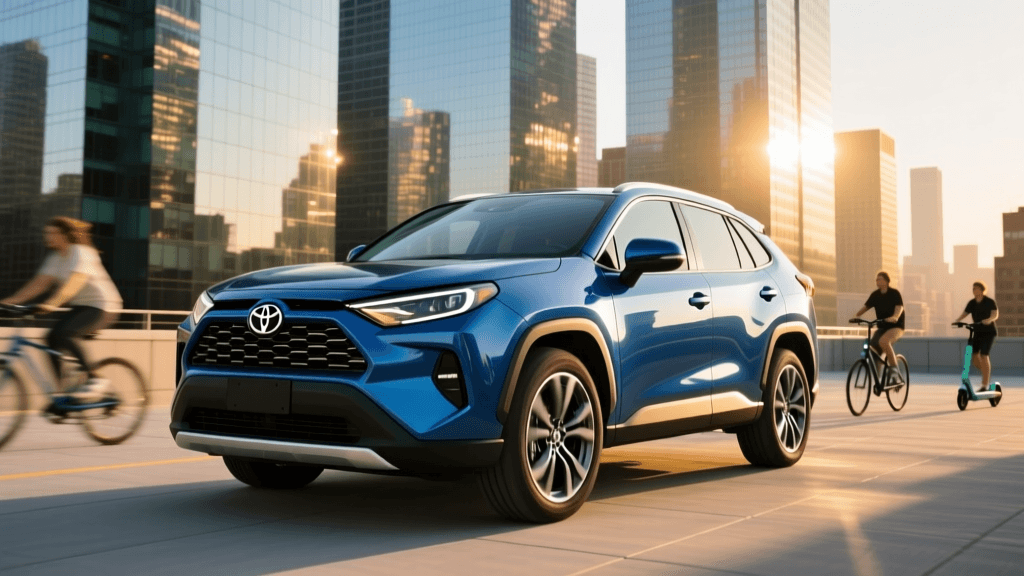
3. Toyota RAV4 Hybrid (The SUV Benchmark)
The RAV4 Hybrid proves that you can have a rugged, spacious, AWD-capable SUV without wincing at the gas pump. Standard electronic On-Demand AWD (using a dedicated rear electric motor) provides excellent traction in snow and rain while maintaining a 40 MPG combined rating. It is the ultimate do-it-all vehicle for small families and outdoor enthusiasts.
4. Toyota Highlander Hybrid (The Family Hauler)
Hauling seven people and their gear usually results in abysmal fuel economy. The Highlander Hybrid defies physics, delivering 36 MPG combined in a three-row package. While the third row is best suited for children, the cargo space and fuel savings make it a vastly superior choice to minivans or traditional V6 SUVs for daily school runs and road trips.
Myth #3: You Should Always Buy the 'Prime' PHEV Version
The Myth: Plug-in Hybrid Electric Vehicles (PHEVs) like the RAV4 Prime or Prius Prime are always the superior, more advanced choice over standard hybrids.
The Reality: A PHEV is only a smart financial and environmental decision if you have access to reliable Level 1 or Level 2 home charging and your daily commute falls within the vehicle's electric-only range (typically 25-44 miles). If you buy a Toyota Prime model but rely exclusively on public gas stations and never plug it in, you are simply paying a $4,000 to $8,000 premium to haul around a heavy, dead battery pack. In that scenario, the standard hybrid model is vastly more efficient and cost-effective.
Common Maintenance Mistakes Toyota Hybrid Owners Make
While Toyota hybrids require less mechanical maintenance than traditional gas cars (no alternators, starter motors, or serpentine belts to replace), owners still make critical errors:
- Ignoring the Inverter Coolant: The hybrid system has its own dedicated coolant loop for the high-voltage inverter. Many owners skip this flush. It must be changed at 100,000 miles, and every 50,000 miles thereafter, to prevent catastrophic inverter failure.
- Forgetting the 12V Auxiliary Battery: Hybrids still use a traditional 12-volt battery to power computers and accessories. In models like the RAV4 Hybrid, this is a specialized AGM battery located in the rear cargo area. If it dies, the car will not start, even if the massive high-voltage traction battery is fully charged. Test it annually after year three.
- Misusing 'B' Mode: Many drivers mistakenly leave the shifter in 'B' (Engine Braking) mode during normal highway driving, thinking it saves fuel. 'B' mode is strictly designed for descending steep mountain grades to prevent brake fade. Using it on flat ground actually wastes energy by converting momentum into heat via engine resistance rather than capturing it via regenerative braking.
Final Verdict
Toyota's hybrid lineup remains the safest, most reliable bet in the electrified automotive space. By ignoring outdated internet myths about battery degradation and understanding the real-world math behind PHEVs vs. standard hybrids, buyers can confidently select a vehicle that will deliver hundreds of thousands of miles of exceptional fuel economy. Whether you choose the hyper-efficient Prius or the family-friendly Highlander Hybrid, Toyota's Synergy Drive continues to set the benchmark that all other automakers are still chasing.