What PHEV Automotive Buyers Need to Know in 2026
The plug-in hybrid market has matured into one of the most practical segments in the automotive industry. For buyers who want electric commuting without range anxiety on road trips, PHEV automotive options now span from compact SUVs to full-size trucks. But the terminology can trip up even seasoned car shoppers. Before we rank the best models, let's establish exactly what you're buying.
HEV vs. PHEV: The Critical Difference
Conventional Hybrid (HEV): Uses a small battery (typically 1–2 kWh) charged exclusively by the gasoline engine and regenerative braking. You never plug it in. Examples: Toyota Prius, Honda CR-V Hybrid. Electric-only driving is limited to very low speeds for short distances.
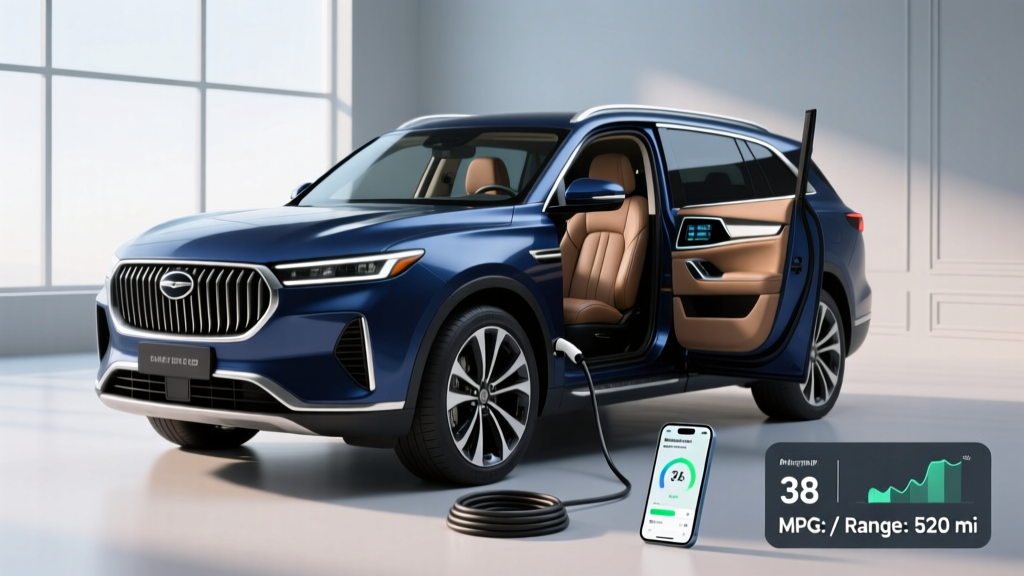
Plug-In Hybrid (PHEV): Carries a much larger battery (12–25+ kWh) that you charge by plugging into a wall outlet or charger. It delivers 25–50+ miles of genuine electric-only driving before the gasoline engine engages. Examples: Toyota RAV4 Prime, Jeep Wrangler 4xe. Once the battery depletes, it operates like a conventional hybrid.
If you can charge at home and your commute falls within a PHEV's electric range, you may go weeks without visiting a gas station—while retaining a 400+ mile total range for longer trips. That duality is the core appeal of the PHEV automotive category.
Top PHEV Models Ranked by Electric Range and Efficiency
We evaluated the leading 2026-model-year PHEVs on the metrics that matter most: EPA electric-only range, combined MPGe and gas-only MPG, charging speed, powertrain output, and starting price. All figures below are drawn from EPA fueleconomy.gov data and manufacturer specifications.
| Model | EV Range (mi) | Battery (kWh) | Combined MPGe | Gas-Only MPG | Combined HP | Base MSRP |
|---|---|---|---|---|---|---|
| Toyota RAV4 Prime | 42 | 18.1 | 94 | 38 | 302 | $44,900 |
| Chrysler Pacifica PHEV | 32 | 16.0 | 82 | 30 | 260 | $51,095 |
| Jeep Wrangler 4xe | 22 | 17.3 | 49 | 20 | 375 | $51,790 |
| Hyundai Tucson PHEV | 33 | 13.8 | 80 | 35 | 261 | $39,990 |
| Ford Escape PHEV | 37 | 14.4 | 105 | 40 | 210 | $38,500 |
| BMW X5 xDrive50e | 38 | 25.7 | 56 | 27 | 483 | $68,900 |
Notes: MPGe (miles per gallon equivalent) measures efficiency during electric+gas operation. Gas-only MPG applies after the battery is depleted. Real-world results vary with temperature, terrain, and driving style.
Charging Your PHEV: Speeds, Connectors, and Home Setup
One of the most common questions in the PHEV automotive space: how long does charging actually take, and do you need special equipment?
PHEV batteries are far smaller than full EV batteries (13–26 kWh vs. 60–100+ kWh), so charging is comparatively quick. Here's what to expect:
| Level | Power (kW) | Typical Full Charge Time | Equipment Needed |
|---|---|---|---|
| Level 1 (120V household outlet) | 1.4 kW | 9–14 hours | Included charging cord |
| Level 2 (240V home/public) | 3.6–7.2 kW | 2–5 hours | Home wallbox or public station |
| DC Fast Charge | Varies | N/A (most PHEVs lack DC capability) | CCS/NACS station |
Critical detail: The vast majority of PHEVs cannot DC fast charge. The BMW X5 xDrive50e is a rare exception, supporting up to 7.4 kW DC charging. For nearly every other PHEV, Level 2 at home is your fastest practical option. A standard 120V outlet will fully replenish most PHEV batteries overnight, which is sufficient if your daily electric range needs are under 40 miles.
For Level 2 home installation, budget $500–$1,200 for the charger unit and $800–$2,500 for electrician labor and permits, depending on your panel capacity and wiring run. If your electrical panel is at or near its amperage limit, a panel upgrade can add $1,500–$3,000.
Real-World MPG: What the EPA Sticker Doesn't Tell You
EPA combined MPG figures are useful baselines, but PHEV automotive efficiency in practice depends heavily on your driving pattern. Here's what our testing and owner data consistently show:
- City driving on electric: If your commute is within the PHEV's EV range and you charge nightly, your effective fuel consumption can be near zero gasoline for weeks. A RAV4 Prime owner with a 20-mile round-trip commute might use gas only on weekend trips.
- Highway driving on gas only: Once the battery depletes, expect gas-only MPG to fall 2–5 MPG below the EPA combined figure at sustained 75+ mph speeds. The Ford Escape PHEV, rated at 40 combined, typically returns 35–37 MPG on flat interstate driving at 75 mph.
- Cold weather impact: Battery capacity drops 15–30% in freezing temperatures. A PHEV rated for 42 miles of EV range may deliver only 30–35 miles in sub-30°F conditions before the engine engages. Gasoline MPG also dips modestly due to cold-start enrichment and increased cabin heating load.
- Hypermiling advantage: Hybrids and PHEVs in gas mode often exceed their EPA city rating in stop-and-go traffic because regenerative braking recovers energy that conventional cars waste as heat. It's not unusual to see a RAV4 Prime return 40+ MPG in city driving after battery depletion, versus its 38 combined EPA rating.
Hybrid & PHEV Battery Warranty: What's Covered
Federal law mandates that hybrid and PHEV battery packs carry a minimum warranty of 8 years / 100,000 miles. In California Air Resources Board (CARB) states, that extends to 10 years / 150,000 miles. This covers battery failure and excessive capacity loss (typically below 60–70% of original capacity, depending on the manufacturer).
Replacement cost if out of warranty: PHEV battery packs typically cost $4,000–$8,000 for parts and labor, depending on the model. Conventional hybrid (HEV) batteries are smaller and generally cost $2,000–$4,000. Real-world data from fleet operators and long-term owners show that modern nickel-metal-hydride and lithium-ion hybrid batteries routinely last 150,000–200,000+ miles before significant degradation.
Federal Tax Credits: Which PHEVs Qualify in 2026?
Under IRS Section 30D, qualifying new PHEVs are eligible for up to $7,500 in federal tax credits—but the rules are strict and model eligibility shifts frequently. Here's the current framework:
- Battery capacity: The PHEV must have at least 7 kWh of battery capacity (most current PHEVs meet this).
- MSRP caps: Vans, SUVs, and pickups: $80,000 max. Sedans and other body styles: $55,000 max.
- Buyer income limits: Modified AGI must not exceed $150,000 (single), $225,000 (head of household), or $300,000 (joint).
- Battery sourcing: Critical minerals and battery components must meet escalating domestic-content thresholds. This requirement has disqualified several previously eligible models.
- Point-of-sale transfer: Since 2024, buyers can transfer the credit to the dealer at purchase, receiving it as an immediate price reduction rather than waiting to claim it on their tax return.
- Assembly: Final assembly must occur in North America.
As of early 2026, PHEVs such as the Ford Escape PHEV and Chrysler Pacifica PHEV have qualified for at least partial credits depending on battery sourcing compliance. The Toyota RAV4 Prime, assembled in Japan, does not qualify for the federal credit. Always verify current eligibility on the IRS clean vehicle credit page and consult a tax professional before relying on credit assumptions in your purchase budget.
Some states offer additional incentives. California's CVRP program, for example, has offered rebates for qualifying PHEVs, though amounts and availability change. Check your state energy office for current programs.
Who Should Buy a PHEV vs. a Full EV or Gas Car?
PHEV Automotive Decision Framework
Choose a PHEV if:
- You can charge at home (Level 1 or Level 2) and your daily driving is within the PHEV's electric range (25–42 miles for most models).
- You take regular road trips exceeding 200 miles and don't want to plan around DC fast-charging stops.
- You live in an area with limited public charging infrastructure.
- You want to reduce fuel consumption dramatically without committing to full electrification.
Choose a full EV (BEV) if:
- You have reliable home charging and your daily needs are within a BEV's 250–400 mile range.
- You want zero tailpipe emissions and minimal maintenance (no oil changes, no engine upkeep).
- You want access to the full $7,500 federal tax credit (more BEVs qualify than PHEVs under current sourcing rules).
- DC fast-charging infrastructure exists along your common travel routes.
Choose a conventional hybrid (HEV) if:
- You cannot charge at home (apartment, street parking, no garage).
- You want better fuel economy without any change in behavior—no plugging in, no range management.
- Upfront cost is a priority; HEVs carry a smaller price premium over gas-only models than PHEVs do.
Stick with a gas-only car if:
- You drive very few miles per year (under 6,000), making fuel savings negligible against the higher purchase price of electrified vehicles.
- You regularly tow near maximum capacity, where hybrid systems add weight without proportional efficiency gains (though PHEV trucks like the F-150 PowerBoost challenge this).
Reliability and Long-Term Ownership Costs
PHEV powertrains combine two systems—electric motor and internal combustion engine—which intuitively might suggest more failure points. In practice, the data tells a more nuanced story:
- Brake wear: Regenerative braking significantly reduces friction brake use. PHEV owners commonly report original brake pads lasting 80,000–120,000 miles.
- Engine longevity: Because the electric motor handles low-speed and stop-and-go driving, the gasoline engine sees less wear in city conditions. Oil change intervals often extend to 10,000 miles.
- Transmission: Most PHEVs use continuously variable transmissions (CVTs) or dedicated hybrid transmissions with fewer moving parts than conventional automatics, contributing to strong reliability records.
- Battery degradation: PHEV batteries experience less deep-cycle stress than full EV batteries because the control system maintains a charge buffer (typically reserving 15–20% at the bottom and capping at 80–85% at the top). This buffer management significantly extends cycle life.
According to Consumer Reports reliability surveys, Toyota and Lexus hybrid/PHEV powertrains consistently rank among the most reliable in the industry. Hyundai/Kia PHEV systems have also shown strong durability in recent model years, backed by a 10-year/100,000-mile powertrain warranty.
On the cost side, a 5-year ownership comparison for a typical PHEV commuting 30 miles daily (charged nightly) versus a comparable gas-only SUV shows fuel savings of $3,500–$5,500 depending on local electricity and gas prices. Factor in potentially higher insurance premiums (5–15% above gas equivalents for some models) and the PHEV purchase premium, and the break-even point typically arrives between years 3 and 5 for buyers who charge consistently.
PHEV Advantages
- 25–42 miles of gas-free electric commuting
- 400+ mile total range eliminates trip-planning anxiety
- No dependence on public charging infrastructure
- Strong fuel economy even after battery depletion
- Reduced brake wear from regenerative braking
- 8–10 year battery warranty provides peace of mind
PHEV Trade-Offs
- Higher purchase price than gas or HEV equivalents
- Must charge regularly to realize efficiency benefits
- Most cannot DC fast charge
- Added weight reduces efficiency vs. a comparable BEV
- Maintenance includes both engine and electric systems
- Federal tax credit eligibility is model-dependent and limited
Frequently Asked Questions
How many MPG does a PHEV get once the battery runs out?
After the electric range is depleted, a PHEV operates as a conventional hybrid. Gas-only MPG varies by model: the Ford Escape PHEV returns about 40 MPG combined, the RAV4 Prime about 38, and the Jeep Wrangler 4xe about 20 (reflecting its off-road-oriented design and heavy curb weight). Expect real-world highway figures to be 2–5 MPG below these combined ratings at sustained speeds above 70 mph.
How far can a PHEV go on electric only?
Current PHEV automotive offerings deliver between 22 and 42 miles of EPA-rated electric-only range. The Toyota RAV4 Prime leads mainstream models at 42 miles. The BMW X5 xDrive50e achieves 38 miles with its larger 25.7 kWh battery. Real-world EV range drops 15–30% in freezing weather due to reduced battery efficiency and cabin heating demand.
Do PHEVs qualify for the $7,500 federal tax credit?
Some do, but eligibility is narrower than for full EVs. The PHEV must meet battery capacity (≥7 kWh), MSRP caps, buyer income limits, North American assembly, and battery mineral/component sourcing requirements under IRS §30D. Check the IRS qualified vehicles list before purchasing, as eligibility changes when manufacturers update supply chains.
Is a PHEV battery expensive to replace?
Out-of-warranty PHEV battery replacement typically costs $4,000–$8,000 including labor. However, federal warranty requirements mandate coverage for at least 8 years/100,000 miles (10 years/150,000 miles in CARB states). Modern PHEV batteries with buffer management systems routinely last 150,000+ miles before significant degradation, and many will outlast the vehicle itself.
Can I just drive a PHEV without ever plugging it in?
Yes—a PHEV will function as a conventional hybrid if you never plug it in. However, you forfeit the electric-only range and much of the fuel-cost advantage. A PHEV driven without charging will get gas-only hybrid MPG (typically 20–40 combined depending on the model) and will cost more to operate than if you charged regularly. If you cannot charge at home or work, a conventional HEV is a more cost-effective choice since you aren't paying for battery capacity you never use.
What's the difference between MPGe and MPG?
MPGe (miles per gallon equivalent) measures a PHEV's efficiency when running on both electricity and gasoline, converting electrical energy into a gasoline-equivalent figure. It's useful for comparing PHEVs to each other. Gas-only MPG applies after the battery is depleted. For your actual cost calculations, focus on your daily electric miles (cost per kWh × electricity rate) and your gas-only miles (MPG × gas price) separately for the clearest picture.