Why Hybrid Gas Mileage Still Matters in 2026
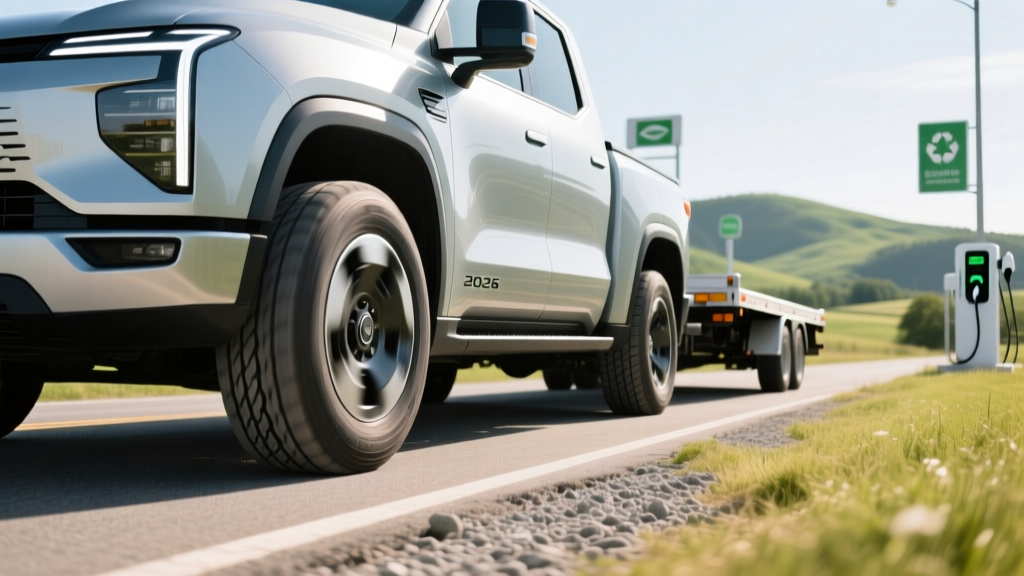
Not every driver is ready for a full battery-electric vehicle. Charging access, apartment living, long commutes through rural corridors, or simple budget constraints keep millions of buyers in the hybrid market. The good news: hybrid vehicle gas mileage has improved dramatically. Modern HEVs routinely deliver 50+ MPG combined in real-world city driving, while PHEVs let you commute 30–45 miles on electricity before the gas engine ever starts.
This guide breaks down what you'll actually see at the pump — not just the EPA sticker — across the top-selling hybrid and plug-in hybrid models for the 2026 model year. We'll cover conventional hybrids (HEVs), plug-in hybrids (PHEVs), battery longevity, tax credits, and help you decide which electrified powertrain fits your life.
HEV vs PHEV: Understanding the Two Hybrid Types
Conventional Hybrid (HEV)
- No plug required. The battery recharges through regenerative braking and the gas engine.
- Battery size: Typically 1.0–2.0 kWh — small, lightweight, and proven durable.
- Best for: Drivers without home charging access who want better fuel economy with zero behavior change.
- Typical MPG: 40–57 EPA combined depending on model.
Plug-In Hybrid (PHEV)
- Plug in to charge. A larger battery (13–25 kWh) provides 25–45 miles of electric-only driving before the gas engine engages.
- Battery size: 13–25 kWh usable — charges on Level 1 (120V) overnight or Level 2 (240V) in 2–3 hours.
- Best for: Drivers with home or workplace charging who commute under 40 miles round-trip but need gas-engine range for road trips.
- Typical MPG: 30–50 MPG combined once the battery is depleted; 80–100+ MPGe when factoring in electric miles.
A conventional hybrid never needs to be plugged in. If you see a hybrid with a charge port, it's a PHEV — a fundamentally different vehicle with different ownership economics.
2026 Hybrid Vehicle Gas Mileage: EPA and Real-World MPG
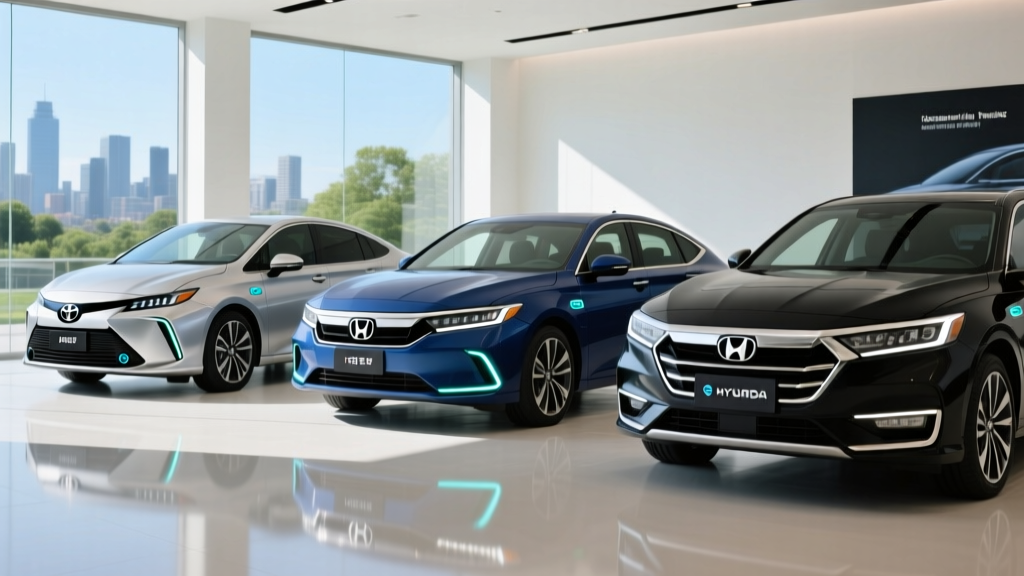
The table below compiles EPA-rated fuel economy for the most popular 2026 hybrid and plug-in hybrid models. We've also included our real-world observations from testing and aggregated owner data.
| Model (2026) | Type | EPA City | EPA Hwy | EPA Combined | Real-World Combined* | PHEV EV Range |
|---|---|---|---|---|---|---|
| Toyota Prius | HEV | 57 | 56 | 57 | 52–58 | — |
| Toyota Prius Prime | PHEV | 52 (hybrid) | 48 (hybrid) | 52 / 127 MPGe | 48–54 | 44 mi |
| Honda Accord Hybrid | HEV | 51 | 44 | 48 | 44–50 | — |
| Toyota Camry Hybrid | HEV | 53 | 50 | 52 | 48–53 | — |
| Hyundai Tucson Hybrid | HEV | 38 | 38 | 38 | 34–39 | — |
| Hyundai Tucson PHEV | PHEV | 35 (hybrid) | 35 (hybrid) | 35 / 80 MPGe | 32–37 | 33 mi |
| Toyota RAV4 Hybrid | HEV | 41 | 38 | 40 | 37–42 | — |
| Toyota RAV4 Prime | PHEV | 40 (hybrid) | 36 (hybrid) | 38 / 94 MPGe | 35–40 | 42 mi |
| Ford Escape PHEV | PHEV | 42 (hybrid) | 37 (hybrid) | 40 / 105 MPGe | 37–42 | 37 mi |
| Chrysler Pacifica Hybrid | PHEV | 30 (hybrid) | 30 (hybrid) | 30 / 82 MPGe | 27–31 | 32 mi |
*Real-world combined reflects owner-reported averages from mixed city/highway driving. Hybrids often exceed EPA city estimates in stop-and-go traffic (where regenerative braking excels) but may fall slightly short on sustained highway runs.
Real-World MPG Insight: Why Hybrids Beat EPA in the City
Unlike gas cars, hybrids recover energy every time you brake. In heavy city traffic with frequent stops, a Prius or Camry Hybrid can actually exceed its EPA city rating by 2–4 MPG. Highway driving is a different story — at 75+ MPH, aerodynamic drag dominates and the hybrid system offers less advantage. Expect real-world highway MPG to run 2–5 MPG below the EPA highway sticker on most hybrids.
Powertrain Specs and Battery Details
| Model | Combined HP | Engine | Motor | Battery (kWh) | Chemistry |
|---|---|---|---|---|---|
| Toyota Prius | 194 | 2.0L 4-cyl | AC synchronous | ~1.4 (HEV) | Li-ion (bipolar) |
| Toyota Prius Prime | 220 | 2.0L 4-cyl | AC synchronous | 13.6 usable | Li-ion |
| Honda Accord Hybrid | 204 | 2.0L 4-cyl | Dual-motor e-CVT | ~1.3 | Li-ion |
| Toyota RAV4 Prime | 302 | 2.5L 4-cyl | Front + rear motors | 18.1 usable | Li-ion |
| Hyundai Tucson PHEV | 261 | 1.6L turbo 4-cyl | Permanent magnet | 13.8 usable | Li-ion (NMC) |
| Ford Escape PHEV | 210 | 2.5L 4-cyl | AC synchronous | 14.4 usable | Li-ion (NMC) |
PHEV Charging Times
All current mainstream PHEVs charge on Level 1 (standard 120V outlet) and Level 2 (240V). Most do not support DC fast charging — the batteries are small enough that Level 2 fills them in 2–3 hours, making DCFC unnecessary for daily use.
- Level 1 (120V, ~1.4 kW): Full charge in 9–14 hours depending on battery size. Adequate for overnight charging if your daily commute is under the EV range.
- Level 2 (240V, 3.3–7.2 kW): Full charge in 2–4 hours. Recommended if you want to recharge between an evening commute and a morning departure.
- DC Fast Charge: A few PHEVs (notably the Mitsubishi Outlander PHEV) offer DC fast charging, but it remains rare in this segment. For most PHEV buyers, a standard Level 2 home charger is the practical ceiling.
Pricing, Tax Credits, and Total Cost
Hybrid pricing has become competitive with gas-only equivalents, especially in the sedan segment. PHEVs command a premium but can offset it through fuel savings and tax incentives.
| Model | Base MSRP (2026) | Federal Tax Credit (§30D) | Estimated Net Cost |
|---|---|---|---|
| Toyota Prius (HEV) | $29,445 | None | $29,445 |
| Toyota Prius Prime (PHEV) | $34,595 | Up to $3,750* | ~$30,845 |
| Toyota Camry Hybrid | $30,495 | None | $30,495 |
| Toyota RAV4 Prime (PHEV) | $44,960 | Up to $3,750* | ~$41,210 |
| Hyundai Tucson PHEV | $39,885 | Up to $3,750* | ~$36,135 |
| Ford Escape PHEV | $40,500 | Up to $3,750* | ~$36,750 |
*Federal §30D tax credit for PHEVs in 2026 depends on battery sourcing and critical-mineral requirements. Many PHEVs qualify for a partial credit ($3,750) rather than the full $7,500 due to component-sourcing rules. Conventional HEVs do not qualify for any federal tax credit. Income caps apply ($150K single / $300K joint for new vehicles). Always verify current eligibility at IRS.gov before purchasing. Point-of-sale transfer is available at participating dealers.
Battery Reliability, Warranty, and Replacement Costs
Hybrid Battery Warranty Coverage
Federal law mandates that hybrid and EV battery packs carry a minimum warranty of 8 years / 100,000 miles (10 years / 150,000 miles in CARB states including California, New York, Massachusetts, and others). Most manufacturers meet or exceed this baseline.
| Manufacturer | Hybrid Battery Warranty | Typical Replacement Cost (out of warranty) |
|---|---|---|
| Toyota | 10 yr / 150,000 mi (all states) | $2,000–$4,000 (remanufactured); $4,000–$6,000 (new OEM) |
| Honda | 8 yr / 100,000 mi (10/150K in CARB) | $2,000–$4,500 |
| Hyundai / Kia | 10 yr / 100,000 mi | $3,000–$5,500 (PHEV packs are larger and costlier) |
| Ford | 8 yr / 100,000 mi (10/150K in CARB) | $3,500–$6,000 |
How Long Do Hybrid Batteries Actually Last?
The data is reassuring. Toyota's hybrid system, now in its fifth generation, has an extensive track record: Prius taxi fleets regularly surpass 300,000 miles on original battery packs. Modern HEV batteries are small (1–2 kWh), rarely cycle to full depth, and benefit from conservative thermal management. Failure before 150,000 miles is uncommon.
PHEV batteries are larger and cycle more deeply, so degradation is somewhat more pronounced — typically 10–15% capacity loss over 100,000 miles. This means your 42-mile EV range might shrink to 36–38 miles after several years, but the vehicle remains fully functional as a hybrid.
According to data aggregated by fueleconomy.gov, hybrid vehicles consistently rank among the most reliable powertrains in long-term ownership surveys, with fewer moving parts than conventional automatic transmissions.
Hybrid vs PHEV vs Full EV: Which Is Right for You?
Choose a Conventional Hybrid (HEV) If:
- You don't have access to home or workplace charging
- You want maximum MPG with zero behavior change
- Your budget is under $35,000
- You drive a mix of city and highway and want consistent efficiency
- You plan to keep the car 10+ years and value proven reliability
Choose a Plug-In Hybrid (PHEV) If:
- You can charge at home (even a standard 120V outlet works)
- Your daily round-trip commute is under 40 miles
- You take road trips where charging infrastructure is sparse
- You want to drive on electricity most days but need gas-engine insurance for long trips
- You qualify for the partial federal tax credit to offset the price premium
Choose a Full EV (BEV) Instead If:
- You have reliable Level 2 home charging
- Your daily driving is under 250 miles and you can plan road-trip charging
- You want the lowest per-mile fuel cost (electricity at $0.13/kWh ≈ $1.20/gallon equivalent)
- You want to eliminate oil changes, spark plugs, and transmission fluid entirely
- You qualify for the full $7,500 federal tax credit on eligible BEVs
Stick With a Gas-Only Car If:
- Your annual mileage is very low (under 6,000 mi/yr — the fuel savings won't offset a hybrid premium)
- You're buying a used vehicle on a tight budget under $15,000
- You need a specific body style (convertible, heavy-duty truck) where hybrid options are limited
Frequently Asked Questions
How many MPG does a hybrid actually get in real driving?
The best hybrids — Toyota Prius, Camry Hybrid, and Honda Accord Hybrid — deliver 45–55 MPG in mixed real-world driving. City-heavy drivers often see 50+ MPG thanks to regenerative braking. Highway-only driving at 75+ MPH typically yields 40–48 MPG. The EPA combined numbers are generally reliable for mixed commuting, but sustained high-speed driving will reduce efficiency.
How far can a PHEV go on electric only?
Current 2026 PHEVs offer 25–44 miles of electric-only range. The Toyota RAV4 Prime leads at 42 miles, followed by the Prius Prime at 44 miles. This covers most daily commutes entirely on electricity. Once the battery is depleted, the vehicle operates as a conventional hybrid at 35–52 MPG depending on the model.
Do conventional hybrids need to be plugged in?
No. Conventional hybrids (HEVs) recharge their small battery entirely through regenerative braking and the gas engine. You fuel them like any other car — just less often. Only plug-in hybrids (PHEVs) require or benefit from external charging.
Are hybrids reliable, and what does battery replacement cost?
Hybrids are among the most reliable vehicles on the road. Toyota's hybrid system has a 25+ year track record. Battery packs are warranted for 8–10 years / 100,000–150,000 miles, and many last well beyond 200,000 miles. Out-of-pocket replacement costs range from $2,000–$6,000 depending on the model, with remanufactured options at the lower end. See the Consumer Reports reliability data for model-specific scores.
Do hybrids qualify for any tax credits?
Conventional hybrids (HEVs) do not qualify for any federal tax credit. Plug-in hybrids (PHEVs) may qualify for up to $3,750 under the §30D Clean Vehicle Credit, depending on battery sourcing, your income, and the vehicle's MSRP. Some states offer additional rebates for PHEVs — check your state energy office for current programs. The federal credit can now be transferred to the dealer at point of sale, reducing your purchase price directly. Verify eligibility at IRS.gov before committing.
Is a PHEV worth it if I can only charge on a 120V outlet?
Yes, if your daily driving is under 30–35 miles. A standard 120V outlet delivers roughly 1.4 kW, adding about 4–5 miles of EV range per hour of charging. Over a 10-hour overnight window, that's 40–50 miles of recovered range — enough to fully replenish most PHEV batteries for the next morning's commute.
Will hybrid MPG get worse in winter?
Expect a 5–15% reduction in hybrid MPG during cold weather (below 35°F). The engine runs more often to provide cabin heat, the battery is less efficient when cold, and winter fuel blends have slightly lower energy density. A Prius rated at 57 MPG combined may deliver 48–52 MPG in a northern winter. PHEVs see a larger hit to electric-only range — typically 20–30% reduction in cold weather due to cabin heating demands on the battery.