If you need a truck that can tow, haul, and still sip fuel around town, the 2025 hybrid truck lineup offers legitimate gains over gas-only pickups — without the range compromises or charging demands of a full EV. But not all hybrid trucks are created equal. Some prioritize towing muscle, others chase city MPG, and one plug-in option blurs the line between truck and EV commuter.
This guide breaks down the three main hybrid trucks available for the 2025 model year — the Ford F-150 PowerBoost, Toyota Tundra i-FORCE MAX, and Ford Maverick Hybrid — with exact EPA figures, real-world efficiency notes, powertrain specs, and ownership economics. We'll also clarify the critical difference between conventional hybrids (HEVs) and plug-in hybrids (PHEVs), and help you decide which electrified truck actually fits your driving pattern.
HEV vs. PHEV: What Kind of Hybrid Truck Are You Looking At?
Before diving into specs, it's essential to understand the two hybrid architectures on the market. Confusing them is the most common buyer mistake.
Conventional Hybrid (HEV)
A conventional hybrid like the F-150 PowerBoost, Tundra i-FORCE MAX, or Maverick Hybrid uses a small battery (typically 1–2 kWh) paired with an electric motor and gasoline engine. You never plug it in. The battery recharges through regenerative braking and the engine. The electric motor assists during acceleration and enables low-speed electric-only driving for short distances (usually under 1 mile). The primary benefit is improved fuel economy, especially in stop-and-go city driving.
Plug-In Hybrid (PHEV)
A plug-in hybrid has a much larger battery (10–20+ kWh) and can be charged from a wall outlet or public charger. It offers meaningful electric-only range (typically 20–50 miles) before the gas engine engages. As of 2025, no full-size PHEV pickup is available in the US market. The closest electrified trucks with plug-in capability are electric pickups like the Ford F-150 Lightning or Rivian R1T. If a PHEV truck matters to you, you're currently choosing between a conventional hybrid truck or a full BEV truck.
The 2025 Hybrid Truck Lineup: Specs at a Glance
| Spec | Ford F-150 PowerBoost | Toyota Tundra i-FORCE MAX | Ford Maverick Hybrid |
|---|---|---|---|
| Powertrain | 3.5L twin-turbo V6 + electric motor | 3.5L twin-turbo V6 + electric motor | 2.5L 4-cyl + electric motor |
| Combined HP / Torque | 430 hp / 570 lb-ft | 437 hp / 583 lb-ft | 191 hp / 155 lb-ft (engine) |
| Battery | 1.5 kWh lithium-ion | 1.87 kWh nickel-metal hydride | 1.1 kWh lithium-ion |
| EPA City MPG | 22–25 (varies by drivetrain) | 20–22 | 42 |
| EPA Highway MPG | 22–24 | 22–24 | 33 |
| EPA Combined MPG | 23–25 | 20–22 | 37 |
| Max Towing Capacity | ~11,200 lbs | ~10,890 lbs | ~2,000 lbs |
| Base MSRP (2025) | ~$58,500 (XLT PowerBoost) | ~$56,000 (SR5 i-FORCE MAX) | ~$27,500 (XL Hybrid) |
| Drivetrain | RWD or 4WD | RWD or 4WD | FWD (AWD available) |
| 0–60 mph | ~5.6 sec | ~5.7 sec | ~7.5 sec |
Sources: fueleconomy.gov, Ford and Toyota official spec sheets. MPG varies by trim, cab configuration, and drivetrain. Always verify the specific configuration you're buying.
Ford F-150 PowerBoost: The Full-Size Efficiency Leader
The F-150 PowerBoost pairs Ford's 3.5-liter twin-turbo V6 with a 35 kW (47 hp) electric motor integrated into the 10-speed automatic transmission. The result is 430 combined horsepower and a muscular 570 lb-ft of torque — more low-end grunt than the non-hybrid 3.5L EcoBoost, which makes it feel responsive off the line and confident when merging with a trailer.
Real-World MPG vs. EPA Sticker
The EPA rates the 4WD F-150 PowerBoost at 22 city / 24 highway / 23 combined MPG. In real-world driving, owners and independent testers consistently report 21–24 MPG in mixed driving, with city-heavy commutes occasionally pushing above the EPA city figure thanks to frequent regenerative braking. Highway-only driving at 75+ mph tends to drop to 19–21 MPG — hybrids lose their advantage at sustained high speeds where the engine does all the work.
Real-world expectation: EPA combined 23 MPG; expect 21–24 MPG in mixed suburban/highway use. Highway-only road trips will net 19–21 MPG. Cold weather reduces city MPG by roughly 1–2 MPG due to engine running longer for cabin heat.
Towing and Payload
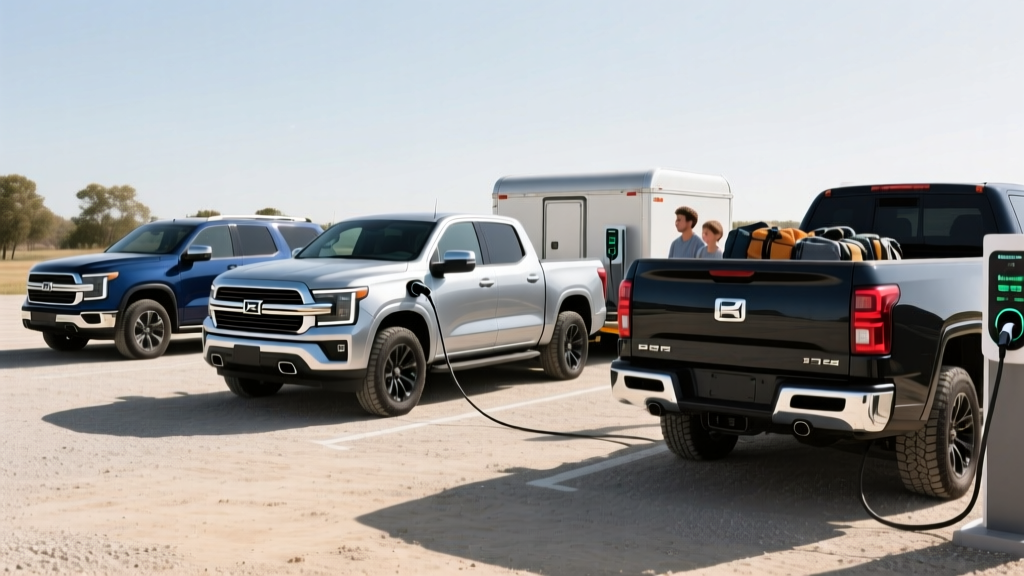
The PowerBoost is rated to tow up to approximately 11,200 lbs when properly equipped (4x2, Max Tow Package). Towing a heavy trailer will cut fuel economy roughly in half — expect 10–13 MPG with a 6,000–8,000 lb load. That's still marginally better than the non-hybrid 3.5L EcoBoost under the same load, but the gap narrows significantly under heavy strain.
Pro Power Onboard
A unique PowerBoost feature is the available Pro Power Onboard system, which turns the hybrid battery and engine into a mobile generator. The top-tier 7.2 kW system can power job-site tools, tailgate setups, or serve as backup home power during outages — a practical advantage neither the Tundra nor Maverick hybrid offers at this scale.
Toyota Tundra i-FORCE MAX: Torque-Heavy with Toyota Reliability
Toyota's i-FORCE MAX hybrid pairs a twin-turbo 3.5L V6 with a 36 kW (48 hp) electric motor positioned between the engine and the 10-speed automatic. Combined output is 437 hp and 583 lb-ft of torque — the highest numbers in this group. The electric motor fills in torque at low RPMs, reducing turbo lag and providing smooth acceleration from a stop.
Real-World MPG vs. EPA Sticker
The EPA rates the 4WD Tundra i-FORCE MAX at approximately 19–20 city / 22–24 highway / 20–22 combined, depending on configuration. Real-world results tend to land in the 18–21 MPG range for mixed driving. The Tundra hybrid's efficiency gains over the non-hybrid i-FORCE (rated around 17–20 combined) are real but modest — typically 2–3 MPG in city driving. Highway efficiency is nearly identical to the non-hybrid.
The Tundra hybrid uses a nickel-metal hydride (NiMH) battery rather than lithium-ion. NiMH is proven and durable but heavier and less energy-dense — a deliberate choice by Toyota prioritizing longevity over packaging.
Towing and the TRD Off-Road Factor
Max towing is rated at approximately 10,890 lbs. The i-FORCE MAX is standard on TRD Pro and available on several trims, meaning you can pair hybrid powertrain efficiency with serious off-road hardware. However, the added weight of hybrid components (roughly 200+ lbs over the non-hybrid) slightly reduces payload capacity on equivalent trims.
Ford Maverick Hybrid: The City MPG King
The Maverick Hybrid is a different animal entirely — a compact, unibody truck designed for urban commuters who occasionally need a bed. Its 2.5-liter four-cylinder hybrid system produces 191 combined horsepower and sends power to the front wheels (AWD became available for 2025, using a separate rear electric motor).
Real-World MPG vs. EPA Sticker
This is where the Maverick dominates. The FWD hybrid is EPA-rated at 42 city / 33 highway / 37 combined MPG. In real-world testing, city driving frequently exceeds the EPA figure, with many owners reporting 43–48 MPG in stop-and-go traffic. Highway driving at 70+ mph drops to 30–33 MPG. This is the hybrid system working as designed: maximum regenerative braking benefit in the city, minimal benefit at sustained highway speeds.
Real-world expectation: EPA combined 37 MPG; expect 38–45 MPG in city-heavy commuting, 30–33 MPG on highway road trips. AWD models lose roughly 3–5 MPG across the board.
The Trade-Off: Towing and Size
The Maverick Hybrid is rated for just 2,000 lbs of towing (1,500 lbs with AWD). If you need to pull a boat, camper, or equipment trailer regularly, this is not your truck. But for homeowners who need a bed for mulch runs, furniture moves, or weekend projects — and who commute 30+ miles daily — the Maverick Hybrid's fuel savings are dramatic. At 37 MPG combined versus a gas compact truck at ~22 MPG, annual fuel savings can reach $600–$900 depending on mileage and local gas prices.
Fuel Economy Breakdown: EPA vs. Real World
| Truck | EPA City | EPA Highway | EPA Combined | Real-World Mixed (est.) | Annual Fuel Cost* |
|---|---|---|---|---|---|
| F-150 PowerBoost 4WD | 22 | 24 | 23 | 21–24 | ~$2,550 |
| Tundra i-FORCE MAX 4WD | 20 | 22 | 21 | 18–21 | ~$2,800 |
| Maverick Hybrid FWD | 42 | 33 | 37 | 36–44 | ~$1,400 |
| Maverick Hybrid AWD | 38 | 31 | 34 | 32–38 | ~$1,550 |
*Based on 15,000 miles/year, 55% city / 45% highway, $3.50/gallon regular unleaded. Source: fueleconomy.gov. Your costs will vary with local fuel prices and driving habits.
Battery Warranty, Reliability, and Replacement Costs
Hybrid battery warranty coverage (2025 models):
- Ford (F-150 PowerBoost & Maverick Hybrid): 8 years / 100,000 miles on hybrid battery and components (10 years / 150,000 miles in California and states adopting CARB emissions standards).
- Toyota (Tundra i-FORCE MAX): 10 years / 150,000 miles on hybrid battery nationwide — one of the most generous hybrid warranties in the industry.
How Long Do Hybrid Truck Batteries Last?
Modern hybrid truck batteries are engineered for longevity. Toyota's hybrid systems have a decades-long track record — the Prius taxi fleet routinely surpassed 200,000 miles on original batteries. Ford's PowerBoost system is newer (introduced for the 2021 model year) but uses proven lithium-ion chemistry with robust thermal management.
Based on current data and historical hybrid reliability patterns:
- Expected hybrid battery lifespan: 150,000–200,000+ miles before significant degradation
- Replacement cost (out of warranty): $3,000–$5,000 for the F-150 PowerBoost or Maverick Hybrid battery pack; $3,500–$5,500 for the Tundra i-FORCE MAX NiMH pack
- Failure rate within warranty period: Very low — well under 2% based on industry data for modern hybrid systems
For most buyers who plan to own the truck 8–10 years and under 150,000 miles, the hybrid battery will likely never need replacement. And if it does, the warranty has you covered.
Tax Credits and Incentives: What Hybrid Truck Buyers Get in 2025
Here's where the news is mixed. Under the current IRS §30D Clean Vehicle Credit rules:
- Conventional hybrids (HEVs) do NOT qualify for the federal $7,500 clean vehicle tax credit. The F-150 PowerBoost, Tundra i-FORCE MAX, and Maverick Hybrid are all self-charging hybrids with small batteries — they don't meet the minimum 7 kWh battery capacity requirement.
- Plug-in hybrids (PHEVs) with 7+ kWh batteries can qualify, subject to MSRP caps ($80,000 for trucks/vans/SUVs), buyer income limits ($300K joint / $225K head of household / $150K individual), and battery component / critical mineral sourcing requirements. However, no PHEV pickup is currently sold in the US.
- State incentives may apply. Some states offer rebates or HOV lane access for hybrids. Check your state's energy or DMV website for specifics — these vary widely and change frequently.
The bottom line: if you're buying a 2025 hybrid truck, you're paying sticker price without federal tax credit assistance. The fuel savings over a gas-only equivalent are your financial return — and for high-mileage drivers, those savings are meaningful.
Hybrid Truck vs. Gas vs. Full EV: Which Should You Buy?
Choose a hybrid truck (F-150 PowerBoost or Tundra i-FORCE MAX) if:
- You tow 5,000+ lbs regularly and need full-size truck capability
- You drive 12,000–20,000 miles/year and want to reduce fuel costs without changing your routine
- You lack home charging access or live in an area with sparse public charging infrastructure
- You want the Pro Power Onboard generator feature (F-150 PowerBoost only)
- You plan to keep the truck 8+ years and value proven hybrid reliability
Choose the Maverick Hybrid if:
- Your daily commute is 25+ miles of city/suburban driving
- You need a truck bed occasionally but not full-size towing capacity
- You want the lowest possible fuel cost in a truck — 37+ MPG combined
- You're a first-time truck buyer replacing a sedan or crossover
Choose a full EV truck (F-150 Lightning, Rivian R1T, Silverado EV) if:
- You have reliable home Level 2 charging and your daily driving is under 250 miles
- You want to eliminate gasoline entirely and reduce maintenance costs (no oil changes, fewer moving parts)
- You qualify for the full $7,500 federal tax credit, significantly reducing effective price
- You value instant torque, quiet operation, and frunk storage
- You rarely tow heavy loads long distances (towing cuts EV range 40–50%)
Stick with a gas-only truck if:
- You're on the tightest possible budget and the hybrid upcharge ($2,000–$5,000+ depending on trim) doesn't pencil out for your mileage
- You primarily drive highway miles at 75+ MPH where hybrid efficiency gains are minimal
- You plan to keep the truck under 5 years — fuel savings may not recoup the hybrid premium
Frequently Asked Questions
How many MPG does a hybrid truck actually get?
It depends on the model. The Ford Maverick Hybrid leads at 37 MPG combined (EPA), with real-world city driving often exceeding 40 MPG. The F-150 PowerBoost returns 23 combined (EPA), and the Tundra i-FORCE MAX returns 20–22 combined. Full-size hybrid trucks improve city MPG by 2–5 MPG over their gas equivalents; the Maverick Hybrid's advantage is far larger because it's a smaller, lighter vehicle.
Do hybrid trucks need to be plugged in?
No. The F-150 PowerBoost, Tundra i-FORCE MAX, and Maverick Hybrid are all conventional hybrids (HEVs). They recharge their small batteries through regenerative braking and the gasoline engine. You fuel them like any other truck — just less often.
Are hybrid trucks reliable?
Yes. Toyota's hybrid systems have an exceptional long-term reliability record spanning two decades. Ford's PowerBoost is newer but benefits from the proven 3.5L EcoBoost engine architecture. Hybrid batteries carry 8–10 year / 100,000–150,000 mile warranties. Failure rates within the warranty period are very low.
What does it cost to replace a hybrid truck battery?
Out-of-warranty hybrid battery replacement runs approximately $3,000–$5,500 depending on the model. However, most hybrid batteries last 150,000–200,000+ miles, and the vast majority of owners will never need a replacement during typical ownership.
Do any hybrid trucks qualify for the federal tax credit?
No. Under current IRS §30D rules, the federal clean vehicle tax credit requires a minimum 7 kWh battery capacity and plug-in capability. All 2025 hybrid trucks are conventional (non-plug-in) hybrids with batteries under 2 kWh. They do not qualify. Full EV trucks like the F-150 Lightning may qualify, subject to income, MSRP, and battery-sourcing requirements.
Can I tow with a hybrid truck?
Absolutely. The F-150 PowerBoost tows up to ~11,200 lbs and the Tundra i-FORCE MAX up to ~10,890 lbs — comparable to their gas counterparts. Expect fuel economy to drop roughly 40–50% while towing heavy loads, which is true for all trucks. The Maverick Hybrid is limited to 2,000 lbs and is not suited for heavy towing.
Is a hybrid truck better than a gas truck?
For most buyers who drive 12,000+ miles per year with a mix of city and highway driving, yes — the fuel savings, additional low-end torque from the electric motor, and onboard power features (in the F-150) justify the upfront premium. If you drive mostly highway miles at high speed or plan to sell within 3–4 years, the math may not work in your favor.