The Hybrid Camper Van Landscape in 2026
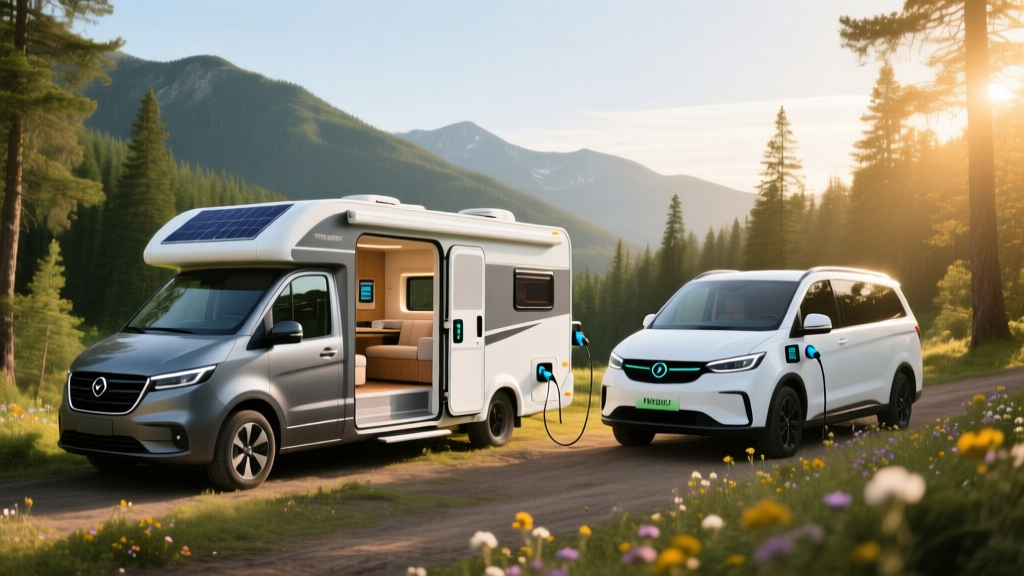
Full electric camper vans remain a niche proposition — heavy conversions crush range, and DC fast-charging infrastructure for oversized vehicles is still sparse on rural routes. That reality has pushed vanlifers and weekend warriors toward a more pragmatic middle ground: the hybrid camper van. Whether you are looking at a factory plug-in hybrid (PHEV) minivan conversion or a conventional hybrid (HEV) cargo van upfit, electrified powertrains now offer meaningful fuel savings, silent electric-only campsite operation, and in some cases, vehicle-to-load (V2L) power for appliances.
This guide breaks down the most viable hybrid camper van platforms available in the US market for the 2026 model year, explains the critical HEV vs. PHEV distinction, and gives you the exact numbers — MPG, electric-only range, battery kWh, pricing, and tax-credit eligibility — you need to decide which setup fits your build.
HEV vs PHEV: Which Hybrid Camper Van Architecture Fits You?
Before evaluating specific models, the single most important decision is whether you need a conventional hybrid (HEV) or a plug-in hybrid (PHEV). The two architectures serve fundamentally different use cases in a camper van context.
| Attribute | Conventional Hybrid (HEV) | Plug-In Hybrid (PHEV) |
|---|---|---|
| Plugs in? | No — charges via regen and engine | Yes — Level 1/Level 2 AC charging |
| Battery size | 1.0–2.0 kWh (small buffer) | 12–18 kWh usable (typical) |
| Electric-only driving | Very short, low-speed only | 20–40 miles at highway speeds |
| Campsite silent mode | Limited (engine cycles on) | Hours of AC/appliance use on battery |
| Fuel economy advantage | Best in city stop-and-go | Best when daily driving is under EV range |
| Tax credit eligible? | No (not plug-in) | Potentially — see §30D rules below |
| Added weight penalty | ~150–250 lbs over gas equivalent | ~400–600 lbs over gas equivalent |
The bottom line: If your camper van will serve as a daily driver with short commutes and weekend camping trips, a PHEV lets you burn zero gasoline on weekdays and still hit the trail without range anxiety. If you primarily take long highway road trips and never want to think about plugging in, an HEV gives you a consistent MPG bump with no behavioral changes.
Top Hybrid Camper Van Platforms for 2026
1. Chrysler Pacifica Hybrid (PHEV) — The Factory-Ready Camper Base
The Chrysler Pacifica Hybrid remains the only mainstream PHEV minivan sold in the US, and its flat load floor, 140+ cubic feet of cargo volume (seats folded), and factory 16-kWh battery make it the most conversion-friendly plug-in hybrid camper van platform on the market. Outfitters like Wayfarer Vans and Freeway Camper Kit have developed bolt-in camper modules specifically for the Pacifica Hybrid.
| Powertrain | 3.6L V6 + 2 electric motors (eCVT) |
| Combined HP | 260 hp |
| Battery (usable) | 16.0 kWh NMC lithium-ion |
| EPA Electric Range | 32 miles |
| Total Combined Range | ~520 miles (gas + electric) |
| EPA MPG (gas-only) | 30 combined (30 city / 31 hwy) |
| MPGe (electric + gas) | 82 MPGe |
| Level 2 Charge Time (0–100%) | ~2 hours at 7.2 kW |
| DC Fast Charging | Not supported |
| Base MSRP | $51,095 (Select trim) |
| Battery Warranty | 10 years / 100,000 miles |
Real-world range note: The EPA rates the Pacifica Hybrid at 32 miles electric-only. In mixed suburban driving at moderate temperatures, owners consistently report 28–34 miles. Highway driving at 70+ mph reduces this to roughly 22–25 miles. In cold weather (below 30°F), expect 18–22 miles on a full charge. The engine will engage under hard acceleration or when cabin heat demand is high unless you precondition while plugged in.
2. Ford Transit (HEV / EcoBlue Hybrid) — The Cargo Van Workhorse
For those who want a larger, more traditional camper van platform, the Ford Transit with the 48-volt mild-hybrid EcoBlue diesel (available in select markets) or the standard 3.5L PowerBoost full hybrid V6 in the F-150-based conversions offer a no-plug HEV approach. The Transit itself is not sold as a full hybrid in the US for 2026, but the Ford E-Transit (full EV, 126-mile EPA range) serves fleet upfitters, while the gasoline Transit with 3.5L EcoBoost remains the dominant US camper conversion base.
However, the more relevant HEV option for vanlifers is the Toyota Sienna (see below) or aftermarket hybrid conversions of the Transit chassis by specialty shops.
3. Toyota Sienna (HEV) — The Efficiency King for Long Hauls
The Toyota Sienna has been exclusively hybrid since the 2021 model year. Its 2.5L four-cylinder hybrid powertrain delivers class-leading fuel economy in a minivan footprint, making it an excellent HEV camper van candidate for those who rack up highway miles and don't want to plug in.
| Powertrain | 2.5L I4 + 2 electric motors (eCVT) |
| Combined HP | 245 hp |
| Battery | 1.9 kWh NiMH (sealed, self-charging) |
| EPA MPG | 36 combined (36 city / 36 hwy) — FWD |
| EPA MPG (AWD) | 35 combined (35 city / 36 hwy) |
| Total Range | ~630 miles on a 17.9-gal tank |
| Electric-Only Driving | Not applicable (HEV — no plug-in mode) |
| Plugs In? | No |
| Base MSRP | $39,485 (LE trim) |
| Battery Warranty | 10 years / 150,000 miles |
| Vehicle | EPA Combined | Real-World City | Real-World Highway | Cold-Weather Avg |
|---|---|---|---|---|
| Pacifica Hybrid (gas mode) | 30 MPG | 32–34 MPG | 27–29 MPG | 25–27 MPG |
| Toyota Sienna (FWD) | 36 MPG | 38–41 MPG | 32–34 MPG | 30–33 MPG |
| Ford Transit 3.5L EcoBoost (gas) | 17 MPG | 15–17 MPG | 19–21 MPG | 14–16 MPG |
Key takeaway: Hybrids frequently exceed their EPA city MPG because regenerative braking recovers energy in stop-and-go traffic. Highway MPG tends to fall below the EPA sticker because aerodynamic drag dominates at 70+ mph and regen has less to recover. The Sienna's real-world city numbers are particularly impressive — many owners report 40+ MPG in urban driving, which matters if your camper van doubles as a daily driver.
Battery Longevity, Warranty, and Replacement Costs
Hybrid battery warranty at a glance:
- Chrysler Pacifica Hybrid: 10 years / 100,000 miles — covers capacity below 70% of original
- Toyota Sienna Hybrid: 10 years / 150,000 miles — covers defects and abnormal degradation
- Federal mandate (CARB states): 10 years / 150,000 miles for PHEV/HEV traction batteries in California-emissions states
Hybrid battery anxiety is the top concern for prospective buyers, but real-world data is reassuring. Toyota's hybrid battery packs routinely last 200,000+ miles with minimal degradation — the NiMH chemistry in the Sienna is conservative and well-proven across millions of Prius, Camry Hybrid, and RAV4 Hybrid units on the road. The Pacifica's NMC lithium-ion pack operates within a narrow state-of-charge window (the engine engages frequently to prevent deep cycling), which significantly extends cycle life.
If a hybrid battery does fail out of warranty, replacement costs in 2026 range from:
- Toyota Sienna: $2,500–$4,000 (refurbished/remanufactured), $4,500–$6,000 (new OEM from dealer)
- Chrysler Pacifica Hybrid: $5,500–$8,000 (new OEM), with refurbished options emerging at $3,500–$5,000
For context, these costs are comparable to a major transmission rebuild on a conventional vehicle — and the failure rate before 150,000 miles is low. According to Consumer Reports reliability data, Toyota hybrids consistently rank among the most reliable vehicles across all powertrain types.
Tax Credits and Incentives: What Qualifies?
Under current IRS §30D clean vehicle credit rules for 2026, only plug-in hybrid and fully electric vehicles qualify for the federal tax credit — conventional hybrids (HEVs) like the Toyota Sienna do not qualify because they have no plug.
§30D Federal Tax Credit Checklist for the Chrysler Pacifica Hybrid (2026):
- ✅ Vehicle has a plug and ≥7 kWh battery (Pacifica has 16 kWh) — qualifies
- ⚠️ MSRP cap: Vans/minivans capped at $80,000 MSRP — Pacifica Hybrid trims fall under this
- ⚠️ Buyer income cap: Modified AGI ≤ $150,000 (single) / $300,000 (joint)
- ⚠️ Battery sourcing: Critical minerals and battery components must meet phased-in domestic/Fta-sourcing thresholds — verify current-year compliance on fueleconomy.gov before purchasing
- ✅ Point-of-sale transfer: You can transfer the credit to the dealer for an upfront price reduction
- ❌ Credit amount: Up to $7,500 maximum, split between critical minerals ($3,750) and battery components ($3,750) — Pacifica Hybrid eligibility for each half varies by model year and sourcing updates
Important: Tax credit eligibility changes frequently as battery sourcing rules tighten. Always verify the specific VIN's credit status on fueleconomy.gov or with a tax professional before committing to a purchase. State incentives (California's CVRP, Colorado's innovative motor vehicle credit, etc.) may stack on top — check your state's energy office for current programs.
Camper Van Conversion Considerations for Hybrid Platforms
Converting a hybrid minivan or van into a camper introduces considerations that don't apply to gas-only builds:
Weight and MPG Impact
A typical camper van conversion adds 500–1,200 lbs (insulation, bed platform, kitchen module, water, gear). For the Sienna, this drops real-world MPG by roughly 2–4 MPG depending on aerodynamic modifications like roof racks or pop-tops. The Pacifica Hybrid sees a similar hit in gas mode, and its electric-only range drops by 3–5 miles under heavy load.
V2L (Vehicle-to-Load) Power at the Campsite
The Pacifica Hybrid's 16-kWh battery can theoretically power a small campsite (LED lights, a 12V fridge, phone charging, a laptop) for an entire evening without the engine engaging — but Chrysler does not currently offer a factory V2L outlet. Third-party inverter solutions (connected to the 12V system with a DC-DC charger) can tap the hybrid battery indirectly, though this requires professional installation and may affect warranty. The Ford F-150 PowerBoost hybrid (a truck, not a van, but relevant for some builds) offers factory Pro Power Onboard with up to 7.2 kW of V2L — a genuine campsite power source.
Roof Clearance and Solar
Neither the Pacifica nor the Sienna has the roof height of a Transit or Sprinter. Pop-top roofs (from manufacturers like SCA or Elevate) add standing room and can integrate 200–400W of solar panels — enough to maintain the 12V house battery independently of the traction battery.
Hybrid vs PHEV vs Full EV: Decision Framework for Camper Vans
Choose a PHEV camper van (Pacifica Hybrid) if:
- Your daily commute is under 30 miles and you can charge at home
- You want silent, emission-free campsite evenings without a generator
- You take 2–4 long road trips per year and need 500+ mile total range
- You want potential federal tax credit savings
Choose an HEV camper van (Toyota Sienna) if:
- You drive 15,000+ miles per year, mostly highway
- You have no reliable access to home or workplace charging
- You want maximum MPG simplicity — no plugs, no apps, no charging planning
- You prioritize proven long-term reliability above all else
Choose a full EV van (e.g., Ford E-Transit, Mercedes eSprinter) if:
- Your routes are predictable and under 120 miles round-trip
- You have depot or home Level 2 charging
- Fuel cost savings are your primary driver (electricity at $0.14/kWh ≈ $4.50/gallon equivalent)
- You accept limited range for the lowest per-mile operating cost
Pricing and Total Cost of Ownership
| Cost Factor | Pacifica Hybrid (PHEV) | Sienna (HEV) | Transit 3.5L (Gas) |
|---|---|---|---|
| Vehicle MSRP (base) | $51,095 | $39,485 | $48,500 |
| Est. tax credit applied | −$3,750 to $7,500* | $0 | $0 |
| Fuel cost (60k mi)** | $4,200 | $5,000 | $10,600 |
| Maintenance (5 yr) | $3,800 | $3,200 | $4,500 |
| Insurance (5 yr avg) | $9,500 | $8,200 | $7,800 |
| Est. depreciation | $22,000 | $16,500 | $24,000 |
| 5-Year Total | ~$67,000–$71,000 | ~$56,000 | ~$71,000 |
*Tax credit amount depends on battery sourcing compliance and buyer income eligibility. **Fuel cost assumes $3.50/gal gas, $0.14/kWh electricity, and 50% electric / 50% gas driving for PHEV. Source: fueleconomy.gov data.
The Sienna HEV wins on sheer affordability — lower MSRP, no charging infrastructure needed, and Toyota's strong resale value keep the 5-year total compelling. The Pacifica Hybrid can match or beat it if you maximize electric-mode driving and capture the full federal credit, but the higher starting price and steeper depreciation (minivans depreciate faster than Toyotas) narrow the gap.
Pros and Cons at a Glance
Hybrid Camper Van — Pros
- 30–40 MPG real-world in mixed driving — 2× the efficiency of a gas Transit/Sprinter
- No range anxiety — fill up at any gas station for 500+ mile total range
- PHEV models offer silent electric campsite operation (no generator noise)
- Hybrid batteries carry 10-year/100k+ mile warranties with strong longevity data
- Lower fuel costs compound over high-mileage vanlife use
Hybrid Camper Van — Cons
- Minivan-based platforms (Pacifica, Sienna) lack the interior height of cargo vans
- Conversion weight reduces MPG gains by 2–4 MPG
- PHEV battery replacement costs $5,500+ out of warranty (Pacifica)
- No DC fast charging on current PHEV minivans
- Federal tax credit eligibility is complex and subject to sourcing-rule changes
Frequently Asked Questions
How many MPG does a hybrid camper van get?
The Toyota Sienna hybrid achieves an EPA-rated 36 MPG combined (36 city / 36 hwy) and real-world owners report 38–41 MPG in city driving. The Chrysler Pacifica Hybrid gets 30 MPG combined when running on gasoline, plus 32 miles of electric-only range before the engine engages. A fully loaded camper conversion typically drops these figures by 2–4 MPG.
How far can a PHEV camper van go on electric only?
The Chrysler Pacifica Hybrid delivers an EPA-rated 32 miles on electricity alone. Real-world range is 28–34 miles in mild conditions, 22–25 miles at highway speeds, and 18–22 miles in freezing temperatures. That's enough for most daily commutes and short errands, but not for highway road-trip segments.
Is a hybrid camper van reliable, and what does battery replacement cost?
Yes — Toyota and Chrysler hybrid systems have extensive real-world track records. Toyota's hybrid batteries routinely exceed 200,000 miles with minimal degradation. Replacement costs range from $2,500–$4,000 (Sienna, refurbished) to $5,500–$8,000 (Pacifica Hybrid, new OEM). Both carry 10-year/100,000+ mile battery warranties.
Does a hybrid camper van qualify for a tax credit?
Only plug-in hybrids (PHEVs) qualify for the federal §30D clean vehicle credit — up to $7,500, subject to MSRP caps ($80,000 for vans), buyer income limits ($150K single / $300K joint), and battery sourcing requirements. The conventional hybrid Toyota Sienna does not qualify. Always verify eligibility on fueleconomy.gov before purchasing.
Can I power my campsite appliances from the hybrid battery?
Not directly from the factory. Neither the Pacifica Hybrid nor the Sienna offers a built-in V2L (vehicle-to-load) outlet. Third-party inverter setups connected through the 12V system with a DC-DC charger can provide limited campsite power, but professional installation is essential to avoid warranty or safety issues. The Ford F-150 PowerBoost hybrid offers factory Pro Power Onboard (up to 7.2 kW) if a truck-based setup works for your needs.
Hybrid vs PHEV vs full EV — which is best for a camper van?
It depends on your charging access and trip patterns. A PHEV (Pacifica Hybrid) is ideal if you can charge at home and want electric daily driving plus gas for road trips. An HEV (Sienna) is best if you drive long highway miles with no charging access. A full EV (E-Transit) works only for predictable short routes with reliable charging — most vanlifers aren't there yet.