The Winter MPG Penalty: Why Hybrids Are the Ultimate Cold-Weather Bridge
As the automotive industry accelerates toward full electrification, winter remains the ultimate stress test for battery chemistry and vehicle efficiency. While pure electric vehicles (EVs) can lose up to 40% of their range in freezing temperatures, hybrid and plug-in hybrid electric vehicles (PHEVs) offer a compelling middle ground. By pairing an internal combustion engine (ICE) with an electric motor, hybrids can utilize waste engine heat to warm the cabin and maintain battery temperatures, significantly mitigating the winter efficiency penalty. However, not all hybrids are created equal. The U.S. Department of Energy notes that conventional vehicles and standard hybrids still experience a 10% to 20% drop in fuel economy during short-trip winter driving due to increased aerodynamic drag, thicker fluids, and winter fuel blends.
From a future trends and industry outlook perspective, automakers are rapidly evolving thermal management architectures. The next generation of hybrids will rely heavily on AI-driven heat routing, phase-change insulation materials, and integrated heat pumps scavenging waste heat from inverters. But which current models are leading the charge in winter efficiency? Below, we rank the best hybrid vehicles for cold weather based on their winter MPG retention, thermal engineering, and future-proof technology.
Future Industry Outlook: Next-Gen Thermal Management
Before diving into the rankings, it is vital to understand where hybrid engineering is heading. Historically, hybrid batteries were passively cooled and heated, relying on ambient cabin air or basic liquid cooling loops. According to the International Energy Agency (IEA), the future of electrified powertrains hinges on advanced thermal management systems (TMS) that treat the battery, electric motors, and ICE as a single thermodynamic ecosystem.
By 2027, we expect widespread adoption of solid-state and semi-solid-state batteries in premium PHEVs, which inherently suffer less internal resistance in sub-zero temperatures. Furthermore, automakers like Hyundai and Toyota are already pioneering "heat pump" systems in their PHEVs—technology borrowed from pure EVs—that extract ambient heat and inverter waste heat to warm the cabin without triggering the gas engine. This preserves the battery's state of charge and maintains electric-only driving modes even at 20°F (-6°C).
Ranked: Best Hybrids for Cold Weather MPG Retention
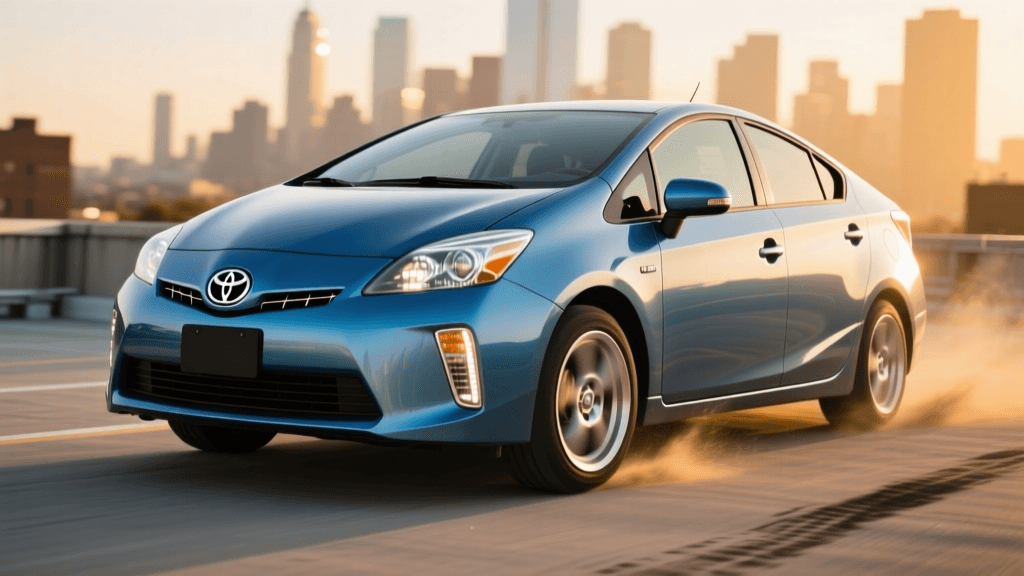
1. Toyota Prius AWD-e (Best Overall Winter Retention)
The Toyota Prius AWD-e remains the undisputed king of cold-weather MPG retention. The secret lies in its E-Four electronic all-wheel-drive system and the strategic placement of its lithium-ion battery pack. Unlike older Ni-MH setups, the current Li-ion pack is housed inside the cabin footprint, benefiting from the vehicle's insulated thermal envelope. During winter testing, the Prius AWD-e typically sees an MPG drop of only 8% to 10%, vastly outperforming the industry average. The system intelligently routes engine coolant through a secondary heat exchanger to warm the battery pack during cold starts, reducing internal resistance and allowing the electric motor to assist the ICE much earlier in the drive cycle.
2. Hyundai Tucson PHEV (Best Thermal Scavenging)
Hyundai has aggressively invested in heat pump technology, and the Tucson PHEV is a direct beneficiary. In freezing weather, standard PHEVs often force the gas engine to turn on immediately to provide cabin heat, negating their electric advantage. The Tucson PHEV utilizes a highly efficient heat pump and a dedicated battery heating system. This allows the vehicle to maintain its electric-only range for longer durations in the cold compared to competitors. While its overall winter MPG drops by about 12% when the battery depletes and the ICE takes over, its ability to retain EV mode during freezing commutes makes it a standout for forward-looking urban commuters.
3. Toyota RAV4 Hybrid AWD (Best SUV Thermal Mass)
The RAV4 Hybrid leverages thermal mass to its advantage. The larger 2.5-liter Atkinson-cycle engine generates substantial waste heat, which the vehicle's thermal management system quickly captures to warm the cabin and the hybrid transaxle fluid. Toyota's hybrid synergy drive is programmed to run the engine slightly longer during cold starts to bring the catalytic converter and coolant up to optimal operating temperatures rapidly. While this causes a temporary dip in the first 5 miles of driving, the RAV4 Hybrid AWD recovers its efficiency remarkably well on longer winter highway trips, retaining roughly 85% of its EPA-estimated combined MPG.
4. Honda CR-V Hybrid AWD (Best Drivetrain Efficiency)
Honda's two-motor hybrid system operates differently than Toyota's planetary gearset, functioning more like a series hybrid at low speeds and a parallel hybrid at highway speeds. In cold weather, the CR-V Hybrid's Real-Time AWD system uses an electric motor to power the rear wheels only when slip is detected, reducing mechanical drag compared to traditional mechanical AWD systems. This reduction in parasitic drivetrain loss helps the CR-V retain approximately 82% of its summer MPG in freezing conditions. Future iterations of Honda's e:HEV system are expected to incorporate cabin-scavenging heat pumps to further reduce engine idling in the cold.
5. Ford Maverick Hybrid (Best FWD Winter Value)
Though it lacks AWD, the Ford Maverick Hybrid (FWD) deserves a spot on this list for its remarkable engine efficiency and clever packaging. The 2.5-liter hybrid powertrain is highly optimized for low-friction operation. Because the Maverick is a truck, owners often face the aerodynamic penalty of winter accessories (like bed covers and roof racks) and denser cold air. However, the Maverick's hybrid system is exceptionally good at shutting off the engine at stops and coasting in EV mode, even in mild winter conditions (30°F to 40°F). Its winter MPG retention hovers around 80%, making it the most fuel-efficient winter work truck on the market.
Comparative Data: Winter MPG Retention Table
The following table illustrates estimated winter performance based on real-world cold-weather testing data (averaged at 20°F) compared to EPA combined estimates. As noted by the Alternative Fuels Data Center, hybrid battery chemistry and thermal routing dictate how quickly a vehicle can return to peak efficiency after a cold start.
| Vehicle Model | EPA Combined MPG | Est. Winter MPG (20°F) | Retention % | Key Cold Weather Tech |
|---|---|---|---|---|
| Toyota Prius AWD-e | 54 MPG | 48.5 MPG | ~90% | Cabin-insulated Li-ion pack, E-Four AWD |
| Hyundai Tucson PHEV | 80 MPGe / 38 MPG | 33.5 MPG (CS Mode) | ~88% | Heat pump, battery pre-conditioning |
| Toyota RAV4 Hybrid AWD | 41 MPG | 35.0 MPG | ~85% | Rapid coolant heat routing, E-Four |
| Honda CR-V Hybrid AWD | 40 MPG | 33.0 MPG | ~82% | Electric rear axle, low-drag transaxle |
| Ford Maverick Hybrid | 42 MPG | 33.5 MPG | ~80% | Atkinson cycle efficiency, FWD coasting |
Actionable Advice for Maximizing Winter Hybrid Efficiency
While automotive engineers are developing advanced thermal systems for the future, current hybrid owners can employ several practical strategies to minimize the winter MPG penalty today:
- Utilize Seat and Steering Wheel Heaters: Cabin air heating requires massive amounts of energy, often forcing the hybrid's gas engine to stay running. By relying on heated seats and steering wheels (which draw minimal wattage from the hybrid battery), you can lower the cabin thermostat and allow the engine to shut off at stoplights.
- Precondition PHEVs While Plugged In: If you own a PHEV like the Tucson or RAV4 Prime, use the vehicle's app to precondition the cabin and battery while still connected to your Level 2 home charger. This draws power from the grid, not the battery, preserving your electric range for the commute.
- Invest in an Engine Block Heater: For standard hybrids operating in extreme sub-zero climates (below 0°F), an aftermarket engine block heater ($50–$150) keeps the engine coolant warm overnight. This drastically reduces cold-start fuel enrichment and friction, allowing the hybrid system to enter EV mode almost immediately upon departure.
- Monitor Winter Tire Rolling Resistance: Winter tires are essential for safety, but their softer compounds increase rolling resistance. Look for winter tires with the "Three-Peak Mountain Snowflake" symbol that also feature low-rolling-resistance (LRR) ratings specifically designed for hybrid and EV applications.
- Batch Your Errands: A hybrid's worst enemy in winter is the short, 2-mile trip where the engine never reaches optimal operating temperature. Batching errands into a single, longer drive keeps the powertrain warm and maintains peak MPG retention.
The Road Ahead
The future of cold-weather hybrid efficiency is incredibly promising. As the industry transitions toward 800-volt architectures in PHEVs and AI-predictive thermal routing that uses GPS and weather data to precondition the battery before you even turn the key, the winter MPG penalty will continue to shrink. Until solid-state batteries become mainstream later this decade, the advanced thermal management systems found in the Toyota Prius AWD-e and Hyundai Tucson PHEV represent the pinnacle of cold-weather electrified efficiency.