Toyota's 2025 hybrid lineup spans 14 models across sedans, SUVs, minivans, and a pickup — the broadest hybrid offering of any automaker. But with conventional hybrids (HEVs) starting near $29,000 and plug-in hybrids (PHEVs) climbing past $47,000, buyers face a dense spec sheet. This guide cuts through the marketing to deliver exact EPA MPG figures, real-world efficiency expectations, battery warranty details, and the ownership math that determines which 2025 Toyota hybrid actually fits your commute.
HEV vs PHEV: What Toyota Actually Sells in 2025
Before diving into individual models, the distinction matters because it dictates fueling behavior, cost, and tax-credit eligibility.
Conventional Hybrid (HEV)
- Self-charging via regenerative braking and the gas engine — never plugged in
- Small battery: 1.0–1.6 kWh (not usable as EV-only propulsion for more than ~1 mile at low speed)
- Optimizes city MPG by running the electric motor at low speeds
- No federal EV tax credit (§30D does not apply)
- Lower MSRP, simpler ownership
Plug-In Hybrid (PHEV) — Toyota calls it "Prime"
- Larger battery (13.6–18.1 kWh) charged via Level 1/Level 2 plug
- 25–44 miles of electric-only driving before the gas engine engages
- After EV range depletes, operates as a conventional hybrid
- May qualify for partial §30D federal tax credit if battery sourcing rules are met
- Higher MSRP, requires home or workplace charging access to realize value
Toyota's 2025 PHEV models are the RAV4 Prime, Prius Prime, and the newly refreshed bZ4X-adjacent offerings. Every other Toyota hybrid in the 2025 lineup is a conventional HEV. Toyota discontinued the Camry's non-hybrid powertrain entirely for 2025 — every Camry is now a hybrid.
Complete 2025 Toyota Hybrid MPG & Range Table
The table below compiles EPA-certified figures from fueleconomy.gov alongside manufacturer MSRP. Real-world notes reflect typical highway and cold-weather behavior observed in independent testing and owner reports.
| Model | Type | EPA City | EPA Hwy | EPA Combined | EV Range (PHEV) | Combined HP | Base MSRP |
|---|---|---|---|---|---|---|---|
| Prius LE | HEV | 57 | 56 | 57 | — | 196 | $28,350 |
| Prius XLE/Limited | HEV | 52 | 52 | 52 | — | 196 | $31,695 |
| Prius Prime SE | PHEV | 127 MPGe | 127 MPGe | 127 MPGe | 44 mi | 220 | $33,445 |
| Prius Prime XSE | PHEV | 114 MPGe | 114 MPGe | 114 MPGe | 40 mi | 220 | $36,695 |
| Camry LE | HEV | 53 | 50 | 51 | — | 225 | $29,495 |
| Camry XLE/SE | HEV | 48 | 47 | 47 | — | 225 | $33,295 |
| Corolla Hybrid | HEV | 53 | 46 | 50 | — | 138 | $24,225 |
| Crown | HEV | 42 | 41 | 41 | — | 236 | $41,445 |
| Venza (discontinued — see Camry Cross) | — | — | — | — | — | — | — |
| RAV4 Hybrid | HEV | 41 | 38 | 39 | — | 219 | $33,575 |
| RAV4 Prime (PHEV) | PHEV | 94 MPGe | 84 MPGe | 94 MPGe | 42 mi | 302 | $47,515 |
| Highlander Hybrid | HEV | 36 | 35 | 36 | — | 243 | $42,220 |
| Grand Highlander Hybrid | HEV | 37 | 34 | 36 | — | 245 | $46,495 |
| Sienna | HEV | 36 | 36 | 36 | — | 245 | $38,085 |
| Tundra i-FORCE MAX | HEV | 20 | 24 | 22 | — | 437 | $57,005 |
| Sequoia i-FORCE MAX | HEV | 21 | 24 | 22 | — | 437 | $62,175 |
| Tacoma i-FORCE MAX | HEV | 23 | 24 | 23 | — | 326 | $47,195 |
Source: EPA via fueleconomy.gov, Toyota USA pressroom. MSRP excludes destination. MPGe figures apply only to PHEV electric-mode operation.
Real-World MPG: Where Toyota Hybrids Beat — and Miss — the EPA Sticker
Toyota's hybrid system excels in stop-and-go traffic because the electric motor handles low-speed propulsion while regenerative braking recaptures energy. This creates a predictable pattern:
- City driving: Most Toyota HEVs meet or exceed EPA city estimates by 2–5 MPG. The Prius LE, rated at 57 city, routinely returns 58–62 MPG in urban driving based on owner-reported data.
- Highway driving: Expect 3–8 MPG below EPA highway figures at sustained 75+ mph. The RAV4 Hybrid's 38 MPG highway rating typically yields 33–36 MPG at interstate speeds.
- Cold weather (below 30°F): Hybrid fuel economy drops 10–20% because the engine runs longer to provide cabin heat and because battery chemistry is less efficient. A Prius rated at 57 combined may return 46–50 MPG in January in Chicago.
- Short trips under 3 miles: The engine spends more time warming up, negating hybrid advantages. MPG can drop to 30–35 regardless of EPA rating.
PHEV Electric-Only Range: Real-World vs EPA
The RAV4 Prime carries an 18.1 kWh battery and an EPA rating of 42 miles EV-only. In mild weather (55–75°F) at city speeds, expect 38–44 miles. At highway speeds (70 mph), that drops to 28–32 miles. In freezing conditions with cabin heat on, plan for 24–28 miles of electric range.
The Prius Prime SE uses a 13.6 kWh battery with a 44-mile EPA EV rating. Real-world highway use at 70 mph yields approximately 32–36 miles before the gas engine engages.
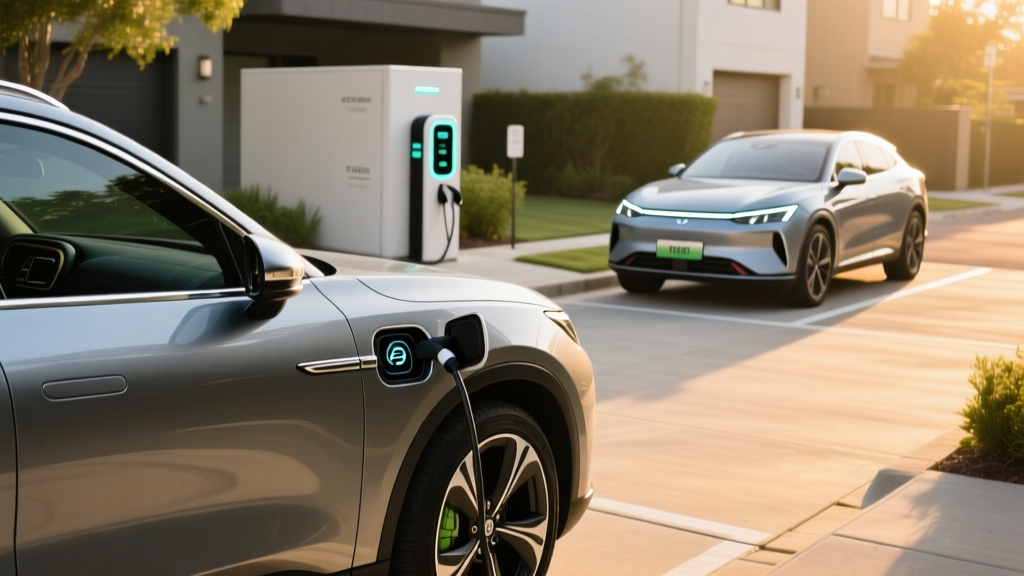
Charging: Neither PHEV supports DC fast charging. Level 2 (240V) charging takes approximately 2.5 hours for the Prius Prime and 4.5 hours for the RAV4 Prime. Level 1 (120V) takes 10–12 hours for a full charge — adequate for overnight replenishment.
Battery Warranty, Lifespan, and Replacement Cost
Battery longevity is the single most common concern among first-time hybrid buyers. Toyota's track record here is among the strongest in the industry.
| Coverage | HEV (all models) | PHEV (Prime models) |
|---|---|---|
| Hybrid Battery Warranty | 10 years / 150,000 miles | 10 years / 150,000 miles |
| Hybrid System Components | 8 years / 100,000 miles | 8 years / 100,000 miles |
| Capacity Retention Threshold | Not specified (failure-based) | Not specified (failure-based) |
| Estimated Replacement Cost | $2,500–$4,000 (Prius) $3,500–$5,500 (RAV4/SUV) | $5,500–$8,000 (Prius Prime) $8,000–$12,000 (RAV4 Prime) |
In practice, Toyota hybrid batteries routinely last 150,000–200,000+ miles before significant degradation. The Prius, in production since 2000 in the US, has documented cases of original batteries exceeding 250,000 miles. PHEV batteries face more stress from deeper discharge cycles, but the larger capacity provides a buffer. Out-of-warranty replacement is a real cost, but it typically occurs at an age where the vehicle's residual value has already depreciated substantially.
Federal Tax Credit Eligibility for 2025 Toyota PHEVs
Under IRS §30D rules (current for 2025), only PHEVs with sufficient battery capacity and compliant battery-sourcing and critical-mineral supply chains qualify for the federal tax credit. Conventional HEVs do not qualify for any federal EV credit.
- Vehicle requirement: Battery capacity ≥7 kWh (both Toyota PHEVs qualify)
- MSRP cap: Vans/SUVs/pickups ≤$80,000; sedans ≤$55,000
- Buyer income cap: $150K single / $225K head of household / $300K joint (modified AGI)
- Battery sourcing: Must meet critical-mineral and battery-component requirements (phased in annually; check IRS.gov for current-year compliance lists)
- Point-of-sale transfer: Eligible buyers may transfer the credit to the dealer for an immediate price reduction
As of early 2025, the Prius Prime (sedan, MSRP under $55K) has been eligible for up to $3,750 depending on the applicable sourcing phase. The RAV4 Prime (SUV, MSRP under $80K cap) has similarly qualified for a partial credit. However, battery-component sourcing rules tighten each year. Always verify current eligibility on fueleconomy.gov's tax credit page before purchasing, as a model's status can change mid-year.
Hybrid vs PHEV vs Full EV: Which 2025 Toyota Fits You?
Choose a Toyota HEV (Prius, Camry Hybrid, RAV4 Hybrid) if:
- You lack reliable home or workplace charging access
- Your budget is under $40,000
- You want maximum fuel savings with zero behavior change
- You drive a mix of city and highway with no predictable daily mileage pattern
Choose a Toyota PHEV (Prius Prime, RAV4 Prime) if:
- You can install a Level 2 charger at home or charge reliably at work
- Your daily commute is under 40 miles round-trip (covers most EV-range days)
- You want electric commuting but need gas-engine flexibility for road trips
- You qualify for the partial federal tax credit and can absorb the higher MSRP
Choose a full EV (bZ4X) instead if:
- You have dependable Level 2 home charging
- Your daily driving is under 200 miles
- You want to eliminate gasoline costs and maintenance entirely
- You qualify for the full $7,500 federal credit (subject to sourcing rules)
The RAV4 Prime's 302 combined horsepower and 42-mile EV range make it the standout in the lineup — it's simultaneously Toyota's quickest non-supercar and its most efficient SUV. But at $47,515 before options, it's priced against luxury compact SUVs. The Prius Prime SE at $33,445 offers 44 miles of EV range and 127 MPGe for buyers who prioritize efficiency over cargo space.
Top Picks by Use Case
Best Overall Value: Prius LE ($28,350)
Pros:
- 57 MPG combined — best in the lineup
- 196 HP (a dramatic improvement over prior generations)
- Lowest entry price
- Proven 10-year/150K-mile battery warranty
Cons:
- LE trim has basic interior materials
- No AWD option on LE (available on XLE/Limited)
- 4.5-second 0-60 estimate is adequate, not quick
Best Family SUV: RAV4 Prime ($47,515)
Pros:
- 302 HP — 0-60 in ~5.7 seconds
- 42-mile EV range covers most school/commute loops
- Standard AWD with dedicated rear electric motor
- 94 MPGe in electric mode
Cons:
- Long wait times at many dealers (high demand, limited allocation)
- No DC fast charging
- $47K+ MSRP before options; limited federal credit
- 4.5-hour Level 2 charge time is slow for the battery size
Frequently Asked Questions
How many MPG does the 2025 Toyota Prius get in real-world driving?
The EPA rates the Prius LE at 57 combined (57 city / 56 highway). In real-world city driving, owners consistently report 58–62 MPG. Highway driving at 75+ mph typically yields 49–53 MPG. In cold climates during winter, expect a 10–15% reduction, bringing the combined figure to roughly 48–51 MPG.
How far can the RAV4 Prime go on electric power only?
The EPA rates the RAV4 Prime at 42 miles of EV-only range. Real-world results vary: 38–44 miles in mild city driving, 28–32 miles at highway speeds, and 24–28 miles in freezing weather with cabin heat active. After EV range depletes, it operates as a conventional hybrid returning approximately 36–38 MPG combined.
Do Toyota conventional hybrids need to be plugged in?
No. Toyota's conventional hybrids (every HEV in the lineup — Prius, Camry Hybrid, RAV4 Hybrid, Sienna, Highlander Hybrid, Tundra i-FORCE MAX) charge their small battery exclusively through regenerative braking and the gasoline engine. You fuel them like a normal gas car. Only the "Prime" PHEV models require or accept plug-in charging.
Is the Toyota hybrid battery reliable, and what does replacement cost?
Toyota hybrid batteries carry a 10-year/150,000-mile warranty and routinely last 150,000–250,000 miles before significant degradation. Out-of-warranty replacement costs range from approximately $2,500–$4,000 for a Prius to $8,000–$12,000 for a RAV4 Prime's larger PHEV battery. Given the typical ownership cycle and the warranty coverage, most original owners will never face a battery replacement.
Does the 2025 Toyota RAV4 Prime qualify for the federal tax credit?
The RAV4 Prime may qualify for a partial federal tax credit under §30D, depending on current battery-sourcing and critical-mineral requirements, which tighten annually. The vehicle's MSRP is below the $80,000 SUV cap, and buyer income limits apply ($300K joint / $150K single). Always verify current eligibility at IRS.gov or fueleconomy.gov before purchasing, as qualification status can change. Conventional RAV4 Hybrids do not qualify for any federal EV credit.
Which 2025 Toyota hybrid gets the best fuel economy?
The Prius LE at 57 MPG combined is the most fuel-efficient vehicle Toyota sells and among the most efficient non-PHEV vehicles available. If you can charge at home, the Prius Prime SE delivers 127 MPGe in electric mode plus 44 miles of zero-gasoline driving, making it the most efficient option for short commutes.
Is a Toyota hybrid worth it over a conventional gas car?
For most buyers, yes. The 2025 Camry Hybrid LE at 51 MPG combined uses roughly 196 fewer gallons of fuel per year than a hypothetical 30 MPG gas-only midsize sedan (at 15,000 miles/year and $3.40/gallon, that's approximately $666 in annual fuel savings). The hybrid premium on the Camry is minimal since Toyota made all 2025 Camrys hybrid — there's no gas-only alternative. On models where a choice exists, the hybrid's fuel savings typically recoup any price premium within 2–4 years.