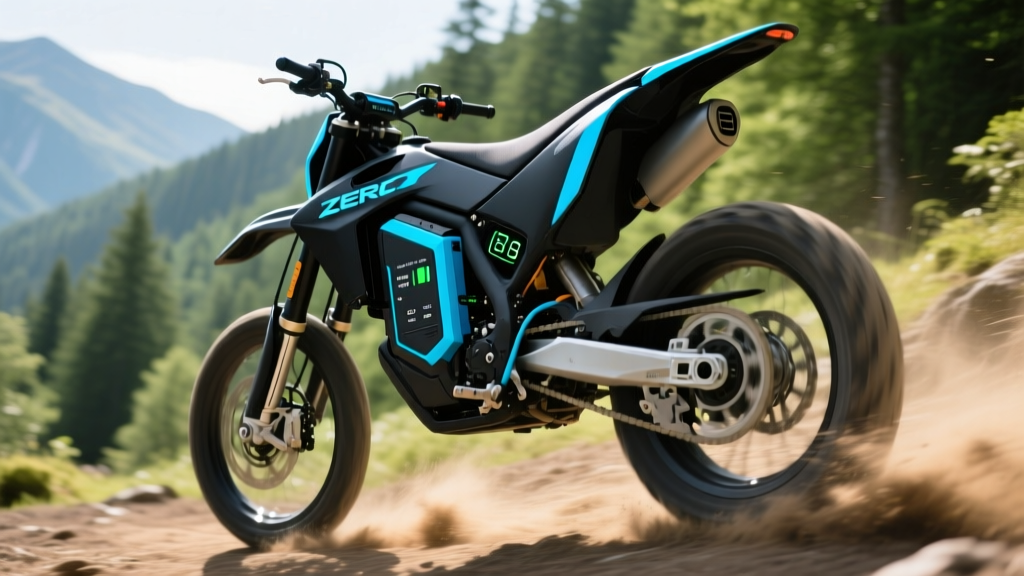
Quick Answer: The Zero XB electric dirt bike is a lightweight, street-legal supermoto built around a 7.2 kWh Z-Force lithium-ion battery and a 46 hp (34 kW) motor. In real-world mixed riding, expect 40–55 miles of range on pavement and 1.5–2.5 hours of trail time before needing a recharge. A full charge from a standard 120V outlet costs roughly $0.95–$1.15 depending on your local electricity rate, compared to $8–$12 in fuel for an equivalent gas 250F. The 2026 MSRP starts at approximately $11,995. The XB does not qualify for the federal §30D EV tax credit because it is a motorcycle, not a four-wheeled vehicle — though it may qualify for the separate §25D two-wheeler credit (up to $2,500) if IRS sourcing rules are met.
What the Zero XB Actually Is — And Who It's For
The Zero XB sits in a niche that few manufacturers occupy: a full-size electric motorcycle that blurs the line between a dual-sport and a supermoto. It shares its platform with the Zero FX but adds 17-inch street wheels, lower suspension, and DOT-legal lighting, making it usable on pavement while still capable of light trail work. It is not a dedicated motocross bike, and it is not a long-range commuter. It is best understood as a urban-adjacent fun machine that can handle dirt roads, fire trails, and short highway stints.
For buyers cross-shopping the Zero XB, the realistic alternatives include:
- Gas 250F dual-sports (Kawasaki KLX250, Honda CRF250L) — $5,500–$6,500 MSRP, ~55 MPG, 150+ mile fuel range
- Gas supermotos (KTM 390 SMC R, Husqvarna 701 Supermoto) — $7,000–$12,000, 45–55 MPG
- Other electric motorcycles (Zero FX, Zero S, LiveWire One) — $11,000–$22,000
If your riding is 80% pavement with occasional dirt road exploration, and you have access to a standard 120V outlet for overnight charging, the XB makes a strong case. If you need 150+ mile range or plan to ride single-track trails all day, you are looking at the wrong bike.
Zero XB Specifications: Battery, Motor, and Real-World Range
| Specification | Value |
|---|---|
| Battery Capacity | 7.2 kWh (Z-Force Li-Ion, NMC chemistry) |
| Motor Output | 46 hp (34 kW) peak / 78 lb-ft torque |
| EPA-Estimated Range (City) | ~82 miles |
| EPA-Estimated Range (Combined) | ~56 miles |
| Real-World Range (Mixed Riding) | 40–55 miles |
| Real-World Range (Aggressive/Trail) | 25–35 miles |
| Top Speed | ~85 mph (electronically limited) |
| 0–60 mph | ~5.8 seconds |
| Curb Weight | ~298 lbs |
| Seat Height | 33.8 inches |
| Level 1 Charge Time (120V, 0–100%) | ~8.5 hours |
| Level 2 Charge Time (240V, 0–100%) | ~2.8 hours (with optional Charge Tank) |
| MSRP (Base) | ~$11,995 |
| Warranty (Battery) | 5 years / unlimited miles |
| Warranty (Motorcycle) | 2 years / unlimited miles |
Real-World Range Reality Check: Zero's EPA city figure of ~82 miles assumes gentle, low-speed urban riding with frequent regenerative braking. In practice, most riders report 40–55 miles in mixed city/highway use and as little as 25–35 miles during aggressive trail riding or sustained 65+ mph highway speeds. Cold weather (below 40°F) can reduce range by an additional 15–25% due to battery chemistry limitations and increased rolling resistance.
The 7.2 kWh Z-Force battery uses NMC (nickel-manganese-cobalt) cell chemistry, which prioritizes energy density over cycle life compared to LFP (lithium iron phosphate). For a motorcycle this size, NMC is the practical choice — it keeps weight down. Zero's battery management system includes a thermal management buffer that protects against deep discharge, but owners should still avoid routinely draining below 10% state of charge or storing the bike at 100% for extended periods to maximize long-term battery health.
Charging: What You Need at Home and What It Costs
The Zero XB ships with a standard Level 1 onboard charger that plugs into any household 120V outlet. This is the default charging method for most owners and works well given the small battery size.
| Level | Voltage / Power | 0–100% Time | Miles Added Per Hour |
|---|---|---|---|
| Level 1 (Included) | 120V / ~0.65 kW | ~8.5 hours | ~7–9 miles/hr |
| Level 2 (Optional Charge Tank) | 240V / ~2.5 kW | ~2.8 hours | ~20–25 miles/hr |
Unlike electric cars, the Zero XB does not support DC fast charging. There is no CCS, NACS, or CHAdeMO port. All charging is AC, through the bike's onboard charger. This is standard for electric motorcycles in this class — the battery is small enough that Level 1 overnight charging is usually sufficient.
Cost to charge: At the US average residential electricity rate of roughly $0.16/kWh (EIA data), a full 7.2 kWh charge costs approximately $1.15. Even charging daily, your monthly electricity cost for the XB is around $35. A comparable gas 250F averaging 55 MPG with fuel at $3.50/gallon would cost roughly $64/month to cover the same ~1,000 miles. Annual fuel savings versus gas: approximately $350–$450, depending on your riding volume and local rates.
If you want faster Level 2 charging, Zero offers an optional Charge Tank accessory (approximately $1,800–$2,200 installed) that enables 240V charging. This requires a dedicated 240V outlet — the same type used for an electric dryer. Installation by a licensed electrician typically runs $300–$800 depending on panel proximity and local permit requirements. For most XB owners, the included Level 1 charger is adequate since the 7.2 kWh battery fills overnight.
Zero XB vs. Gas 250F: Head-to-Head Cost and Ownership Comparison
| Category | Zero XB (Electric) | Gas 250F (e.g., Honda CRF250L) |
|---|---|---|
| Purchase Price (MSRP) | $11,995 | $5,800 |
| Federal Tax Credit | Up to $2,500 (§25D two-wheeler, if eligible) | $0 |
| Effective Purchase Price | ~$9,495 | $5,800 |
| Fuel/Energy Cost (5 yrs, 6,000 mi/yr) | ~$2,100 | ~$3,800 |
| Maintenance (5 yrs) | ~$400 (tires, brake pads, chain) | ~$2,800 (oil, filters, valves, chain, tires) |
| Insurance (5 yrs avg) | ~$3,500 | ~$2,500 |
| Estimated Resale Value (Year 5) | ~$5,500 | ~$3,500 |
| Net 5-Year Cost | ~$9,995 | ~$11,100 |
The math reveals a counterintuitive result: despite a purchase price roughly double that of a gas 250F, the Zero XB can reach cost parity over five years thanks to dramatically lower fuel and maintenance costs. Electric motorcycles eliminate oil changes, air filter replacements, valve adjustments, spark plugs, and clutch wear. The primary recurring maintenance items are tires, brake pads (which last significantly longer due to regenerative braking), chain lubrication, and cabin air filtration (none required on the XB).
However, there are important caveats:
- Insurance is typically higher for electric motorcycles. Specialty EV insurers often quote 20–40% more than equivalent gas bikes due to higher replacement costs and limited repair network data.
- Depreciation uncertainty remains a factor. The used electric motorcycle market is still thin, and resale values are less predictable than established gas models.
- Battery replacement is the long-tail risk. Zero's 5-year unlimited-mile battery warranty covers defects and significant capacity loss (below 80% state of health), but an out-of-warranty replacement battery currently costs approximately $4,000–$6,000.
Tax Credits and Incentives: What Actually Applies
A common misconception is that the Zero XB qualifies for the $7,500 federal EV tax credit under IRS §30D. It does not. Section 30D applies only to four-wheeled vehicles with a gross vehicle weight rating under 14,000 lbs. Motorcycles are excluded.
The relevant federal incentive is the §25D Qualified Two-Wheeled Plug-In Electric Vehicle credit, which provides up to 10% of the purchase price, capped at $2,500. To qualify:
- The bike must have a battery capacity of at least 2.5 kWh (the XB's 7.2 kWh qualifies)
- The bike must be new and placed in service during the tax year
- It must be used primarily in the United States
- Battery component and critical mineral sourcing requirements may apply — verify current-year rules at IRS.gov
Some states offer additional incentives for electric motorcycles. California's CVRP program, for example, has historically included rebates for zero-emission motorcycles, though amounts and availability change annually. Check your state energy office or the AFDC incentives database for current local programs.
Common Misconceptions About the Zero XB
| Myth | Fact |
|---|---|
| "It qualifies for the $7,500 EV tax credit" | No — §30D is for four-wheelers only. The two-wheeler credit (§25D) caps at $2,500. |
| "Electric dirt bikes have no maintenance" | Tires, chains, brake fluid, suspension service, and brake pads still need attention — just far less than gas bikes. |
| "You can charge it at public DC fast chargers" | The XB has no DC fast-charge port. Charging is AC-only via Level 1 or Level 2. |
| "The battery will need replacement in 3 years" | Zero's NMC batteries are warrantied for 5 years. With proper care (avoiding deep discharge and extreme heat storage), 80%+ capacity retention at 100,000+ miles is typical based on fleet data. |
| "It's a real dirt bike for motocross" | At 298 lbs, it's lighter than many gas dual-sports, but the 7.2 kWh battery limits hard trail time to ~1.5–2.5 hours. It's a supermoto with dirt capability, not a motocross racer. |
Real-World Ownership: What First-Time EV Motorcycle Buyers Should Know
Owning an electric motorcycle is fundamentally different from owning an electric car. The stakes are lower (smaller battery, lower cost), but the infrastructure realities are different too. Here is what matters:
Home charging is essential. Unlike electric cars, which can rely on public DC fast-charging networks for road trips, the Zero XB must be charged at home. There is no practical public charging infrastructure for electric motorcycles. If you live in an apartment without garage access or a dedicated parking spot with an outlet, the XB is not a viable daily rider for you. This is the single biggest ownership gatekeeper.
Range planning is different on a motorcycle. Car EV drivers worry about highway range on road trips. XB riders need to think about ride loops. A 40-mile mixed-ride loop with a stop for coffee is perfectly doable. A 70-mile canyon run with sustained high speeds and elevation changes is not — unless you have a charging stop planned. Most XB owners ride in a 20–30 mile radius from home and charge nightly.
Cold weather hits harder on two wheels. Battery performance drops in cold temperatures for all EVs, but on a motorcycle, the rider is also exposed. Below 40°F, expect 15–25% range reduction and noticeably slower Level 1 charging speeds as the battery management system limits charge current to protect cold cells. Riders in northern climates should plan for winter range of 30–40 miles on a full charge.
Ride modes matter more than you think. The Zero app allows you to customize ride modes that adjust throttle response, top speed, and regenerative braking strength. Setting up an "Eco" mode with maximum regen for city riding can extend range by 20–30% compared to the default "Sport" mode. Learning to modulate regen effectively is the electric motorcycle equivalent of learning to feather a clutch — it takes a week of riding to internalize, then it becomes second nature.
Decision Framework: Should You Buy the Zero XB?
Choose the Zero XB if:
- You have a garage, driveway, or dedicated parking spot with 120V outlet access
- Your typical rides are under 45 miles round-trip
- You want a quiet, low-maintenance bike for urban riding with occasional dirt roads
- You value instant torque and smooth power delivery over top-end speed
- You are willing to pay a premium ($9,500–$12,000 net) for electric convenience
- You understand this is a supermoto/dual-sport, not a motocross or adventure bike
Look elsewhere if:
- You lack reliable home charging access
- You regularly ride 60+ miles in a single outing
- You want a dedicated motocross or hard-enduro machine
- Your budget is under $7,000 — a used gas 250F is the pragmatic choice
- You live in a region with harsh winters and no indoor storage (cold degrades battery health over time)
- You need passenger capability — the XB is a solo-rider bike
Frequently Asked Questions
How long does the Zero XB battery last before it needs replacement?
Zero warranties the battery for 5 years with unlimited miles, covering defects and capacity loss below approximately 80% state of health. In practice, Zero's NMC batteries in fleet and owner data show 85–90% capacity retention at 50,000 miles when properly maintained. Avoid storing the bike at 100% or 0% state of charge for extended periods, and avoid repeated deep discharges below 10% to maximize longevity. Out-of-warranty battery replacement currently costs $4,000–$6,000.
Can I ride the Zero XB on highways?
Yes, the XB is fully street-legal and capable of 85 mph. However, sustained highway speeds above 65 mph drain the 7.2 kWh battery rapidly — expect highway range of 30–40 miles at 70 mph. It works as a short-highway commuter but is not practical for interstate touring.
Is the Zero XB waterproof? Can I ride it in the rain or through creek crossings?
The XB is rated for rain riding and wet conditions. The battery and motor are sealed. However, it is not designed for deep water submersion. Avoid creek crossings above the bottom bracket height. Zero's owner manual specifies wading depth limits — follow them, as water intrusion into the controller or battery contacts is not covered under warranty.
How does the Zero XB compare to the Zero FX?
The FX shares the same 7.2 kWh battery and 46 hp motor but comes with 21-inch front / 18-inch rear dirt-oriented wheels, longer suspension travel, and a higher seat height (34.7 inches). The FX is the better choice if your riding is 60%+ off-road. The XB's 17-inch street wheels and lower suspension make it the better pavement bike with dirt-road capability. Both share the same battery, motor, and charging system.
Does the Zero XB qualify for any federal tax credit in 2026?
Not the §30D clean vehicle credit — that applies to four-wheeled vehicles only. The §25D two-wheeler plug-in electric vehicle credit may apply, offering up to 10% of purchase price (capped at $2,500). Eligibility depends on battery sourcing requirements and your tax liability. Consult a tax professional and verify current rules at IRS.gov before relying on this credit.
What happens if I run out of battery on the road?
Unlike a gas bike that can be refueled from a jerry can in 2 minutes, a depleted XB requires a tow or a long wait for a Level 1 charge. Zero's app provides real-time range estimation and low-battery warnings. Most owners treat 15% state of charge as their practical "reserve" and plan rides accordingly. Roadside assistance coverage (through your insurer or a motorcycle club) is strongly recommended.