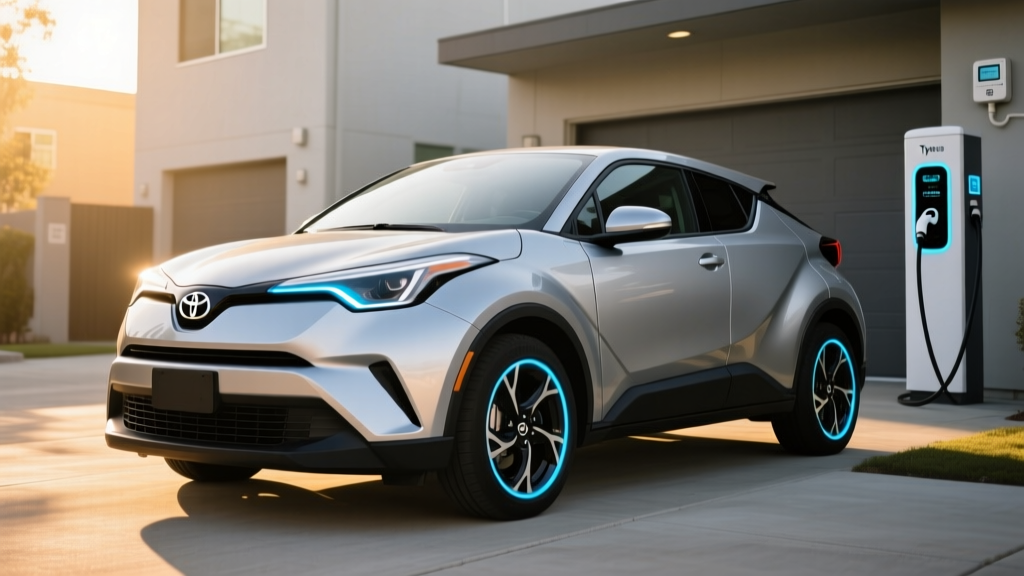
Quick Answer: The 2026 Toyota C-HR EV (also known as the bZ3C in some markets) is Toyota's compact electric crossover built on the e-TNGA platform. Based on announced specifications and the related bZ4X architecture, expect an EPA-estimated range of approximately 250–280 miles from a ~71 kWh usable lithium-ion battery, DC fast charging up to roughly 150 kW (10–80% in ~30 minutes), and a starting MSRP near $35,000–$38,000 before incentives. It is currently announced for select global markets; U.S. availability and final EPA certification remain unconfirmed as of early 2026. If Toyota brings it stateside, it will compete directly with the Hyundai Kona Electric, Kia Niro EV, and Chevrolet Equinox EV.
Toyota has been cautious with battery-electric vehicles compared to rivals, leaning heavily on its hybrid lineup. The 2026 Toyota C-HR EV represents a shift — a dedicated battery-electric subcompact crossover aimed at urban and suburban buyers who want zero tailpipe emissions without stepping up to the larger, pricier bZ4X. But with Toyota's EV track record still evolving and the C-HR EV's U.S. launch status uncertain, buyers need hard data before getting excited. Here's what the numbers actually look like.
What We Know About the 2026 Toyota C-HR EV So Far
The C-HR EV shares Toyota's e-TNGA platform — the same modular skateboard architecture underpinning the bZ4X and Subaru Solterra. For the 2026 model year, Toyota has revealed the vehicle for international markets (notably China, where it's sold as the bZ3C through the FAW-Toyota joint venture). Key preliminary specifications include:
| Specification | Estimated / Announced |
|---|---|
| Battery Capacity (Usable) | ~71.4 kWh (NMC chemistry) |
| EPA-Est. Range | ~250–280 mi (estimated; not EPA-certified for U.S.) |
| Motor Output | ~201 hp / 150 kW (FWD single motor) |
| 0–60 mph | ~7.5 sec (est.) |
| Peak DC Fast Charge Rate | ~150 kW |
| 10–80% DC Charge Time | ~30 min (est.) |
| Level 2 AC Charging | ~7.2 kW (est., ~9.5 hr for full charge) |
| Drivetrain | Front-wheel drive (AWD possible) |
| Est. Base MSRP (if U.S.) | $35,000–$38,000 |
| Battery/Powertrain Warranty | 8 yr / 100,000 mi (Toyota's standard EV warranty) |
Important caveat: These are preliminary figures based on the international bZ3C variant and the related bZ4X's known specs. Toyota has not published final U.S.-market EPA certification data for a "C-HR EV" badge. If and when the vehicle launches in the U.S., expect the EPA range sticker to land somewhere in the 250–280 mile window, but real-world highway range at 70+ mph will likely be 220–250 miles, and cold-weather range (below 30°F) could drop 20–30%, putting winter highway range closer to 175–210 miles.
⚡ Real-World Range Reality Check: The bZ4X — which uses a similar e-TNGA platform and battery — received an EPA rating of 252 miles (FWD) but averaged roughly 215–230 miles in independent highway testing at 70 mph. The C-HR EV, being lighter and potentially more aerodynamic, may fare slightly better, but buyers should budget for ~230 miles of usable range on a road trip, not the sticker number. Always precondition the battery before DC fast charging to avoid slow charge speeds in cold weather.
2026 Toyota C-HR EV vs. Gas C-HR and Toyota Hybrids
Toyota's strongest competition for the C-HR EV might be… Toyota. The brand dominates hybrid sales, and many buyers cross-shopping a compact electric crossover will also consider the Corolla Cross Hybrid or even a used gas C-HR (discontinued in the U.S. after 2022). Here's how the economics stack up:
| Metric | C-HR EV (Est.) | Corolla Cross Hybrid (AWD) | Gas C-HR (2022, last U.S. year) |
|---|---|---|---|
| Base MSRP | ~$36,000 | $30,550 | $23,000 (discontinued) |
| Fuel/Energy Cost per Mile | $0.04–$0.06 (home charging) | $0.10–$0.12 | $0.12–$0.14 |
| EPA Efficiency | ~110 MPGe (est.) | 42 MPG combined | 29 MPG combined |
| Annual Fuel/Energy (12k mi) | $480–$720 | $1,200–$1,440 | $1,440–$1,680 |
| 5-Year Energy Cost | $2,400–$3,600 | $6,000–$7,200 | $7,200–$8,400 |
| Maintenance (5 yr est.) | $1,200–$1,800 | $2,500–$3,500 | $3,000–$4,000 |
The EV's energy savings are substantial — roughly $3,600–$4,800 less spent on fuel over five years compared to the hybrid, assuming home Level 2 charging at the national average of ~$0.16/kWh (per EIA electricity pricing data). But the higher upfront cost means the breakeven point versus a Corolla Cross Hybrid sits around 3–4 years for a typical 12,000-mile/year driver, before accounting for any federal or state incentives.
Charging Speed, Infrastructure, and Home Setup
Charging is where EV ownership either clicks or frustrates. The C-HR EV's expected 150 kW peak DC fast-charge rate is mid-tier for 2026 — competitors like the Hyundai Kona Electric peak around 100 kW, while the Chevrolet Equinox EV can hit ~190 kW. Here's what the C-HR EV's charging looks like in practice:
| Charging Level | Power (kW) | Miles Added per Hour | Full Charge Time |
|---|---|---|---|
| Level 1 (120V household) | ~1.4 kW | ~4–5 mi/hr | ~50+ hours |
| Level 2 (240V home/public) | ~7.2 kW | ~22–25 mi/hr | ~9.5 hours |
| DC Fast Charge (public) | Up to ~150 kW peak | ~180+ mi/hr (peak) | 10–80% in ~30 min |
Charging curve reality: The 150 kW peak rate won't be sustained across the entire session. Expect the C-HR EV to hold peak rate from roughly 10–40% state of charge, then taper progressively. A typical 10–80% session at a 150+ kW station will take around 30 minutes, but an 80–100% top-off could add another 25–30 minutes due to taper. For road trips, plan stops around the 10–80% window and skip topping to 100% unless you're parking overnight.
Connector note: Toyota has committed to adopting the NACS (Tesla-style) connector for future U.S. EVs. If the C-HR EV launches stateside for 2026 or 2027, it may ship with a NACS port or include a CCS-to-NACS adapter. Verify the connector before purchase — it determines which public networks you can access natively. Tesla Supercharger access (now open to non-Tesla EVs via the NACS standard) is a significant advantage for NACS-equipped vehicles.
Home Charging Installation Costs
Most C-HR EV owners will want a Level 2 home charger for overnight charging. Here's a realistic cost breakdown:
| Item | Cost Range |
|---|---|
| Level 2 EVSE hardware (ChargePoint, Emporia, Wallbox) | $350–$700 |
| Electrician labor (240V/40A circuit install) | $500–$2,000 |
| Permit and inspection fees | $50–$300 |
| Electrical panel upgrade (if needed, 200A) | $1,500–$4,000 |
| Total (typical, no panel upgrade) | $900–$3,000 |
Always get a quote from a licensed electrician before committing to an EV purchase. Homes with older 100-amp panels may need an upgrade to support a 40-amp EV circuit alongside existing loads. Factor this into your total purchase budget.
Federal Tax Credit and Incentive Eligibility
The IRS §30D Clean Vehicle Credit offers up to $7,500 for qualifying new EVs, but eligibility is far from guaranteed. For the 2026 Toyota C-HR EV to qualify, it must meet several requirements simultaneously:
- MSRP cap: The vehicle must have an MSRP at or below $55,000 (SUV/crossover classification). The C-HR EV's estimated ~$36,000 base price clears this easily.
- Buyer income cap: Modified adjusted gross income must not exceed $150,000 (single), $225,000 (head of household), or $300,000 (joint filers).
- Battery sourcing: A percentage of critical minerals and battery components must be sourced from the U.S. or free-trade-agreement countries. Toyota's battery supply chain for a potential U.S.-market C-HR EV has not been publicly detailed for §30D compliance. This is the biggest question mark.
- Final assembly: The vehicle must undergo final assembly in North America. If the C-HR EV is imported from Japan or China, it would be disqualified regardless of other factors.
- Point-of-sale transfer: As of 2024+, buyers can transfer the credit to the dealer for an upfront price reduction rather than waiting to claim it on their tax return.
Bottom line: Do not assume the C-HR EV qualifies for the full $7,500 credit. Check the fueleconomy.gov tax credit database and the IRS clean vehicle credit page at the time of purchase for the latest eligibility data. State incentives (California's CVRP, Colorado's innovative motor vehicle credit, etc.) may stack on top but vary by jurisdiction — consult your state's energy office.
Total Cost of Ownership: 5-Year Breakdown
| 5-Year Cost Category | C-HR EV (Est.) | Corolla Cross Hybrid |
|---|---|---|
| Purchase Price (base) | $36,000 | $30,550 |
| Federal Tax Credit (est.) | $0–$7,500* | $0 |
| Home Charger Install | $1,500 | $0 |
| Energy/Fuel (60k mi) | $2,880 | $6,600 |
| Maintenance | $1,500 | $3,000 |
| Insurance (est. avg) | $9,000 | $7,500 |
| Depreciation (est. 5-yr) | $18,000 | $12,000 |
| Net 5-Year Cost (before credit) | ~$68,880 | ~$59,650 |
| Net 5-Year Cost (with $7,500 credit) | ~$61,380 | ~$59,650 |
*Tax credit eligibility is uncertain for the C-HR EV. See §30D discussion above. Insurance estimates are averages; EV premiums tend to run 15–25% higher than comparable gas/hybrid models due to higher repair costs and battery replacement risk. Get quotes from your insurer before purchasing.
Even with the full $7,500 credit, the C-HR EV's 5-year cost edges slightly above the Corolla Cross Hybrid — primarily due to higher depreciation (EV resale values remain more volatile) and insurance premiums. However, the gap narrows significantly if electricity costs stay low and gas prices rise. For buyers who prioritize zero tailpipe emissions and a quieter, smoother drive, the cost premium may be acceptable.
Common Misconceptions About the C-HR EV
| Myth | Fact |
|---|---|
| "Toyota EVs have terrible range — the bZ4X failed." | The bZ4X's 252-mile EPA rating was below expectations, but the C-HR EV is lighter and may achieve 260–280 miles. More importantly, Toyota has updated battery management software since the bZ4X's launch to improve cold-weather performance and charge speeds. |
| "The battery will need replacing in 5 years." | Modern NMC batteries degrade roughly 10–15% over 8 years/100,000 miles based on data from Geotab's fleet battery study. Toyota warranties the battery for 8 years/100,000 miles against dropping below 70% capacity. Full replacement (rare) costs $8,000–$14,000. |
| "I can charge on any public charger." | Connector compatibility matters. If the C-HR EV ships with NACS, you'll access Tesla Superchargers natively but may need an adapter for Electrify America CCS stations. If it ships with CCS, the reverse applies. Confirm the connector before buying. |
| "EVs are cheaper to own in every scenario." | Not always. If you lack home charging, rely on expensive DC fast chargers ($0.35–$0.50/kWh), drive very few miles per year, or live in a state with high electricity rates and low gas prices, a hybrid like the Corolla Cross may cost less over 5 years. |
| "Level 2 ADAS means the car drives itself." | Toyota Safety Sense (TSS 3.0) is a Level 2 driver-assistance system per SAE standards. It provides adaptive cruise, lane centering, and emergency braking — but you must remain fully engaged with hands on the wheel and eyes on the road at all times. This is not autonomous driving. |
Decision Framework: Should You Wait for the C-HR EV?
Choose the 2026 Toyota C-HR EV (or wait for it) if:
- You want a compact EV crossover under $40,000 and prefer Toyota's reliability reputation
- You have home Level 2 charging access (or can install it)
- Your daily commute is under 80 miles round-trip, and road trips are occasional
- You value zero tailpipe emissions and want to reduce fossil fuel dependence
- You plan to keep the vehicle 7+ years, giving the battery warranty time to prove out
Choose the Corolla Cross Hybrid instead if:
- You don't have reliable home or workplace charging access
- You regularly drive 300+ miles in a single trip through areas with sparse charging infrastructure
- You live in an extremely cold climate (northern MN, MT, AK) where EV range loss is severe
- Your budget is firm at $30,000–$32,000 and you can't absorb the EV premium
- You want immediate availability without waiting for a potential U.S. launch
Consider the Hyundai Kona Electric or Chevrolet Equinox EV if:
- You want a compact EV crossover that's available now with confirmed EPA ratings and tax credit eligibility
- You need the longest possible range in this segment (Kona Electric: EPA 261 mi; Equinox EV: up to EPA 319 mi)
- You want faster DC charging (Equinox EV peaks at ~190 kW)
What First-Time EV Buyers Should Know Before Purchasing
If the C-HR EV is your first battery-electric vehicle, here are the practical realities that spec sheets don't highlight:
- Home charging is non-negotiable for most owners. Public DC fast charging at $0.35–$0.50/kWh erases most of the fuel savings versus a hybrid. If you can't install a Level 2 charger at home or access one at work, reconsider the purchase.
- kW is not kWh. kW (kilowatts) measures power — how fast energy flows into the battery. kWh (kilowatt-hours) measures energy — the battery's total capacity. A 71 kWh battery charging at 150 kW doesn't fill in 28 minutes; the charge curve tapers as the battery fills.
- Plan for 20–30% range loss in winter. Cold temperatures slow battery chemistry and increase cabin heating demand. A heat pump (expected on the C-HR EV) mitigates this but doesn't eliminate it.
- Precondition before fast charging. Use the vehicle's navigation to route to a DC fast charger — this triggers battery preconditioning, warming the cells for faster charge acceptance. Skipping this can double your charge time in cold weather.
- Insurance will likely cost more. Get a quote before signing. EV insurance premiums average 15–25% higher than equivalent gas vehicles due to battery replacement costs and specialized repair requirements.
- Tires wear faster on EVs. The instant torque and heavier weight (from the battery) accelerate tire wear by roughly 20–30% versus a gas equivalent. Budget for tire replacement every 30,000–40,000 miles.
Frequently Asked Questions
Is the 2026 Toyota C-HR EV available in the United States?
As of early 2026, Toyota has not confirmed a U.S. launch for a vehicle badged "C-HR EV." The related bZ3C is on sale in China. Toyota's U.S. EV lineup currently consists of the bZ4X. Monitor Toyota's U.S. pressroom for announcements — the vehicle could arrive as a 2027 model year if confirmed.
What is the expected range of the 2026 Toyota C-HR EV?
Based on the e-TNGA platform and ~71 kWh battery, expect an EPA rating of approximately 250–280 miles. Real-world highway range at 70+ mph will likely be 220–250 miles, with cold-weather range dropping to 175–210 miles in sub-freezing temperatures.
Will the C-HR EV qualify for the $7,500 federal tax credit?
Uncertain. Qualification depends on final assembly location (must be North America), battery component and critical mineral sourcing percentages, and MSRP/income thresholds. Check irs.gov for current eligibility rules at the time of purchase.
How does the C-HR EV compare to the Toyota bZ4X?
The C-HR EV is smaller, lighter, and expected to be $5,000–$8,000 cheaper than the bZ4X. Range should be comparable or slightly better due to lower weight. The bZ4X offers more cargo space (27.7 cu ft) and an available AWD powertrain with 214 hp. Choose the bZ4X if you need more room; choose the C-HR EV for a lower price and better efficiency.
What connector does the C-HR EV use?
International variants use CCS2 or GB/T (China). For a potential U.S. model, Toyota has signaled a transition to NACS. The final connector has not been confirmed for a U.S.-spec vehicle. This matters significantly for public charging access.
How long will the C-HR EV battery last?
Toyota warranties the traction battery for 8 years/100,000 miles against dropping below 70% of original capacity. Based on industry-wide NMC battery data, expect 85–90% capacity retention at 100,000 miles under normal use. Avoid habitual DC fast charging and routinely charging to 100% to maximize longevity — daily charging to 80% is ideal.
Sources: fueleconomy.gov (EPA ratings and tax credit database), IRS §30D Clean Vehicle Credit rules, Toyota global pressroom (bZ3C/bZ4X specifications). All estimated specifications are based on announced international variants and related platform data; final U.S. specs may differ. Consult a tax professional for credit eligibility.