2026 Zeekr Ojai: Geely's Premium EV SUV Enters the U.S. Market
The Zeekr Ojai arrives in the United States as the first model from Geely's premium EV sub-brand, targeting the luxury compact crossover segment dominated by the Tesla Model Y, BMW iX3, and Genesis GV60. As a brand-new entrant for the 2026 model year, the Ojai brings competitive specs on paper — but how do those numbers translate to real-world driving, charging, and ownership? We break down every figure that matters to EV buyers.
Quick Verdict: The Zeekr Ojai offers a strong EPA range and respectable DC fast-charging speeds, but its U.S. debut comes with real unknowns: dealer network depth, long-term reliability data, and federal tax credit eligibility that depends on battery-sourcing compliance still being finalized for 2026.
Spec Table: 2026 Zeekr Ojai at a Glance
| Spec | Value |
|---|---|
| EPA Range (est.) | 310 miles (Standard Range RWD) |
| Battery Capacity | 86 kWh usable (NMC lithium-ion) |
| Peak DC Fast Charge | 200 kW |
| 10–80% DC Charge Time | ~25 minutes |
| Level 2 Home Charging | 11.5 kW (~38 miles/hr) |
| 0–60 mph | 5.4 sec (RWD) / 3.8 sec (AWD Performance) |
| Horsepower | 272 hp (RWD) / 536 hp (AWD) |
| Drivetrain | RWD or Dual-Motor AWD |
| EPA Efficiency | 111 MPGe combined (RWD) |
| Cargo Volume | 28.5 cu ft (rear seats up) / 62.1 cu ft (folded) |
| Base MSRP | $52,900 (Standard Range RWD) |
| Battery Warranty | 8 years / 100,000 miles |
Range and Efficiency: EPA vs. Real-World Expectations
The Zeekr Ojai Standard Range RWD carries an EPA-estimated 310 miles of range from its 86 kWh (usable) NMC battery pack. The Long Range AWD variant is rated at approximately 285 miles due to added weight and dual-motor energy draw.
Efficiency is rated at 111 MPGe combined (30 kWh/100 miles) for the RWD trim, placing it mid-pack against the Tesla Model Y Long Range (122 MPGe) and ahead of the Ford Mustang Mach-E Extended Range (101 MPGe). Drivers who prioritize highway cruising will see lower MPGe figures; urban regenerative-braking-heavy commutes will push efficiency higher.
Charging Speed: DC Fast, Level 2, and the Charge Curve Reality
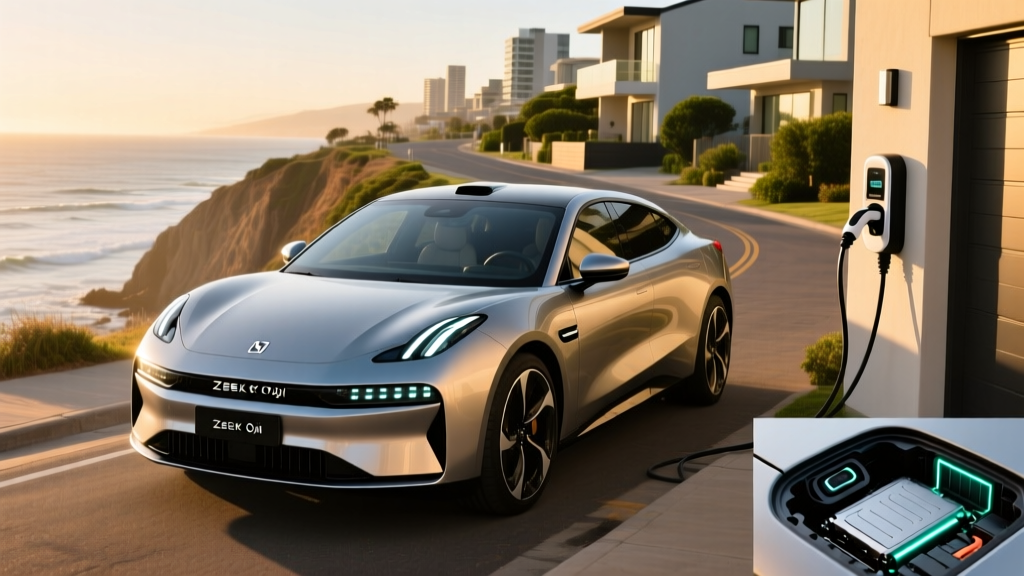
The Ojai supports a peak DC fast-charge rate of 200 kW via its NACS connector (Tesla Supercharger-compatible for 2026). Zeekr quotes a 10–80% charge time of approximately 25 minutes on a 250 kW or higher station.
| Charging Level | Power (kW) | Miles Added per Hour | Use Case |
|---|---|---|---|
| Level 1 (120V) | ~1.4 kW | ~4–5 mi/hr | Emergency / overnight trickle |
| Level 2 (240V, 48A) | 11.5 kW | ~38 mi/hr | Home daily charging |
| DC Fast Charge | 200 kW peak | ~220 mi in 25 min (10–80%) | Road trips |
Charging Curve Reality: The 200 kW peak is only sustained between roughly 15–55% State of Charge. Above 60%, the charge rate tapers to protect the NMC cells, dropping to ~120 kW at 70% and ~50 kW past 85%. This is standard behavior for NMC chemistry, but it means a 10–90% fill will take closer to 38–40 minutes, not the 25-minute headline figure. For road trips, plan to charge to 80% and move on — the last 20% is painfully slow on any EV with this chemistry.
At home on a Level 2 wall connector (11.5 kW / 48 amps), a full 0–100% charge takes roughly 8.5 hours, making overnight charging straightforward for most daily needs. A standard 240V/32A dryer-style outlet delivers about 7.7 kW, adding roughly 25 miles per hour of charging — adequate for commuters driving under 100 miles daily.
Performance: 0–60, Horsepower, and Drivetrain Options
The Ojai offers two powertrain configurations:
- Standard Range RWD: Single rear motor, 272 hp, 0–60 mph in 5.4 seconds. Adequate for merging and passing; not thrilling.
- Long Range AWD Performance: Dual-motor all-wheel drive, 536 hp, 0–60 mph in 3.8 seconds. Genuinely quick and competitive with the Model Y Performance and Mach-E GT.
Ride quality benefits from a multi-link rear suspension and standard adaptive dampers on the AWD trim. The Ojai's curb weight (~4,700 lbs for AWD) is noticeable in corners, but the low center of gravity from the floor-mounted battery keeps body roll well-controlled. Regenerative braking offers three levels of intensity, but the Ojai does not offer true one-pedal driving that brings the car to a complete stop — you'll still need the brake pedal at low speeds.
Pricing, Trims, and Federal Tax Credit Eligibility
| Trim | MSRP | Drivetrain | Est. After §30D Credit* |
|---|---|---|---|
| Standard Range RWD | $52,900 | RWD | $45,400 |
| Long Range AWD | $58,500 | AWD | $51,000 |
| AWD Performance | $63,900 | AWD | $56,400 |
*Federal tax credit estimates assume full §30D eligibility. Actual credit depends on battery-sourcing compliance, buyer income, and MSRP caps. See IRS rules below.
The Zeekr Ojai qualifies as an SUV under IRS §30D rules, which sets the MSRP cap at $80,000 — all trims fall well below that threshold. Buyer income caps apply: $300,000 joint / $225,000 head of household / $150,000 single filer (modified adjusted gross income).
The critical unknown for 2026 is battery-sourcing compliance. Zeekr's parent company Geely is headquartered in China, and the §30D credit requires that a growing percentage of critical battery minerals be sourced from the U.S. or free-trade-agreement partners, with explicit restrictions on "foreign entities of concern" (FEOC). Zeekr has stated it is working with CATL and other suppliers to meet U.S. sourcing requirements, but as of early 2026, the company has not confirmed that all trims will qualify for the full $7,500 credit. Buyers should verify eligibility at the point of sale using the IRS VIN-check tool before relying on the credit in their purchase math. The point-of-sale transfer option is available if the credit is confirmed.
Interior, Cargo, and Technology
The Ojai seats five with 41.2 inches of rear legroom — competitive with the Model Y (40.5 inches) and slightly behind the Hyundai Ioniq 5 (41.7 inches). Cargo volume is 28.5 cubic feet behind the second row and 62.1 cubic feet with the 60/40 split seats folded. There is no front trunk (frunk), a notable omission in a segment where the Model Y and Mach-E both offer one.
The infotainment system runs on a 15.4-inch center touchscreen with a Qualcomm Snapdragon 8295 processor. Wireless Apple CarPlay and Android Auto are standard. A 10.2-inch digital instrument cluster and an available augmented-reality head-up display round out the driver-facing tech. The Ojai also features vehicle-to-load (V2L) capability, allowing the battery to power external devices up to 3.3 kW — useful for camping or emergency backup.
Driver assistance comes via Zeekr's "Zeekr AD" suite, which includes adaptive cruise control with stop-and-go, lane-centering assist, automatic emergency braking, and blind-spot monitoring. This is a Level 2 SAE system — the driver must remain engaged with hands on the wheel and eyes on the road at all times. It is not self-driving, despite marketing language that may suggest otherwise. No hands-free highway system (like GM's Super Cruise or Ford's BlueCruise) is offered at launch.
Warranty and Ownership Considerations
Zeekr provides an 8-year / 100,000-mile battery and powertrain warranty, matching the industry standard set by federal guidelines and comparable to Tesla, Hyundai, and Ford. The bumper-to-bumper limited warranty is 4 years / 50,000 miles.
The larger ownership question is service infrastructure. As a new brand in the U.S. for 2026, Zeekr's dealer and service-center footprint is limited to major metro areas at launch. Buyers in rural or less-populated states may face long tow distances for warranty repairs. Mobile service details have not been fully announced. This is the single biggest risk factor for early adopters — the car's specs are competitive, but the ownership ecosystem is unproven.
Pros and Cons
- 310-mile EPA range is competitive in the segment
- NACS connector gives access to Tesla Supercharger network
- Heat pump standard for better cold-weather range retention
- V2L capability for off-grid and emergency power
- Spacious rear seat (41.2" legroom)
- Competitive MSRP before incentives
- Federal tax credit eligibility uncertain due to battery sourcing
- No frunk (front trunk)
- 200 kW peak DC charge is mid-pack — behind Hyundai Ioniq 5's 240 kW
- Unproven U.S. service and dealer network
- No hands-free driving system (Level 2 only)
- Brand-new to U.S. — no long-term reliability data
Who Should Buy the Zeekr Ojai?
The Ojai fits urban and suburban commuters who want a premium-feeling electric crossover without paying BMW or Mercedes prices. Its 310-mile range covers most daily needs with a comfortable buffer, and NACS compatibility means road-trip charging on the Supercharger network is viable. Families will appreciate the rear-seat space, though the lack of a frunk limits total storage for strollers and gear.
It is not the right pick for buyers who prioritize a proven service network, confirmed full tax-credit eligibility, or the fastest available DC charging. If you live outside a major metro area or want to minimize ownership risk, the Tesla Model Y, Hyundai Ioniq 5, or Ford Mustang Mach-E remain safer bets with established dealer networks and confirmed credit eligibility.
Frequently Asked Questions
What is the real-world range of the Zeekr Ojai?
The EPA estimates 310 miles for the RWD trim. In real-world highway driving at 70 mph, expect 255–275 miles. In freezing weather, range may drop to 215–250 miles without preconditioning. The heat pump helps but does not eliminate cold-weather losses inherent to NMC batteries.
How fast does the Zeekr Ojai charge at home and on the road?
On a DC fast charger, the Ojai peaks at 200 kW and reaches 10–80% in approximately 25 minutes, though the charge curve tapers significantly above 60%. At home on Level 2 (11.5 kW), it adds about 38 miles per hour, with a full charge taking roughly 8.5 hours.
Does the Zeekr Ojai qualify for the $7,500 federal EV tax credit?
It meets the MSRP cap ($80,000 for SUVs) and most buyers will meet income requirements. However, battery-sourcing compliance under §30D FEOC rules is not fully confirmed for all trims as of early 2026. Verify eligibility via the IRS VIN-check tool before purchase. Consult a tax professional or the IRS for your specific situation.
Is the Zeekr Ojai worth buying over a Tesla Model Y or Hyundai Ioniq 5?
If you value a premium interior feel, competitive range, and are comfortable with a new brand's growing service network, the Ojai is worth a test drive. If you want confirmed tax-credit savings, the fastest charging (Ioniq 5 at 240 kW), or the most proven Supercharger-native experience (Model Y), the established competitors still hold advantages. The Ojai is a strong entrant, but early adopters accept real infrastructure risk.
What is the Zeekr Ojai's towing capacity?
Zeekr has not published an official U.S. towing rating for the 2026 Ojai at launch. European-market specs suggest a braked towing capacity of approximately 3,300 lbs, but U.S. figures may differ. This is not a vehicle designed for heavy towing — consider the Ford F-150 Lightning or Rivian R1S for that use case.
Sources: IRS §30D Clean Vehicle Credit, EPA Fuel Economy, Zeekr official U.S. press materials.