The Quick Answer on New Toyota EVs
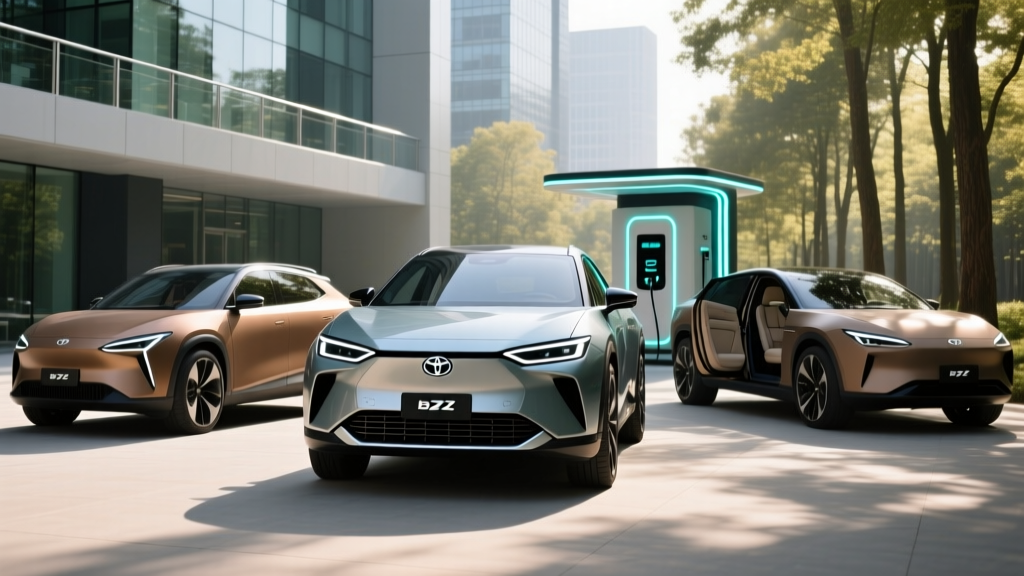
As of 2026, Toyota sells two battery-electric vehicles in the U.S.: the bZ4X compact SUV (EPA range up to 252 miles, starting around $38,465) and the newly introduced bZ Woodland SUV (EPA range up to 283 miles, starting around $42,900). Both use a 72.8 kWh lithium-ion battery and support DC fast charging up to 150 kW. Toyota's EV lineup is smaller than rivals like Hyundai, Kia, or Tesla, but these models offer competitive pricing, standard all-wheel drive on most trims, and Toyota's 10-year/100,000-mile powertrain warranty. If you're a current Toyota hybrid owner considering going full electric, the math depends heavily on your home charging access, daily mileage, and whether you qualify for the federal §30D tax credit.
Toyota's 2026 EV Lineup: Specs at a Glance
Toyota was slower to embrace full battery-electric vehicles than competitors, instead leaning heavily on its hybrid dominance. That strategy is shifting. The bZ4X launched for the 2023 model year, and the bZ Woodland (a more rugged, slightly larger sibling) joined the lineup for 2025. Here's how the current models stack up by the numbers.
| Spec | 2026 bZ4X XLE AWD | 2026 bZ Woodland |
|---|---|---|
| EPA Range | 252 mi | 283 mi |
| Real-World Range (highway/cold) | ~200–225 mi | ~230–255 mi |
| Battery Capacity (usable) | 72.8 kWh (NMC) | 72.8 kWh (NMC) |
| Peak DC Fast Charge Rate | 150 kW | 150 kW |
| 10–80% DC Charge Time | ~32 min | ~30 min |
| Level 2 Charging (240V) | ~9.5 hours (0–100%) | ~9.5 hours (0–100%) |
| Horsepower | 214 hp (AWD) | 338 hp (AWD) |
| 0–60 mph | ~5.8 sec | ~4.4 sec |
| MPGe (combined) | 104 MPGe | 100 MPGe |
| Starting MSRP | $38,465 | $42,900 |
| Battery/Powertrain Warranty | 10 yr / 100,000 mi | 10 yr / 100,000 mi |
Real-World Range Reality Check
The EPA sticker says 252 miles for the bZ4X and 283 for the Woodland, but expect 15–20% less on sustained highway driving at 70+ mph, and 20–30% less in sub-freezing winter conditions without preconditioning. On a 30°F winter road trip, plan for roughly 180–200 usable miles in the bZ4X before needing a charger. Battery preconditioning (available via the Toyota app or nav-routed charging) helps recover some of that loss by warming the pack before you plug in.
New Toyota EVs vs. Toyota Hybrids: The Ownership Cost Comparison
Toyota built its reputation on hybrids, and the RAV4 Hybrid remains one of the best-selling electrified vehicles in America. So the fair question is: does switching from a Toyota hybrid to a Toyota EV actually save money? Here's a 5-year cost comparison using 15,000 miles/year, national-average electricity ($0.16/kWh), and regular unleaded gasoline ($3.40/gallon).
| 5-Year Cost Factor | 2026 bZ4X XLE AWD | 2026 RAV4 Hybrid XLE AWD |
|---|---|---|
| Base MSRP | $38,465 | $34,560 |
| Est. Federal Tax Credit (§30D) | $0–$7,500* | $0 |
| Fuel/Energy (5 yr, 75K mi) | ~$4,600 | ~$6,800 |
| Maintenance (5 yr) | ~$1,800 | ~$3,200 |
| Est. Insurance (5 yr avg) | ~$9,500 | ~$7,800 |
| 5-Year Total (before credit) | ~$54,365 | ~$52,360 |
| 5-Year Total (with max credit) | ~$46,865 | ~$52,360 |
*Federal §30D tax credit eligibility depends on your adjusted gross income (single filers: ≤$150,000; joint: ≤$300,000), vehicle MSRP caps ($80,000 for SUVs), and battery component/critical mineral sourcing requirements that tighten annually. As of 2026, the bZ4X's battery sourcing may limit or eliminate credit eligibility for some buyers. Check the latest rules at IRS.gov §30D and verify with a tax professional before purchasing.
Where the EV Wins
Energy costs are the clear advantage. At the bZ4X's efficiency of roughly 32 kWh/100 miles, charging at home on a national-average rate of $0.16/kWh costs about $0.051 per mile. The RAV4 Hybrid at 39 MPG combined costs roughly $0.087 per mile. Over 75,000 miles, that's a ~$2,200 fuel savings for the EV — and more if your utility offers off-peak rates below $0.10/kWh.
Maintenance savings are real too. No oil changes, no spark plugs, no transmission fluid. Expect to spend mainly on tire rotations, cabin air filters, wiper fluid, and brake inspections (regenerative braking significantly extends pad life).
Where the Hybrid Still Has an Edge
Insurance premiums for EVs remain 15–25% higher on average, driven by higher repair costs and battery replacement risk. The RAV4 Hybrid's lower purchase price and zero charging-infrastructure requirement also matter if you rent, live in an apartment, or lack access to reliable Level 2 charging. And for frequent long-distance travelers who regularly drive 350+ miles in a day through rural charging deserts, the hybrid's 550+ mile range and 5-minute gas fill-up still offer practical advantages that a 30-minute DC fast-charge stop can't fully match.
Charging the bZ4X and bZ Woodland: What You Need to Know
Charging speed is one of the most common complaints about Toyota's current EVs, and it's worth understanding the physics. Both the bZ4X and bZ Woodland peak at 150 kW on DC fast chargers. That's competitive with many 2024-era EVs but falls behind the Hyundai Ioniq 5 (240 kW) and Tesla Model Y (250 kW). In practice, the Toyota pack sustains close to 130–140 kW through about 40% State of Charge (SoC), then tapers progressively. A 10–80% session takes roughly 30–32 minutes at a 150+ kW station.
| Charging Level | Power | Miles Added per Hour | Best For |
|---|---|---|---|
| Level 1 (120V household) | ~1.4 kW | ~4 mi/hr | Overnight top-up, emergencies |
| Level 2 (240V home/public) | 7.2–11.5 kW | ~22–35 mi/hr | Daily home charging |
| DC Fast Charging | Up to 150 kW | ~300+ mi/hr (peak) | Road trips |
Home Charging Installation Costs
Most Toyota EV buyers will want a Level 2 home charger. Budget for the following:
| Component | Typical Cost Range |
|---|---|
| Level 2 Charger (40A, hardwired) | $350–$700 |
| Electrician labor (240V/50A circuit) | $500–$2,000 |
| Electrical permit | $50–$200 |
| Panel upgrade (if needed: 100A→200A) | $1,500–$4,000 |
| Total (no panel upgrade) | $900–$2,900 |
| Total (with panel upgrade) | $2,400–$6,900 |
If your home has a 200-amp electrical panel with spare capacity, expect to pay $1,000–$2,500 total for a professional Level 2 installation. Homes with older 100-amp panels may need an upgrade, which adds significant cost. Always get a quote from a licensed electrician before purchasing a charger — don't assume your panel can handle an additional 40-amp continuous load.
For public charging, both Toyotas use the CCS1 connector (Combined Charging System). Toyota has announced NACS (Tesla-style) adoption for future models, but as of the 2026 model year, the bZ4X and bZ Woodland ship with CCS. You can use a CCS-to-NACS adapter to access Tesla Superchargers that support non-Tesla vehicles, but verify adapter compatibility and expect slightly slower peak charge rates through the adapter.
Battery Longevity, Degradation, and Warranty
Battery replacement fear is the single biggest hesitation for first-time EV buyers. Here's the data to put it in perspective.
Toyota's bZ series uses NMC (nickel manganese cobalt) lithium-ion cells, which offer higher energy density than LFP (lithium iron phosphate) chemistry but are more sensitive to sustained high SoC and extreme heat. Real-world degradation data from early bZ4X owners (2023–2025 model years) suggests approximately 5–8% capacity loss over the first 60,000 miles, which is consistent with industry averages for NMC packs with active thermal management.
Toyota backs the battery with a 10-year/100,000-mile warranty that guarantees the pack will retain at least 70% of its original capacity. If degradation exceeds 30% within that window, Toyota will repair or replace the battery at no cost. For context, a full out-of-warranty battery replacement for the bZ4X is estimated at $12,000–$16,000 based on current parts pricing — a significant sum, but one that most owners will never face given the warranty coverage and typical degradation curves.
Battery Care Best Practices
- Set your daily charge limit to 80% for routine driving; charge to 100% only before long trips.
- Use DC fast charging sparingly — frequent 150 kW sessions accelerate degradation slightly compared to Level 2 charging.
- In hot climates, park in shade or a garage when possible; sustained pack temperatures above 95°F accelerate cell aging.
- Use the Toyota app to precondition the battery before fast-charging sessions in cold weather.
Common Misconceptions About Toyota EVs
| Myth | Fact |
|---|---|
| "Toyota doesn't make EVs" | Toyota sells two EVs in the U.S. (bZ4X, bZ Woodland) and has announced additional models through 2028, including a next-gen bZ sedan with improved range and charging. |
| "The bZ4X has terrible range" | 252 EPA miles is below the class-leading Hyundai Ioniq 5 (303 mi) and Tesla Model Y (310 mi), but adequate for 90%+ of daily driving. The average American drives 37 miles/day per FHWA data. |
| "All Toyotas qualify for the $7,500 tax credit" | §30D eligibility depends on battery sourcing, buyer income, and MSRP caps. Rules tighten annually. Verify at fueleconomy.gov before buying. |
| "EV batteries need replacing every 5 years" | Modern NMC and LFP packs are designed to last 150,000–200,000+ miles with 70–85% capacity retention. Toyota warranties its pack for 10 years/100,000 miles. |
| "Charging takes too long for road trips" | A 10–80% DC fast charge takes ~30 minutes — roughly a meal stop. Plan routes around 150+ kW stations using PlugShare or the Toyota app for minimal disruption. |
Decision Framework: Is a New Toyota EV Right for You?
Choose a Toyota EV (bZ4X or bZ Woodland) if:
- You have access to Level 2 home charging (garage, driveway, or workplace charger).
- Your daily commute is under 80 miles round-trip, and you take road trips fewer than 6 times per year.
- You value Toyota's reliability reputation, dealer network, and 10-year powertrain warranty.
- You want a competitive MSRP ($38K–$47K range) without paying Tesla or luxury-brand premiums.
- You qualify for the §30D tax credit or your state offers additional EV rebates.
Choose a Toyota Hybrid (RAV4 Hybrid, Highlander Hybrid) instead if:
- You rent your home or lack access to reliable Level 2 charging.
- You regularly drive 300+ miles in a single day through areas with sparse DC fast-charging infrastructure.
- You live in an extremely cold climate (sub-0°F winters) and can't garage the vehicle.
- Your budget is tight and you want the lowest possible monthly payment without relying on tax credits.
- You tow frequently (the RAV4 Hybrid tows up to 1,750 lbs; Toyota's current EVs aren't rated for towing).
Consider a competitor's EV if:
- You need 300+ miles of EPA range (look at the Hyundai Ioniq 5, Tesla Model Y, or Chevrolet Equinox EV).
- You want the fastest DC charging speeds available (Ioniq 5 peaks at 240 kW; 10–80% in ~18 minutes).
- You need NACS native compatibility for seamless Tesla Supercharger access without an adapter.
What First-Time Toyota EV Buyers Should Know
If you're coming from a gas car or a Toyota hybrid, the transition to a full EV involves a learning curve that's manageable but real. Here are the practical ownership considerations that don't show up on a spec sheet:
One-pedal driving takes a week to master. Toyota's regenerative braking system lets you slow the car significantly just by lifting off the accelerator. It's not true one-pedal driving to a full stop like some competitors, but it reduces brake wear dramatically and makes stop-and-go traffic far less fatiguing.
Your "fuel" cost drops to near-zero if you have solar. Homeowners with rooftop solar panels often find their marginal cost of EV charging approaches zero, especially with net metering. Even without solar, time-of-use utility plans can drop your effective charging cost to $0.08–$0.10/kWh overnight, making a full bZ4X charge cost roughly $6–$7.
Plan road trips around charging, not gas stations. Apps like PlugShare, A Better Routeplanner, and Toyota's built-in navigation will route you through DC fast-charging stations. On a 500-mile trip, expect 1–2 charging stops of 25–35 minutes each. That's more time than gas stops, but most drivers combine them with meal breaks or rest stops.
Insurance quotes vary wildly. Get quotes from at least three insurers before purchasing. Some companies (GEICO, Progressive, State Farm) have become more competitive on EV premiums, while others still price EVs at a significant premium. Bundling with homeowners insurance can help.
Cold weather is manageable but real. If you live in a climate where temperatures regularly drop below 30°F, expect 20–30% range loss on short trips (before the cabin and battery warm up). Preconditioning the car while it's still plugged in at home recovers much of this loss and keeps the cabin warm without draining the battery.
Frequently Asked Questions
Does Toyota have a 300-mile EV coming?
Toyota has announced next-generation EVs using its improved battery platform expected around 2027–2028, with targeted EPA ranges exceeding 300 miles and faster DC charging. However, as of the 2026 model year, the maximum EPA range available is 283 miles (bZ Woodland). These future models are announced but not yet available for purchase.
Can I charge a Toyota bZ4X at a Tesla Supercharger?
Yes, but with an adapter. The bZ4X uses the CCS1 connector. Tesla has opened select Supercharger stations to non-Tesla EVs, and you can use a CCS-to-NACS adapter to access them. Check Tesla's "Charge Your Non-Tesla Vehicle" page for station compatibility and expect slightly reduced peak charge rates through the adapter.
How much does it cost to charge the bZ4X at home?
A full charge from 0–100% on the 72.8 kWh battery at the national average electricity rate of $0.16/kWh costs approximately $11.65. For a typical daily commute requiring 20–30 kWh of replenishment, expect $3.20–$4.80 per day — or roughly $1.60–$2.40 if your utility offers off-peak rates around $0.08/kWh.
Is the bZ4X reliable compared to other Toyota vehicles?
Early reliability data from 2023–2025 model-year bZ4X vehicles has been generally positive, with no widespread battery or powertrain failures reported to NHTSA. EVs have fewer moving parts than gas vehicles, which historically translates to lower long-term failure rates. Toyota's 10-year/100,000-mile EV powertrain warranty provides additional protection.
What happens if the battery fails out of warranty?
A full battery replacement for the bZ4X is estimated at $12,000–$16,000. However, industry data shows that modern EV batteries with active thermal management rarely fail catastrophically. More commonly, they gradually lose capacity over 150,000–200,000+ miles. At 70% retained capacity, a bZ4X would still deliver roughly 175 miles of range — adequate for most daily driving even after significant aging.