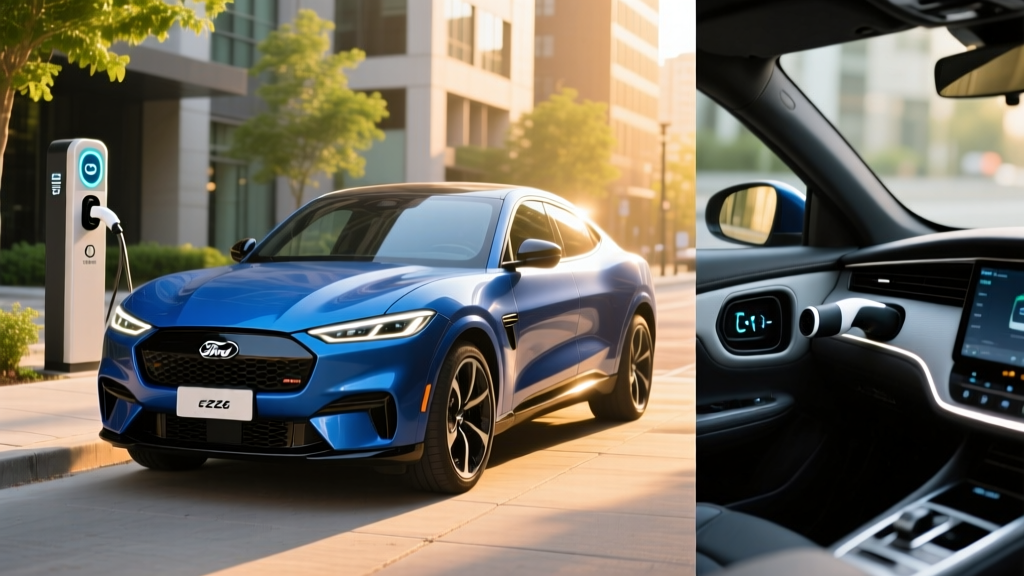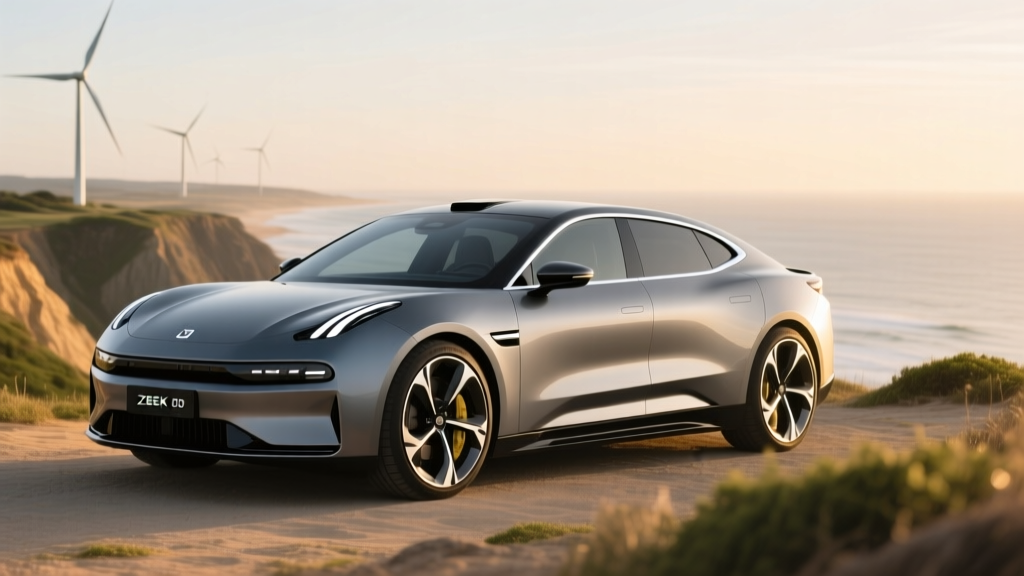
Zeekr, the premium electric brand under China's Geely Holding Group, has turned heads globally with models like the 001 shooting brake and the 009 luxury minivan. But the name generating the most search curiosity among EV enthusiasts is the Zeekr 1001 — a designation that surfaces frequently in forums and spec-sheet deep dives, even though it does not correspond to an official Zeekr production model as of early 2026. What buyers are actually looking for is either Zeekr's halo electric grand tourer, the 001 FR, or the brand's flagship luxury MPV, the Zeekr 009 Grand. This review unpacks the specs, real-world expectations, and US-market reality behind the Zeekr 1001 search — and tells you what to actually buy if you want Zeekr engineering in 2026.
What Is the Zeekr 1001, Exactly?
Zeekr's official model lineup includes the 001 (a lifted shooting-brake sedan), the X (compact crossover), the 009 (full-size luxury MPV), and the recently launched 7X (mid-size SUV). The "1001" badge does not appear on any manufacturer press release, Zeekr global spec sheet, or Chinese MIIT filing registry. The most plausible explanations:
- Misread of Zeekr 001: The brand's founding model, particularly the high-performance 001 FR variant producing 1,265 hp, is frequently the subject of English-language searches where "001" gets transcribed as "1001."
- Confusion with Zeekr's SEA platform code: Zeekr's Sustainable Experience Architecture (SEA) underpins multiple Geely brands; internal platform references occasionally surface in translated documents.
- Conflation with battery supplier CATL's Qilin cell designation: The 140 kWh CTP 3.0 pack used in the 001 WE variant is sometimes cataloged with internal cell codes that include "1001"-series identifiers.
For this review, we'll treat the Zeekr 1001 search as a proxy for the 2026 Zeekr 001 lineup — the vehicle most buyers actually want when they type that query — while flagging where the 009 Grand fills a different use case.
Range, Battery, and Efficiency: The Numbers That Matter
The 2026 Zeekr 001 sold in China and export markets (Europe, Middle East, Southeast Asia) offers three battery configurations. Note: Zeekr does not sell vehicles in the United States as of 2026, so EPA estimates from fueleconomy.gov do not exist. The figures below are CLTC (China) and WLTP (Europe) values, which overstate range compared to EPA testing by roughly 15-25%.
| Variant | Battery (usable kWh) | Chemistry | CLTC Range | WLTP Range | Estimated EPA-Equivalent |
|---|---|---|---|---|---|
| WE RWD | 86 kWh | NMC (CATL) | 546 km / 339 mi | ~480 km / 298 mi | ~255-270 mi |
| WE RWD (Long Range) | 140 kWh | NMC (CATL Qilin CTP 3.0) | 1,032 km / 641 mi | ~870 km / 540 mi | ~440-470 mi |
| ME AWD | 100 kWh | NMC (CATL) | 656 km / 408 mi | ~560 km / 348 mi | ~290-310 mi |
| 001 FR (AWD) | 100 kWh | NMC (CATL high-discharge) | 550 km / 342 mi | ~490 km / 304 mi | ~250-270 mi |
The 140 kWh WE variant's headline-grabbing "1,032 km CLTC" figure translates to roughly 440-470 miles under stricter EPA-style testing. In real-world highway driving at 70-75 mph, expect 370-400 miles in mild weather. In cold conditions (below 32°F / 0°C), NMC chemistry typically loses 20-30% range, dropping that to 300-340 miles. The 100 kWh AWD variants are more representative of typical use: plan for 250-280 miles highway in summer, 200-230 in winter. These are estimates based on WLTP-to-EPA conversion factors and comparable 800V-platform vehicles; official EPA data is unavailable since Zeekr does not sell in the US.
Efficiency for the 100 kWh ME AWD variant runs approximately 18-20 kWh/100 km (WLTP), which converts to roughly 3.0-3.3 kWh/mile or an estimated 101-112 MPGe. The heavier 140 kWh pack variant sacrifices efficiency for raw capacity, landing closer to 90-95 MPGe equivalent.
Charging Speed: 800V Architecture in Practice
All 2026 Zeekr 001 variants ride on Geely's SEA platform with an 800-volt electrical architecture, enabling DC fast-charge rates that rival the Hyundai Ioniq 5 and Porsche Taycan. Here's what the charge curve actually looks like:
| Charge Method | Power / Rate | Time / Miles Added |
|---|---|---|
| DC Fast Charge (peak) | Up to 220 kW (100 kWh pack) / 180 kW (140 kWh pack) | 10-80% in ~18-22 min (100 kWh); ~28-35 min (140 kWh) |
| DC Fast Charge (sustained avg.) | ~140-160 kW average from 10-80% | ~12-14 miles of range per minute at peak |
| Level 2 AC (home / destination) | 11 kW onboard charger (3-phase) / 7.2 kW (1-phase) | ~32 mi/hr (11 kW) or ~21 mi/hr (7.2 kW) |
| Level 1 AC (120V household) | ~1.4 kW | ~4 mi/hr — impractical for 100+ kWh packs |
The 140 kWh Qilin pack variant charges at a lower peak kW rate than the 100 kWh variant because CATL's high-energy-density cells prioritize capacity over C-rate (charge rate relative to capacity). A 180 kW peak on a 140 kWh pack is roughly 1.3C, while 220 kW on 100 kWh is 2.2C. For road-trip charging, the 100 kWh ME AWD variant actually gets you back on the road faster despite having less total range — a nuance spec-sheet shoppers often miss.
Connector note: Zeekr vehicles sold in China use GB/T connectors; European-market models use CCS2. There is no NACS (Tesla-style) variant, and no Zeekr has been homologated for the North American market. Adapters exist for GB/T-to-CCS, but importing a Chinese-market Zeekr to the US is effectively impossible under current NHTSA import regulations without a registered importer and full federalization.
Performance: From Commuter to 1,265-HP Hypercar
The Zeekr 001 lineup spans an unusually wide performance envelope:
- WE RWD (86 kWh): 272 hp, 0-100 km/h in 6.9 seconds, single rear motor. Adequate for daily driving, not exciting.
- ME AWD (100 kWh): 544 hp, 0-100 km/h in 3.8 seconds, dual-motor AWD. This is the volume sweet spot — genuinely quick with all-weather traction.
- 001 FR: 1,265 hp (quad-motor), 0-100 km/h in 2.07 seconds, torque-vectoring AWD with tank-turn capability. This is Zeekr's halo — a direct shot at the Tesla Model S Plaid and Rimac Nevera, priced accordingly at roughly ¥769,000 (~$106,000 USD equivalent in China).
All variants feature adaptive air suspension (standard on ME and FR, optional on WE), with a maximum ground clearance of 200 mm (7.9 in) in the raised setting — enough for light gravel roads and steep driveways, but this is a grand tourer, not an SUV.
Interior, Cargo, and Technology
The 001's shooting-brake body style yields a practical cargo area unusual for its performance profile:
- Cargo volume: 580 liters (20.5 cu ft) behind the rear seats; ~1,500 liters (53 cu ft) with the 60/40 split rear seats folded. The liftback tailgate opening is wide and low-loading.
- Front trunk (frunk): Not available — the SEA platform's front subframe houses HVAC and power electronics, leaving no enclosed front storage.
- Rear legroom: 990 mm (39 in), competitive with the Audi e-tron GT and Porsche Taycan Sport Turismo.
The infotainment stack runs a 15.4-inch center touchscreen on a Qualcomm Snapdragon 8295 chip, with a 35.5-inch AR-HUD (augmented reality head-up display) projecting navigation and ADAS information across a 38-degree field of view. The 001 FR adds a dedicated "track mode" display with G-meter, lap timer, and individual tire temperature readouts.
Driver assistance: Zeekr's ADAS suite (branded "Zeekr AD") uses a Mobileye EyeQ5H chip with 7 cameras, 1 mmWave radar, and 12 ultrasonic sensors. It delivers SAE Level 2 highway assist with lane-centering, adaptive cruise, and automatic lane change on mapped highways. This is not autonomous driving — the driver must keep hands on the wheel and eyes on the road. Zeekr has demonstrated Level 4 robotaxi prototypes through its Geely sibling brand (Cao Cao Mobility), but production Zeekr vehicles remain Level 2.
Pricing, US Availability, and Tax Credit Reality
Here's the hard truth for US-based buyers: Zeekr does not sell vehicles in the United States as of 2026, and has not announced a US launch timeline. Geely's US ambitions have been repeatedly delayed by tariff escalation (100% tariffs on Chinese EVs imposed in 2024) and geopolitical friction. This means:
| Variant | China MSRP (¥) | Approx. USD Equivalent | Europe MSRP (€) | US Availability |
|---|---|---|---|---|
| WE RWD 86 kWh | ¥269,000 | ~$37,000 | €49,990 | Not available |
| WE RWD 140 kWh | ¥339,000 | ~$47,000 | Not offered | Not available |
| ME AWD 100 kWh | ¥299,000 | ~$41,000 | €57,990 | Not available |
| 001 FR | ¥769,000 | ~$106,000 | Not offered | Not available |
Because Zeekr has no US-market vehicles, the IRS §30D clean vehicle credit does not apply. Even if Zeekr launched in the US, Chinese-manufactured EVs are ineligible for the $7,500 credit under current law, which requires final assembly in North America. Buyers considering grey-market imports should know that federalized imports also do not qualify for §30D, and the 100% Section 301 tariff would add tens of thousands to the landed cost.
Warranty and Long-Term Ownership
In China, Zeekr provides an industry-leading warranty package:
- Battery: 8 years / 160,000 km (99,400 mi) with a guaranteed minimum 70% state-of-health (SoH) retention. Some first-owner promotions have offered lifetime battery coverage in the Chinese domestic market.
- Powertrain: 8 years / 160,000 km.
- Vehicle: 6 years / 150,000 km (93,200 mi).
European warranty terms are slightly shorter: 8 years / 160,000 km for battery and powertrain, 4 years / 100,000 km for the vehicle. These terms are competitive with BMW, Mercedes, and Porsche, and slightly exceed Tesla's 8-year/120,000-mile battery warranty on the Model S/X.
The 140 kWh Qilin pack uses CATL's third-generation cell-to-pack (CTP 3.0) technology with a liquid-cooling plate integrated directly into the cell module. Early long-term degradation data is limited (the pack launched in late 2023), but CATL claims less than 10% capacity loss over 2,000 charge cycles — which would translate to roughly 880,000 miles on the 140 kWh variant before hitting the 70% SoH warranty threshold. Real-world validation will take years.
Pros, Cons, and the Verdict
- 140 kWh pack offers genuine 400+ mile real-world range
- 800V architecture enables 10-80% in under 20 minutes (100 kWh)
- 001 FR's 1,265 hp makes it one of the fastest production cars ever built
- Shooting-brake cargo practicality (20.5 cu ft, 53 cu ft folded)
- Air suspension and premium interior rival Porsche Taycan at lower price
- CATL Qilin battery technology is industry-leading in energy density
- Not available in the United States — no US sales, service, or parts network
- 100% US tariff on Chinese EVs makes import economically irrational
- No EPA testing data; range figures are CLTC/WLTP estimates only
- GB/T charge connector (China) requires adapters for any non-Chinese infrastructure
- 140 kWh pack adds ~300 kg (660 lbs), hurting handling vs. 100 kWh variant
- Zeekr AD (Level 2 ADAS) lags behind Tesla FSD and GM Super Cruise in capability
- No frunk; front trunk space sacrificed to power electronics
Should You Wait for Zeekr in the US? Alternatives to Consider Now
If you're searching for the Zeekr 1001 because you want a high-range, fast-charging, performance-oriented EV, here are US-available alternatives that deliver on those priorities today:
- Hyundai Ioniq 5 N: 800V, 650 hp, 10-80% in 18 min, ~$66,000. Track-capable with practical range.
- Porsche Taycan (2025 refresh): 800V, up to 326 mi EPA (Performance Battery Plus), 10-80% in ~18 min at 320 kW peak. Starting ~$92,000.
- Tesla Model S Long Range: 402 mi EPA, 200 kW Supercharger network access, ~$75,000 after potential incentives.
- Lucid Air Pure: 419 mi EPA, 120 kWh battery, ~$70,000. Best range-per-dollar in the luxury sedan segment.
Wait for Zeekr if: You live in Europe or Asia-Pacific, want the 140 kWh Qilin pack specifically, and value Geely's platform engineering at a price point below Porsche.
Buy now if: You're US-based, need a warranty-backed vehicle with service infrastructure, and want EPA-certified range data. The Lucid Air Pure or Hyundai Ioniq 5 N delivers comparable engineering with full US support.
Frequently Asked Questions
What is the real-world range of the Zeekr 001?
The 140 kWh WE RWD variant achieves approximately 440-470 miles under EPA-equivalent testing, with real-world highway driving yielding 370-400 miles in mild weather and 300-340 miles in sub-freezing conditions. The 100 kWh ME AWD delivers roughly 250-280 miles highway in summer, 200-230 in winter.
How fast does the Zeekr 001 charge?
The 100 kWh variants peak at 220 kW DC fast charging, achieving 10-80% in approximately 18-22 minutes on a capable 350 kW charger. The 140 kWh variant peaks at 180 kW with a 10-80% time of 28-35 minutes. Home Level 2 charging at 11 kW adds roughly 32 miles of range per hour.
Does the Zeekr 001 qualify for the US federal EV tax credit?
No. Zeekr does not sell vehicles in the United States, and Chinese-manufactured EVs are ineligible for the IRS §30D credit regardless of price or buyer income, because the credit requires final assembly in North America. Even a grey-market import would face 100% tariffs and no credit eligibility.
Is the Zeekr 001 worth buying vs. competitors?
In China and Europe, the 001 ME AWD at ~$41,000-$58,000 USD equivalent undercuts the Porsche Taycan and Audi e-tron GT on price while matching their performance and charging speed. The 140 kWh variant is unique — no other production EV offers that much battery capacity. For US buyers, the Lucid Air Pure and Tesla Model S remain stronger choices due to availability, service infrastructure, and EPA certification.
What is the Zeekr 1001?
There is no official Zeekr model called "1001." The search term likely refers to the Zeekr 001 (the brand's shooting-brake sedan) or is a confusion with CATL battery cell codes used in the 001's 140 kWh Qilin pack. All specs in this review reflect the 2026 Zeekr 001 lineup.