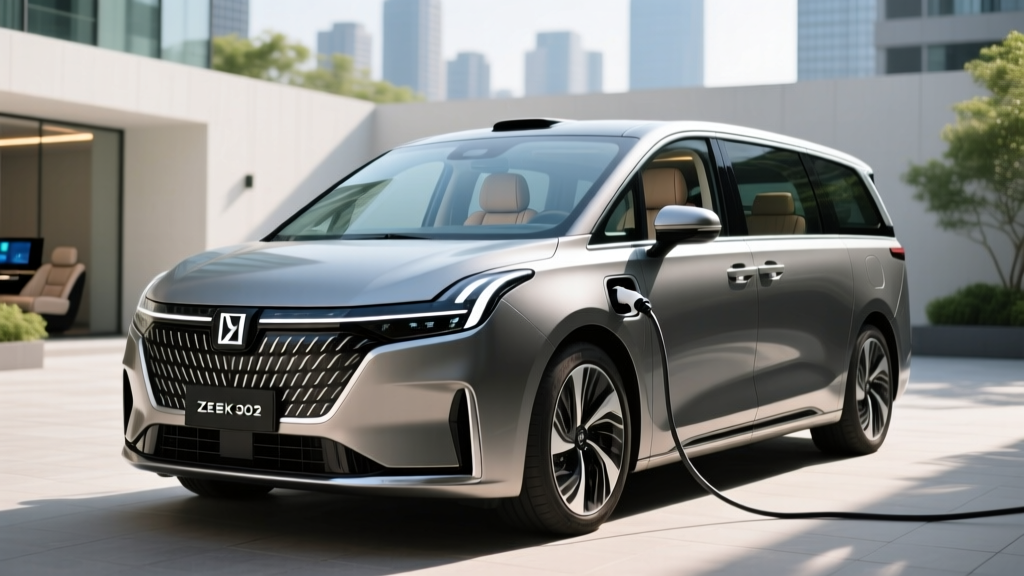
The Zeekr 009 is Geely's luxury electric minivan, positioned squarely at the premium end of the EV MPV segment. Originally launched for the Chinese market, the 2026 model year marks Zeekr's broader international push, bringing this three-row, six-passenger electric van to select global markets. With a massive 140 kWh battery option and dual-motor all-wheel drive, the 009 is designed for executives and families who want limousine-level comfort without burning a drop of fuel. But with limited U.S. availability and a price that rivals the Mercedes EQS SUV, buyers need hard data before considering an import or future domestic launch.
This review breaks down every Zeekr 009 specification that matters — real-world range expectations, charging curve behavior, interior dimensions, and whether this EV minivan can qualify for U.S. federal tax credits. Let's get into the numbers.
Zeekr 009 Specifications at a Glance
| Specification | Standard Range (116 kWh) | Long Range (140 kWh) |
|---|---|---|
| Battery Capacity (usable) | ~116 kWh | 140 kWh (CATL Qilin) |
| Battery Chemistry | NMC (Nickel Manganese Cobalt) | NMC (CTP 3.0 / Qilin) |
| CLTC Range (China) | ~514 mi (827 km) | ~583 mi (938 km) |
| Estimated EPA Range (if U.S.-rated) | ~310–330 mi | ~370–400 mi |
| Drivetrain | Dual-Motor AWD | Dual-Motor AWD |
| Total Output | 536 hp (400 kW) | 536 hp (400 kW) |
| 0–60 mph | ~4.5 sec | ~4.5 sec |
| Max DC Fast Charge | ~200 kW | ~200 kW |
| 10–80% DC Charge Time | ~28 min | ~35 min |
| Level 2 Home Charge (11 kW AC) | ~22 mi/hr | ~25 mi/hr |
| Passenger Capacity | 6 (2+2+2) | 6 (2+2+2) |
| Length / Width / Height | 205.5 in / 79.5 in / 72.6 in | |
| Wheelbase | 126.4 in (3,210 mm) | |
| Cargo (behind 3rd row) | ~12.4 cu ft | |
| Cargo (3rd row folded) | ~40 cu ft | |
Note: CLTC range figures are from China's lighter testing cycle. U.S. EPA estimates would be approximately 25–30% lower. Zeekr has not published official EPA ratings as the 009 is not currently sold in the United States.
Real-World Range: What to Actually Expect
The 140 kWh CATL Qilin battery uses Cell-to-Pack 3.0 (CTP 3.0) technology, which increases volumetric utilization to roughly 72% — meaning more energy in the same physical footprint. This is a genuinely impressive engineering achievement. However, physics still governs efficiency: the 009 weighs over 6,200 lbs (curb weight), and a boxy minivan profile carries a higher drag coefficient than a sedan. Combined, these factors mean the 009 will consume roughly 48–55 kWh per 100 miles in mixed driving — substantially more than a Tesla Model Y (~28 kWh/100 mi) but in line with large luxury EVs like the Rivian R1S.
The 116 kWh variant, which uses a conventional NMC pack, offers a CLTC range of 514 miles (827 km). Expect real-world highway range of roughly 250–280 miles and cold-weather range of 210–240 miles. For most owners with home charging, this is still adequate for daily use, but road-trippers will want the 140 kWh pack.
Charging Speed: DC Fast Charging and Home Level 2
| Charging Level | Power | Time / Rate | Notes |
|---|---|---|---|
| Level 1 (120V household) | ~1.4 kW | ~3 mi/hr | Emergency top-up only |
| Level 2 (240V / 48A home) | 11 kW (onboard charger) | ~22–25 mi/hr; full charge in 11–14 hr | Recommended for daily use |
| DC Fast Charge (peak) | ~200 kW | 10–80% in ~28–35 min | Peak rate sustained to ~50% SoC, then tapers |
| DC Fast Charge (800V architecture) | Up to ~200 kW | 80–100% adds ~15–20 min | Charge curve slows significantly above 80% |
The Zeekr 009 uses an 800-volt electrical architecture, which enables higher charge rates with lower current (and therefore less heat). At a compatible 200+ kW DC fast charger, the 140 kWh pack can accept peak rates around 200 kW — but as with all lithium-ion batteries, the charge curve is not flat. Expect the 009 to sustain near-peak rates from roughly 10% to 50% State of Charge (SoC), after which the Battery Management System (BMS) tapers current to protect cell longevity. The 10–80% fill takes approximately 28 minutes for the 116 kWh pack and 35 minutes for the 140 kWh pack.
For home charging, the onboard AC charger maxes out at 11 kW. On a 48-amp, 240-volt Level 2 circuit (the most common home EVSE setup), you'll add roughly 22–25 miles of range per hour. A full overnight charge from 20% to 100% takes about 10–12 hours — perfectly suited to a nightly plug-in routine. Zeekr recommends preconditioning the battery (warming it to optimal temperature) before fast-charging sessions, especially in cold climates. This can be initiated via the Zeekr app or the navigation system when a DC fast charger is set as your destination.
Performance and Driving Dynamics
For a vehicle that weighs over three tons, the Zeekr 009 moves with surprising urgency. The dual-motor all-wheel-drive powertrain produces 536 horsepower (400 kW) and launches the 009 from 0–60 mph in approximately 4.5 seconds. That puts it in the territory of a Porsche Cayenne — remarkable for a three-row minivan.
The dual-motor setup uses a front asynchronous (induction) motor and a rear permanent-magnet synchronous motor. This configuration allows the front motor to freewheel during light-load cruising, improving efficiency by reducing drag losses. The air suspension system (standard on all trims) adjusts ride height by up to 2.4 inches and includes adaptive damping, providing a compliant ride that isolates occupants from road imperfections — exactly what you'd expect in a vehicle competing with the Mercedes V-Class and Lexus LM.
Regenerative braking offers three levels, selectable via the center touchscreen or steering wheel paddles. The strongest setting enables near-one-pedal driving in city traffic, though it doesn't quite bring the vehicle to a complete stop without touching the brake pedal. Towing capacity is rated at approximately 3,300 lbs (1,500 kg) with a braked trailer — sufficient for a small boat or light utility trailer, but not for heavy-duty hauling.
Interior, Technology, and Standout Features
The Zeekr 009's cabin is where it earns its luxury positioning. The six-seat layout (2+2+2) features second-row captain's chairs with power recline, heated and ventilated cushions, power leg rests, and individual armrests with integrated controls. The third row accommodates adults on shorter trips, with 30.3 inches of legroom — tight for long journeys but better than many three-row SUVs.
Technology highlights include:
- 15.6-inch central touchscreen running Zeekr's Android-based infotainment system with wireless Apple CarPlay and Android Auto
- 12.3-inch digital instrument cluster plus a head-up display with augmented-reality navigation
- Second-row 17-inch ceiling-mounted display for rear-seat entertainment (streaming, navigation, video calls)
- Yamaha 20-speaker audio system with headrest speakers in second-row seats
- Zeekr AD (Advanced Driving) — a Level 2 driver-assistance suite including adaptive cruise control, lane-centering, automatic lane change, and traffic-jam assist on supported highways
- Mobileye EyeQ5H chips powering the ADAS stack, with LiDAR on upper trims for enhanced perception
- Over-the-air (OTA) updates for powertrain calibration, infotainment, and ADAS features
Notable drawbacks: the infotainment system, while feature-rich, has a learning curve and some menu nesting that requires more taps than ideal. The driver-assist system (Zeekr AD) is an SAE Level 2 system — the driver must remain fully engaged with hands on the wheel and eyes on the road. It is not autonomous driving.
Pricing, Trims, and Federal Tax Credit Eligibility
| Trim | Battery | MSRP (China Market) | Estimated U.S. Price (if launched) |
|---|---|---|---|
| WE (Standard Range) | 116 kWh NMC | ~¥499,000 (~$69,000) | $75,000–$80,000 (est.) |
| ME (Long Range) | 140 kWh CATL Qilin | ~¥588,000 (~$81,000) | $90,000–$95,000 (est.) |
Federal Tax Credit (§30D) Eligibility: As of 2026, the Zeekr 009 is not officially sold in the United States, which makes federal tax credit eligibility a complex question. If Zeekr enters the U.S. market, the 009 would face several hurdles under current IRS §30D rules:
- MSRP Cap: Vans and SUVs are capped at $80,000 MSRP. The Long Range (ME) trim would likely exceed this cap, disqualifying it from the credit. The Standard Range (WE) trim might fall under the cap depending on U.S. pricing.
- Battery Sourcing: At least 40% of critical minerals and 50% of battery components must be sourced from the U.S. or free-trade-agreement countries (2026 thresholds). CATL's Chinese supply chain would likely fail this requirement, eliminating the $7,500 credit entirely regardless of MSRP.
- Buyer Income Cap: Modified adjusted gross income must not exceed $300,000 (joint), $225,000 (head of household), or $150,000 (individual).
- Assembly: Final assembly must occur in North America. Zeekr's Ningbo, China factory does not meet this requirement.
Bottom line: The Zeekr 009 would almost certainly not qualify for the $7,500 federal EV tax credit under current rules due to Chinese assembly and battery sourcing. Buyers should consult a tax professional for personalized guidance.
Zeekr 009 vs. Competitors: Is It Worth Buying?
The Zeekr 009 occupies a niche with very few direct electric competitors. Here's how it stacks up:
| Spec | Zeekr 009 (140 kWh) | Mercedes EQS SUV 580 | Rivian R1S (Max Pack) | Tesla Model X (Long Range) |
|---|---|---|---|---|
| Est. EPA Range | ~370–400 mi | ~305 mi | ~352 mi | ~335 mi |
| Battery (kWh) | 140 kWh NMC | 108.4 kWh NMC | 149 kWh NMC | 100 kWh NMC |
| 0–60 mph | ~4.5 sec | ~4.4 sec | ~3.5 sec | ~3.8 sec |
| DC Fast Charge (peak kW) | ~200 kW | ~200 kW | ~200 kW | ~250 kW |
| Seating | 6 (3 rows) | 5–7 | 7 | 5–7 |
| Base MSRP (U.S.) | Not available in U.S. | ~$105,550 | ~$99,900 | ~$81,630 |
| Federal Tax Credit | Likely ineligible | Partial (sourcing dependent) | $7,500 (if eligible) | $7,500 (if eligible) |
The 009's standout advantage is its class-leading battery capacity and estimated range — no competitor in this segment offers a 140 kWh pack. However, its unavailability in the U.S. market, lack of tax credit eligibility, and uncertain service/parts infrastructure make it a risky proposition for American buyers. If Zeekr establishes a U.S. dealer and service network, the 009 could be a compelling alternative to the EQS SUV at a potentially lower price point.
Pros
- Massive 140 kWh battery offers best-in-class range potential (~370–400 mi est. EPA)
- 800V architecture enables competitive 200 kW DC fast charging
- Luxurious six-seat cabin with second-row captain's chairs and rear entertainment
- 536 hp dual-motor AWD with 4.5-second 0–60 mph
- Air suspension with adaptive damping as standard
- Competitive pricing in China (~$69K–$81K) vs. European rivals
Cons
- Not officially available in the U.S. market as of 2026
- Almost certainly ineligible for $7,500 federal EV tax credit (Chinese assembly + battery sourcing)
- Heavy curb weight (~6,200 lbs) hurts efficiency (est. 48–55 kWh/100 mi)
- 35-minute 10–80% DC charge time for the 140 kWh pack is slower than some rivals
- Cargo space behind 3rd row is modest (~12.4 cu ft)
- Infotainment system has a steep learning curve
- U.S. service and parts infrastructure does not yet exist
Warranty and Battery Longevity
In the Chinese market, Zeekr provides the following warranty coverage for the 009:
- Vehicle warranty: 6 years / 150,000 km (~93,000 miles)
- Battery & powertrain warranty: 8 years / 200,000 km (~124,000 miles) with a capacity retention threshold of 70% State of Health (SoH)
- First-owner battery: Zeekr has offered lifetime battery warranty for first owners in China (terms may differ for export markets)
The CATL Qilin (CTP 3.0) NMC cells used in the 140 kWh variant are among the most energy-dense production cells available, with a rated cycle life of approximately 1,500–2,000 full charge cycles before reaching 80% SoH. At an estimated 370 miles per full cycle, that translates to roughly 550,000–740,000 miles before the battery degrades to 80% capacity — far more than most owners will ever drive. However, real-world degradation depends on charging habits, climate, and how often the battery is held at high SoC. Best practice: charge to 80% for daily use and reserve 100% charges for road trips.
Who Should Buy the Zeekr 009?
The Zeekr 009 is best suited for:
- Executive chauffeur use: The second-row experience rivals a business-class airline seat, making the 009 ideal for airport transfers and corporate fleets.
- Large families needing maximum range: If you need three rows and 350+ miles of real-world range, the 140 kWh 009 is one of the few EVs that delivers.
- Buyers in China, Southeast Asia, or the Middle East: Where Zeekr has established sales and service networks, the 009 is a strong value proposition against the Lexus LM and Mercedes V-Class.
U.S. buyers should wait until Zeekr confirms a domestic launch, establishes service centers, and clarifies tax credit eligibility before committing. For now, the Rivian R1S, Tesla Model X, and Mercedes EQS SUV remain the practical choices for American families seeking a three-row electric vehicle.
Frequently Asked Questions
What is the real-world range of the Zeekr 009?
The 140 kWh Long Range variant achieves approximately 583 miles on China's CLTC cycle, which translates to an estimated EPA rating of 370–400 miles. In real-world highway driving at 70 mph, expect 300–340 miles. In cold weather (below freezing), plan for 260–300 miles.
How fast does the Zeekr 009 charge?
On a DC fast charger, the 009 peaks at approximately 200 kW, with a 10–80% charge time of about 28 minutes (116 kWh pack) or 35 minutes (140 kWh pack). At home on a Level 2 (240V / 48A) charger, it adds roughly 22–25 miles of range per hour.
Does the Zeekr 009 qualify for the U.S. federal EV tax credit?
Almost certainly not. Under current IRS §30D rules, the vehicle must be assembled in North America and meet battery-sourcing requirements for critical minerals and components. The 009 is built in Ningbo, China, with a CATL battery that does not meet FTA-country sourcing thresholds. Additionally, the Long Range trim would likely exceed the $80,000 MSRP cap for vans/SUVs.
Is the Zeekr 009 available in the United States?
As of 2026, the Zeekr 009 is not officially sold in the U.S. market. Zeekr has indicated plans for global expansion, but no U.S. launch date has been confirmed. Gray-market imports are theoretically possible but would lack warranty coverage, service support, and U.S. safety certification.
How does the Zeekr 009 compare to the Toyota Sienna hybrid?
The Toyota Sienna is a conventional hybrid (HEV) minivan with an EPA-estimated 36 MPG combined and no electric-only range. It starts around $38,000 and offers a proven reliability record. The Zeekr 009 is a fully electric (BEV) luxury minivan at roughly twice the price, offering dramatically more power (536 hp vs. 245 hp), a quieter cabin, and zero tailpipe emissions — but at the cost of charging logistics and limited service infrastructure outside Asia.
What battery chemistry does the Zeekr 009 use?
Both variants use NMC (Nickel Manganese Cobalt) lithium-ion chemistry. The 140 kWh Long Range model uses CATL's Qilin (CTP 3.0) cells, which offer higher energy density than conventional NMC packs. LFP (Lithium Iron Phosphate) chemistry is not offered, which means the 009 prioritizes range over the lower cost and longer cycle life that LFP provides.