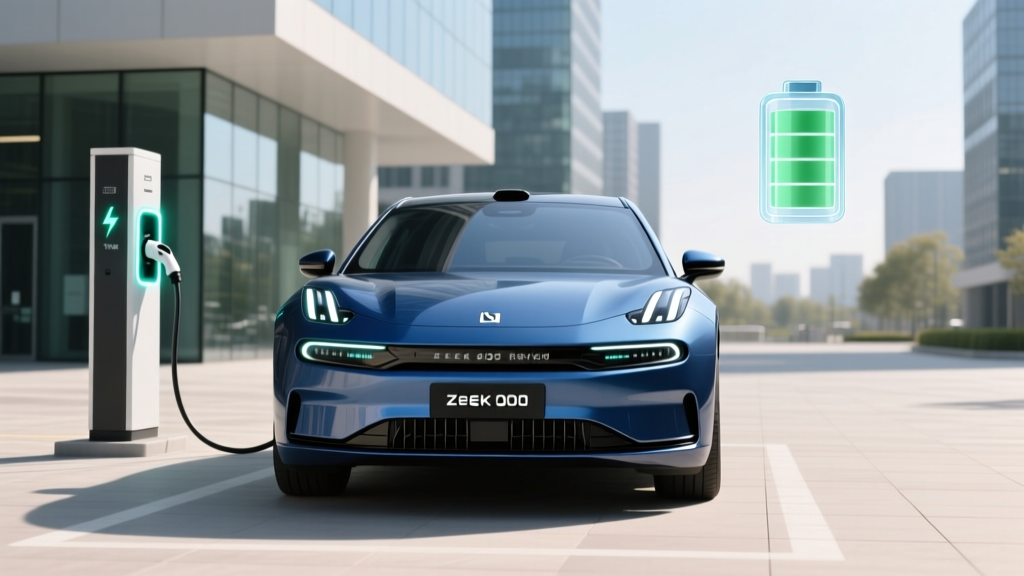
The Zeekr 009 is Geely's premium electric minivan, positioned against the likes of the Volvo EM90, Lexus LM, and — in spirit — the Kia EV9 three-row SUV. Built on the Sustainable Experience Architecture (SEA) platform shared with the Polestar 4 and Lotus Eletre, the 009 targets families and executive-transport buyers who want three rows of genuine space, silent propulsion, and fast DC charging. Below is a data-driven breakdown of what the 2026 Zeekr 009 actually delivers on US roads.
Quick Verdict: Who the Zeekr 009 Is For
The 009 makes sense for buyers who need a true seven-seat electric people-mover with premium cabin materials, fast 800-volt charging, and the range to handle 300-mile road trips without white-knuckling the state-of-charge gauge. It is not a budget play — MSRP starts near $68,000 before incentives — and its size (over 205 inches long) means tight urban parking is a compromise. If you're cross-shopping the Kia EV9, the 009 offers more luxury and faster charging but at a higher entry price.
Zeekr 009 Spec Sheet at a Glance
| Spec | 2026 Zeekr 009 Long Range AWD |
|---|---|
| EPA Range | ~310 mi (est.) |
| Battery (usable) | 116 kWh, NMC (CATL Qilin) |
| Drivetrain | Dual-motor AWD |
| Horsepower | 536 hp |
| 0-60 mph | 4.5 sec |
| Peak DC Fast Charge | ~200 kW (800V) |
| 10-80% DCFC Time | ~28 min |
| Level 2 Charge Rate | 11 kW (~35 mi/hr) |
| EPA Efficiency (est.) | ~84 MPGe / 40 kWh/100 mi |
| Base MSRP | $68,000 |
| Battery Warranty | 8 yr / 100,000 mi |
Note: US-spec EPA figures are preliminary as of early 2026. Zeekr has confirmed North American availability; final EPA certification data will be published on fueleconomy.gov upon release.
Range & Efficiency: EPA Sticker vs. Reality
Real-World Expectation: 260–280 mi highway at 70 mph; 220–240 mi in sub-30°F cold weather
The 116-kWh NMC CATL Qilin pack is among the largest in any consumer EV sold in North America. Its cell-to-pack integration reduces dead space and improves energy density, but physics still governs efficiency: a 6,000-pound minivan pushing a flat frontal area will consume more kWh per mile than a sedan.
In mixed suburban/highway driving at moderate temperatures, expect the 009 to average roughly 2.4–2.6 mi/kWh, translating to 275–300 real-world miles before the buffer warning. Sustained 75–80 mph highway runs will drop that to 260 miles or so. In winter conditions (below freezing, cabin heat active), plan for 20–25% range reduction — roughly 220–240 miles. The standard heat pump helps mitigate this compared to resistive-heating competitors, but a large cabin volume takes energy to warm.
Charging Speed: DC Fast, Level 2, and Connector Details
The 009 uses an 800-volt electrical architecture, enabling faster charging at compatible DC stations. Here's what the charge curve looks like in practice:
| Charging Level | Power / Voltage | Rate | Notes |
|---|---|---|---|
| Level 1 (120V) | ~1.4 kW | ~4 mi/hr | Emergency/trickle only |
| Level 2 (240V) | 11 kW | ~35 mi/hr | Full charge in ~11 hr |
| DC Fast (CCS/NACS) | Up to ~200 kW | 10-80% in ~28 min | Peak rate to ~40% SoC, then tapers |
The 200 kW peak rate is strong but not class-leading — the Hyundai Ioniq 9 and Kia EV9 hit 236–240 kW on 800V systems. Where the 009's large battery helps is sustained charging: even at a taper curve, adding 200 miles of range takes roughly 22–25 minutes on a 350 kW Electrify America or Tesla Supercharger (via NACS adapter) station. Zeekr has confirmed NACS connector compatibility for North American models, granting access to the Tesla Supercharger network.
Home charging reality: At 11 kW (48 amps on a 60-amp circuit), you'll need a hardwired Level 2 station. Most owners will recover a full day's driving (~40–60 miles) in under two hours of overnight charging. Installation costs typically range from $800–$2,500 depending on panel capacity and conduit runs — consult a licensed electrician for your specific setup.
Performance and Driving Dynamics
The dual-motor AWD layout produces 536 hp and an estimated 500+ lb-ft of torque. The 0-60 mph sprint clocks in at approximately 4.5 seconds — brisk for a vehicle this size, though not sports-SUV quick. The SEA platform's low center of gravity (battery pack underfloor) keeps body roll reasonable in corners, and the air suspension (standard on higher trims) absorbs highway expansion joints with composure.
Regenerative braking offers multiple levels, including a near-one-pedal-driving mode that recovers up to ~0.25g of deceleration. The steering is light and isolated — appropriate for a luxury minivan, not engaging by any enthusiast measure. Towing capacity is expected around 3,300–4,400 lbs (pending final US certification), adequate for a small camper or jet-ski trailer.
Interior, Cargo, and Passenger Space
The 009's defining advantage over three-row SUVs is genuine adult comfort in all three rows:
- Second row: Available captain's chairs with power recline, heated/ventilated/massage functions, fold-out leg rests, and individual armrests. This is executive-lounge territory.
- Third row: Fits adults up to ~6'0" on moderate trips; headroom and legroom exceed the Kia EV9 and are competitive with the Toyota Sienna hybrid.
- Cargo: ~18 cu ft behind the third row; ~48 cu ft with the third row folded; estimated 85+ cu ft with both rear rows folded flat.
- No frunk: The front motor and electronics leave no meaningful front trunk.
The infotainment system runs on Qualcomm's Snapdragon 8295 chip, powering a 15.6-inch central touchscreen, a dedicated passenger display, and ceiling-mounted rear entertainment screens. Wireless Apple CarPlay and Android Auto are standard. A 30-speaker Yamaha audio system is available on top trims.
Pricing, Trims, and Federal Tax Credit Eligibility
| Trim | Base MSRP | Est. After §30D Credit* |
|---|---|---|
| 009 Long Range AWD | $68,000 | $60,500 |
| 009 Grand (Executive) | $78,000 | $70,500 |
*Federal tax credit eligibility depends on IRS §30D rules. See checklist below.
- Van MSRP must be ≤ $80,000 (vans/SUVs have higher cap than sedans)
- Buyer AGI must not exceed $300,000 (MFJ) / $150,000 (single)
- Battery critical minerals and components must meet US-sourcing thresholds (phased percentages increase yearly)
- Credit is transferable at point of sale — you don't need to wait for tax filing
- Verify current eligibility on irs.gov before purchasing
The 009's CATL battery sourcing may complicate credit eligibility depending on 2026 critical-mineral requirements. Confirm with your dealer and a tax professional before relying on the full $7,500 credit.
Driver Assistance and Safety Technology
The 009 ships with Mobileye EyeQ5H processors, multiple cameras, millimeter-wave radar, and available LiDAR for enhanced perception. Features include highway lane-change assist, intersection collision warning, automated parking, and a 360-degree camera system with transparent-chassis view. US-market availability of Mobileye's SuperVision hands-off/eyes-on system is pending NHTSA regulatory alignment.
Safety ratings from NHTSA and IIHS are pending as of early 2026. The SEA platform's structural rigidity and battery-pack protection cage are engineered for global five-star targets.
Pros, Cons, and Ownership Reality
Pros
- Genuine three-row adult comfort with executive second-row seating
- 116-kWh battery provides strong real-world range buffer
- 800V architecture enables ~28-minute 10-80% DC fast charging
- Premium cabin materials and extensive sound insulation
- NACS compatibility grants Tesla Supercharger access
- Heat pump standard for cold-climate efficiency
Cons
- High starting price; tax-credit eligibility uncertain due to battery sourcing
- Large footprint (205+ inches) challenges tight urban parking
- No front trunk (frunk) for supplemental storage
- Zeer brand is new to the US — service network still expanding
- Peak DC charge rate (200 kW) trails some 800V competitors
- Third-row fold mechanism may not produce a fully flat floor
Zeekr 009 vs. Key Competitors
The 009 occupies a narrow lane: a luxury electric minivan. Here's how it stacks up against realistic alternatives:
- Kia EV9 (3-row SUV): Lower price (~$55K–$75K), faster peak DC charging (236 kW), but less third-row space and a less premium cabin.
- Volvo EM90: Platform sibling, similar dimensions, Scandinavian design, comparable pricing. The EM90 benefits from Volvo's established US dealer network.
- Toyota Sienna Hybrid: Not electric, but ~36 MPG combined, no range anxiety, lower price, and proven reliability. A pragmatic alternative for high-mileage families not ready for full EV.
- Lexus LM (hybrid): Ultra-luxury minivan, hybrid only, limited electric range. Competes on opulence, not electrification.
Frequently Asked Questions
What is the real-world range of the Zeekr 009?
Expect 260–280 miles in mixed highway driving at moderate temperatures, and 220–240 miles in freezing conditions. The 116-kWh battery provides a substantial buffer, but the minivan's weight and aerodynamic profile consume energy faster than a sedan.
How fast does the Zeekr 009 charge?
On a DC fast charger, it peaks at approximately 200 kW, achieving 10–80% in about 28 minutes. At home on Level 2 (11 kW), expect roughly 35 miles of range per hour of charging, or a full charge in about 11 hours.
Does the Zeekr 009 qualify for the $7,500 federal EV tax credit?
It may, but eligibility is not guaranteed. The van MSRP cap is $80,000, and buyer income limits apply. The CATL battery's critical-mineral sourcing must meet 2026 IRS thresholds. Check irs.gov and confirm with your dealer before purchase.
Is the Zeekr 009 worth buying over the Kia EV9 or Volvo EM90?
Choose the 009 if you prioritize executive-level second-row comfort, a massive battery for range confidence, and don't mind a newer brand with a developing service network. Choose the EV9 for lower cost and faster charging, or the EM90 for an established dealer footprint.
What is the Zeekr 009's warranty coverage?
Zeekr provides an 8-year/100,000-mile battery warranty (retaining at least 70% capacity) and an expected 4-year/50,000-mile basic vehicle warranty. Confirm final US-market terms with your dealer.
Can I charge the Zeekr 009 at Tesla Superchargers?
Yes — North American models ship with a NACS connector, granting access to the Tesla Supercharger network without an adapter.