Quick Answer: Is the Yangwang U9 Electric Supercar Worth Buying?
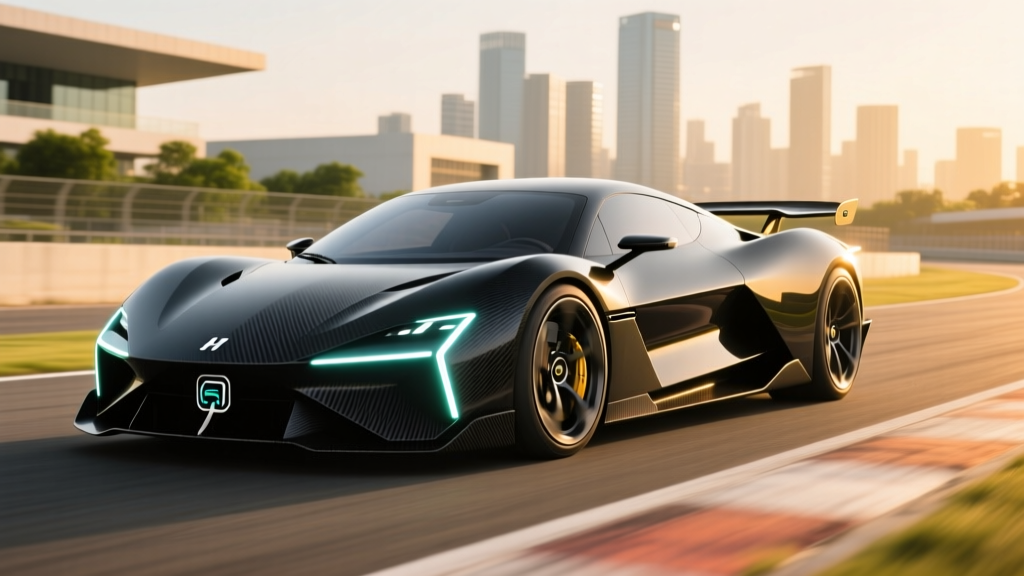
The Yangwang U9 is BYD's halo electric supercar producing 1,287 horsepower from four independent motors, with a 120 kWh LFP Blade battery delivering a CLTC-rated 280 miles (expect ~220–240 miles real-world). Priced at approximately 1.68 million yuan (~$165,000 USD at current exchange rates), it undercuts comparable gas supercars like the Lamborghini Revuelto and Ferrari SF90 on sticker price. However, US availability remains unconfirmed as of early 2026, federal §30D tax credits do not apply due to the MSRP cap and battery-sourcing rules, and insurance premiums on a 1,287-HP EV are substantial. If you can import one or are based in a market where BYD sells directly, the U9 offers supercar performance at a fraction of traditional exotic pricing — but real-world charging logistics and parts availability remain open questions.
Yangwang U9: Core Specs and Performance Numbers
BYD launched the Yangwang brand to compete at the ultra-luxury tier, and the U9 is its flagship electric supercar. Here are the confirmed specifications based on BYD's official releases and Chinese market filings:
| Specification | Yangwang U9 |
|---|---|
| Powertrain | Quad-motor AWD (e4 platform) |
| Total Output | 1,287 HP (960 kW) |
| 0–62 mph (0–100 km/h) | 2.36 seconds |
| Top Speed | 190 mph (305 km/h) |
| Battery Chemistry | LFP (BYD Blade) |
| Battery Capacity | ~120 kWh (usable) |
| Range (CLTC) | ~280 miles (450 km) |
| Estimated Real-World Range | ~220–240 miles |
| DC Fast Charge Architecture | 800V |
| Peak DC Charge Rate | ~500 kW (dual-gun) |
| 10–80% Charge Time | ~15 minutes (at rated peak) |
| Suspension | DiActive active hydraulic (tank turns, jumps) |
| Base Price (China) | ¥1,680,000 (~$165,000 USD) |
The e4 platform gives each wheel its own motor, enabling torque vectoring that no conventional mechanical differential can match. The DiActive suspension is the same system that went viral for allowing the U9 to drive on three wheels and perform controlled jumps — engineering theater, yes, but it also translates to extraordinary body control at speed.
Real-World Range Reality Check
The CLTC testing cycle used in China is notably optimistic compared to the US EPA standard. A CLTC rating of 280 miles typically translates to roughly 220–240 miles in mixed real-world driving, and potentially as low as 170–190 miles at sustained highway speeds above 75 mph or in cold weather below 32°F. Supercar aerodynamics and wide, sticky tires increase rolling resistance and drag. Plan your road-trip charging stops around 160–180 miles to maintain a safety buffer.
Yangwang U9 vs Gas Supercars: Performance and Cost Comparison
The most useful context for the U9 is how it stacks up against the internal-combustion supercars it targets on performance — and how dramatically it undercuts them on price.
| Metric | Yangwang U9 (EV) | Lamborghini Revuelto (V12 PHEV) | Ferrari SF90 Stradale (V8 PHEV) |
|---|---|---|---|
| Horsepower | 1,287 HP | 1,001 HP | 986 HP |
| 0–62 mph | 2.36 sec | 2.5 sec | 2.5 sec |
| Top Speed | 190 mph | 217 mph | 211 mph |
| Base Price (USD approx.) | ~$165,000 | ~$608,000 | ~$524,000 |
| Fuel / Energy | Electricity | Gasoline + Electric | Gasoline + Electric |
| Annual Fuel/Energy Cost* | ~$1,800 | ~$5,400 | ~$4,800 |
| Drivetrain Warranty | 6 yr / 150,000 km (China) | 3 yr / unlimited | 3 yr / unlimited |
*Based on 5,000 miles/year at US average electricity rate ($0.16/kWh) for the U9 and US average premium fuel ($4.80/gal) for gas supercars, assuming 12 MPG combined. Supercar owners typically drive fewer annual miles.
The price gap is staggering. The U9 costs roughly what a well-optioned Porsche Taycan Turbo S does while delivering more horsepower than a Bugatti Chiron. The trade-off: brand cachet, top speed, established dealer networks, and long-term parts availability all favor the European marques.
Real Ownership Costs: What the U9 Actually Costs to Run
Sticker price is only the beginning. Here is a projected 5-year cost breakdown assuming US-equivalent ownership (were the car available stateside):
| Cost Category | Yangwang U9 (Est.) | Lamborghini Revuelto (Est.) |
|---|---|---|
| Purchase Price | $165,000 | $608,000 |
| Import / Compliance (if applicable) | $15,000–$30,000 | N/A (sold in US) |
| Annual Insurance | $8,000–$14,000/yr | $10,000–$18,000/yr |
| 5-Year Energy/Fuel | $9,000 | $27,000 |
| 5-Year Maintenance | $3,000–$5,000 | $15,000–$25,000 |
| 5-Year Depreciation (est. 50–60%) | $82,500–$99,000 | $243,000–$365,000 |
| Estimated 5-Year Total Cost | $356,500–$433,000 | $1,003,000–$1,243,000 |
Key takeaways from this breakdown:
- Insurance is the wildcard. Few US insurers have actuarial data on Yangwang vehicles. Expect premiums based on the car's value and 1,287 HP output — similar to insuring a McLaren or high-end Porsche.
- Maintenance favors EVs. No oil changes, no V12 timing chain service, no dual-clutch transmission fluid. Brake wear is reduced thanks to regenerative braking. However, the DiActive hydraulic suspension is complex and proprietary — repairs could be costly without a local service network.
- Depreciation is the biggest unknown. BYD/Yangwang has no resale-value track record outside China. Early adopters should expect steep depreciation until the brand establishes itself globally.
Charging the U9: 800V Architecture and Real-World Logistics
The U9 uses BYD's 800V electrical architecture, which is the current gold standard for fast-charging EVs. The dual-gun charging capability — using two CCS connectors simultaneously — enables peak rates up to ~500 kW, but this requires compatible infrastructure that remains rare.
| Charging Level | Power (kW) | Miles Added per Hour | Notes |
|---|---|---|---|
| Level 1 (120V household) | 1.4 kW | ~4–5 mi/hr | Impractical for 120 kWh battery |
| Level 2 (240V, 48A) | 11.5 kW | ~35–40 mi/hr | Full charge in ~11 hours |
| Level 2 (240V, 80A) | 19.2 kW | ~60–65 mi/hr | Full charge in ~6.5 hours |
| DC Fast (single gun, 250 kW) | 250 kW peak | ~750+ mi/hr (peak) | 10–80% in ~20 min |
| DC Fast (dual gun, 500 kW) | 500 kW peak | ~1,500+ mi/hr (peak) | 10–80% in ~15 min; rare infrastructure |
For home charging, a Level 2 setup at 11.5 kW is the practical baseline. With a 120 kWh battery, expect an overnight charge (10 hours) to add roughly 350 miles of range — more than enough to refill from near-empty. Installation costs for a dedicated 60A circuit with a hardwired Level 2 charger typically run $800–$2,500 depending on panel proximity, per data from the US Department of Energy.
On public DC fast chargers, the charge curve matters more than peak rate. Like all EVs, the U9 will sustain peak charging only in a narrow state-of-charge window (roughly 10–40%), then taper. A 500 kW peak doesn't mean you average 500 kW across the session. Expect real-world 10–80% times closer to 18–22 minutes on typical 350 kW chargers (Tesla V4 Superchargers, Electrify America 350 kW stations).
Tax Credits, Import Challenges, and US Availability
As of 2026, BYD has not officially announced US sales for the Yangwang U9. This creates several ownership complications:
Federal §30D Tax Credit Eligibility
- MSRP Cap: The §30D credit caps eligibility at $80,000 for sedans and $80,000 for SUVs/trucks/vans. At ~$165,000, the U9 exceeds this cap regardless of other factors.
- Income Cap: Modified adjusted gross income limits apply ($300K joint / $150K single for new vehicles). Even if the price qualified, high-income supercar buyers would likely be excluded.
- Battery Sourcing: The critical-minerals and battery-component requirements under IRS §30D rules effectively exclude most Chinese-manufactured battery packs. BYD's vertically integrated LFP supply chain does not meet current US sourcing requirements.
- Verdict: The U9 does not qualify for the federal EV tax credit under any realistic scenario.
Importing a non-US-market vehicle involves DOT compliance (FMVSS standards), EPA emissions certification (even EVs require EPA import approval), and potentially modifying lighting, glass, and crash structures. Specialist importers charge $15,000–$30,000+ for this process, and there is no guarantee of approval for a vehicle never submitted for US homologation by the manufacturer.
Common Misconceptions About Electric Supercars
| Myth | Fact |
|---|---|
| "Electric supercars can't match gas cars on track." | The U9's 2.36-second 0–62 mph beats most gas supercars. However, sustained track use causes battery heat buildup, and EVs are heavier — tire and brake wear increase. The U9 is a grand-touring supercar, not a dedicated track weapon. |
| "LFP batteries are inferior for performance cars." | LFP offers lower energy density than NMC but provides superior thermal stability and longer cycle life. BYD's Blade cell format mitigates packaging penalties. For a supercar driven mostly on road, LFP's safety and longevity are assets. |
| "You can charge an EV anywhere in 15 minutes." | Peak 500 kW dual-gun charging requires specialized infrastructure. On standard 150–350 kW public chargers, expect 20–30 minutes for 10–80%. In rural areas or regions with limited DC fast-charger density, trip planning is essential. |
| "EV maintenance is basically free." | Drivetrain maintenance is minimal, but the U9's active hydraulic suspension, four independent motors, and complex thermal management systems are expensive proprietary components. Out-of-warranty repairs could rival gas supercar costs. |
| "Cold weather won't affect a supercar." | LFP batteries are more sensitive to cold than NMC. Below freezing, expect 15–25% range reduction and slower DC charge rates unless the battery is preconditioned. The U9's thermal management system mitigates this, but physics still applies. |
Decision Framework: Should You Buy the Yangwang U9?
Choose the Yangwang U9 If:
- You are in a market where BYD officially sells and services the U9 (currently China, expanding to select Middle Eastern and Southeast Asian markets).
- You want 1,287 HP and sub-2.4-second 0–62 performance for under $200,000 — no gas or hybrid car at this price point comes close.
- You have reliable home charging (Level 2 at minimum) and drive primarily in urban or suburban environments where the U9's range is sufficient.
- You value technological novelty (DiActive suspension, individual wheel torque vectoring) over traditional brand prestige.
- You accept that depreciation on a new, unproven brand will likely be steep in the first 3–5 years.
Look Elsewhere If:
- You are in the US and need a vehicle with established dealer support, warranty service infrastructure, and FMVSS compliance.
- Track-day endurance is a priority — EVs still face thermal management challenges during repeated hot laps compared to mid-engine gas supercars.
- Resale value preservation matters. Lamborghini, Ferrari, and Porsche have decades of collector-market data supporting long-term value.
- You cannot install home charging and would rely entirely on public infrastructure for a 120 kWh battery.
Frequently Asked Questions
Is the Yangwang U9 available in the United States?
Not through official channels as of early 2026. BYD has not announced US sales for the Yangwang brand. Private import is theoretically possible but involves significant cost ($15,000–$30,000+) and regulatory risk. BYD's passenger vehicles are currently sold in China, Europe, Southeast Asia, Australia, and select Middle Eastern and South American markets.
How does the U9's range compare to other electric performance cars?
The U9's estimated real-world range of 220–240 miles is comparable to the Porsche Taycan Turbo GT (EPA 269 miles real-world ~230) and Lotus Eletre R (~260 miles EPA). The Lucid Air Sapphire achieves EPA 427 miles but is a sedan, not a supercar. Range is acceptable for a vehicle in this segment — most supercar owners drive 3,000–6,000 miles annually.
What is the battery warranty on the Yangwang U9?
BYD offers a 6-year/150,000 km battery warranty in China, typically covering capacity retention above 70–80% depending on terms. LFP chemistry generally degrades more slowly than NMC, with laboratory data showing 80%+ capacity retention after 3,000+ charge cycles. For a supercar driven 5,000 miles/year, the battery should outlast the ownership period.
Can the Yangwang U9 really jump and drive on three wheels?
Yes, these are demonstrated capabilities of the DiActive suspension system. The system uses hydraulic actuators at each corner to independently raise, lower, and stiffen each wheel. The "jump" is a controlled suspension extension, and three-wheel driving is a stability demonstration. These are not intended for regular use but showcase the system's bandwidth.
How does insurance work for an imported electric supercar?
Specialty insurers (Hagerty, Grundy, Chubb) handle exotic and imported vehicles. Expect premiums of $8,000–$14,000 annually based on agreed value, driver history, and storage conditions. An imported vehicle without US crash-test data may face additional underwriting scrutiny. Always get insurance quotes before committing to a purchase.