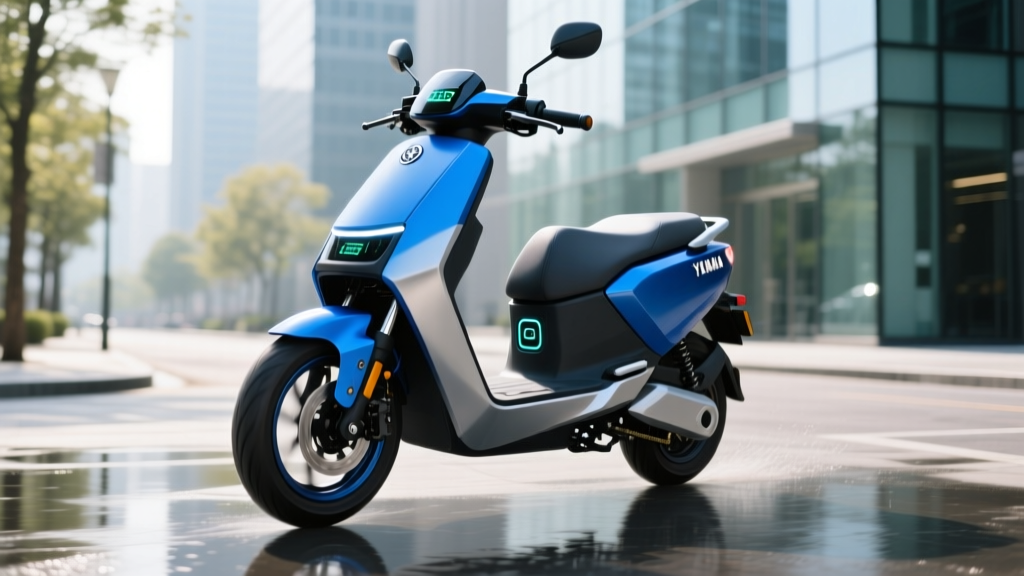
Quick Answer: As of 2026, Yamaha does not sell full-size electric scooters in the United States. The company's electric two-wheeler lineup is limited to the NEO's (a low-speed electric moped-class scooter with roughly 23 miles of range and a 1.2 kWh battery) and the E01, an electric scooter announced for select Asian and European markets but not currently available through U.S. dealers. If you're searching for a Yamaha electric scooter to buy in the U.S. today, your options are essentially zero — and you'll need to look at competitors like Zero Motorcycles, NIU, or Super73 for electric two-wheelers, or consider a used import.
This guide breaks down what Yamaha currently offers in the electric scooter space, the real numbers behind those products, how they compare to gas-powered scooters on cost and practicality, and what you should know if you're considering an electric scooter purchase from any brand.
Yamaha's Electric Scooter Lineup: What Actually Exists
Yamaha has been cautious in the electric two-wheeler market compared to competitors. Here's what's in their portfolio as of early 2026:
| Model | Class | Battery (kWh) | Range (claimed) | Top Speed | U.S. Availability | Price (MSRP) |
|---|---|---|---|---|---|---|
| Yamaha NEO's | Moped / low-speed | 1.2 kWh (removable, NMC) | ~23 mi (city) | ~25 mph | Discontinued in U.S. | Was ~$2,700 |
| Yamaha E01 | 125cc-equivalent scooter | 4.9 kWh (fixed, NMC) | ~65 mi (WMTC) | ~62 mph | Not available (Asia/Europe only) | ~¥1,650,000 JPN (~$11,000 USD equiv.) |
| Yamaha E02 (announced) | 50cc-equivalent scooter | ~1.7 kWh (est.) | ~30 mi (est.) | ~30 mph (est.) | Announced — no U.S. date | TBD |
The NEO's was Yamaha's only electric scooter sold in the U.S., and it was discontinued several years ago. The E01, which is a legitimate highway-capable electric scooter, launched in Japan in 2022 and expanded to limited European markets, but Yamaha Motor USA has not announced any plans to import it. The E02 remains in the concept/preview stage.
This matters because many U.S. buyers searching for "Yamaha electric scooters" expect to find a current model they can walk into a dealership and purchase — and that simply isn't the case in 2026.
Why Yamaha Hasn't Brought Electric Scooters to the U.S.
Several factors explain Yamaha's hesitation:
- Market size: The U.S. scooter market is small compared to Asia and Europe. Americans overwhelmingly prefer cars and trucks for commuting, making the addressable market for electric scooters niche.
- Regulatory complexity: U.S. DOT/NHTSA regulations for low-speed vehicles and motorcycles differ significantly from European and Asian standards, requiring separate homologation.
- Charging infrastructure gap: Unlike Europe, where apartment-dwelling scooter riders can often use public charging or removable batteries with indoor outlets, U.S. urban infrastructure for two-wheeler charging is sparse.
- Competition from cheaper brands: Chinese manufacturers like NIU and Segway dominate the U.S. electric scooter market at aggressive price points ($2,000–$5,000), making it difficult for premium Japanese brands to compete on value.
Yamaha has instead focused its electrification efforts on larger vehicles and on markets where scooter commuting is the norm.
Electric Scooter vs. Gas Scooter: Real Cost Comparison
Even though you can't buy a new Yamaha electric scooter in the U.S. today, understanding the economics of electric vs. gas scooters is essential if you're considering any brand. Here's a data-backed comparison using a typical 125cc-equivalent electric scooter (like the NIU MQI+ Evo or similar) versus a gas 125cc scooter (like the Honda PCX or Yamaha Vino):
| Cost Factor | Electric Scooter (125cc equiv.) | Gas Scooter (125cc) |
|---|---|---|
| Purchase Price (MSRP) | $3,500 – $6,000 | $3,000 – $4,200 |
| Battery / Fuel (annual, 3,000 mi/yr) | $60 – $120 (at $0.15/kWh) | $300 – $450 (at $3.50/gal, 80 MPG) |
| Maintenance (annual avg.) | $50 – $100 (tires, brakes, cabin filter) | $200 – $400 (oil, belt, spark plug, tires) |
| Insurance (annual avg.) | $300 – $600 | $250 – $500 |
| 5-Year Fuel/Energy Cost | $300 – $600 | $1,500 – $2,250 |
| 5-Year Maintenance Cost | $250 – $500 | $1,000 – $2,000 |
| 5-Year Total Operating Cost | $550 – $1,100 | $2,500 – $4,250 |
| Battery Replacement (if needed) | $800 – $1,500 (year 5-7) | N/A |
The electric scooter wins on operating costs by a wide margin — typically saving $1,500 to $3,000 over five years in fuel and maintenance. But the upfront price premium ($500–$2,000 more) and the risk of battery replacement partially offset those savings. For riders covering more than 3,000 miles per year, the payback period shrinks to roughly 2–3 years.
One critical note: the federal §30D electric vehicle tax credit applies to four-wheeled vehicles with four wheels and a GVWR under 14,000 lbs. Electric scooters and motorcycles do not qualify for the $7,500 federal credit. Some states offer separate incentives for electric two-wheelers, but these vary widely — check your state's energy office for current programs.
Real-World Ownership: What First-Time EV Scooter Buyers Get Wrong
Based on the common pitfalls I see among electric two-wheeler buyers, here are the misconceptions that cost people money and frustration:
| Myth | Fact |
|---|---|
| "I'll get the advertised range every day." | Claimed range (often WMTC or city-cycle) drops 20–40% at sustained highway speeds, in cold weather below 40°F, or with a heavier rider. A 65-mile claimed range may deliver 40–50 miles in mixed real-world riding. |
| "I can charge from any regular outlet quickly." | A standard 120V household outlet delivers roughly 0.3–0.5 kW to a scooter charger. Charging a 4.9 kWh battery from 0–100% on Level 1 takes 10–16 hours. You need daily outlet access and overnight charging discipline. |
| "Electric scooters need zero maintenance." | No oil changes, yes — but tires wear faster due to instant torque, brake pads still need replacement, and the battery degrades 2–3% per year depending on chemistry and usage patterns. |
| "The battery will last forever." | NMC batteries in scooters typically retain 70–80% capacity after 500–800 full charge cycles. If you ride daily and charge daily, expect noticeable range loss by year 4–5. Replacement batteries cost $800–$1,500. |
| "All electric scooters are highway-legal." | Many are classified as low-speed vehicles or mopeds, limited to 25–30 mph and prohibited from roads with speed limits above 35 mph. Check your state's DMV classification before buying. |
Charging Practicalities: Can You Actually Charge an Electric Scooter at Home?
This is the make-or-break question for electric scooter ownership, and the answer depends entirely on your living situation:
House with garage or driveway: You're set. Most electric scooters charge from a standard 120V outlet. If the scooter has a removable battery (like many NIU models), you can carry the battery indoors and charge it on a shelf — no garage outlet needed. A full charge on a 4–5 kWh battery takes 6–10 hours overnight.
Apartment or condo without garage access: This is where it gets difficult. You'll need either a removable battery you can carry upstairs (scooter batteries weigh 15–35 lbs), an outdoor outlet your landlord permits you to use, or access to a public charging station. Many U.S. cities have minimal public scooter-charging infrastructure. If you can't charge at home or work, an electric scooter becomes impractical regardless of how much money it saves on paper.
Cold-climate riders (Northern U.S.): Lithium-ion batteries lose 15–30% of usable capacity in temperatures below 32°F, and charging below freezing can permanently damage cells. If you live in Chicago, Minneapolis, or similar climates, you'll need indoor battery storage and should plan for significantly reduced winter range. Some riders treat electric scooters as fair-weather-only vehicles and use transit or a car in winter.
What to Buy Instead: Electric Scooter Alternatives Available in the U.S.
Since Yamaha electric scooters aren't a realistic option for U.S. buyers in 2026, here are the brands that are, with key specs:
| Brand / Model | Battery (kWh) | Range (real-world est.) | Top Speed | Price (MSRP) | Key Feature |
|---|---|---|---|---|---|
| NIU MQI+ Evo | 3.4 kWh (removable) | 40–55 mi | 50 mph | $4,200 | Removable battery, smart connectivity |
| NIU KQi3 Max (kick scooter) | 0.6 kWh | 25–30 mi | 24 mph | $1,100 | Portable, last-mile commuter |
| Zero Motorcycles DS (motorcycle) | 14.4 kWh (Z-Force) | 82 mi (city) / 49 mi (hwy) | 98 mph | $16,495 | Highway-capable, premium build |
| Segway E22 (kick scooter) | 0.4 kWh | 15–20 mi | 15 mph | $650 | Budget entry, ultra-portable |
| Super73 RX (e-bike) | 1.2 kWh (removable) | 35–45 mi (pedal assist) | 28 mph (Class 2) | $3,295 | Moped-style e-bike, street legal |
Note that the Zero DS is classified as a motorcycle (requires M endorsement), while NIU scooters and Super73 e-bikes fall into different regulatory categories depending on your state. Always verify DMV requirements before purchasing.
Decision Framework: Is an Electric Scooter Right for You?
Choose an electric scooter if:
- Your daily round-trip commute is under 30 miles
- You have reliable access to a 120V outlet at home or work (or a removable-battery model)
- You live in a mild climate or are willing to limit winter riding
- Local roads in your area are scooter-friendly (bike lanes, low speed limits)
- You want to eliminate fuel costs and reduce maintenance hassle
Stick with a gas scooter or look at other transport if:
- Your commute exceeds 40 miles round-trip or includes sustained highway riding
- You have no reliable charging access at home or work
- You live in a region with harsh winters and no indoor storage
- You need a vehicle that holds resale value well (electric scooter resale is currently weak)
- You want the Yamaha brand specifically — you'll need to wait or buy used
Frequently Asked Questions
Does Yamaha make any electric vehicles I can buy in the U.S.?
As of 2026, Yamaha does not sell any electric scooters, motorcycles, or cars in the United States. Their electric two-wheeler products (E01, E02) are limited to Asian and select European markets. Yamaha's U.S. lineup remains focused on gas-powered motorcycles, ATVs, side-by-sides, and outboard motors.
Why aren't electric scooters eligible for the federal $7,500 EV tax credit?
The IRS §30D credit requires the vehicle to have four wheels and a gross vehicle weight rating under 14,000 pounds. Two-wheeled and three-wheeled electric vehicles, including scooters and motorcycles, are excluded. A separate, now-expired credit (§30D's predecessor for two/three-wheelers) existed but was not renewed. Some states offer their own incentives — check your state energy office.
How long do electric scooter batteries last before replacement?
NMC lithium-ion batteries in quality electric scooters typically endure 500–800 full charge cycles before dropping below 80% of original capacity. With daily charging, that translates to roughly 2–4 years of peak performance and 4–6 years before replacement becomes necessary for practical range. LFP (lithium iron phosphate) batteries, used in some newer models, can last 1,500–2,000+ cycles but are heavier and less common in scooters due to lower energy density.
Can I charge an electric scooter from a standard wall outlet?
Yes. Nearly all electric scooters charge from a standard 120V household outlet using an included charger. The charge rate is typically 0.3–0.7 kW, meaning a full charge on a 3–5 kWh scooter battery takes 5–12 hours. This is sufficient for overnight charging but means you cannot "top up" quickly during the day the way you could refuel a gas scooter in 2 minutes.
Are electric scooters street-legal in my state?
It depends on the scooter's top speed and your state's classification. Scooters limited to 20–25 mph are often classified as mopeds or low-speed vehicles, which may not require a motorcycle endorsement but may be restricted from roads with speed limits above 35 mph. Faster scooters (30+ mph) may require registration, insurance, and an M endorsement. Check your state DMV's specific rules before purchasing. The NHTSA defines low-speed vehicles at the federal level, but states set their own operating rules.
What's the real range I should expect from an electric scooter?
Take the manufacturer's claimed range and subtract 20–35% for real-world mixed riding. A scooter rated for 65 miles will typically deliver 42–52 miles in practice, depending on rider weight, terrain, speed, and temperature. Cold weather (below 40°F) can reduce range by an additional 15–25%. Always plan your routes around 70% of claimed range to avoid stranding.
Yamaha's absence from the U.S. electric scooter market is a real gap for brand-loyal buyers, but the broader electric two-wheeler category offers viable alternatives if your commuting needs and charging access align. The math works — electric scooters save $300–$600 per year in fuel and maintenance — but only if you can charge reliably and ride within the battery's real-world limits.