XPeng's eVTOL Ambitions: What the X2 Actually Is
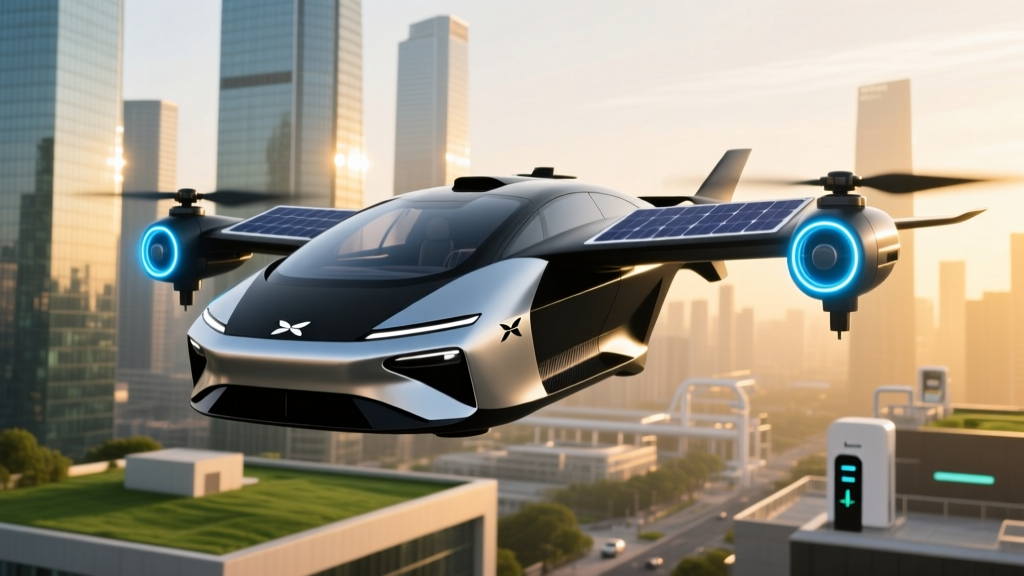
XPeng AeroHT, the urban air mobility subsidiary of Chinese EV maker XPeng, has been developing its eVTOL (electric vertical takeoff and landing) aircraft under the codename "Land Aircraft Carrier" — a modular flying car concept that pairs a ground vehicle with a detachable flying module. The most advanced iteration, the XPeng X2, completed crewed test flights in Dubai and Guangzhou, and XPeng AeroHT has targeted FAA and CAAC certification pathways for limited commercial operations.
But here's the critical reality check for anyone searching "XPeng eVTOL" with purchase intent: no XPeng eVTOL aircraft is currently available for consumer purchase anywhere in the world as of early 2026. The X2 and the newer modular "Land Aircraft Carrier" remain in pre-certification testing. What XPeng has announced are commercial air-taxi partnership timelines, fleet pre-orders from operators, and a long-range vision for personal ownership — not a vehicle you can configure and order today.
This article breaks down everything XPeng AeroHT has publicly disclosed about its eVTOL platform — range, battery architecture, charging, pricing projections, and regulatory status — so you can separate engineering reality from marketing ambition.
Preliminary Specs: What We Know About the X2 Platform
| Specification | XPeng X2 (Announced/Preliminary) |
|---|---|
| Range (flight) | ~18-22 miles (30-35 km) per charge — manufacturer estimate |
| Battery Capacity | ~50-60 kWh (estimated); high-discharge-rate NMC lithium-ion |
| Battery Chemistry | NMC (nickel manganese cobalt) — optimized for power density, not energy density |
| Max Speed | ~80 mph (130 km/h) cruise |
| Passengers | 2 (pilot + 1 passenger in current config) |
| Takeoff/Landing | Vertical — no runway required; ~35 ft × 35 ft pad minimum |
| Propulsion | 8 independent electric motors/rotors (octocopter config) |
| Autonomy Level | SAE-equivalent Level 4 target (fully autonomous flight paths), currently supervised |
| Noise Level | ~65 dB at ground level (claimed, hover mode) |
| Projected Price | $150,000–$300,000+ (personal ownership, unconfirmed) |
Range Reality: 18-22 Miles Is Not a Road Trip
Real-World Expectation: Expect 12-16 usable miles in typical urban conditions. Headwinds, payload weight, temperature extremes, and mandatory reserve requirements (aviation regulations typically require 10-20% battery reserve) will reduce practical range significantly. Cold-weather operations could reduce effective range by 20-30%, similar to ground EVs.
The XPeng X2's range is the single biggest constraint of the platform. At ~18-22 miles announced, this aircraft is designed for point-to-point urban hops — think airport-to-downtown, suburb-to-business-district — not intercity travel. For context, a typical eVTOL air-taxi route under consideration globally is 10-25 miles, which aligns with the X2's envelope.
Why is range so limited? Physics. Unlike a ground EV that rolls on low-resistance tires and benefits from regenerative braking, an eVTOL must expend continuous energy to fight gravity. Hover alone requires enormous power draw — the X2's eight motors collectively demand peak power in the hundreds of kilowatts during vertical takeoff and landing. Cruise flight is more efficient but still far more energy-intensive per mile than a wheeled vehicle.
XPeng AeroHT's longer-term "Land Aircraft Carrier" concept attempts to address range anxiety with a hybrid ground-air approach: a six-wheeled ground vehicle (itself electric, with estimated 200+ mile ground range) that carries and launches the flying module. The flying module would handle the last-mile vertical segment, while the ground vehicle handles highway cruising. This modular approach is clever but adds enormous complexity, weight, and cost.
Battery and Charging: High-Power NMC, Fast Turnaround
The X2's battery pack uses NMC (nickel manganese cobalt) chemistry, chosen for its high discharge rate capability rather than maximum energy density. This is a fundamentally different optimization than a Tesla Model 3's battery, which prioritizes energy density for long driving range. An eVTOL battery must deliver extreme power bursts (high C-rates) during takeoff and landing without overheating or degrading rapidly.
Key battery and charging considerations:
- Capacity: Estimated 50-60 kWh — similar to a compact ground EV like the Chevrolet Bolt, but delivering a fraction of the range due to flight energy demands
- Charge rate: XPeng has targeted rapid ground turnaround; DC fast-charge capability at approximately 120-150 kW is anticipated, potentially enabling a 10-80% recharge in 20-30 minutes at a dedicated vertiport charger
- Battery swap: XPeng AeroHT has discussed swappable battery modules as a solution for commercial fleet operations, eliminating charge downtime entirely — though this adds infrastructure cost
- Cycle life concern: High-discharge NMC cells degrade faster than LFP or standard NMC used in ground EVs. Aviation-grade battery replacement cycles may be measured in hundreds of flight cycles rather than thousands, adding significant operating cost
- Thermal management: Active liquid cooling is mandatory; the thermal load during a 25-minute flight with vertical takeoff and landing is extreme
| Charging Method | Power (kW) | Estimated Time | Notes |
|---|---|---|---|
| DC Fast Charge (vertiport) | 120-150 kW (est.) | 10-80% in ~20-30 min | Requires dedicated aviation-grade DC infrastructure |
| Battery Swap | N/A (physical swap) | ~5 minutes | Fleet/vertiport only; no consumer swap stations planned |
| Standard AC (Level 2 equivalent) | 7-11 kW (est.) | 6-8 hours (full) | Hangar/depot overnight charging |
A critical ownership reality: you cannot charge an eVTOL in your garage alongside your Tesla. The aircraft requires a certified landing pad, aviation-grade charging equipment, and compliance with local airspace and zoning regulations. This is not a consumer product in the traditional automotive sense.
Performance: Flight Dynamics and Powertrain
The X2's eight-motor octocopter configuration provides redundancy — if one motor fails, the remaining seven can maintain controlled flight and execute a safe landing. This multirotor redundancy is standard in passenger eVTOL designs and is a key safety argument for certification.
Performance figures (preliminary):
- Cruise speed: ~80 mph (130 km/h)
- Maximum altitude: ~3,300 ft (1,000 m) — well within urban airspace corridors
- Takeoff to cruise transition: ~30-60 seconds from vertical liftoff to forward flight
- Total system power: Estimated 400-600 kW peak across all eight motors during vertical takeoff (equivalent to roughly 540-800 horsepower, though aviation motors are rated differently than automotive)
- Payload: ~200 kg (440 lbs) including pilot and passenger — limiting luggage to essentially nothing
For comparison, Joby Aviation's S4 eVTOL (a leading US competitor targeting FAA certification) uses a tilt-rotor design with a cruise speed of ~200 mph and range of ~100 miles — substantially outperforming the X2 on paper. Joby's approach sacrifices vertical-lift simplicity for fixed-wing cruise efficiency, which explains the range gap. XPeng's octocopter design is mechanically simpler but aerodynamically less efficient in cruise.
Pricing, Tax Credits, and the Ownership Question
| Cost Factor | Estimate / Status |
|---|---|
| Projected MSRP (personal ownership) | $150,000–$300,000+ (unconfirmed by XPeng) |
| Commercial fleet/air-taxi pricing | Not publicly disclosed; per-seat ticket pricing expected at $50-$150 per trip |
| Federal §30D EV Tax Credit | Does not apply. IRS §30D credits are for highway-capable motor vehicles meeting FMVSS standards. Aircraft are not eligible. (Source: IRS §30D) |
| Ground vehicle module (Land Aircraft Carrier) | If sold separately as a road-legal EV, §30D eligibility would depend on MSRP caps ($55K sedans / $80K SUVs/trucks), buyer income limits, and battery-sourcing requirements — all unconfirmed |
| Operating cost (estimated) | $3-$8 per mile in electricity + maintenance + insurance + pilot/certification costs |
| Insurance | Aviation hull + liability insurance; expect $10,000-$30,000+/year for personal ownership |
Let's be direct: the XPeng eVTOL will not qualify for the federal §30D clean vehicle tax credit. The IRS credit applies exclusively to new, highway-capable, four-wheeled motor vehicles that meet Federal Motor Vehicle Safety Standards. An aircraft — even an electric one — falls under FAA (or CAAC) jurisdiction, not NHTSA, and is categorically ineligible.
If XPeng eventually sells the ground vehicle module of the "Land Aircraft Carrier" concept as a standalone road-legal EV, that module could theoretically qualify — but only if it meets the current §30D requirements: MSRP under $55,000 (sedans) or $80,000 (SUVs/pickups), buyer modified adjusted gross income within IRS thresholds, and battery component/critical mineral sourcing compliance. Given the projected pricing of the full system, the ground module alone would likely exceed these caps.
Regulatory Status: Where Certification Actually Stands
XPeng AeroHT's certification strategy spans multiple jurisdictions:
- China (CAAC): XPeng's home market and likely first to certify. The CAAC has been more aggressive in establishing eVTOL regulatory frameworks, with companies like EHang already receiving type certificates for limited autonomous passenger drones. XPeng targets Chinese commercial operations first.
- Middle East (GCAA): The X2 completed crewed demonstration flights in Dubai under the UAE General Civil Aviation Authority's sandbox program. Dubai has announced plans for air-taxi corridors, though commercial launch dates have slipped multiple times.
- United States (FAA): No XPeng eVTOL has entered the FAA type certification process as of early 2026. The FAA's eVTOL certification framework (under 14 CFR Part 21.17, special conditions for powered-lift aircraft) is still being finalized. US availability, if it comes, is likely 2028 at the earliest.
- Europe (EASA): EASA's SC-VTOL framework is the most mature globally, but no XPeng application has been publicly filed. European operations would follow Chinese and potentially Middle Eastern launches.
The gap between "completed a test flight" and "certified for commercial passenger operations" is enormous. For reference, Joby Aviation began FAA type certification in 2020 and is still working toward final approval in 2025-2026. Archer Aviation follows a similar timeline. XPeng AeroHT is behind both in the FAA pipeline.
Who Is the XPeng eVTOL Actually For?
- You're an air-taxi fleet operator evaluating platforms for future Middle East or China routes
- You're tracking the eVTOL industry for investment purposes (XPeng is publicly traded on NYSE: XPEV and HKEX: 9868)
- You're an aviation enthusiast following certification milestones
- You're shopping for a personal EV today — no XPeng eVTOL is purchasable
- You need a commuter vehicle — look at ground EVs like the Tesla Model Y, Hyundai Ioniq 5, or Chevrolet Equinox EV
- You're counting on a tax credit — aircraft don't qualify under §30D
If you're a consumer looking for an electric vehicle you can actually buy, drive, and charge at home in 2026, the XPeng eVTOL is irrelevant to your purchase decision. XPeng's ground vehicles (G3, P7, G9) are sold in China and select international markets, but the company has not entered the US consumer auto market. For US buyers, XPeng's eVTOL program is a technology demonstration and long-range corporate strategy — not a product on a lot.
Competitive Landscape: How X2 Compares to Other eVTOLs
| Platform | Range | Speed | Passengers | Certification Status (2026) |
|---|---|---|---|---|
| XPeng X2 | ~18-22 mi | ~80 mph | 2 | Testing (CAAC/GCAA); no FAA application |
| Joby S4 | ~100 mi | ~200 mph | 4 + pilot | FAA type cert in progress; targeting 2025-2026 |
| Archer Midnight | ~60 mi (20 mi + reserve) | ~150 mph | 4 + pilot | FAA type cert in progress; targeting 2025-2026 |
| EHang EH216-S | ~18 mi | ~62 mph | 2 | CAAC type certified (2023); limited commercial ops in China |
The X2's most direct competitor is EHang's EH216-S, which shares the octocopter architecture and similar range limitations but has already achieved CAAC type certification and begun limited commercial operations in China. XPeng's advantage, if realized, would be its integration with a ground vehicle platform and its brand recognition from the EV market. But in pure flight performance, Joby's tilt-rotor design offers dramatically better range and speed.
Frequently Asked Questions
Can I buy the XPeng eVTOL X2 today?
No. As of early 2026, no XPeng eVTOL aircraft is available for consumer purchase. The X2 is in pre-certification testing, and XPeng AeroHT has not opened individual purchase orders. Initial deployment will likely be through commercial air-taxi operators, not personal ownership.
What is the real-world range of the XPeng X2?
XPeng claims approximately 18-22 miles (30-35 km) per charge. Real-world usable range will likely be 12-16 miles after accounting for headwinds, payload, temperature, and mandatory aviation reserve requirements. This limits the X2 to short urban hops.
How fast does the XPeng eVTOL charge?
XPeng targets DC fast-charging at approximately 120-150 kW at dedicated vertiport stations, enabling a 10-80% recharge in roughly 20-30 minutes. Battery swap is also under development for fleet operations, with swap times around 5 minutes. Standard AC charging for overnight hangar storage is estimated at 7-11 kW.
Does the XPeng eVTOL qualify for the $7,500 federal EV tax credit?
No. The IRS §30D clean vehicle credit applies only to highway-capable motor vehicles meeting Federal Motor Vehicle Safety Standards. Aircraft — including electric aircraft — are regulated by the FAA and are categorically ineligible. No eVTOL from any manufacturer qualifies for this credit.
Is the XPeng eVTOL self-flying?
XPeng AeroHT targets autonomous flight capability (SAE-equivalent Level 4 for aviation), but current test flights are conducted with a safety pilot on board. Full autonomy for passenger eVTOLs requires regulatory approval that has not yet been granted by any major aviation authority for urban environments.
How much will the XPeng eVTOL cost?
XPeng has not confirmed consumer pricing. Industry analysts estimate personal ownership pricing in the $150,000 to $300,000+ range, comparable to a small helicopter. Commercial air-taxi rides on XPeng-equipped routes are projected at $50-$150 per seat per trip, competitive with premium ride-hailing for short distances.
Is it worth waiting for an eVTOL vs. buying a ground EV now?
If you need a vehicle today, absolutely buy a ground EV. eVTOLs are years away from widespread availability, will require infrastructure (vertiports, certified pads) that doesn't exist in most locations, and will not be practical for daily commuting, road trips, or family transport. A ground EV like the models listed on fueleconomy.gov offers proven range, established charging networks, and available tax credits today.
- Vertical takeoff — no runway needed
- Modular ground-air concept is innovative
- XPeng's EV manufacturing scale could reduce costs long-term
- Octocopter redundancy for safety
- Backed by a publicly traded, well-funded company
- Not available for purchase — no timeline for consumer sales
- Range limited to ~18-22 miles (real-world less)
- No FAA certification pathway initiated
- No federal tax credit eligibility
- Requires vertiport infrastructure that doesn't exist in most cities
- Projected cost of $150K-$300K+ puts it far beyond typical EV buyers
- Battery degradation under high-discharge aviation use is an open cost question
Sources: XPeng AeroHT official disclosures, IRS §30D Clean Vehicle Credit, FAA eVTOL certification resources. All specifications are preliminary and subject to change pending certification. This article does not constitute purchase advice or a recommendation to invest in XPeng securities.