The XPeng AeroHT Voyager X2: Ground EV or Sky Fantasy?
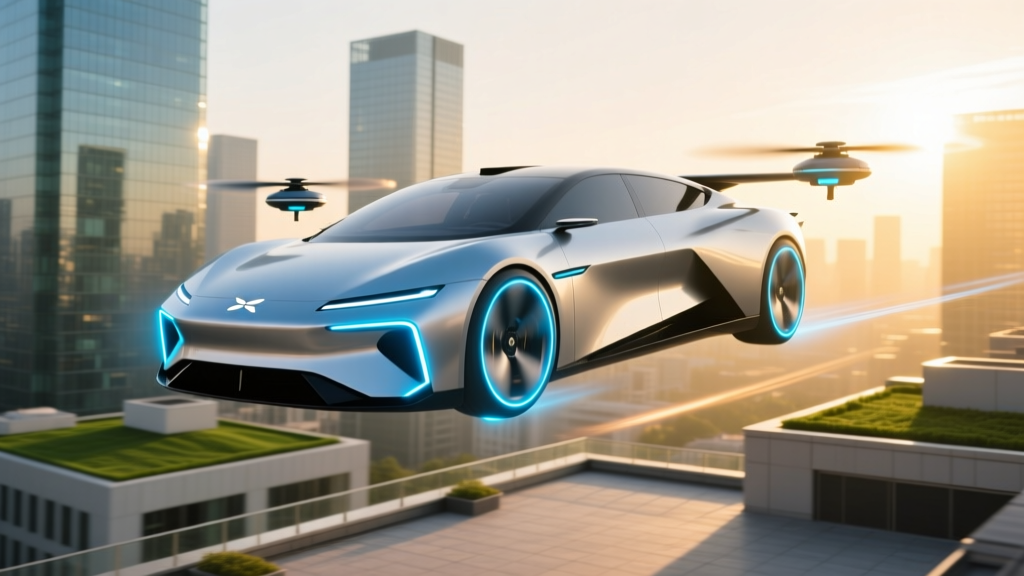
The XPeng AeroHT Voyager X2 is not a conventional electric car. It is an eVTOL (electric vertical takeoff and landing) aircraft — a passenger-carrying multicopter developed by XPeng's AeroHT division, first demonstrated in crewed public flights in Dubai (2022) and Guangzhou (2023). As of early 2026, the Voyager X2 remains in the certification and limited-demo phase; it is not available for consumer purchase anywhere in the world. What follows is a rigorous, spec-driven look at what XPeng AeroHT has published, what remains preliminary, and what eVTOL realities mean for anyone tracking this platform.
Spec Table: XPeng AeroHT Voyager X2 (Preliminary / Announced)
| Spec | Figure (Preliminary) | Notes |
|---|---|---|
| Vehicle Type | eVTOL multicopter (2-seat) | Not a road-legal EV |
| Flight Endurance | ~35 min (full charge) | XPeng AeroHT demo data |
| Max Speed | ~130 km/h (~80 mph) | Level flight cruise |
| Max Altitude | Not publicly disclosed | Expected <1,000 ft AGL for urban ops |
| Battery Chemistry | High-density NMC (nickel-manganese-cobalt) | Energy-density priority over cycle life |
| Battery Capacity (kWh) | Not officially published | Industry-class eVTOLs: 50–80 kWh estimated |
| Propulsion | 8 coaxial rotors (distributed electric) | Redundancy for single-rotor-out safety |
| Passenger Capacity | 2 (pilot + 1 passenger) | Enclosed carbon-fiber cabin |
| Autonomous Capability | SAE-equivalent Level 4 in designated corridors | Operator oversight required outside corridors |
| Consumer Price | Not on sale | Commercial/air-taxi model expected first |
| Regulatory Status (2026) | CAAC type-certification in progress | No FAA/EASA certification yet |
Battery, Chemistry, and the Energy-Density Problem
eVTOLs live and die by specific energy (Wh/kg). Where a Tesla Model Y can tolerate a heavy 75 kWh LFP pack because rolling resistance is low, a flying vehicle must lift every kilogram against gravity. XPeng AeroHT has indicated NMC-type lithium-ion cells for the Voyager X2, consistent with the broader eVTOL industry (Joby Aviation, Archer, Volocopter all use NMC or NCA chemistries). Current production cells deliver roughly 250–300 Wh/kg at the cell level; pack-level is closer to 180–220 Wh/kg after cooling, structure, and BMS overhead.
This is the core constraint: a 35-minute flight on a 2-seat eVTOL likely requires a 60–80 kWh pack weighing 300–400 kg. That's roughly half the useful payload budget. Until solid-state cells reach 400+ Wh/kg at pack level (projected late this decade, per DOE research timelines), eVTOL range will remain measured in tens of miles, not hundreds.
Charging: What "Refueling" Looks Like for an eVTOL
XPeng AeroHT has not published a consumer charging spec for the Voyager X2 — because there are no consumer charging stations for eVTOLs. Vertiports under development (by companies like Skyports and Joby) plan DC fast-charge pads in the 350–600 kW range, targeting 5–10 minute turnarounds between air-taxi hops. For a ~70 kWh pack, a 500 kW peak rate could theoretically deliver a 20–80% top-up in roughly 6–8 minutes — if the pack's thermal system can sustain that C-rate without aggressive taper.
| Charging Mode | Power (kW) | Estimated Time (10–80%) | Status |
|---|---|---|---|
| Vertiport DC Fast Charge (projected) | 350–500 kW | ~6–10 minutes | Infrastructure in development |
| Depot-Level DC Charge | 150–250 kW | ~18–25 minutes | Likely early-stage ops |
| Standard Level 2 (40A / 9.6 kW) | 9.6 kW | ~5–7 hours | Maintenance/overnight only |
For context, the charge-curve taper above 80% state-of-charge is even more critical in aviation than in cars: an eVTOL needs a reserve battery margin for landing and contingencies, so operators will likely cap routine charges at 80–85% SoC, mirroring airline fuel-reserve rules.
Performance: 0-to-Hover, Not 0-to-60
Automotive metrics like 0–60 mph and horsepower don't map cleanly to eVTOLs. What matters is total system power (kW across all motors), thrust-to-weight ratio, and single-motor-out performance. The Voyager X2 uses 8 coaxial rotors (16 motors total) with distributed redundancy. XPeng AeroHT has quoted a top speed around 130 km/h (81 mph) and a cruise slightly below that. Takeoff is vertical — no runway required — which is the whole point of the eVTOL concept for urban air mobility.
For comparison to road-going XPeng products: the XPeng G9 SUV delivers 0–60 mph in roughly 3.9 seconds on its dual-motor AWD variant. The Voyager X2's performance envelope is defined by rotor disk loading and climb rate, not straight-line acceleration.
Pricing, Tax Credits, and the §30D Question
Because the Voyager X2 is an aircraft, not a highway-capable motor vehicle, it does not qualify for the IRS §30D Clean Vehicle Credit. That credit applies to on-road EVs meeting MSRP caps ($55,000 sedans / $80,000 SUVs and trucks), buyer income limits ($300k MFJ / $150k single), and battery critical-mineral sourcing rules, per IRS guidance on new clean vehicles. None of those frameworks apply to aircraft.
| Item | Detail |
|---|---|
| Voyager X2 MSRP | Not priced for consumer sale |
| Estimated Unit Cost (industry estimate) | $300,000–$500,000+ per airframe (commercial ops) |
| §30D Federal Tax Credit | Not eligible — classified as aircraft |
| FAA / EASA Certification Fees | Borne by operator, not consumer |
| Comparable Road-Legal XPeng | XPeng G6 SUV (~$35,000–$50,000 in China, not sold in US as of 2026) |
If you're shopping for an actual, buyable EV today with XPeng's tech DNA, the G6 and G9 SUVs are the relevant products — but neither is currently sold in the United States.
Who the Voyager X2 Is Actually For
Short answer: not individual consumers in 2026. The realistic early adopters are:
- Air-taxi operators running scheduled short-hop routes (airport-to-downtown, 15–30 mile corridors)
- Charter and premium shuttle services in cities that approve vertiport infrastructure
- Government and emergency-medical pilots once certified for IFR and night ops
For a US-based EV shopper reading autoedgeview.com, the Voyager X2 is a technology tracker, not a purchase candidate. Your garage will not host one. Your commute will not include one — at least not before the 2030s, and even then as a ticketed ride, not a personal vehicle.
Pros and Cons: Honest Assessment
Pros
- True vertical takeoff — no runway infrastructure needed
- Quiet electric propulsion vs. helicopter (~10–15 dB lower cabin noise)
- Distributed-rotor redundancy (no single point of failure)
- Backed by XPeng's EV battery supply chain and software stack
- Public crewed flight demos completed (Dubai 2022, Guangzhou 2023)
Cons
- Not for sale — no consumer pricing, no delivery timeline
- Flight range under 30 miles on a full charge
- No FAA or EASA certification path confirmed as of 2026
- Vertiport infrastructure effectively nonexistent in the US
- NMC battery degradation under high-C-rate flight cycles is an open cost question
- Not eligible for any EV tax credit or incentive
Competitive Landscape: How the Voyager X2 Stacks Up
The Voyager X2 competes in a narrow eVTOL field, not against Teslas or Rivians. Direct peers include:
- Joby S4 — 6-rotor tilt-rotor, ~100-mile targeted range, FAA type-certification in progress, Toyota-backed. Longer range due to wing-borne cruise.
- Archer Midnight — 12-rotor lift-plus-cruise, ~50-mile target, United Airlines partnership, aiming for 2026–2027 commercial launch.
- Volocopter VoloCity — 18-rotor multicopter, ~22-mile range, EASA certification furthest along in Europe. Closest analog to the Voyager X2's multicopter layout.
- EHang EH216-S — Chinese competitor that received CAAC type certificate in late 2023 — the first certified passenger eVTOL globally.
Against these, the Voyager X2 sits mid-pack on range and is behind EHang on certification. Its advantage is XPeng's automotive-scale battery procurement and manufacturing muscle, which could matter when production ramps.
FAQ: XPeng AeroHT Voyager X2
What is the real-world range of the Voyager X2?
Approximately 22–28 miles (35–45 km) in calm conditions at cruise speed. Headwinds, high ambient temperatures, and payload reduce this by 20–35%. There is no EPA rating; eVTOLs are certified under aviation authorities.
How fast does it charge?
No public consumer spec exists. Vertiport DC fast-charge infrastructure targeting 350–500 kW could deliver 10–80% in roughly 6–10 minutes on a ~70 kWh pack. Depot-level 150–250 kW charging would take 18–25 minutes.
How much does the Voyager X2 cost after tax credits?
It is not for sale, and as an aircraft it does not qualify for the IRS §30D EV tax credit. Industry estimates place per-unit cost in the $300,000–$500,000+ range for commercial operators.
Is it worth buying vs. competitors?
You cannot buy one. Among eVTOL developers, EHang's EH216-S is the only certified passenger eVTOL as of 2026 (CAAC, China only). Joby and Archer are further along on US FAA certification paths for longer-range missions.
What are the biggest pros and cons?
Pros: vertical takeoff, quiet electric drive, rotor redundancy, XPeng manufacturing backing. Cons: sub-30-mile range, no consumer availability, no US/EU certification, no vertiport infrastructure, no tax-credit eligibility.
Does it qualify for the federal EV tax credit?
No. The §30D credit applies to on-road motor vehicles meeting MSRP, income, and battery-sourcing requirements. Aircraft are excluded. See IRS.gov for eligible vehicle categories.
Will XPeng sell a flying car in the US?
Not in any announced timeline. XPeng has not entered the US auto market as of 2026, and FAA eVTOL certification is a multi-year process that has not been initiated for the Voyager X2 specifically.