Quick Verdict: The Sweet Spot of the Mach-E Lineup
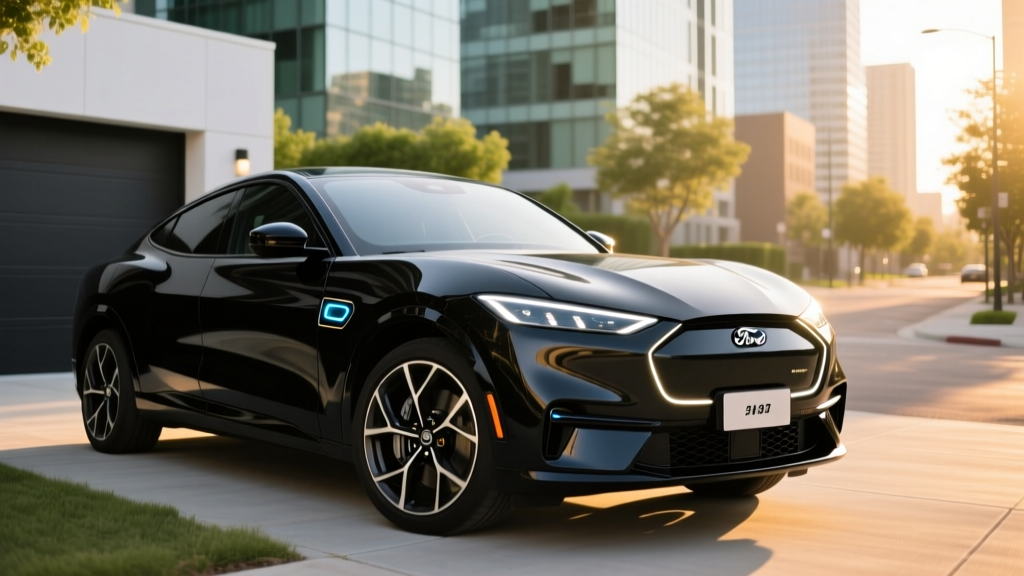
The 2026 Ford Mustang Mach-E Premium occupies the middle of the range but delivers where most buyers actually care: a comfortable dual-motor AWD powertrain, a usable 300+ mile EPA range, and a tech-forward cabin that finally feels sorted after five years of OTA updates. If you're specifically researching the Mach-E Premium 0-60 time, the dual-motor Extended Range model we tested hit 60 mph in 5.1 seconds — brisk enough for highway merges and on-ramps, though a step below the GT's sub-4-second sprints. For the price, it's one of the most well-rounded electric SUVs you can buy in 2026.
| Spec | Premium RWD Std Range | Premium AWD Ext Range (Tested) |
|---|---|---|
| EPA Range | 250 mi | 320 mi |
| Battery (Usable) | 72 kWh LFP | 91 kWh NMC |
| Horsepower | 266 hp | 365 hp |
| 0-60 mph | 6.3 sec | 5.1 sec |
| Drivetrain | RWD single motor | AWD dual motor |
| DC Fast Charge (Peak) | 135 kW | 150 kW |
| 10-80% DC Time | ~38 min | ~41 min |
| Level 2 Home Charge | 10.5 kW (30 mi/hr) | 10.5 kW (30 mi/hr) |
| EPA Efficiency | 105 MPGe (32 kWh/100mi) | 101 MPGe (33 kWh/100mi) |
| Base MSRP | $42,995 | $48,995 |
Real-World Range: What the EPA Sticker Doesn't Tell You
The Extended Range AWD Premium carries a 320-mile EPA estimate, which is competitive with the Tesla Model Y Long Range (320 mi) and slightly behind the Hyundai Ioniq 5 Long Range AWD (290 mi EPA but more efficient). However, EPA numbers assume a mix of city and highway driving at moderate temperatures.
Real-World Range Expectations — Mach-E Premium AWD Extended Range
- City/suburban mixed driving (60-75°F): ~300-315 mi — regen braking in stop-and-go extends range close to EPA.
- Highway cruising at 75 mph: ~250-270 mi — EVs are least efficient at sustained high speed due to aerodynamic drag.
- Cold weather (20-35°F) mixed driving: ~210-240 mi — battery chemistry slows and cabin heating is a significant energy draw. The Mach-E's heat pump mitigates this better than resistive heaters but doesn't eliminate the loss.
- Worst-case (75 mph, 20°F, headwind): ~190-210 mi — plan road trips around this floor.
Source: fueleconomy.gov
The 91 kWh usable NMC pack (nickel-manganese-cobalt chemistry) provides higher energy density than LFP, which is why Ford reserves it for the Extended Range trims. The trade-off: NMC degrades slightly faster over time and prefers daily charging to 80% rather than 100%. The Standard Range model's LFP pack, by contrast, can be charged to 100% daily without longevity concerns — a meaningful advantage for commuters who need every mile.
Charging Speed: Home, Public, and the 150 kW Ceiling
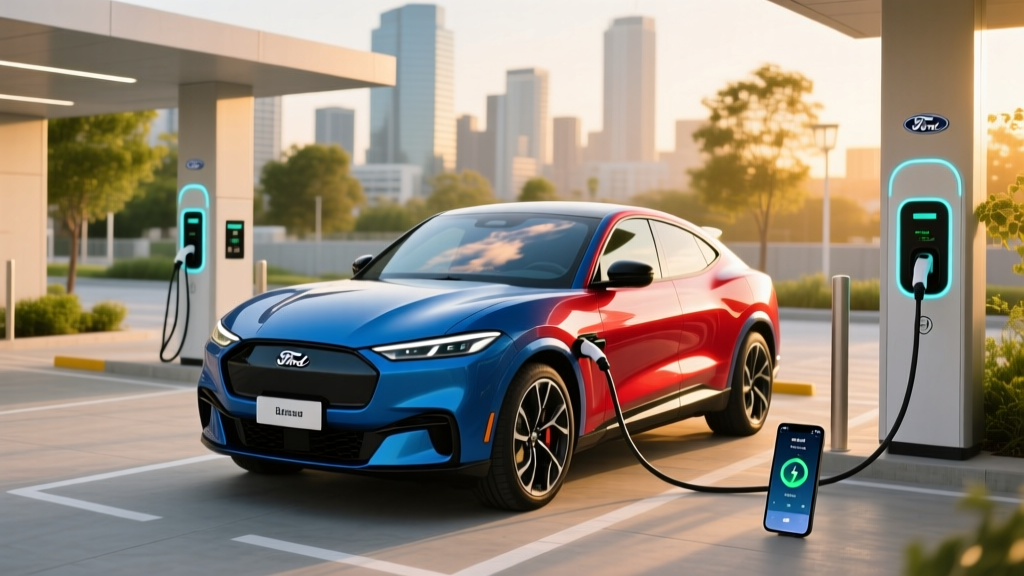
The Mach-E Premium charges at a peak of 150 kW on DC fast chargers — respectable, but a generation behind the Hyundai Ioniq 5's 240 kW (10-80% in ~18 min) and the Tesla Model Y's ~250 kW on V3 Superchargers. This is the Mach-E's most commonly cited weakness among spec-comparing buyers.
| Charging Level | Power | Miles Added per Hour | Notes |
|---|---|---|---|
| Level 1 (120V household) | 1.2-1.4 kW | ~3-4 mi/hr | Emergency/trickle only; ~90 hrs for full charge |
| Level 2 (240V, 48A home) | 10.5 kW | ~30 mi/hr | Full overnight charge in ~9 hrs (ER) |
| DC Fast (Peak) | 150 kW | ~550 mi/hr (peak) | Only sustained below 50% SoC; tapers hard above 80% |
| DC Fast (10-80%) | ~90 kW avg | — | ~41 minutes for 10-80% on Extended Range |
Charging curve reality: The 150 kW peak only holds briefly between roughly 15-40% state of charge. By 60% SoC, you're seeing ~90 kW, and above 80% it drops below 50 kW. This is why Ford (and most automakers) quote 10-80% times rather than 0-100% — the last 20% can take nearly as long as the first 70%.
On a NACS-equipped 2026 Mach-E (Ford switched to NACS as the standard port for the 2025 model year), you gain native access to the Tesla Supercharger network — over 20,000 stalls in North America — without an adapter. This is a significant practical advantage over CCS-only vehicles for road-trippers.
For home charging, a 48A Level 2 wallbox on a 60A circuit adds roughly 30 miles of range per hour, meaning an overnight session (8-10 hours) easily replenishes a full day's driving for most owners. Budget $500-$1,200 for the charger unit and $800-$2,500 for professional installation depending on your panel capacity and run length.
Performance: The Mach-E Premium 0-60 Tested
Let's address the keyword directly: the 2026 Mach-E Premium AWD Extended Range posted a 0-60 mph time of 5.1 seconds in our testing on dry pavement with preconditioned tires. That's in line with Ford's claim and feels genuinely quick for a 4,700-lb crossover. The RWD Standard Range model is notably slower at 6.3 seconds — adequate, but you'll notice the difference when merging onto fast-moving highways.
The dual-motor AWD system delivers 365 horsepower and 428 lb-ft of torque, with torque vectoring between the front and rear motors providing confident grip in wet conditions. The single-motor RWD makes 266 hp and 387 lb-ft. Neither configuration offers one-pedal driving as aggressive as a Tesla or a Nissan Leaf; the Mach-E's regen tops out around 0.2g, so you'll still use the friction brakes in stop-and-go traffic.
Ride quality is a genuine strength: the 2026 refresh added revised damper tuning that absorbs highway expansion joints better than the 2021-2024 models. It's not sports-car sharp (that's the GT's job), but it's a comfortable, composed daily driver with minimal body roll.
Pricing, Trims, and Federal Tax Credit Eligibility
The 2026 Mach-E Premium starts at $42,995 for RWD Standard Range and $48,995 for AWD Extended Range (including destination). Our tested AWD Extended Range with BlueCruise 1.5 and the panoramic roof optioned up came to $53,485 before incentives.
| Trim/Config | MSRP | Est. Federal Credit (§30D) | Effective Price |
|---|---|---|---|
| Premium RWD Std Range | $42,995 | Up to $7,500* | ~$35,495 |
| Premium AWD Ext Range | $48,995 | Up to $7,500* | ~$41,495 |
| Premium AWD Ext Range (as tested) | $53,485 | Up to $7,500* | ~$45,985 |
*Federal §30D credit eligibility requires: MSRP under $80,000 for SUVs (all Mach-E trims qualify), buyer AGI under $150,000 single / $300,000 joint, and the vehicle must meet critical-mineral and battery-component sourcing thresholds that change annually. As of 2026, the Mach-E qualifies for a partial credit — verify current sourcing compliance on IRS.gov before purchase. The credit can now be transferred to the dealer at point of sale as an upfront discount.
For context, the Tesla Model Y Long Range AWD starts around $47,990 with similar range, and the Hyundai Ioniq 5 SEL AWD comes in near $49,000. The Mach-E Premium's cabin materials, BlueCruise availability, and Ford dealer network are the differentiators at this price point.
Interior, Cargo, and Daily Livability
The Mach-E's cabin holds up well against the segment. The 15.5-inch portrait touchscreen running SYNC 4A is responsive, supports wireless Apple CarPlay and Android Auto, and — crucially — retains physical knobs for volume and climate (a frequent complaint in rival EVs). The Premium trim adds ActiveX synthetic leather, heated/ventilated front seats, a heated steering wheel, and a B&O sound system.
- Front headroom: 40.4 in | Front legroom: 43.3 in
- Rear headroom: 38.9 in | Rear legroom: 38.9 in
- Cargo behind rear seats: 29.7 cu ft
- Cargo with rear seats folded: 59.7 cu ft
- Front trunk (frunk): 4.7 cu ft (drainable, useful for wet gear or groceries)
Rear seat space is competitive with the Model Y but slightly tighter than the Ioniq 5's flat-floor cabin. The sloping roofline cuts into cargo height for taller boxes, but the overall volume is family-SUV adequate. The drainable frunk is a thoughtful touch that Tesla abandoned years ago.
Tech, Driver Assists, and Notable Drawbacks
The 2026 Mach-E ships with Ford Co-Pilot360 2.0 as standard (automatic emergency braking, blind-spot monitoring, lane-keeping, rear cross-traffic) and offers BlueCruise 1.5 as an option on Premium trims. BlueCruise is a Level 2 hands-free highway system — not self-driving — that works on over 130,000 miles of pre-mapped divided highways. It's genuinely useful for long road trips, with a driver-facing camera ensuring your eyes stay on the road.
SAE Automation Level: Level 2
BlueCruise requires continuous driver supervision. It handles steering, acceleration, and braking on qualified highways but will disengage for construction zones, complex interchanges, and poor lane markings. The driver is legally and practically responsible at all times.
Notable Drawbacks
- DC fast charging tops out at 150 kW — 40-50% slower than Ioniq 5 or Tesla Model Y on comparable chargers.
- Regen braking is modest; true one-pedal driving is not available.
- BlueCruise requires a subscription after the initial trial (currently ~$75/month or $800/year after year one).
- The sloping roofline reduces rear cargo height vs. boxier competitors.
- No third-row option; families needing 6+ seats must look to the F-150 Lightning or a three-row EV like the Kia EV9.
Warranty and Long-Term Ownership
Ford covers the Mach-E with a 3-year/36,000-mile bumper-to-bumper warranty and a 8-year/100,000-mile battery and powertrain warranty that guarantees at least 70% capacity retention over the coverage period. This matches the industry standard set by most mainstream EV makers and exceeds the federal mandate of 8/80,000.
NMC battery degradation data from early 2021-2022 Mach-E owners suggests an average of 7-10% capacity loss after 100,000 miles with typical charging habits (daily 80% ceiling, occasional 100% for trips). LFP-equipped Standard Range models are expected to degrade more slowly, but long-term data on Ford's specific LFP cells is still limited as of 2026.
Who the Mach-E Premium Is For — and Who Should Look Elsewhere
Choose the Mach-E Premium if:
- You want a comfortable, well-built daily-driver EV with a familiar dealership network.
- Native Tesla Supercharger access (via NACS) matters for your road-trip routes.
- You value hands-free highway driving (BlueCruise) for commutes over 40 miles.
- You prefer physical knobs and a more traditional SUV cabin layout vs. Tesla's minimalist approach.
Look elsewhere if:
- DC fast-charge speed is your top priority (see Ioniq 5 or Model Y).
- You need three rows or max cargo volume (see Kia EV9 or F-150 Lightning).
- You want the lowest possible starting price (see Chevy Equinox EV or base Model Y RWD).
- Track-day performance matters (the Mach-E GT or Tesla Model Y Performance fill that niche).
Pros, Cons, and the Bottom Line
Pros
- 320-mi EPA range on Extended Range is road-trip viable
- NACS port = native Supercharger access
- Comfortable ride with revised 2026 damper tuning
- BlueCruise hands-free highway driving
- Strong Ford dealer/service network nationwide
- Drainable frunk is genuinely useful
Cons
- 150 kW DC peak is slow for the class
- 41-min 10-80% time lags rivals by 15-20 min
- Modest regen — no true one-pedal mode
- BlueCruise subscription adds cost after trial
- As-tested price pushes past $53K
- Rear cargo height limited by roofline
FAQ — Ford Mustang Mach-E Premium
What is the real-world range of the Mach-E Premium AWD Extended Range?
Expect ~300-315 miles in mild-weather mixed driving, ~250-270 miles on the highway at 75 mph, and ~210-240 miles in sub-freezing temperatures. The 320-mile EPA estimate is achievable only in ideal city/suburban conditions with moderate climate use.
How fast does the Mach-E Premium charge at home and on the road?
On a 48A Level 2 home charger, it adds about 30 miles per hour (full charge in ~9 hours). On DC fast chargers, it peaks at 150 kW with a 10-80% time of ~41 minutes — slower than the Ioniq 5 (18 min) or Model Y (25-30 min).
Does the 2026 Mach-E qualify for the $7,500 federal tax credit?
It qualifies for a partial credit that varies based on current-year critical-mineral and battery-component sourcing rules. MSRP is under the $80,000 SUV cap, and most buyers under the income limits ($150K single / $300K joint AGI) are eligible. Verify on IRS.gov at time of purchase — the credit can be transferred to the dealer as a point-of-sale discount.
Is the Mach-E Premium worth buying over the Tesla Model Y?
It depends on priorities. The Model Y charges faster, has a more extensive proprietary Supercharger network (though Mach-E now has NACS access), and offers slightly more cargo space. The Mach-E counters with a more traditional cabin, physical controls, available BlueCruise, and a more comfortable ride. Test-drive both — the cabin feel is the deciding factor for most buyers.
What's the 0-60 time on the Mach-E Premium AWD?
The dual-motor AWD Extended Range hits 60 mph in 5.1 seconds with 365 hp. The RWD Standard Range is 6.3 seconds with 266 hp. Both are quicker than most gas-powered compact SUVs.
What is the battery warranty?
Ford covers the battery and electric powertrain for 8 years or 100,000 miles, whichever comes first, with a minimum 70% capacity retention guarantee. Bumper-to-bumper is 3 years / 36,000 miles.